/pic7247536.jpg)











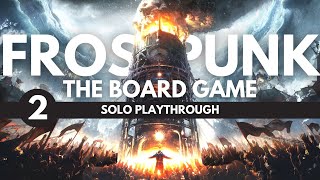



Frostpunk: The Board Game Deep Dive
What the Community Thinks About Frostpunk: The Board Game
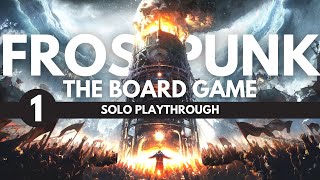
Frostpunk: The Board Game stands as one of 2022's most acclaimed cooperative survival experiences. Reviewers across multiple channels consistently praise its thematic depth and mechanical elegance, with many citing it as a standout title for solo play. Totally Tabled ranked it as a top solo game of the year, a rare honor reserved for titles that would crack an all-time list. The community appreciates how the board game successfully translates the video game's bleakness and moral weight into cardboard form, creating moments of genuine tension and consequence. Channels like One Stop Co-op Shop and Quackalope echo that the result is demanding but deeply rewarding.
Core Mechanics That Define Frostpunk: The Board Game
Worker Placement and Resource Management
At its heart, Frostpunk employs worker placement where players assign citizen meeples (workers, engineers, and children) to actions. The core resources of coal, wood, food, and steam cores create constant scarcity. Coal becomes the lifeblood of survival; players must feed it into a central generator to produce heat. Every round demands difficult choices: spend coal for warmth now, or preserve it for future rounds? Gather wood, or risk running out of essential materials? Players balance these pressures while managing a dwindling population and rising hunger and sickness markers. The mechanic elegantly mirrors the video game's survival-management core, where every decision carries weight and no resource is ever quite sufficient.
Heat, Cold Actions, and Sickness
A signature mechanic involves the heat system. As players fuel the generator with coal, a heat marker advances, determining which building colors and map zones are heated and safe versus cold and dangerous. Taking a cold action causes the worker's citizen type to gain a sickness token. Once sickness accumulates past a threshold, citizens become gravely ill, and a further sickness flip triggers death. This creates an escalating spiral: ignore heating, and workers sicken faster; over-heat to prevent sickness, and coal reserves dwindle. Players must strategically place buildings near the generator to minimize cold actions while managing the generator's creeping stress, turning the simple act of staying warm into the central economic puzzle.
The Frostpunk: The Board Game Experience
Moral Decision-Making and Consequences
Frostpunk shines in its moral clarity and long-term consequences. Morning cards present hard choices: pass a law to gain hope, but a consequence card shuffles into a later deck, affecting future rounds unpredictably. Players craft policies (child labor, emergency rations, makeshift shelters) that unlock buildings and special abilities but embed hidden costs. The hope and discontent system tracks citizen morale, and losing all hope ends the game while excessive discontent can backfire catastrophically. As one reviewer noted, everything in the game flows through the morale system: players manage sickness, hunger, and infrastructure while simultaneously shepherding their society's will to survive.
Escalating Scenario Events and Variable Difficulty
Each scenario unfolds through trigger tokens placed on the round track. At specific rounds, beacons must be lit and expeditions reveal distant settlements' fates. Storm cards accelerate toward the settlement, destroying tents and then bunkhouses, forcing players to prepare for a final catastrophic round. The game layers difficulty: normal and hard societies offer different starting populations and resources; citizen cards provide specialized abilities but cost resources to use; and random scenario events such as plague victims, food crises, and refugee arrivals force immediate moral judgment. This prevents the game from becoming a solved puzzle, since each playthrough shapes its own unique tragedy.
What Makes Frostpunk: The Board Game Stand Out
Mechanics That Tell the Story
Unlike many survival games, Frostpunk's mechanics tell the story. The generator's deteriorating condition becomes a metaphor for holding civilization together; managing it is a constant background tension. The heat mechanic is not abstract; it is the fundamental barrier between warmth and death. The morning cards are not random events; they are genuine dilemmas that force players to compromise their values, weighing shelter against hope, discipline against morale. Reviewers consistently highlight how the game achieves thematic resonance: playing it feels like managing a doomed society in a frozen world, not solving a detached optimization problem.
Exceptional Solo Experience with Tight Design
Frostpunk excels as a solo game. The solo mode is streamlined, which keeps the mechanical burden manageable while the morale system and random events maintain pressure. Players control all citizens and decisions, making the experience deeply personal. The game's difficulty is notorious, and reviewers describe losing multiple games on normal before understanding the strategy, but losses feel earned rather than unfair. The sense of progression through researching technologies, building specialized structures, and sending expeditions rewards learning, while the brutal final rounds ensure tension never dissipates before the end.
Potential Drawbacks
Length and Cognitive Burden
Frostpunk is a marathon. Solo games regularly run ninety minutes to two hours, with multiplayer games extending further. Each round involves multiple phases and decision points: weather changes, sickness resolution, moral choices, and resource allocation. Multiple reviewers acknowledge that the first few games take longer as players learn the phase sequence and rules, but even experienced players find it demanding. The rule interactions, particularly heat calculations, sickness mechanics, and consequence card timing, require sustained attention. Some players may find the cognitive load exhausting, especially combined with the game's emotional weight.
Brutal Difficulty and Swingy Balance
The game's reputation for difficulty is well-earned. Many reviewers failed multiple games before achieving a win. While this creates tension, it can also feel punishing: one missed round of heating or food can trigger a cascade of deaths and discontent that becomes unrecoverable. Some strategies feel stronger than others, and certain technology paths or building arrangements can feel like traps. The balance tips sharply between survival and failure, and randomness in expedition returns, moral card timing, and scenario events occasionally feels arbitrary rather than strategic. Players seeking a gentler difficulty curve, or those who tire quickly after losses, may find the experience discouraging.
If You Enjoy Frostpunk: The Board Game
If Frostpunk captivates you, several related games deliver a similar experience. Robinson Crusoe: Adventures on the Cursed Island shares the blend of worker placement, resource scarcity, and morale management, with the same brutal difficulty and escalating danger, though it emphasizes survival exploration over city-building. This War of Mine: The Board Game mirrors the dark theme and impossible choices under scarcity, leaning heavier on storytelling and civilian suffering while Frostpunk emphasizes systemic management and cold calculation. Frosthaven offers a different survival lens through dungeon-crawling exploration, but shares the cascading difficulty and sense of mounting desperation. And those drawn to the source material can return to Frostpunk (video game) for the deeper moral branching that influenced the board game's design.
What Reviewers Are Saying
"There is hope for us. We even managed to preserve enough food to be able to feed our children, at least for now. The theme is incredible. We're living in this frozen-over post-apocalyptic 19th-century world, and the only reason we're able to survive is due to advances in steam technology, which created these giant generators providing the heat."
— Good Time Society
"This is a solo-only game, but it has ways of spreading out the decision-making so you can play it with more players. For me, I really want to play this solo, making all the decisions, because there's a lot of strategy here. The morale of your society becomes very angry or very greedy over something, and then the events just keep happening and making things worse and worse in a very thematic way."
— Totally Tabled
"I got it right onto the table and I've just been playing it over and over again. The story is handled kind of like Robinson Crusoe, but we're still faced with a lot of these heart-wrenching moral decisions, and the choices that we make will have long-term consequences."
— Totally Tabled