/pic8556001.jpg)
Gate is a solitaire tower-defense game in which you take on the role of the leader of a small medieval town under siege from a swarm of vile creatures from the local forest. You have to manage the health of your town's gate, the tower, and the local farm. In addition, this attack is causing fear levels to rise. If you cannot keep your gate standing or if the fear of the townspeople gets too high, you lose the game. If, however, you can hold off the swarm of enemies long enough, you will be victorious!
Gate uses deck-building as the driving mechanism in the game. You start with three starting cards, but as the game progresses you can recruit new people from your town to help your cause. Each character has unique abilities, and some even have special powers. The enemies in the game get increasingly more difficult with each new wave, so you have to make good choices as to when to spend resources on fighting off your foes, upgrading your command, and repairing your town.
—description from designer


- Rack up one points at a time.
- On a four-player game, the board gets really busy.
- Some of these spaces are pretty small.
- It does feel like there is maybe too much pressure on some of those spaces.
- Visually can get to be a little bit of a mess.
Mechanics (from transcript analysis)
- Area Contention — More players leads to more contests on the different spaces.
- Point scoring — Players aim to rack up one point at a time.
Video topics + discussion points
Quotes (from this video)
- More players does add to the pressure of the game in those spaces and and have more contests on the different spaces.
- So, it does feel like there is maybe too much pressure on some of those spaces, and it visually can get to be a little bit of a mess.
References (from this video)
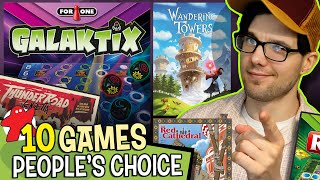
- Great solo option
- High replayability in a small package
- Quick playtime
- Not available in English
- Import charges can be high
- Using rockets to move down star paths.
- Space
- Schwarz Rosen Rose Garden
Mechanics (from transcript analysis)
- Dice Rolling — Each round you'll roll five space dice space dice not regular dice.
- Movement — Use your Rockets to move down five star paths as far as possible.
- Push Your Luck — Handling houses such as black holes and forbidden zones while collecting bonuses.
- Resource Management — Use valuable rocket components.
Video topics + discussion points
Quotes (from this video)
- It's a memorable visceral experience that keeps the focus on the sharp tactical space that all players inhabit.
- It's Mad Max the board game but it's it's meant to be really really fun and just frivolous nonsense in a best way possible.
- I agree was this my favorite game of 2020 yes and I would S I would Hazard to guess it still is I love the red Cathedral don't me wrong I also love the White Castle that's a great game too but the red Cathedral there's something about this game...
- Rail Pass is just a little gem it's not something I need to play all the time for sure but Al convention Rail Pass might be one of the best convention games out there.
- This is my now goto solo game I love the small package it contains five different maps and 20 different games in one small box it's completely replayable with simple rules I've become a bit exhausted with complex campaigns that take a year to finish you complete a game of this in 10 minutes.
- Cloudit is supposed to be about fighting post apocalyptic terrorist militias from the futuristic airships but honestly it felt more like we were flying from City to City raining down Death from Above until the poor land bound inhabitants surrendered their precious water to us are we the baddies does it matter as long as you're winning that's all that matters right.
- Each character plays so differently it's Cooperative yet you're doing your own thing but you have common goals to achieve.
References (from this video)
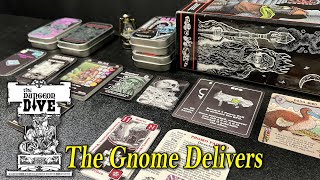
- seven new cards (all previously unreleased)
- new villagers to enhance deck-building
- three new enemies per wave and a new location
- defense against waves of enemies attempting to breach gates
- tower-defense style in a fortified city
- standalone expansion with new cards and wave-based threats
Mechanics (from transcript analysis)
- Combat — three new enemies for waves 1-3
- Deck Building — new starter card and villagers to add to the deck
- deck-building — new starter card and villagers to add to the deck
- deck-building / scenario expansion — new villagers and enemies expand deck and encounter options
Video topics + discussion points
Quotes (from this video)
- this is kind of a sneaky way of enticing people to buy all of your games
- I'm not cynical about that at all because this game comes with a whole bunch of stuff that I find useful
- Iron Helm I am super excited for because you get one old card and 20 new cards this is a really great expansion for Iron Helm
- Dust Runner is this little tin game, very much kind of a Mad Max Fury Road Style game where you are taking these little mini cars and trying to get from point A to point B before the bandits catch you and destroy your car or before it blows up from some unforeseen circumstances
- seven all new cards so none of these cards have been previously released
- you will get three new enemies for each of the Waves, right wave one two and three so we get the Gloom skull we get the swine witch and the claw bone
- this Oracle deck now this Oracle deck is really interesting because it's not really for any of his games you could probably use this to maybe add a little bit of an RPG feel to games like telm or what's the new one that's coming out 10 the Overland crawl I was a backer on that on the crowd sale on gamecrafter
References (from this video)

- Can be un-fun if one person gets a bunch of cards where they're really just punching down on other people.
- The whole game feels tight and restricting.
Mechanics (from transcript analysis)
- 4X — The description of the game is like, it's a 4X game.
- Take That — There's a good deal of take that in the game, really going after other players.
- Trading — A trading aspect in resources.
Video topics + discussion points
Quotes (from this video)
- It's just a game that I really wanted to like,
References (from this video)

- Rich, multi-layered decision space
- Highly replayable with intrigue and engine-building vibes
- Compact two-player experience with depth
- intrigue and social maneuvering to gain characters and victory conditions
- abstract worker-placement with classical theater vibe
- multi-route, tension between immediate victory and long-term scoring
Mechanics (from transcript analysis)
- area control / track advancement — Challenge for control of domains with varying rewards.
- card/tile bonuses and combos — Trigger powerful abilities and chain effects.
- Variable victory conditions — Balance immediate wins against scoring tracks and character collection.
- Worker Placement — Place workers across areas to gain actions and resources.
Video topics + discussion points
Quotes (from this video)
- Ink. Now, this game is a lot nicer than Azul, I would say.
- The second side is a little bit more thinky, a little bit more bite to it.
- This game is absolutely fantastic.
- If you're looking for a two-player game that has a little bit of everything, Gatsby's it.
- This is the first game of this type that I know of ... takes that concept and just adds a lot of things around it.
- This is a lifestyle game where like I didn't have any baseball cards when I played this.
References (from this video)

- Catch-up Games publishing track record
- novel take on Great Gatsby
- Designer Bruno Cathala tends to add unnecessary conflict
- Limited information available
- social climbing
- high society
- American literature
- Castle Combo
- Far Away
- The Loop
- Dinosaur Island
Mechanics (from transcript analysis)
Video topics + discussion points
Quotes (from this video)
- I'm not here to talk about that I'm here to talk about games
- catch-up games has been on fire
- I love his Cooperative design sensibilities
- how does this game not already exist
- I want more games that tell in 2025 a positive story about how we can work in unison with nature
- 2025 might be the year of co-ops
- pure Feld simple Elegance that leads to deep challenging decisions
- Coming of age is by far my number one most anticipated game
References (from this video)
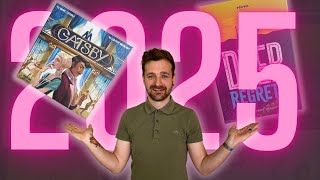
- Two-player efficiency with deep strategic layers
- Bruno Cathala-quality design and pacing
- Accessible yet highly strategic
- Some players may feel pressure from macro-level interaction
- economic action selection with opponent interaction
- two-player dueling withBruno Cathala's design flair
- clear, accessible mechanics with deep strategic depth
- Bruno Cathala games
- two-player duels
Mechanics (from transcript analysis)
- action selection — Players move their token to available spaces to take actions; timing and repercussions affect opponents.
Video topics + discussion points
Quotes (from this video)
- 2025 is shaping up to be the year of two-player games, and I am totally here for it.
- This is easily his best design to date.
- Stuper Mundy is the most Eurol looking Euro game you will ever see, but unbelievably interactive.
References (from this video)

- clever, subtle gameplay
- tight two-player interaction
- highly abstracted; low thematic pull
- no flashy moments or punchy highs
- abstract strategy with area tug-of-war
- 1920s-inspired world
- minimalistic, metaphorical
Mechanics (from transcript analysis)
- abstract strategy — clever but understated play without heavy thematic tie-in
- area control / tug-of-war — two-player confrontation over three regions with indirect competition
Video topics + discussion points
Quotes (from this video)
- This is a two-player head-to-head game set in the world of Gatsby, kind of. And you are, it's kind of a tug-of-war over three different areas. It's very abstract.
- Moonrise part is the sideboard with tiles that fill up and then they go to one of the players for victory points and then there's just more buildings.
- I recommend it for anybody who plays the game a lot. Though, again, the game is sort of the kind of game you buy at Target.
- This is a neat worker placement game played over two parts of the board on the moon and on the planet. You're trying to blast an asteroid coming.
- the cursing was a little over the top and unnecessary. It didn't really bring anything to the table.
- Star Trek Captain's Chair. Wow, what a game. Nine out of 10. This game takes Imperium, a deck building game, adds a Star Trek theme to it, and does a really good job in that regard.
- Very mass market kind of racing game. You're playing out cards whether you're moving your own ships or your opponent's ships.
- I came in at a six on this game. Ultimately, I did enjoy this as a trivia game. It's a marriage of trivia and blackjack, right?
References (from this video)
- high-energy, hilarious group experience
- great for streams or audience participation
- low-stakes, easy to pick up once explained
- requires a solid group size (4–8) to shine
- instructions can be a bit goofy and may overwhelm new players
- humorous, chaotic, caveman-inspired team game
Mechanics (from transcript analysis)
- asymmetrical information — one side controls the building objective while the other team tries to interpret cues and build accordingly.
- crane-sheet communication — players rely on simple, nonverbal cues and silly animations to relay orders.
- physical components — inflatable clubs and oversized blocks contribute to the tactile, noisy party vibe.
- team-based play — two teams compete with a designated leader (the 'UG') who directs tasks via a crib-sheet and characterful caveman cues.
Video topics + discussion points
Quotes (from this video)
- it's absolutely ridiculous
- this game is a riot
- Cosmic Encounter is a great game
- we're going to do a full playthrough
- come on by you can probably find us
- we'll be all over the board game floor
- I'm dying to get this to the table
- it's your video and our community
- we're getting down there Thursday night
- we want to meet you and play some games
References (from this video)

- Three distinct mini-games add depth without complicating the core
- Intrigue and tension with cat-and-mouse style gameplay
- Elegant action-selection mechanic with escalating goals
- Potentially heavy for a small two-player abstract; requires familiarity with multiple rules
- intrigue, area control, and strategic tension
- Two-player abstract strategy with multiple tracks and mini-games
- head-to-head competition with hidden information and layered objectives
Mechanics (from transcript analysis)
- Area/track advancement and bonuses — Players move along tracks to gain bonuses and progress toward victory conditions.
- Hidden information and tile interaction — Character tiles and tiles are revealed/activated with strategic timing.
- Multi-avenue action selection — Three mini-games provide different victory paths and interaction styles.
Video topics + discussion points
Quotes (from this video)
- The big Essen Spiel fair in Essen Germany is about to happen later this week.
- This one, in my opinion, is a better list, but it always gets less views than the other list.
- It's a simple easy game there but there's still a lot to think about.
- Gatsby is an amazing two-player 30-minute abstract strategy game.
- Mindbug orig is an amazing game. Now, it's my two-player game of the year.
- Take Time is fantastic.
References (from this video)
- Intrigue and tension driven by multiple routes to victory
- Two-player suitability with broad intrigue
- Can be complex for newcomers
- mystery, social maneuvering, tension between quick wins and points
- 1920s-inspired intrigue
- tension between immediate victory conditions and point scoring
- Abstract strategy games
- Other Bruno Cathala designs
Mechanics (from transcript analysis)
- area control / track progression — compete to gain advantages across different tracks and regions
- variable goals / scoring tension — decide whether to pursue immediate victory or longer-term scoring
- Worker Placement — players visit areas to gain characters, abilities, and resources
Video topics + discussion points
Quotes (from this video)
- it's basically like Where's Waldo the board game
- this is Mindbug, which is I've been touting for the last few years
- The twist is you're playing cards very simply
- Here's the best reprint: Wolf Street
References (from this video)

- Literary theme
- Two-player game
- Gaining Jay Gatsby's favor
- 1920s social scene
- Two-player competitive
Mechanics (from transcript analysis)
- action selection — Gain influence at different locations
Video topics + discussion points
Quotes (from this video)
- Family that games together stays together
- We're going to keep chugging along until there's no more board games to talk about
References (from this video)

- fantastic theme integration with replayable intrigue
- layered choices across tracks, edges, and character collection
- uber-high production values and satisfying tension between immediate and point-based goals
- complexity may deter pure light-gamers seeking quick filler
- intrigue, character-driven competition, multiple victory conditions
- loosely based on The Great Gatsby saga in a competitive, edge-edge world
- thematic, theater-like bluff and strategy
- Worker placement hybrids
- area control/title track games
Mechanics (from transcript analysis)
- abstract puzzle / area adaptation — board edges, circles, and tiles create a modular puzzle that changes each game.
- multi-path victory with immediate objectives — players may chase immediate win conditions or accumulate points via tracks and characters.
- worker placement / area control / track progression — players use various hubs to perform actions, gain characters, advance on tracks, and activate abilities.
Video topics + discussion points
Quotes (from this video)
- This is a very clean, classic feeling design that is very impressive that what they can do with just standard trick taking.
- It's a light game, but it's got a lot of sort of player interaction there.
- Enthroned is a fantastic clean game of bluffing, double bluffing, and intrigue.
- Iconheavy game, but lots of depth here for such a quick 20minute game in that Abyss lineup.
- Mindbug is blending King of Tokyo and Mindbug and it’s fantastic.
- Azul Duel deeper, deeper in three different ways.
- This next one is a straight up no luck logic and deduction game. And I love logic and deduction games.
- Gatsby is absolutely fantastic, my most anticipated for Gen Con. It lived up to the hype.
References (from this video)
- Strong integration of deck-building with a compact tower-defense conceit
- Tight mint tin design that nevertheless packs substantial gameplay
- Retro art and visual design enhance the game feel and portability
- Strategic depth in decisions about enemy targeting and fear management
- Hero cards can be unpredictable and may clog the hand
- Limited variety due to mint tin constraints; long-term replayability can feel constrained
- Setup and rule readability suffer from the tiny components and mixed-in rule cards
- Some issues with balance and order of hero cards affecting difficulty
- tower defense flavored by deck-building mechanics
- Medieval/fantasy village under siege; gate as the last defense
- light, tactical rather than narrative-driven
- Gates (expansion)
Mechanics (from transcript analysis)
- Deck Building — Players build a personal deck from market cards and use its symbols to perform actions each turn.
- deck-building — Players build a personal deck from market cards and use its symbols to perform actions each turn.
- fear track / inspiration — Fear rises as monsters threaten townsfolk; reaching milestones triggers effects and can bring in hero cards.
- market and commands — Coins purchase new recruits and defensive actions; command cards convert two coins into one action type per turn.
- Multi-Use Cards — Each card can be played for only one symbol per term, creating choice and tension in play decisions.
- Resource Management — Coins pay for purchases and repairs; managing repairs helps keep the gate and defenses intact.
- resource management and repairs — Coins pay for purchases and repairs; managing repairs helps keep the gate and defenses intact.
- restricted card usage per turn — Each card can be played for only one symbol per term, creating choice and tension in play decisions.
- tower defense element — The gate is the central defense; monsters attack the gate and may cascade damage if not managed.
Video topics + discussion points
Quotes (from this video)
- I'm generally impressed with what Gate is able to do
- the constraints of a mint tin are very very tight and there is a whole lot of game in here
- kudos for a really good design
- hero cards are a major issue
- I think it's a great game
- the mint tin constraint might have been a little too constraining for a game design that maybe needs a little more room to run