/pic6399596.jpg)








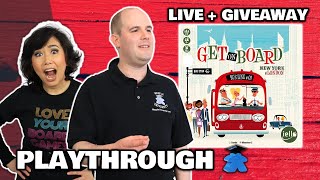

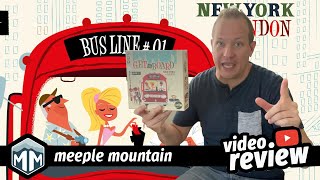

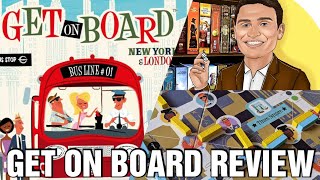

Get on Board: New York and London Deep Dive
What the Community Thinks About Get on Board: New York and London
Get on Board: New York and London has become a beloved flip-and-write that delights newcomers and experienced gamers alike. Chairman of the Board praises how much depth it packs into a game he can play anytime, anywhere, while Foster the Meeple calls it the sweet spot among route-building flip-and-writes. Reviewers consistently highlight its elegant simplicity paired with surprising strategic tension. Designed by Saashi and published by IELLO as a reimplementation of Let's Make a Bus Route, it plays quickly yet rewards careful planning, making it a standout in the route-building genre.
Core Mechanics That Define Get on Board: New York and London
Flip and Write With Route Building
The core loop is refreshingly straightforward. Each round, a card is revealed showing which path shapes every player may draw, and players lay wooden track pieces matching that shape onto their personal city boards. What makes this feel fresh is how constraint and freedom work together. You can only place the shapes the cards dictate, yet the map is large enough that real choice exists about where to route your buses. Chairman of the Board notes that the game stays wonderfully simple while still presenting genuinely interesting ideas in how the routing actually plays out.
Compound Scoring Through Passenger Combos
Scoring is where the game shines. Players pick up passengers, including grannies, students, tourists, and businessmen, by running routes through the right icons. The brilliance is how these pieces interact: tourists score when reaching landmarks, businessmen score at skyscrapers, students multiply by the schools you visit, and grannies simply accumulate as you collect them. Chairman of the Board stresses that doing this at the right time is crucial, since you must collect passengers before reaching their destinations. This ties the route building and the scoring together, forcing players to think about sequencing rather than gathering points at random.
The Get on Board: New York and London Experience
Tension and Pacing Under a Short Clock
With only a fixed handful of card draws, every turn matters. This creates constant tension between pursuing your private objective card, a specific sequence of locations worth bonus points, and chasing public objectives that reward the first player to reach them. Foster the Meeple appreciates that the game sits in a sweet spot where the combos stay digestible rather than spiraling out of control, which keeps the short clock exciting instead of overwhelming. Before you know it you are halfway through the game, forcing aggressive optimization of every placement.
Shared Board Interaction and Traffic Management
Unlike many multiplayer-solitaire flip-and-writes, Get on Board features a shared city where players can occupy the same streets. This creates organic interaction, since sharing a road incurs traffic penalties, incentivizing players to claim undeveloped areas. Some zones are always congested, so avoiding them is appealing, but sometimes the points justify the hit. Players can also transform a shape to escape a dead end, though leaning on that option too often accumulates penalties. The result is a constant risk-reward calculation that makes the game feel less isolating than many titles in the genre, since players genuinely affect one another's options.
What Makes Get on Board: New York and London Stand Out
Elegant Design With Strategic Variety
The game offers multiple viable scoring paths without forcing any single one. You can chase big multipliers through students and schools, bank steady granny points, pursue public objectives for quick bonuses, or commit to your secret goal. Because the card draws are fixed and shared, different players naturally specialize based on where their routes take them. Chairman of the Board praises how much there is to consider even though the core action stays ultra-simple: flip a card and add to your track. The double-sided board also scales well, with the tighter New York side suited to fewer players and the London side to more.
Minimalist Aesthetic and Quality Production
The charming, stripped-back cartoony look gels neatly with the mechanisms. The board is high quality and double-sided, allowing setup choices based on player count, and the wooden track pieces feel satisfying to place even if they can get slightly fiddly in convoluted areas. Each player sheet includes different line variations so players are not solving identical puzzles. Reviewers single out the clean, simple presentation as a strong fit for a game that aims to be quick, approachable, and endlessly repeatable.
Potential Drawbacks
Limited Solo Support
The New York and London edition does not include a dedicated solo mode, which limits its utility for players who game primarily alone. Players seeking a deeper competitive challenge may also find the mechanics relatively light compared to heavier euro-games, though that restraint is clearly by design rather than oversight.
Wasted Moves and Planning Risk
Because the card draws are shared but not under any one player's control, it is possible to collect passengers without reaching their destinations, wasting movement and points. If you load up on tourists and businessmen early but do not draw the shapes to reach landmarks before the game ends, those points vanish. This rewards adaptability but can punish rigid long-term planning, though the short length and quick reset soften the sting.
If You Enjoy Get on Board: New York and London
Players who love this game should explore other route-building and flip-and-write titles. Let's Make a Bus Route, the original design this reimplements, refines the same core concept. Welcome To offers similar pick-and-write elegance through neighborhood planning, and Cartographers shares the satisfying map-marking loop with grid-based strategy. For a lighter spatial puzzle with comparable accessibility, Railroad Ink delivers route drawing with dice-driven prompts. The sweet spot of light yet thoughtful play is what makes Get on Board special.
What Reviewers Are Saying
"I love the variety of different ways the game can score. Are you going to focus on the grannies and get straight up points, or the tourists and the businessmen? You can build up a lot of points, but doing so at the right time is important, because you don't want to start visiting all the landmarks and skyscrapers before you actually collect the pedestrians in the first place. Getting things in the right order really blends the route building and the scoring together in a very nice way."
— Chairman of the Board
"For someone like myself who has played a ton of roll and flip and writes, this one is right in the sweet spot for me, because some of those bigger grandiose ones with so many combos, I end up losing track of what's going on. This one felt pretty light and straightforward where the combos didn't go crazy. I love pickup and deliver and I love route building, so this one scratched that itch for me."
— Foster the Meeple
"This is a really nice one. It's definitely a game that I play anytime, anywhere. Lots of depth, very simple rule sets, and the quickness of the draft is much nicer in this one."
— Chairman of the Board