/pic5841874.jpg)




















Glen More II: Chronicles Deep Dive
What the Community Thinks About Glen More II: Chronicles
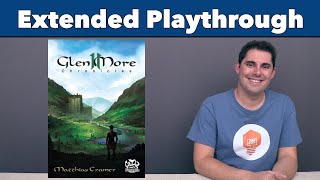
Glen More II: Chronicles stands as one of the most celebrated tile placement games in modern tabletop gaming, consistently earning praise from board game reviewers and enthusiasts worldwide. The game's elegant design, engaging time track system, and deep strategic possibilities have made it a fixture in collections of experienced gamers. Designer Matthias Cramer achieved something that had eluded many predecessors: a time track system that actually incentivizes aggressive, exciting decision-making rather than forcing players to crawl methodically around a track.
Core Mechanics That Define Glen More II: Chronicles
The Rondel and Time Track System
At Glen More II: Chronicles' heart lies the rondel mechanism, where players advance a pawn around a circular track as far as they wish to claim tiles. The brilliance emerges in the turn order system: whoever is furthest behind always takes the next turn, creating a push-your-luck dynamic that feels fresh even after dozens of plays. Players can jump halfway across the board to snag the exact tile they want, knowing they might give multiple opponents turns before acting again. This creates an elegant tension between greedy advancement and strategic patience. The game doesn't penalize aggressive play harshly; instead, it rewards those who carefully balance when to rush ahead and when to hold back, letting opponents take numerous quick turns while the board refreshes.
Tile Activation and Cascading Effects
Placement and activation form the second pillar of gameplay. When a player places a tile into their personal territory, they immediately activate that tile, plus every orthogonally and diagonally adjacent tile they control. This creates satisfying cascades of effects as a well-placed building generates resources, converts them, and triggers adjacent locations. The river mechanic adds spatial constraint: rivers must connect to previous river tiles, forcing players to plan their territories with care. Every decision about where to build shapes future possibilities, encouraging long-term strategic planning alongside immediate tactical choices.
The Glen More II: Chronicles Experience
Economy and Resource Conversion
Glen More II: Chronicles excels at resource management where players acquire raw goods like wood, stone, and barley, then convert them into more valuable commodities. A whisky distillery, for example, transforms barley into casks worth points. The market system allows buying and selling at prices that fluctuate based on demand. Coins earned from sales become victory points at game's end, making even peripheral economic decisions meaningful. This interlocking system means players feel genuinely rewarded for smart trading and penalized for poor resource management, yet the game never becomes punishing if luck turns against someone.
Multiple Paths to Victory Through Landmarks and Scoring
The game features four distinct scoring rounds, each measuring different categories: the number of clansmen stationed in home castles, landmark cards collected, whisky casks produced, and person tiles acquired. This ensures multiple viable paths to victory. A player focused on whisky production scores differently than one investing in clan board activations, yet both can achieve high scores. The landmark cards themselves offer ongoing abilities, from movement point conversion to passive bonuses, providing both mechanical variety and long-term planning opportunities.
What Makes Glen More II: Chronicles Stand Out
Modularity Through Chronicle Expansions
Perhaps the game's greatest innovation is its modularity through eight Chronicle modules that introduce new mechanics sequentially across campaigns. Each module arrives with fresh components and rules that expand the design space without overwhelming players. This structure allows groups to discover the game's depth gradually, making Glen More II: Chronicles accessible to newer gamers while offering veterans fresh strategic challenges. The campaign framework transforms what could be a static experience into an evolving journey where each session builds on previous lessons.
Brain-Burning Strategic Depth
Despite its relatively clean ruleset, Glen More II: Chronicles demands thoughtful play from experienced strategists. The interplay between the time track, tile placement restrictions, resource conversion chains, and multi-round scoring creates genuine decision space. How far ahead should you advance on the track? When is it right to sacrifice coins for immediate actions versus saving for conversions? Which tiles synergize with your existing territory? These questions have no single right answer, and different game states reward different approaches.
Potential Drawbacks
Analysis Paralysis Potential
The depth that makes Glen More II: Chronicles rewarding for strategists can slow games when players overthink decisions. The cascading activation system means carefully calculating which tile placement generates the optimal resource sequence, a task that grows more complex as territories fill with interconnected buildings. Experienced players can manage this analysis, but the game does not naturally force faster play. Groups accustomed to quicker, lighter games may find the decision space daunting initially.
Player Count Variance
The game's pacing and strategic considerations shift with player count. In three-player games, opponents take turns frequently, making it harder to plan multiple turns ahead. In four-player games with all expansions, turns between actions can feel long. The game handles both counts well mechanically, but the play experience differs meaningfully. New players with large groups might find themselves sitting idle longer than comfortable.
If You Enjoy Glen More II: Chronicles
Fans of Glen More II: Chronicles typically gravitate toward other Matthias Cramer designs and tile placement games that reward spatial planning. Grand Austria Hotel and Great Western Trail appeal to the same design sensibilities, though each approaches euro-style complexity differently. Those who love the time track mechanism should explore Orleans and Terra Mystica, which use similar player order mechanics to create tension. Gaia Project provides comparable strategic depth with area control elements in a space-themed setting.
What Reviewers Are Saying
"My favorite pure tile placement game with the best implementation of the time track system where you can go as far as you want, but you don't get another turn until the other players catch up with you. No game does it better than Glen More II: Chronicles."
— Chairman of the Board
"Glen More II: Chronicles is a sequel released in 2019 designed by Matthias Cramer where you're using a Rondel and advancing as far as you would like to build out your tableau with tiles adding farming type resources like wheat and cattle and then using those to trade for goods and points. The Rondel I think makes this game feel unique."
— The Board Gaming Doctor
"It's got elegant tile-laying with clean tension and accessible depth. Clear thematic flavor and satisfying spatial planning. The way the time track works where you can go as far as you want but everyone else gets to go before you come back around, that's what makes the whole thing tick."
— The Brothers Murph