/pic1728832.jpg)
Game Info
Players
2
Age
8+
Playtime
90 min
Collection
Ratings
Creator Score
Mechanic profile
Percentile rank vs. all games
Vibe profile
How this game feels to play
Description
By all appearances, Go is just two players taking turns laying stones on a 19×19 (or smaller) grid of intersections. But once its basic rules are understood,Go shows its staggering depth. One can see why many people say it's one of the most elegant brain-burning abstract games in history.
Players place one stone at a time on the board at an empty intersection. The goal of the game is to try to claim the most territory by walling off sections of the board and surrounding or capturing each other's stones. The game doesn't end until the board fills up, or, more often, when both players agree to end it, at which time whoever controls the most territory wins.
Featured Videos

Rules Teach

Wrath Of Ashardalon - Game Play 10

Unboxing

Spiel 2025 Pickups! LIVE & tired!
Ask a Rules Question
All mentions
Browse transcript mentions, sentiments, pros/cons, mechanics, topics, quotes, and references.
Total mentions: 109
This page: 50
Sentiment:
pos 24 ·
mix 5 ·
neu 4 ·
neg 4
Showing 1–50 of 109
Video 1Wbmtp9JAJ4
TheGameBoyGeek - Hi Quality Hi Energy Board Game Reviews Top List at 18:25 sentiment: positive
video_pk 142938 · mention_pk 406253
Click to watch at 18:25 · YouTube ↗
Overall sentiment (raw)
positive
Pros
- Extremely old and historically significant
- Simple rules but immense strategic depth
- AI took decades longer to master than chess
Cons
- Host has never played it
- Difficult to find people who play it casually
Thematic elements
Comparison games
- Chess
Mechanics (from transcript analysis)
- abstract strategy — A game with no theme, focusing purely on strategic play.
- Area Control — Players surround territory to win.
- Capture — Stones are captured when they have no liberties (adjacent empty intersections).
- placement — Players take turns placing stones on intersections of a grid.
Video topics + discussion points
No key topics recorded for this video.
Quotes (from this video)
- Are there any games that you're embarrassed to tell your game group that you have never played?
- I've been making videos for over 12 years about board games. I have over 3,000 videos, and I've played roughly 2,000 different board games. And there's still some that I am embarrassed that I have not yet played.
- This has been a mechanism that has sort of seen a renaissance lately.
- It's a two-player game simulating the 45-year dance of intrigue, prestige, and occasional flares of warfare between the Soviet Union and the United States.
- It made roll selection such as traders and builders a popular mechanism as well as the follow mechanism.
- From a rules perspective appears to be very simple, but it has a board gamegeeek weight rating of 3.91
- It's one of those lifestyle games kind of like chess that people play chess, most of them play chess and nothing else.
References (from this video)
No references stored for this video.
Video p3kObLvixxM
Game Night Picks - Pair Of Dice Paradise Analysis at 3:03
video_pk 125359 · mention_pk 358983

Click to watch at 3:03 · YouTube ↗
Pros
none
Cons
none
Thematic elements
Comparison games
none
Mechanics (from transcript analysis)
Mechanics unknown.
Video topics + discussion points
No key topics recorded for this video.
Quotes (from this video)
- Oh, my brain's hurting.
- Churm. Gross.
- the granddaddy of modern board gaming era.
- The game that has sold more games than any other game out there.
- Go is from thousands of years ago.
- So so so let's let's up the ante for ourselves.
- Okay, Mr. Historical Trivia Box.
- That's a little bit '80s.
- Board Game Geek That's an interesting thing because we're talking about their YouTube channel not the website.
- That guy.
- Sneaky move there Matthew.
- My list is conceptual.
- Oh, this is tough.
- I don't know We talk about when board games came out, you know, that is an active conversation. I don't know that I've ever heard anybody talk about the year a convention started.
- the biggest board game convention in the world, and I have no idea when it started.
- Were you aware that that existed?
- Shut up and sit down Expo.
- I keep hearing really good things about. I'd like to go at some point.
- The World Series of Board Gaming did indeed begin in 2022.
- That's a That's unpleasant to hear.
- Well, your your history trivia expertise paid off there in spades at the end.
- That was a close one. That was a close one. We've had a few like uh blowouts here. That was a real close one there.
- it was a nail-biter.
- I'm realizing that no, we didn't.
References (from this video)
No references stored for this video.
Video VmgSUTTaGSk
The Board Game Garden Review at 22:21 sentiment: positive
video_pk 105367 · mention_pk 303795

Click to watch at 22:21 · YouTube ↗
Overall sentiment (raw)
highly positive
Pros
- wonderful
- relaxing
Cons
none
Thematic elements
Comparison games
none
Mechanics (from transcript analysis)
Mechanics unknown.
Video topics + discussion points
No key topics recorded for this video.
Quotes (from this video)
- Realm of Reckoning is fantastic.
- The moment that I heard that one of the mechanisms is close drafting, immediately I was like, yes, let's play this.
- You are building up a tableau and then you are scoring in different ways based off of the game and what people decide to score and yeah just such a cool game.
- Recommend uh Realm of Reckoning.
- This is a tile placement game that I played in Edmonton that I really enjoyed.
- Absolutely loved it.
- One of my top games for the month of June.
- This is another tableau building, hand management game that I absolutely loved as well and was quite a big surprise to me that I enjoyed it as much as I did.
- Gen Con is officially 2 weeks away when I am filming this.
- If you guys are going to Gen Con and you see me wandering the halls, definitely come up and say hello.
- I'd love to meet you.
- I've been very, very excited for that part of Gen Con.
- I am just overall very excited to get back to Gen Con this year.
- I am very, very excited for that part of Gen Con.
- I've been recently getting more into the Pokemon TCG, and honestly, just TCGs in general.
- I'm really wanting to get back into Magic, Pokemon, TCG, Lorana as well.
References (from this video)
No references stored for this video.
Video zJ6Rl_cD7Ek
Board Gaymes James Top List at 16:18 sentiment: other
video_pk 104154 · mention_pk 300582
Click to watch at 16:18 · YouTube ↗
Overall sentiment (raw)
Highly recommend
Pros
- Very good game
- Light
- Plays real quick
Cons
none
Thematic elements
Comparison games
none
Mechanics (from transcript analysis)
- Deduction — Trying to figure out what your numbers are by asking other players to position a number that you flipped up into the center into the thing.
- Set Collection — Trying to cross off the numbers to figure out what your number is.
Video topics + discussion points
No key topics recorded for this video.
Quotes (from this video)
- This is probably my contender for a game of the year kind of thing.
- It is a reprint though which feels like cheating.
- Very very good game. Highly recommend.
- Very light plays real quick.
- Gashapon trick is really cool.
- This is a really cool game where you actually want to leave gaps in your tile lane because when you leave gaps you're going to put in more pieces that are going to give you scores.
- I love Bruno's games.
References (from this video)
No references stored for this video.
Video IbThWhI6RI8
The Dice Tower Review at 0:07 sentiment: mixed
video_pk 100792 · mention_pk 279983

Click to watch at 0:07 · YouTube ↗
Overall sentiment (raw)
mixed
Pros
- Beautiful pieces
Cons
- The theme hurts the game due to shape and thematic disconnect.
- Doesn't stand out from other games with similar mechanics.
Thematic elements
- Fish and sharks eating each other
Comparison games
none
Mechanics (from transcript analysis)
- abstract strategy — Described as a two-player abstract game.
- Area Control — Players aim to build a chain of 10 fish and sharks to win.
- Capture — Sharks eat opponent's fish.
- Set Collection — The goal is to create a chain of 10 pieces.
Video topics + discussion points
No key topics recorded for this video.
Quotes (from this video)
- It's a six out of 10, unfortunately, for me.
- I think in this case the theme hurts it a bit.
- There's a lot of games that do this sort of thing, and this one doesn't seem to stand out
References (from this video)
No references stored for this video.
Video qEbHptdPYI0
The Dice Tower Event Coverage at 4:04 sentiment: neutral
video_pk 99359 · mention_pk 276751

Click to watch at 4:04 · YouTube ↗
Overall sentiment (raw)
neutral
Pros
none
Cons
none
Thematic elements
Comparison games
none
Mechanics (from transcript analysis)
Mechanics unknown.
Video topics + discussion points
No key topics recorded for this video.
Quotes (from this video)
- And so I wanted to go over in this video some of the things that we are doing there so that you can come by and see us.
- Come by our booth. It is 249 in the exhibit hall.
- If you see me walking around, you see Dice Tower people walking around, stop us to say hi.
- Well, good news, we're putting up a Gen Con blog.
- I'm Tom Vasel and you're watching The Dice Tower heading to Gen Con 2026.
References (from this video)
No references stored for this video.
Video RTcVbs6zsHs
BoardGameGeek Top List at 7:16 sentiment: neutral
video_pk 98381 · mention_pk 273176

Click to watch at 7:16 · YouTube ↗
Overall sentiment (raw)
neutral
Pros
- Very simple to learn
- Deep tactical strategy and positioning
- Classic game with historical significance
Cons
- Host has never played it
- Host anticipates being destroyed by opponents due to lack of skill in abstract strategy games
Thematic elements
- abstract strategy, territory control
- Ancient China
Comparison games
- Chess
- Backgammon
Mechanics (from transcript analysis)
- abstract strategy — A game focused on pure strategy with no thematic elements beyond the basic setup.
- Capture — Stones can be captured by completely surrounding them.
- territory building — Players gain points by surrounding areas of the board with their stones.
Video topics + discussion points
No key topics recorded for this video.
Quotes (from this video)
- We are ashamed of a few that we haven't played.
- It's dead simple. It's super quick. People love for sale. And I've never played it.
- Truly shameful that we haven't played it [Tigris and Euphrates].
- Weird that we've never played considering how many other kind of related games around this that I really, really love. And this is going to be Agricola.
- From what we hear from many, many, many people is this is like the ultimate solo game. For so many folks, this is their favorite game to play solo. [Mage Knight]
- It's weird that we have it. We love these games. We literally have it. We got to get Terramisk to the table.
- Again, it's easy to get caught up in the new hotness, but those classics are classic for a reason, right?
References (from this video)
No references stored for this video.
Video bIw6hVUjHEc
Watch It Played Discussion at 3:49
video_pk 92402 · mention_pk 248324
Click to watch at 3:49 · YouTube ↗
Pros
none
Cons
none
Thematic elements
Comparison games
none
Mechanics (from transcript analysis)
Mechanics unknown.
Video topics + discussion points
No key topics recorded for this video.
Quotes (from this video)
- we are just over 80% of our funding goal and I have to just say a huge huge thank you
- you know this past week on Tom bassel's board game breakfast episode he talked about the value of encouraging media creators and people doing things in the hobby that you enjoy and appreciate and I have certainly felt that this week
- if you haven't already consider donating the minimum $5 but by law I have to make this available everyone unless I want to go through all kinds of rig rolles of getting licenses and other things which I don't want to do it's just a game giveaway
- he is one of the nicest guys you're going to meet in this industry and he's been a real advocate for watchet plate he values what we're doing here
- I have to say this is kind of a crazy time to be running a fundraiser
- listen if our release schedule for videos is a bit sporadic for the next probably four weeks I apologize for that I assure you you guys have given me every reason to be throwing every last bit of energy into watch it played and I have been doing that but it's just not man esting itself in videos being released right now aside from these updates
References (from this video)
No references stored for this video.
Video UaGT-eIU5eg
Watch It Played Review at 0:26 sentiment: positive
video_pk 92129 · mention_pk 247425

Click to watch at 0:26 · YouTube ↗
Overall sentiment (raw)
positive
Pros
- Adorable and fun
- Impressive display with prepainted miniatures
- Miniatures are characterized and have personality
- Engaging and highly laughable
- Encourages cooperation
- Everyone is involved
- Creates memorable moments
- Can be as wild and fun as desired
- Beautiful and breathtaking art
- Funny cards with unique illustrations
Cons
- Some challenges can make the throw difficult
- Having all balloons popped triggers the end game, which is negative
Thematic elements
- achieving challenges to move up levels to the top of the sky
Comparison games
- Dixit
- Samurai Spirit
Mechanics (from transcript analysis)
- Betting — Players not actively participating in a throw can bet on the success or failure of the hurler, earning or losing tokens based on their prediction.
- cooperative play — While there are challenges, the game encourages cooperation between the hurler and skewer to succeed and gain rewards.
- Dexterity Challenge — Players take turns as the 'hurler' and must try to place a ring on a skewer (finger), with various cards imposing restrictions on how they can do this, such as covering an eye or using a different finger.
- Role-playing — Players can take on roles like 'hurler', 'skewer', 'assistant' (who directs the hurler), and 'turbulator' (who tries to hinder the throw).
Video topics + discussion points
No key topics recorded for this video.
Quotes (from this video)
- It's probably one of the most adorable and fun games I've ever seen and had the opportunity to play.
- It really creates quite an impression on the table.
- It's really, really engaging and it's highly, highly laughable game.
- Marie's art is absolutely beautiful, I mean it just, it's breathtaking to me.
References (from this video)
No references stored for this video.
Video hwpSQbHxK7o
3 Minute Board Games Top List at 0:27 sentiment: positive
video_pk 91703 · mention_pk 246082

Click to watch at 0:27 · YouTube ↗
Overall sentiment (raw)
positive
Pros
- Really neat environmental theme and carbon credit trading
Cons
- Not getting the second edition because a friend who is an expert owns it
Thematic elements
- Environmental theme and carbon credit trading
Comparison games
none
Mechanics (from transcript analysis)
Mechanics unknown.
Video topics + discussion points
No key topics recorded for this video.
Quotes (from this video)
- hello and welcome to games that left my collection in 2018 this is a list of 10 games I've gotten rid of over the last year or so
- not every game needs to stay in your collection especially not if you found a game that does much the same thing only a lot better for you
- I don't have to be the one that owns everything I don't have to be the person in the group that owns every single game other people can own games and I can borrow them off them that's fine that's great
- it's actually quite neat for other people in your group to go actually this is the game I want to own I want to add this to my shelf and for you to go cool you you get that one that's awesome I don't need every single game
- the app absolutely killed my interest in playing this as a solo on the tabletop or as a multiplayer game
- all I could think was this is an improved version of Arkham Horror wow I must be totally out of line with what everyone else is thinking because I'm not enjoying this at all
- it really bugs me when the optimal way to play someone is so utterly boring
- one thing that drove me up the wall was when a character would be at one location discover a clue but then anyone could act on it so if you were on the opposite side of the map you could go and complete that assignment and it just didn't make any sense to me
- Foreclosed is just rubbish
- you either have to play down so people can learn the game or you play your ability and people just get stomped
- it's just because the groups I play with if they want that hidden Trader experience they're going to play Battle Star Galactica and shadows of Camelot just occupied much of the same space
- no game is for everyone and Through the Ages is not for me
- it's just such a time consumer there's so much fiddling around with cubes and the game just has a heck of a lot of downtime when it's someone else's turn
- my only real regret with this one is that I got rid of it just before I started the channel because despite my reservations with the game I think it's one that would do quite well as a 3-minute recap
References (from this video)
No references stored for this video.
Video 0kjvqZ2z2VQ
Meeple University Analysis at 4:27
video_pk 90849 · mention_pk 243179
Click to watch at 4:27 · YouTube ↗
Pros
none
Cons
- it's not for me i really would if it's going to be semi-cooperative it should be easily relatively easy
Thematic elements
Comparison games
none
Mechanics (from transcript analysis)
Mechanics unknown.
Video topics + discussion points
No key topics recorded for this video.
Quotes (from this video)
- semi-cooperative it's a word that's thrown around quite a lot and we're going to talk about what it means and the different things it can mean coming up
- for me i think when i think semi-cooperative my first instinct is a game that has a common lose condition for all players where the players need to do some sort of some level of cooperative work or some level of work which doesn't necessarily benefit their game that much to make sure that someone can win
- for it for me for it to work as a semi-co-op it needs to be not that hard to cooperatively win the game like if you were to play the game cooperatively it should be too easy
- it's not strictly a traitor game but it's it kind of plays like that that's the other yeah like that there's also a game where it's it's cooperative but then there's a point or something system that if you reach the most point then you win or you know i can't think of a game i have played it i just can't think of it
- you can have a game with a semi-cooperative element but it doesn't make it semi-cooperative
- they're a tough balance there's definitely i've had a lot of bad experiences playing semi-co-ops that just didn't balance right
- unless you know how competitively to play it where does where to be on the spectrum of co-op and competitive um you could just not have the experience that the game was intended to be at all
References (from this video)
No references stored for this video.
Video JJYca04yRq0
Watch It Played Analysis at 5:25
video_pk 90362 · mention_pk 241363
Click to watch at 5:25 · YouTube ↗
Pros
- similar to chess
Cons
none
Thematic elements
Comparison games
none
Mechanics (from transcript analysis)
Mechanics unknown.
Video topics + discussion points
No key topics recorded for this video.
Quotes (from this video)
- do miniatures really enhance the board game experience
- chess is a culture untowards itself
- flgs mean
- well very simply flgs stands for friendly local game store
- if that person does not want to play any ball games don't force them
- all your games are more complicated than you think they are
- tailor that experience to that person is my suggestion
References (from this video)
No references stored for this video.
Video NKwoDt0ihBQ
Getting Games Discussion at 34:28 sentiment: positive
video_pk 89789 · mention_pk 239064
Click to watch at 34:28 · YouTube ↗
Overall sentiment (raw)
positive
Pros
- minimalistic line-art style
- neat two-player concept
Cons
none
Thematic elements
Comparison games
none
Mechanics (from transcript analysis)
- reveal and switch — two-player strategy with reveal and switch mechanics and placement of cards
Video topics + discussion points
No key topics recorded for this video.
Quotes (from this video)
- it's a relatively lightweight card game
- looks very pleasant
- i would love to try at some point
- aesthetically pleasing vibe
- i'm genuinely curious to learn more about this
References (from this video)
No references stored for this video.
Video vBJoqNrxyeo
Getting Games Discussion at 10:18 sentiment: neutral
video_pk 88458 · mention_pk 233187

Click to watch at 10:18 · YouTube ↗
Overall sentiment (raw)
neutral
Pros
none
Cons
none
Thematic elements
Comparison games
none
Mechanics (from transcript analysis)
Mechanics unknown.
Video topics + discussion points
No key topics recorded for this video.
Quotes (from this video)
- I have a monstrous shifting shelf
- nine games leaving the collection
- there are 19 new games that arrived this month
- I backed it on Kickstarter and apparently I backed it for a level that also got me Deep Dive
- Founders is a Thailand game
- bone race essentially
- this is going to be four videos coming out that week
References (from this video)
No references stored for this video.
Video kIsOmI6J7vg
Getting Games Discussion
video_pk 88349 · mention_pk 293624

Pros
none
Cons
none
Thematic elements
Comparison games
none
Mechanics (from transcript analysis)
Mechanics unknown.
Video topics + discussion points
No key topics recorded for this video.
Quotes (from this video)
- it's just a really exciting experience to pitch these games
- Jessica did all of the graphic design
- I believe in these games
- I don't think I'm ever going to make money off of these maybe I will who knows
- Spiel felt like Disneyland for five days
References (from this video)
No references stored for this video.
Video V3pnLjyZNpY
UndeadVikingVideos Discussion at 1:23:05 sentiment: other
video_pk 88258 · mention_pk 232303
Click to watch at 1:23:05 · YouTube ↗
Overall sentiment (raw)
Searching
Pros
none
Cons
- Original edition not found.
Thematic elements
none
Comparison games
none
Mechanics (from transcript analysis)
Mechanics unknown.
Video topics + discussion points
No key topics recorded for this video.
Quotes (from this video)
- the early 1990s saw a temporary craze with the release of the Super Soaker
- I went racing out the garage door the garage door had one of those doors that like you know the the The Swinging like door with the spring and everything like that and I was so excited and I was I was leaving the door sland and broke the barrel off one and I was so mad
- Sour grapes is a comedy about things that aren't funny
- Sour grapes however is tone deaf
- I lost a bet and had to go to that movie it was horrible
- Shot glass is correct
- Spice Girls is correct
- Sugar Hill G
- Suicide Girls nice
- I like it better I think than Clash Royale it's it's good worth a try
- The Escapist team put their heart into every piece of work we put out and the talent brought in was UNM the kind of talent isn't cheap and my mission with The Escapist was to not be driven primarily by views but by direct funding through premium memberships and live streams
- he went on some show and went did an interview that basically probably added like 20 years to his sence
- Elizabeth Holmes finally went to jail right did
- you know all of them are going to be it's with AI art now like none of these people that are like you know just they're not going to pay for they're just going to AI art all of their
- if you plead guilty you going to jail for 40 to 50 years you might as well try to have the trial you might get off right
- Seven years of college down the drain I might as well go join the peace score
- the bench isn't wasn't actually there though they moved it
- he was a comedian from Houston
- they basically just have it listen to every single thing that he sung or said and you just take the sounds that's all it is
- The Smoking Gun that was a website
- It's got $225,000 Canadian though
- he said he was let go for not achieving goals that were never properly set for us
- we were given unattainable goals in a very short amount of time
- I won't be taking Zero Punctuation name with me but fans would hear my voice again soon in a new place
- my mission with The Escapist was to not be driven primarily by views but by direct funding through premium memberships and live streams
- I'm pretty hyped for the next yatsi drop not gonna lie
- it's always good like you know you fall down internet rabbit hole and like watch his videos
- it's like it's like him I really like Norm Mitch Hedberg always made me laugh
- it's like they said um we have that audio to play here they say the audio you're listening for you have to listen carefully it's after the third shot and you hear this cow and then no no no it's like kapow then it's like and it's like now here it's right for the third shot and you hear this kapow
- yippe Jerry Ruben died oh I'm sorry that should be yippi Jerry Ruben died
- The curse of the doors
- it's like a slice a life thing you know
- Seven years of college down the drain I might as well go join the peace corps
- the fingers are mostly they're not completely fixed but they're they're a lot better
- he didn't listen to anybody he didn't listen to his lawyers
- turns out turns out it was he
- she's in prison for serving an 11 year three month sentence for the wire fraud
- the victims of the fraud were like giant companies
- when she's making license plates you know that's a lot of license plates
- The actor strike oh yeah
- you guys are going to do for parking
- it's a 30 foot tall realistically rendered fiberglass sculpture of a human eyeball
- I don't think there's anything about I mean it's part of the the lore
- I must told you yeah basically we sat in a room for two three hours and then left done nothing
- The judge that came in and swore us all in threaten to throw somebody in jail
- you basically lied I was I was unknowingly
- so when the cop pulled you over um there were open beers in your car he said yeah he's like but I was he's like and you were outside a bar he's like yeah he's like and you're 19 I was like yeah he's like were you in the bar he's like no I got a call my friends had been drinking and they said they needed to ride home so I went to go pick him up and I should have checked him
- the thing that John balushi does in that scene was not in the script
- Everything is within walking distance if you have enough time
References (from this video)
No references stored for this video.
Video 2wOBFvN0Vto
UndeadVikingVideos Discussion at 1:20:43 sentiment: negative
video_pk 88088 · mention_pk 231269

Click to watch at 1:20:43 · YouTube ↗
Overall sentiment (raw)
negative
Pros
none
Cons
- Container was unloaded on December 11th
- Will post an update as soon as it starts going
Thematic elements
- fantasy
Comparison games
none
Mechanics (from transcript analysis)
Mechanics unknown.
Video topics + discussion points
No key topics recorded for this video.
Quotes (from this video)
- the most gamery one I did was definitely Blood on the clock tower
- welcome to time Jinx you know we almost called this the dating game but they sent us a cease and desist
- the outlier doesn't know they're the outlier it could even be you so think about whose answers don't quite fit or seem a bit odd then on your device vote for whom you think the outlier most likely is
- the curtain for hypnot is about to go up you'll love it there's hypnosis and people thinking they're cartoon characters or inanimate objects then they have to figure out each other's identities laugh Riot
- sadly it was a bunch of you know get this old white men that weren't all that excited about the fact that there was a young woman that wrote a wrote a like a basically an RPG based on D and D that was people were that was doing well and so they were just like shock and awe
- I posted a video of uh of uh the the computer reading Ticket to Ride rules I just threw it up see what would happen in your feed throw it out in the world yeah
- it's actually like reading stuff out of order
- I've never seen that kind of play it's never been done I mean yeah he's and here's this thing that sucks is he's his YouTube channel he's a kid right so he can't have comments turned on
- the lead actor in parasite the main the father not the not the um the businessman father that's it yeah it's a it's odd yeah
References (from this video)
No references stored for this video.
Video AL1oM9nB4lg
BoardGameBollocks Review at 0:14 sentiment: mixed
video_pk 87504 · mention_pk 228807
Click to watch at 0:14 · YouTube ↗
Overall sentiment (raw)
mixed
Pros
- Solid construction of wooden pieces
- Effectively a toolbox that allows players to fashion their own games
- Fits back neatly into a reasonably sized box, minimal tear down
Cons
- Ramps are a little off, causing discs to wobble and fly randomly
- Too abstract with no real theme
- Lack of unique experiences with the included components; games are very similar
Thematic elements
Comparison games
- clask
- pitch car
Mechanics (from transcript analysis)
- Component Arrangement — Players arrange the wooden pieces on the table to make different games.
- dexterity — The core mechanic involves flicking a disc around the table.
- Dice Rolling — The game includes 27 different dice with different symbols.
- Set Collection — Implied by the 'cards with like a def set on it or some goals'.
Video topics + discussion points
No key topics recorded for this video.
Quotes (from this video)
- it is essentially a tool box that allows you to create some of the games that are either in this rule book or online or you can create your own
- the first thing we don't like about this is that the ramps are a little bit
- kouo is an interesting experiment that largely succeeds in what it sets out to do and that is to provide you with a toolkit to make up your own games
References (from this video)
No references stored for this video.
Video alRveWtArdA
Getting Games Discussion at 24:02 sentiment: positive
video_pk 87496 · mention_pk 228778
Click to watch at 24:02 · YouTube ↗
Overall sentiment (raw)
positive
Pros
- deluxe wooden board and design notes provide insights
- compact 20-40 minute two-player abstract war vibe
Cons
none
Thematic elements
- two-player battle on a standard 8x8 checkerboard
- historical battle context (General Headquarters)
- historical military tactics with reinforcements
Comparison games
none
Mechanics (from transcript analysis)
- board_control — maneuvering infantry, vehicles, artillery, and airborne units on a grid.
- hidden_tactics — real-world combined arms tactics; reinforcements timing.
Video topics + discussion points
No key topics recorded for this video.
Quotes (from this video)
- 24 games that I'm going to be talking about I'm going to go through them in alphabetical order
- my heart skipped a beat when I saw this on the list
- time will have to tell on that one
References (from this video)
No references stored for this video.
Video Pm3qSszTT0I
Watch It Played Discussion at 7:16
video_pk 87444 · mention_pk 228539

Click to watch at 7:16 · YouTube ↗
Pros
none
Cons
none
Thematic elements
Comparison games
none
Mechanics (from transcript analysis)
- Area Control — grouping and placement mechanics cited in relation to Heartland
- tile/area control style — grouping and placement mechanics cited in relation to Heartland
Video topics + discussion points
No key topics recorded for this video.
Quotes (from this video)
- multiplayer RPG in a box that you kind of just Choose Your Own Adventure through and play and have fun with and laugh about
- every word matters because you're going to use strategic word play to create a chain of single word Clues to lead them through the jungle
- it's a big heavy Euro by my standards
- it's a thinky Euro with a ton of actions to choose from
- Far Away is just an exceptional little game
- it's just such a lovely calming game
- it's very complicated
References (from this video)
No references stored for this video.
Video 9eQ9sVz9Ys8
Chairman of the Board Discussion at 18:32 sentiment: negative
video_pk 87232 · mention_pk 227542

Click to watch at 18:32 · YouTube ↗
Overall sentiment (raw)
negative
Pros
- Liked the company and the designer.
Cons
- Mechanically an absolute cluster.
- Very long drawn out.
Thematic elements
Comparison games
none
Mechanics (from transcript analysis)
Mechanics unknown.
Video topics + discussion points
No key topics recorded for this video.
Quotes (from this video)
- Um I'd have slight concerns about the replayability of the game, but please do correct me uh on that.
- Maybe a little bit maybe a bit oversaturated in terms of how many there are out there.
- Unfortunately, I'm not familiar with either of those.
- Um I also thought that there wasn't enough mitigation in terms of activating the spots that you wanted.
- Um and pretty much the uh the cards not doing anything terribly interesting either.
- Um but I just like it in every way. But I'm a big sucker for really good Dawn games. I think he's a brilliant designer.
- Um hopefully I'll get copies of those for for sale relatively soon.
References (from this video)
No references stored for this video.
Video kwfWxZKGqc8
Board Gaming Ramblings Other at 21:02 sentiment: other
video_pk 86956 · mention_pk 226612
Click to watch at 21:02 · YouTube ↗
Overall sentiment (raw)
Call
Pros
- Concept of hidden objectives and tile placement is interesting.
Cons
- The actual gameplay was less exciting than the concept.
- Lacked tension and excitement.
- Not memorable enough to play again.
Thematic elements
Comparison games
none
Mechanics (from transcript analysis)
- Deduction — Trying to deduce opponents' goals based on their tile placement.
- hidden objectives — Each player has secret objectives they are trying to fulfill.
- Tile Placement — Laying tiles to create a scoring area.
Video topics + discussion points
No key topics recorded for this video.
Quotes (from this video)
- Double call
- Did not like this one too much this was sadly very boring
- I think the main reason I didn't like it is that it's all about destroying for the other person
- It's a bluffing a double psychological game
- it was good it was fine it was but it was for me I would not choose this over Hanoi G Ro or Shadow Oro
- The big problem is that it felt too random
- This is one that we have been enjoying a lot
- The only negative for me is that it's a bit long
- I think that the concept of this sounded more exciting than in I thought it was
- it was just a fine game that I don't need to play again
References (from this video)
No references stored for this video.
Video JNuRoWbolfs
The Dungeon Dive Review at 0:30 sentiment: positive
video_pk 86827 · mention_pk 226143
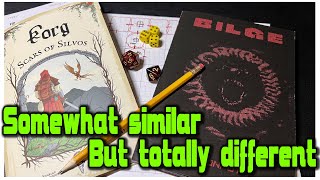
Click to watch at 0:30 · YouTube ↗
Overall sentiment (raw)
positive
Pros
- Fantastic theming and lore
- Creepy and gooey atmosphere
- Interesting parasite system and parasitic purity mechanic
- Unique setting and concept
- Vigorous combat system with large numbers and dice rolling
Cons
- Rules inconsistencies and lack of clarity in several areas (e.g., fatigue per area, room details, bestiary codes).
- Difficulty deciphering some room entries and enemy codes (e.g., 'sh h3. hermit').
- Combat involves rolling more dice and tracking more numbers, making it less simple than Corg.
Thematic elements
- Prisoner volunteers mining Ambergris from a whale's body before it dives
- Inside a giant whale creature on a moon of Neptune
- Body horror
Comparison games
none
Mechanics (from transcript analysis)
- Card drawing — A deck of cards is used to draw rooms and determine encounters within the Leviathan.
- Dice Rolling — Dice are used for combat rolls based on stats.
- Leviathan Discomfort Timer — Actions increase the Leviathan's discomfort, affecting game difficulty and potentially triggering events like dives.
- Lock Picking/Hacking — Players use a 'Spike' check to overcome nerve locks or sphincters blocking progress.
- Mapping — Players explore and map the interior of the Leviathan, drawing cards to determine rooms.
- Parasite System — Players can acquire parasites which increase their 'parasitic purity' and affect the game world.
- Resource Management — Players manage Vigor (health) and Fatigue (for exploration).
- Stat-based Checks — Uses stats like Flesh, Spike, and Crunch for various checks and combat.
Video topics + discussion points
No key topics recorded for this video.
Quotes (from this video)
- if you want something that is pretty dark and twisted and kind of disturbing and want a little more complexity in your games you might want to take a look at buge man this thing is Twisted
- The Simplicity of corg is also evident in the components that it needs
- The numbers do get pretty large there's a lot of small addition and subtraction in this game
- I love the theme of this game it's really creepy and gooey and gross
- Corg is cozy it's nice it has a a really kind of standard fantasy theming and the the world is a little more pleasant to be in and you don't feel as bad exploring the world of corg as you might with Bill Bill is dirty and grimy and nasty and kind of gross and disgusting
References (from this video)
No references stored for this video.
Video 0pKQ9M5_0rA
Meeple University Top 10 List at 5:41 sentiment: positive
video_pk 86781 · mention_pk 225831
Click to watch at 5:41 · YouTube ↗
Overall sentiment (raw)
positive
Pros
- Cooperative
- Party game
- Plays across a wide age range
- Can use your own prompts
Cons
none
Thematic elements
Comparison games
- Timeline
- Wavelength
Mechanics (from transcript analysis)
- category guessing — Players give an example in a category between 1 and 100 on the scale for the number given.
- cooperative play — Another cooperative game.
- Number guessing — Cooperatively trying to guess where you need to put your hidden numbers.
Video topics + discussion points
No key topics recorded for this video.
Quotes (from this video)
- so this is the ultimate board game Christmas gift guide 2024 for $20 and under that's US
- we ideally don't want to be like that right teren ideally not no don't want to end up with multiple copies of the same thing so hopefully that's why we are here
- It's a one and done game because you put stickers on the cards or rip cards up and yeah really you just tell that tell your own story.
- It's certainly a much better game at two players than the original.
- It plays kind of like a toy as well as a game.
- So in this trick taking adaptation is that you don't want to win the trick with the prince on it so I just like I don't want it I don't want to so so how you modify that it's just really fun game and each game is different as well.
- It's got that TCG battle card game Vibe but it's not a TCG it's self-contained.
- It has this really interesting mechanism where you get your random set of cards but the other player can take two of them from you as you play them during the game.
References (from this video)
No references stored for this video.
Video 4s7vjjDevfY
kovray Discussion at 2:57 sentiment: positive
video_pk 86198 · mention_pk 222371
Click to watch at 2:57 · YouTube ↗
Overall sentiment (raw)
positive
Pros
none
Cons
none
Thematic elements
Comparison games
none
Mechanics (from transcript analysis)
Mechanics unknown.
Video topics + discussion points
No key topics recorded for this video.
Quotes (from this video)
- Don't judge this this is what we do before we go to conventions
- when we get back we're going to be doing a recap video where we'll talk about our experience there
- type in what game you want to play
References (from this video)
No references stored for this video.
Video srpA5ZHn5MQ
UndeadVikingVideos Discussion at 325:29:20 sentiment: positive
video_pk 85757 · mention_pk 220472

Click to watch at 325:29:20 · YouTube ↗
Overall sentiment (raw)
positive
Pros
- Amazing game
- Probably their best game
Cons
none
Thematic elements
Comparison games
- Merchants Cove
- Cavern Tavern
- Rise to Nobility
Mechanics (from transcript analysis)
Mechanics unknown.
Video topics + discussion points
No key topics recorded for this video.
Quotes (from this video)
- I may have regret backing the latest Cthulhu Death May Die.
- Fabulous minis.
- I remember when they were cool mini or not, and and I liked that.
References (from this video)
No references stored for this video.
Video TutG02Uzu5k
All You Can Board Discussion at 49:23 sentiment: other
video_pk 85719 · mention_pk 220332

Click to watch at 49:23 · YouTube ↗
Overall sentiment (raw)
dig_in
Pros
- Rich, thematic asymmetry; high complexity and depth
- Variety in decks yields depth
Cons
- Complex rules; long learning curve; heavy setup
Thematic elements
- asymmetric, cards-as-actions, island control
- Multiple ancient civilizations on islands
- thematic, heavy
Comparison games
- Innovation
- Invention Innovation
Mechanics (from transcript analysis)
- Five asymmetric factions — Each faction has unique goals and abilities.
- Multi-Use Cards — Cards can be played for abilities or as costs.
- Multi-use cards and island placement — Cards can be played for abilities or as costs.
Video topics + discussion points
No key topics recorded for this video.
Quotes (from this video)
- I want to dig in on this game.
- It's a dig in for me as well.
- This is the best two-player only game I've played since Great Plains.
References (from this video)
No references stored for this video.
Video NcfUb8DU2Gg
Let's Table It Discussion at 10:27 sentiment: positive
video_pk 85430 · mention_pk 218893

Click to watch at 10:27 · YouTube ↗
Overall sentiment (raw)
positive
Pros
- part of travel game mix
- supports group play
Cons
- not described in great detail in transcript
Thematic elements
- party / social
Comparison games
none
Mechanics (from transcript analysis)
Mechanics unknown.
Video topics + discussion points
No key topics recorded for this video.
Quotes (from this video)
- A Gentle Rain is just like my happy place.
- Kenya Coladis... feels like a vacation in a box to me.
- It's so fun and relaxing and we can play it anywhere.
- That's Not a Hat is a memory game where you're trying to either make up an answer because you forgot what the answer is.
- The Crew is a strategy based game of trying to get to Mars, I think.
- Ido is a rank game where you tell people in a category what the category is and then they come up with the best or the worst answer.
References (from this video)
No references stored for this video.
Video mOcj8UBvdQk
Get into games Discussion at 18:50 sentiment: positive
video_pk 85248 · mention_pk 218094
Click to watch at 18:50 · YouTube ↗
Overall sentiment (raw)
positive
Pros
none
Cons
none
Thematic elements
- Array
Comparison games
none
Mechanics (from transcript analysis)
Mechanics unknown.
Video topics + discussion points
No key topics recorded for this video.
Quotes (from this video)
- The map is amazing. You are essentially going into this town to find out why people are being killed.
- Box One is very good, though.
- The Venice Conspiracy, if you like exit games, is very good.
- Dark Tower. Epic game of Dark Tower. That was fun.
- We love Tapestry.
References (from this video)
No references stored for this video.
Video jQsF9PM8ha4
Board Game Buzzz Gen Con Preview at 30:39 sentiment: positive
video_pk 84871 · mention_pk 216443
Click to watch at 30:39 · YouTube ↗
Overall sentiment (raw)
positive
Pros
- beautiful artwork and components
- engaging gameplay
- calming theme
Cons
none
Thematic elements
- building an aesthetically pleasing koi fish pond
- koi pond
Comparison games
- Bonsai
Mechanics (from transcript analysis)
- Tile Placement — building out your own koi pond by placing tiles.
Video topics + discussion points
No key topics recorded for this video.
Quotes (from this video)
- Gen Con is the biggest board game convention in America.
- I literally had over 70 that I had saved.
- In Spooktacular, you are becoming the monsters, I believe, that are haunting the people who are going to the movie theaters and like watching your movie.
- As one of those monsters, you are now free to wreak havoc. Terrify and devour unsuspecting movie goers in a race to become the most terrifying monster of all time.
- This is Tea Witches. Okay, for the OP games, I have been so excited for this one. I'm so nervous that I'm going to play it and it's going to be meh or all right because I've like built it up so much in my head.
- Everything about this game just screams me and I need it.
- I'm so sad that I'm not going to Gen Con.
- Like I have FOMO so
References (from this video)
No references stored for this video.
Video uxw-784KOP8
Meeple University Discussion
video_pk 84725 · mention_pk 215709

Pros
none
Cons
none
Thematic elements
Comparison games
none
Mechanics (from transcript analysis)
Mechanics unknown.
Video topics + discussion points
No key topics recorded for this video.
Quotes (from this video)
- The future is here.
- Gen Con happened and was big and successful.
- Please let Taran know as well in the comment to try to convince Taran why Taran should go to Gen Con.
References (from this video)
No references stored for this video.
Video 349MvC1vPsU
Board Gaymes James Top 10 List at 1:50 sentiment: positive
video_pk 84596 · mention_pk 215105

Click to watch at 1:50 · YouTube ↗
Overall sentiment (raw)
positive
Pros
- cozy visuals
- engaging interplay of tiles/cards
Cons
- may have higher complexity for some players
Thematic elements
- 3D puzzle laying game with hand/resource management
- Koi pond aesthetic with pretty cards
- puzzle-driven with attractive components
Comparison games
none
Mechanics (from transcript analysis)
- 3D puzzle placement — building a tableau with layered components
- Hand Management — managing cards and resources to attack/defend
- hand management / resource management — managing cards and resources to attack/defend
Video topics + discussion points
No key topics recorded for this video.
Quotes (from this video)
- It's another week closer to Spiel
- crunchy yet cozy games
- don't be deceived. This one is actually quite the think.
References (from this video)
No references stored for this video.
Video xYcKA9NcANI
Gaming Rules! Analysis at 1:17:09 sentiment: positive
video_pk 84169 · mention_pk 213655

Click to watch at 1:17:09 · YouTube ↗
Overall sentiment (raw)
Positive
Pros
none
Cons
none
Thematic elements
Comparison games
none
Mechanics (from transcript analysis)
Mechanics unknown.
Video topics + discussion points
No key topics recorded for this video.
Quotes (from this video)
- I did not enjoy my first play of Echoes of Time.
- this is a light tableau building card game.
- Flow... it looks gorgeous.
- Covenant. Number two on my most anticipated list.
- Vlaada Chvátil. Do you know what the last game that Vlaada designed was? ... He's not actually designed a new game and had a new game published for almost 10 years.
- It's called Severton.
- I have spent the last 15 years of my life telling everybody that Talisman is such a bad game... And with the fifth edition, I've had to sort of eat my words on that.
- There just isn't enough time to play all of the games.
- IR from Osprey Games. Children of the Sun. Yeah. It is really good.
- Druids of Adora, new Stefan Feld game from Alea
- There may be some Essen live streams while we're there.
- I have written to the publisher to ask for a potential review copy, yeah, but to be fair, I only emailed them yesterday.
- Covenant. I completely forgot that was a thing. Started looking at the pictures and and thinking, yeah, I'm down for that.
- The The Void Voynich Puzzle. Voynich Yeah. Don't forget go to bed reading the Wikipedia articles about the Voynich manuscript.
- Saboteur is the other one which I did know. I saw it on your shelf uh today earlier, but I didn't know much about it. But now you've explained what it is, I'm kind of getting that um like Enid Blyton vibe from it. Yeah. what was it called? The Famous Five. Famous Five. Famous Five. Of that kind of stuff. Yeah. And weirdly, I'm interested. All right. And I've looked at the pictures of that, so yeah. Yeah. Yeah, Saboteur is good.
- I'll be demoing, but I'm demoing um uh Revenant um I think twice on the Saturday from 12:00 till 4:00.
- Trickerion with the Arcane Arts expansion. I think that's my schedule.
- Now, the one game that I am going to be looking at is there's a new game that Mighty Boards have just announced recently called Gods. All right. Which is designed by David Thompson, Trevor Benjamin, and is right up my alley.
- And they said, "Well, at least come round and have a look at it." And I'm like, "Yeah, I'll come round and have a look at it." But I've already agreed that I'm going to be doing content on that.
- I find it really weird and unusual that and and everybody else does this. I'm the odd one, but all of all of these content creators go to Essen, they go to Gen Con, and they have meetings with publishers where they sit down and they make deals about payment and what videos they're going to Right. That's the worst place to have a meeting.
References (from this video)
No references stored for this video.
Video Gsew5C2__sY
Board Gaming Ramblings Unboxing at 41:16 sentiment: positive
video_pk 84109 · mention_pk 213320

Click to watch at 41:16 · YouTube ↗
Overall sentiment (raw)
positive
Pros
- CGE usually puts out nice stuff.
Cons
none
Thematic elements
Comparison games
none
Mechanics (from transcript analysis)
- tile laying — Described as a nice little tile-laying game.
Video topics + discussion points
No key topics recorded for this video.
Quotes (from this video)
- nobody, including us, need this many games.
- This is Divan. Mhm. I don't know anything about this game. I bought it because it looks beautiful.
- This could have easily been a Reiner Knizia game I feel like.
- And I love a reason to play Lost Ruins of Arnak Lost Ruins of Arnak because I think it's a great game.
- We have to empty our unplayed game shelf from everything that's not 2025 releases and then we'll put it in there and the rest go on the floor until we manage to play them.
- And it's based on the problem called what is called again it's based on the seven bridges of somewhere.
- I feel kind of like bad about bringing a hundred games back home.
- I I usually they go in, they go out. And that's also the thing like if I haven't played a game in a month, I will not remember the rules most of the time.
- The longest line I saw was for coffee. In the morning before the whole office.
- What's more important for you for the channel? Playing the popular ones or the less known niche ones?
- My favorite animal beside the monkey which is my favorite animal. The capybara.
- We are basically very lucky because we share a lot of hobbies.
- The building thing Ah, it was too much building. I didn't like that too much.
- It's been super fun. It's so many people. It's been so long since we did a live.
- Thank you so much for watching. Like it. We wouldn't have done this if it wasn't for you.
References (from this video)
No references stored for this video.
Video bG5Vt8VHvMc
Rahdo Runs Through Top List at 4:36 sentiment: mixed
video_pk 84001 · mention_pk 212786
Click to watch at 4:36 · YouTube ↗
Overall sentiment (raw)
mixed
Pros
- Clever and smart design
- Brilliant packaging
Cons
- Incredibly cutthroat as a two-player game
Thematic elements
- gem auction and set collection
Comparison games
none
Mechanics (from transcript analysis)
- Auction — A 'fairly cutthroat once around auction' where players bid with coins.
- Resource Management — Players manage coins to bid on gems and also spend gems to re-energize other gems.
- Set Collection — Players bid on gems to collect sets of varying values.
Video topics + discussion points
No key topics recorded for this video.
Quotes (from this video)
- Ants. And I loved this game. Um it is a phenomenal worker placement game where we are controlling a colony of ants trying to, you know, spread out into the uh the countryside, um you know, set up pheromone trails of scavenging ants, exploring, dealing with big scary bigger bugs than us, like centipedes and millipedes and whatnot, getting to the far reaches where there are huge benefits if we're the first player to occupy, and, you know, basically expand our little ant kingdom.
- And unlike most other ant colony civilization games, there is no player versus player in this game. No direct attacking. We just have to fight, you know, the the other big bugs that are out there.
- this is a conveyor belt game, folks, and I love conveyor belts. The conveyor belt here is the life cycle of our ants.
- Everything about this game is fantastic.
- It's the second best game we played this month. It's Ants.
- The Last Droids.
- This game is phenomenal.
- It's an I split, I choose game, which is a fun little thing.
- That decision, which do I keep for myself, which two do I give to the other players, is phenomenal.
- The rules actually suggest that once the cards are revealed before the lead player hands them out and keeps one for themselves that players could say, "Hey, I really want that one."
- The art in this game is stunning.
- It is the best game I played this month as a three-player game.
- As a two-player game, I don't know. So, I'm going to have to do a follow-up in a future roundup, I assume.
References (from this video)
No references stored for this video.
Video SxJx0vFj5pU
Man vs Meeple Analysis at 1:20 sentiment: negative
video_pk 83633 · mention_pk 211213

Click to watch at 1:20 · YouTube ↗
Overall sentiment (raw)
negative
Pros
none
Cons
- Isaac Childres destroyed everyone playing it, leading to the thought that the game might be broken or players are dumb.
Thematic elements
Comparison games
- Saltfield
Mechanics (from transcript analysis)
Mechanics unknown.
Video topics + discussion points
No key topics recorded for this video.
Quotes (from this video)
- I just I thought this was going to end up being a huge game.
- If you can get a copy of Men Nefer, if you can find that game and you like Eurogame, that is definitely one to try.
- My number one, Star Wars Unlimited, which even at the time I was like, I'm it didn't really feel like a board game, but like it was the game I played most in 2024.
- this was my number one, this was the one for me that beat out STI was Saltfield.
- Saltfield I 100% stand behind.
- He destroyed everybody just like he always does. And it felt like, you know, and again, this is not unself because I played uh what was the one Sor also with him and he destroyed everyone in that to the point where I was like, "Oh, what? Either we're dumb or the game is broken and the games aren't broken."
- this is what makes Isaac such a great game designer. And this is how we get games like Gloom Haven
- The ones I didn't get to play, they're just going to get shoved over to the 2026 year.
- It came out in December of 2024. Not a lot of people got to play in 2024.
References (from this video)
No references stored for this video.
Video Ia5joIhl21o
Board Game Sanctuary Top List at 27:25 sentiment: positive
video_pk 83272 · mention_pk 209518
Click to watch at 27:25 · YouTube ↗
Overall sentiment (raw)
positive
Pros
- Beautiful artwork
- Intriguing and tight spatial puzzle
- High artistic customization of the koi pond
- Thematic connection to nature and aquascaping
- Satisfying endgame scoring based on pond configuration
Cons
none
Thematic elements
- Creating a zen koi pond
- Zen koi pond
Comparison games
- Bonsai
Mechanics (from transcript analysis)
- Card Drafting — Taking cards from a market area, with bonuses dependent on the card's position.
- Pattern Building — Arranging koi and surrounding elements to meet scoring conditions.
- Resource Management — Collecting water tiles, floral tiles, and koi.
- Set Collection — Collecting different types of ornaments and koi.
- Tile Placement — Placing water tiles, floral tiles, koi, and various ornaments onto a personal player board.
Video topics + discussion points
No key topics recorded for this video.
Quotes (from this video)
- The top 10 games are going to come from my own board game collection, and they're games I already own.
- I think this is a video where I want to dedicate my top 10 list to games that just need a little bit more love.
- And if you love Stefan Feld games, they're all point salad games.
- It creates this really tense tug and pull and it makes players really feel like there's a sense of competition there.
- The fact that you can configure your koi pond to your artistic design, that's just something that I really really enjoy in a game.
- The other thing I really like about this game is that you can unlock these little herbs from your player board. And those herbs, you have to choose one of the bonuses and sacrifice the other.
References (from this video)
No references stored for this video.
Video b80zN98FP5E
Board Games UnLocked Review at 0:16 sentiment: mixed
video_pk 82883 · mention_pk 208241
Click to watch at 0:16 · YouTube ↗
Overall sentiment (raw)
mixed
Pros
- Innovative and interconnected systems.
- Thematic connection of actions based on player count or field strength.
- Engaging area control elements within each section.
- The university/student theme is liked.
- Components are awesome with different shapes and colors.
- The solo mode is decent and makes the game more accessible.
- Explores niche historical areas.
Cons
- Setup is a major pain with 32 steps.
- Playtime is too long and the game overstays its welcome.
- Pacing can be an issue due to lack of consistent round order.
- The game doesn't have enough 'meat' to justify its length.
- The inability to do the same action twice can feel restrictive.
- Can lead to players being starved for resources.
- The library section could be more restrictive.
- Lack of variability from game to game compared to similar weight games.
Thematic elements
- University and students
- Historical (Northern Africa)
Comparison games
- MV
- IR
- Paladins of the West Kingdom
- Viscounts of the West Kingdom
- Teotihuacan: City of Gods
- Tawantinsuyu
- Food Chain Magnate
- Gùgōng
- Voyages of Marco Polo
- Twilight Imperium
Mechanics (from transcript analysis)
- action selection — Players select actions, and the game has a rule preventing the same action from being taken twice in a row, which some found restrictive.
- Area Majority/Control — Players vie for control in various sections of the game, such as the law section, influencing scoring and token acquisition.
- Resource Management — Players manage resources like gold, salt, and books, with limitations on how much can be carried, forcing strategic spending and acquisition.
- Set Collection — Gathering books and placing them in the library influences the value of certain tokens, like knowledge tokens.
- Variable player powers — Objective cards provide unique passive powers at the start of the game.
- Worker Placement — Players place students into university 'classes' to take actions, with the strength of the action based on knowledge accumulated.
Video topics + discussion points
No key topics recorded for this video.
Quotes (from this video)
- This would have been my favorite of the three if it wasn't so damn long.
- The setup is just nuts.
- The run time is long.
- The game doesn't really have enough meat to justify two and a half hours.
- I really liked it for about an hour and a half.
- The intricacy of the system leans more into what I like in a Euro.
- This is a trilogy that I think I actually brought this up when I was talking with Mike about kind of Euro games and I was like, I'm playing this trilogy, but I wouldn't own any of these.
- If I have unlimited time in the world, this would probably be an 8.5.
References (from this video)
No references stored for this video.
Video -XKzi3OyxCY
The Board Game Garden Discussion at 2:35
video_pk 81836 · mention_pk 204604

Click to watch at 2:35 · YouTube ↗
Pros
none
Cons
none
Thematic elements
Comparison games
none
Mechanics (from transcript analysis)
Mechanics unknown.
Video topics + discussion points
No key topics recorded for this video.
Quotes (from this video)
- Remember, you are somebody's reason to smile.
References (from this video)
No references stored for this video.
Video rSVygd5FU44
Tantrum House Discussion at 8:59 sentiment: positive
video_pk 81647 · mention_pk 203714
Click to watch at 8:59 · YouTube ↗
Overall sentiment (raw)
positive
Pros
- Engaging deduction process
- Simple yet challenging
Cons
- High risk of player elimination on a wrong guess
Thematic elements
- Deduction game to figure out a secret combination.
Comparison games
- Clue
Mechanics (from transcript analysis)
- Deduction — Players deduce a secret combination of numbers by asking questions and observing other players' actions.
- Player Elimination — A wrong guess results in the player being 'out for the rest of the game'.
- Set Collection — Players collect sets of tiles to help with their deductions.
Video topics + discussion points
No key topics recorded for this video.
Quotes (from this video)
- Grab your dice and shuffle your deck.
- We're playing games with wooden meeples, sharing the news for all you geeky people.
- The Op, and we're going to be playing one of their games at the end of the show, so stick around.
- Come and hang out with your tabletop friends.
- The Op games are party games. Lots of things like this that you can play along with us and have fun.
References (from this video)
No references stored for this video.
Video dczcPFU6uD8
The Dice Tower Top List at 14:58 sentiment: positive
video_pk 81538 · mention_pk 203085
Click to watch at 14:58 · YouTube ↗
Overall sentiment (raw)
positive
Pros
- Great deduction game for kids.
- Wonderful components.
- Works well for kids.
- Lots of good deduction games for kids these days.
Cons
none
Thematic elements
- guessing numbers
Comparison games
none
Mechanics (from transcript analysis)
- Deduction — You're guessing if this is higher or lower than your numbers and where they fit on a grid.
- number placement — Players guess where numbers fit on a grid based on higher or lower values.
Video topics + discussion points
No key topics recorded for this video.
Quotes (from this video)
- Fiction: Banned Books, this is from All Play. I really like the first Fiction, guessing a five-letter word. If you like things like Wordle, um this is a good sort of one versus others game because one person is trying to stop you from guessing the word cuz they lie they have to lie about a letter each time, but you know they lie, so they're picking the right time to lie. But this offer this adds some special powers and things to it, so it's slightly better than the first one, I think, if you care about the stuff. If not, you can still play it normally, so great little game.
- Got 5, a great deduction game for kids, wonderful components. Basically, um you everyone can see your numbers and you're guessing if this is higher or lower than your numbers and where they fit on a grid really works well for kids. There's a lot of good deduction games for kids these days. Another 8.5.
- And Catan on the Road, what a glorious card game version of Catan, one one few games that I am going to get a copy of this for my house because my kids and family liked it so much. We can play this with anybody. It takes Catan, it distills it down into 15 minutes. What a wonderful thing. Like it a lot.
- So, almost 15 minutes for 36 games.
- If you have thoughts on these games, you disagree, agree, whatever it might be, let us know in the comments.
- Like I said, you can find more information about most of these games on the Dice Tower channel or you will hear more about them in the future.
- Hey everybody, thanks for watching another video from the Dice Tower.
- Do you want to learn more about us, communicate with us? We have a Facebook group. We have a Discord channel. Lots of different ways to get involved with the Dice Tower.
- You can find that in our Linktree link below. So, just click that, it will take you and you can communicate with us on Facebook, join our Facebook groups. There's lots of cool things that you can find and become part of the Dice Tower.
References (from this video)
No references stored for this video.
Video J_fUN1hALw0
The Dice Tower Discussion at 55:24 sentiment: positive
video_pk 81521 · mention_pk 202918
Click to watch at 55:24 · YouTube ↗
Overall sentiment (raw)
positive
Pros
- it feels so streamlined
Cons
none
Thematic elements
Comparison games
none
Mechanics (from transcript analysis)
Mechanics unknown.
Video topics + discussion points
No key topics recorded for this video.
Quotes (from this video)
- So, the highest ranked game I haven't played is Eclipse: Second Dawn.
- Each year I play more more games and each year I have played fewer of the top 100. BGG's top 100 is turning into heavy game central, for sure.
- Daydream is a cozy roll and write.
- Stop telling me your games are cozy.
- Terraria on the box says 45 minutes per player. I don't even know what what was going on there because someone was like, you lots of publishers lie about time. No one lies that that egregiously. It is not even remotely 45 minutes a player.
- I don't like Imperial at all. There's my review of
- Wise Wizards definitely said they're kind of on the uh that they're that they're struggling with a lot of stuff. So, I hope it works out pretty well.
- That was Zen Camilla, and they said it was really really hard, which made me not really particularly want to play it that strongly. I like to play games that are easier, not as difficult.
- Um, there's there's always things we're working on. Uh there's something small bag that we're working on. I can't really talk about that. Um, yet, but you'll know about that in a few weeks.
References (from this video)
No references stored for this video.
Video kN7mVzJuY4c
Good Time Society Rules Teach at 12:14 sentiment: positive
video_pk 81464 · mention_pk 202431

Click to watch at 12:14 · YouTube ↗
Overall sentiment (raw)
positive
Pros
- Unique theme in board games
- Clever dice tower packaging
Cons
none
Thematic elements
- boxing
- boxing ring
Comparison games
- Punch-Out!!
Mechanics (from transcript analysis)
- Card-based — The game is card-based.
- Dice Rolling — Dice will be involved in resolving actions.
- Hand Management — The game involves hand management.
Video topics + discussion points
No key topics recorded for this video.
Quotes (from this video)
- If you're on the good team, you're in the cult, you're branding people, you're doing weird rituals, you're making them call their loved ones and say they're never going to see them again.
- The thing about Tumbling Dice is I need to be able to swear freely or I can't do it.
- This is the cardboard version of it.
- This is a blossoming strategy game of taking flowers from a garden and then pressing them.
- I get plus three operation points no matter where I go.
- He's handsome. He needs to become my best friend.
References (from this video)
No references stored for this video.
Video HWGTpsnbreg
Heavy Cardboard Discussion at 32:53 sentiment: positive
video_pk 81469 · mention_pk 202497
Click to watch at 32:53 · YouTube ↗
Overall sentiment (raw)
positive
Pros
- tight deduction
- short playing time
Cons
none
Thematic elements
- deduction
Comparison games
none
Mechanics (from transcript analysis)
- deduction and rapid signaling — players cross off numbers on a shared sheet; can call 'got five' to reveal the five numbers.
Video topics + discussion points
No key topics recorded for this video.
Quotes (from this video)
- It's not really a game, but a chat tonight.
- It's an extended family reunion.
- Don't be a douche canoe.
- Gathering of Friends is not a convention. It's a gathering.
- There is nothing in existence that is like this game.
References (from this video)
No references stored for this video.
Video DOJ-k52YDOE
Going Analog Discussion at 29:09 sentiment: positive
video_pk 81456 · mention_pk 202342
Click to watch at 29:09 · YouTube ↗
Overall sentiment (raw)
positive
Pros
- Clever and simple logic deduction.
- Great introduction to the genre for new players.
- Fast-playing, around 15 minutes.
- Cute and appealing presentation.
- Enjoyable for experienced deduction fans as well.
Cons
- May have less replayability with the same group over time.
- Luck can play a role in how quickly clues reveal numbers.
Thematic elements
Comparison games
- Turing Machine
- Chronologic
- Search for Planet X
- Hanabi
Mechanics (from transcript analysis)
- Clue giving — Players can ask for and receive clues about tile placement and relationships.
- Hidden Information — Players' tiles are hidden from themselves but visible to others.
- Logic deduction — Players deduce the numbers on their hidden tiles using clues and process of elimination.
- Set Collection — Players try to identify and collect specific sets of numbers (their five tiles).
Video topics + discussion points
No key topics recorded for this video.
Quotes (from this video)
- We're not going Analog Podcast anymore. It's the Going Analog Show.
- So, we're going to do a pal- pallet cleanser, right?
- This is not a campaign on the website like this is not a campaign cuz that's what you think because even on the back of the box I'm looking at right now it says non-campaign
- from that tableau, you're trying to combine some um different cards that your word qualifies for, but they have to be orthogonally adjacent, and you have to be able to trace a pathway through the cards that you're going to score.
- There's this extra puzzle element of not just like, oh, I'm not rewarded for just the longest word. I might have the longest word, but that doesn't necessarily mean it's going to score well.
- if I pick these scoring word scoring tiles over here, I can make a pretty good word. But, if other people also use the same scoring cards, then the value of that card goes gets lower and lower.
- So, if you've played Point Salad, this feels very much like Point Salad. There's going to be a But with fruit.
- Each basket will have its own scoring condition based on what fruits are in that basket.
- the rocks then you could keep them in your discard pile. They're worth a point each or fill up your bonus baskets with rocks, which eats up one of those three spots.
- It is mean, but because it's so easy just to get more fruit and more baskets, it's not that big a deal.
- he threw a rock down making it impossible for me to meet that goal because I need three specific fruit for a high value and now he a rock is eating up one of those spaces.
- It is mean, but at the same time it's like Too mean, but adds a layer of strategy to the game, you know?
- It's It was garbage day when we were recording today.
References (from this video)
No references stored for this video.
Video cDDZc1CtFYE
Get into games Top 10 List at 23:16 sentiment: negative
video_pk 81415 · mention_pk 201953
Click to watch at 23:16 · YouTube ↗
Overall sentiment (raw)
negative
Pros
none
Cons
- Ranked quite low.
Thematic elements
Comparison games
none
Mechanics (from transcript analysis)
Mechanics unknown.
Video topics + discussion points
No key topics recorded for this video.
Quotes (from this video)
- If I wanted to play the same game but be really stressed, Silver Frost would be my go-to.
- I argue I'd almost argue that it's the best artwork of any of the Everdale games.
- Whereas normal Everdale, you can kind of chill and just be like, 'Yeah, let's build these fun things and look at my little critters.'
- the landlord's game was the basic blueprint for Monopoly.
- and arguably the best game ever made. So really what we've ranked is completely wrong.
- that is quite dull. Let's say you're rolling. The only so I feel like the boring bit about it is that you're just rolling dice and you land where the dice tells you.
- Monopoly Legacy.
- The board state changes. Buildings go into disrepair and crumble around you.
- There are elections. Hire one of you becomes a mayor of the city. You can control other people's turns and what properties they're going to buy.
- How do you improve Cludo Legacy?
- Well, just dying over and over again.
References (from this video)
No references stored for this video.
Video m91zG_SLh3I
Tabletop Minions Discussion at 1:08:12 sentiment: neutral
video_pk 81111 · mention_pk 199775
Click to watch at 1:08:12 · YouTube ↗
Overall sentiment (raw)
neutral
Pros
- Had a really good turnout last year (at Gen Con)
Cons
none
Thematic elements
Comparison games
none
Mechanics (from transcript analysis)
Mechanics unknown.
Video topics + discussion points
No key topics recorded for this video.
Quotes (from this video)
- I
- I was never super into the video game, frankly. So, I'm not I don't have the nostalgia for it.
- I'm also not really into army games, so like the scale of it, not the physical scale of the models, but how many models there are is also not really my thing.
- I always love making lore for my miniatures in Trench Crusade. It's just so interesting making backstory for each of them.
- I love the new GW Cog fort model, but is anyone going to make a squadron and buy four of them at $210 a piece?
- The white ones are definitely the type that don't take rattle can.
- Shatterpoint biggest problem wasn't really the game. I think it was the feeling of the neglect.
- That walking building sure is cool. Assume I can buy it and it's not totally sold out already.
- Metal minis, that's a tough one. I'm not good at those.
- Sets one and two are grim dark, but three and four lean into the Wim dark. Oh, I like the word whim dark. That's fun.
- I'm going to be working on these guys, which are um the naval raiders from uh Trench Crusade.
- It's such a fun world to build inside.
- I'm probably going to paint these guys up and then when the plastics come out, I'll probably just redo them.
References (from this video)
No references stored for this video.
Video L0fCPfR8rBI
Rob's Tabletop World Top List at 2:37
video_pk 81069 · mention_pk 199387

Click to watch at 2:37 · YouTube ↗
Pros
none
Cons
none
Thematic elements
Comparison games
none
Mechanics (from transcript analysis)
Mechanics unknown.
Video topics + discussion points
No key topics recorded for this video.
Quotes (from this video)
- But very rarely do we have a chance where we can go Well, what are the top 10 dungeon crawls of all time? Okay? I mean we can always have our opinion, but I really wanted to put make a video where you, the public, helps makes the top 10 dungeon crawls of all time of all time.
- Spanning the history of dungeon crawls, which ones are your favorites? And I'm going to compile this massive spreadsheet, and then we're going to do another video, probably in a few weeks after we get enough entries, and decide what you guys decided are the top dungeon crawls of all time.
- We're talking dungeon crawlers of all time by the people.
- So, my dear friends, let's get right to it, and let's get going, and start compiling this list.
References (from this video)
No references stored for this video.
Video _kcLGU86viQ
Board Gaming Ramblings Other at 18:12 sentiment: mixed
video_pk 81092 · mention_pk 199506

Click to watch at 18:12 · YouTube ↗
Overall sentiment (raw)
mixed
Pros
- Looks nice.
- Based on a well-known graphic novel in Poland.
- Very well known in Poland.
Cons
- Backed on Kickstarter without a clear reason.
- Not a campaign game, only scenario-based.
- Has been on the shelf for a while with multiple chances to cull.
- Finally feeling like it's time to let it go.
- 10 standalone adventures for 90 to 120 minutes sounds horrible.
Thematic elements
- scenario-based
Comparison games
none
Mechanics (from transcript analysis)
- Campaign — The speaker prefers campaign games over scenario-based ones.
- Cooperative — A cooperative game, typical for story games.
Video topics + discussion points
No key topics recorded for this video.
Quotes (from this video)
- It's a good one. Next up is another good one called Formosa Tea.
- It's a flip and cube placing game.
- This is the one that I wanted us to get.
- This is the way that doesn't spill.
- It is a longer game. I would have liked to play it but there is too many games so we're not playing it.
- He played it when it arrived. We never did.
- it's supposed to be fun, but there are so many fun games.
- this made it into the top 10 from last year.
- I love the worker placement like bidding that you bid with work.
- But I like so much about it. I just don't like how long it is.
- So even though I love and adore it, I don't think I will play it again.
- my number one game from last year was galactic cruise. Galaxy Cruise.
- And those are 20 more games leaving the shelf for different reasons.
- And if you have too many games, take a hard look on yourself and see if there's something that you don't really need to have there because I promise you it feels good.
References (from this video)
No references stored for this video.
Video r5XK979AXt8
The Dice Tower Discussion at 32:11 sentiment: positive
video_pk 80862 · mention_pk 198388
Click to watch at 32:11 · YouTube ↗
Overall sentiment (raw)
positive
Pros
- Upgraded components (wooden temples).
- Improved usability.
- Released in a smaller box format.
Cons
none
Thematic elements
- Spiteful gods vying for adoration
- Archipelago
- Euro game
Comparison games
none
Mechanics (from transcript analysis)
- tile laying — A tile-laying Euro game.
Video topics + discussion points
No key topics recorded for this video.
Quotes (from this video)
- Yeah, my man [laughter] loves paths.
- You're going to be going across crumbling bridges, but beware each bridge crossed will collapse behind you, changing the landscape.
- They're going smaller. We're going to be able to fit all these on your shelf, yeah.
- Now, this one before you get to what it's about, I had it myself a shame for a while only because the components were so nice, right?
- Beautiful editions of those games, right? Now, this looks very nice to me.
- Our focus has been in ensuring that it's the definitive version, including a visual over overhaul.
- When you compare against any of those three Super Meeple games, those are stellar productions.
- It's more portable. It's a little easier to bring to the table cuz you need less footprint, you know, things like that.
- Now, that I'm I'm intrigued by making this game a little bit shorter.
- It could be very mean like uh all of these games kind of could be.
- I do worry that they're kickstarting or crowdfunding, I don't know how uh all of these at once in the same project.
- Roll and write, flip and write.
- Smack and write.
References (from this video)
No references stored for this video.