/pic5988511.jpg)
/pic4887376.jpg)
/pic6893215.png)
/pic7350809.png)
/pic5988511.jpg)



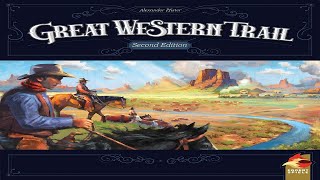





Great Western Trail: Second Edition Deep Dive
What the Community Thinks About Great Western Trail: Second Edition
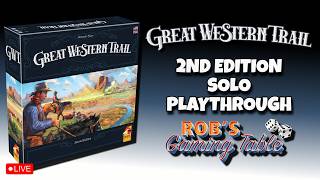
Great Western Trail: Second Edition reimagines the entry point to Alexander Pfister's acclaimed cattle-driving Euro, praised for its balance refinements, component upgrades, and the welcome addition of solo play. Rob's Gaming Table marvels at the sheer number of strategic options on the board, Foster the Meeple recounts falling back in love with the game through repeated plays, and Before You Play single out the new solo mode as a major reason to pick up this edition. The result is a deeply rewarding heavy Euro that supports multiple paths to victory and rewards careful planning.
Core Mechanics That Define Great Western Trail: Second Edition
The Loop and Route Optimization
At its heart, Great Western Trail is about movement efficiency and route planning. Designed by Alexander Pfister and published by Eggertspiele, it sends players' herds along a winding trail toward Kansas City, stopping at buildings and choosing which actions to take. Rob's Gaming Table frames the central question as going from point A to point B and repeating, racing along the trail while squeezing value from key stops. The tension lies in deciding whether to move fast and hit important locations or slow down for better value from intermediate buildings, with farther shipping destinations demanding better cattle but paying off in coins and position.
Hand Management and Cattle Sales
The cattle-card system forms the engine's core. You build a hand of cattle of varying values and colors, and at Kansas City you cash them out for victory points and coins based on your best cattle and your worker count. The second edition adds exchange tokens, which let you swap cards between your hand and deck even on other players' turns, softening the original's punishing draws. Reviewers highlight the satisfaction of filtering your deck, discarding weak starting cattle and building toward consistent, high-value deliveries until the engine runs like clockwork.
The Great Western Trail: Second Edition Experience
Strategic Specialization and Engine Building
The game rewards focus. Each player can specialize by hiring cowboys, builders, or engineers, and leaning into one path creates a more efficient engine than dabbling in all three. Cowboys help you buy cattle, builders place buildings that benefit everyone but tax opponents who use them, and engineers extend your train to ship cattle farther for less. Foster the Meeple describes the deep pleasure of refining a deck and a strategy until everything clicks, the kind of compounding power growth that keeps pulling them back to the table.
Solo Play and a Dynamic AI Opponent
The second edition's standout addition is its solo mode, driven by an AI opponent named Sam. Sam runs on its own deck of action cards and starts with an extra worker that sets its specialization, and if that worker mix shifts during play, so does its strategy, creating an opponent that adapts rather than following a rigid script. Before You Play emphasize that this solo mode is one of the biggest reasons to choose this edition, since there was no solo mode in the first edition at all. Reviewers praise how quickly Sam's turns resolve: flip a card, execute the action, move on, avoiding the analysis paralysis that can bog down solo gaming.
What Makes Great Western Trail: Second Edition Stand Out
Balance Refinements
The first edition's dominant opening, rushing cattle to Kansas City for a large early payout, so overshadowed other approaches that the second edition reduced that payout to rebalance the decision without removing the option. Reviewers appreciate that the change invites experimentation rather than punishing it. The old, more punitive board space was redesigned into rewarding outlaw tiles, new building tiles expand late-game options, and the exchange-token system eases the harshness of bad draws. These changes preserve the core strategy while making the game more forgiving, a deliberate design goal that resonates with players who value mastery without cruelty.
Component Quality and Production
The physical presentation received a significant upgrade. The board uses brighter, clearer graphics that make the trail easier to navigate, new player boards add dedicated worker slots, and organizer bags streamline setup. The cattle cards received fresh artwork and names while keeping their mathematical distribution identical, preserving balance while refreshing the look. New worker pieces add visual personality where the original used generic tokens, and reviewers describe the whole component suite as premium and thoughtfully designed, removing friction without piling on unnecessary chrome.
Potential Drawbacks
Complexity and First-Play Overhead
Great Western Trail remains a heavy economic Euro with real rules overhead. Learning which buildings serve your engine and understanding the worker economy takes focus, and the very variability that veterans love, the many viable paths, can feel paralyzing to newcomers. Foster the Meeple recalls a memorably rough first in-person session that briefly soured them on the game. This is not a coast-on-intuition design; you need to understand the cost-benefit math behind nearly every action, and new players benefit from a tutorial and patience during early plays.
Relearning Curve for Returning Players
The game's specificity and the edition's tweaks create a relearning burden for veterans of the original. Returning after time away, it is easy to forget the economy and flow enough to misplay badly, and the second edition's changes to the early payout, outlaws, buildings, and exchange tokens mean first-edition muscle memory can mislead. This is not a game you dust off after months of neglect and play smoothly; a rules refresh or at least a mental reset helps avoid frustration.
If You Enjoy Great Western Trail: Second Edition
Fans of heavy economic engines like Scythe and Brass: Birmingham will find familiar satisfaction in building and optimizing a ranching operation. The hand-management and deck-filtering threads appeal to players who enjoy Concordia, while the worker-placement spine connects to Agricola. And for solo gamers specifically, the new Sam AI puts Great Western Trail alongside other strong single-player experiences like Spirit Island, delivering variable difficulty and a genuinely reactive opponent that the first edition never offered.
What Reviewers Are Saying
"This game is kind of crazy on the strategy. It seems there's lots and lots of ways to go, lots of options, so many variables. Really neat."
— Rob's Gaming Table
"I've fallen back in love with it. It's one that I want to play more and more. I would like to play it in person again now that I've played it a bunch on BGA; I feel like we could navigate it a lot easier."
— Foster the Meeple
"The solo mode is one of the biggest things for this. For all you solo gamers out there, that might be a really nice reason to want to pick up this copy of the game, because there is no solo mode in the first edition."
— Before You Play