/pic2007286.jpg)



























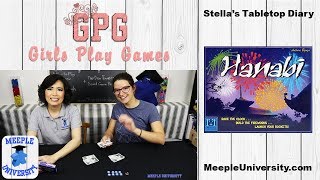











Hanabi Deep Dive
What the Community Thinks About Hanabi
Hanabi holds a place that few cooperative card games manage to claim: reviewers consistently describe it as genuinely unique, something they cannot easily compare to anything else in their collections. The game earns its reputation not through mechanical complexity or impressive production, but through the strange and specific mental tension it creates at the table. Playing cards you cannot see while watching others read meanings into the clues you give them produces a kind of shared puzzle that players find compelling long after their first session.
What draws reviewers to Hanabi most often is the way it reframes what cooperation means in a card game. Rather than pooling resources or taking coordinated turns on a shared board, players here are navigating genuine informational asymmetry. You hold a hand of cards facing outward, visible to everyone but you. The cards you need to play correctly, the ones the whole table is depending on, are exactly the ones you cannot see. That inversion sits at the heart of why people keep coming back to Hanabi despite its small footprint and brief playtime.
Reviewers also note that Hanabi occupies a valuable spot for groups who want a cooperative experience that feels genuinely collaborative rather than susceptible to one strong player taking over. Because you cannot see your own hand, no one at the table can fully quarterback the group. The decisions belong to each player individually, even when those decisions hinge on reading the signals others have offered.
Core Mechanics That Define Hanabi
The Inverted Hand
The central mechanic of Hanabi is disarmingly simple to explain and surprisingly difficult to play well. Every player holds their cards facing outward, so the fronts of the cards are visible to all other players but never to the person holding them. The table is cooperatively working to build five color-coded firework piles, each running from one through five in sequence. To complete a firework display, cards must be played in strict ascending order, and any card played out of sequence is a mistake that costs the group one of its precious fuse tokens.
On each turn, a player chooses among three options: spend a clue token to give another player information, play a card from their own hand onto the appropriate firework pile, or discard a card to recover a spent clue token. The clues themselves are tightly constrained. A player giving a clue must indicate either a specific color or a specific number, pointing to all cards in the recipient's hand that match. There is no way to say which card is most important, which one to play next, or when to hold back. The receiver of a clue must infer all of that from context: from which card was identified, from how many clue tokens remain, from what has already been played, and from what the giver might have chosen to say but did not.
Limited Communication and Clue Reading
Reviewers consistently identify the limited communication structure as the engine that makes Hanabi what it is. Peter C. Hayward, speaking on the Going Analog podcast, draws a clear distinction between two types of cooperative games: those where you work against the game as a unified team, and those built around limited communication. He places Hanabi firmly in the second category, describing it as a game where the challenge is reading why someone gives you a specific clue at a specific moment. That interpretive layer, he argues, is what separates limited communication cooperatives from games where a single strong player can effectively run the table.
Foster the Meeple makes a similar observation, noting that in Hanabi you at least have some kind of information to work with, which is what distinguishes it favorably from The Mind. Where The Mind asks players to act on pure instinct without any signals at all, Hanabi provides a structured clue system that gives players something concrete to analyze. The question is never simply what the clue says but why the clue was given: why now, why that card, and what does the timing tell you about the state of the game.
The Hanabi Experience
Maddening and Satisfying in Equal Measure
Reviewers describe the feeling of playing Hanabi in terms that acknowledge both frustration and reward. On 3 Minute Board Games, the experience is called maddening, and the description captures something real about the game: you can see everyone else's cards, you can see exactly what needs to happen for the group to succeed, and yet you must watch as someone on a different wavelength plays the wrong card at the wrong moment. That helplessness, that inability to simply say what you know, is exactly what the game is designed to produce.
At the same time, the scoring system builds in an unusual kind of consolation. Getting all 25 cards played perfectly is very hard, and reviewers note that most sessions end with something less than the maximum. What makes this tolerable is that Hanabi always gives you a score based on how many cards were successfully played, even if the game ends in failure. The result is that every session ends with a number to beat next time, and the conversation after a game tends to focus on where things went wrong rather than on the loss itself. Reviewers find this framing keeps the game feeling approachable even when results fall short.
Social Chemistry and Connection
One of the more interesting observations reviewers make about Hanabi is what it reveals about the people you are playing with. Because the game depends entirely on how well players read each other's intentions, moments of perfect synchrony and moments of complete miscommunication become visible in ways that feel personal. On 3 Minute Board Games, the reviewer describes being able to see which players are resonating with you and clicking in the communication, and which ones just are not getting it. That dimension of the game, its ability to surface the wavelengths people are on relative to each other, makes it feel more intimate than its small box and brief playtime might suggest.
Hanabi also works across a wide range of group types. Reviewers describe playing it on board game apps with friends at a distance, bringing it to conventions, and introducing it to people who would not normally seek out cooperative card games. Its short playtime, typically around fifteen minutes, means that sessions can be repeated until the group finds its rhythm, and the game does not overstay its welcome when things go badly.
What Makes Hanabi Stand Out
Genuine Originality
Reviewers who cover a wide range of card games frequently note that Hanabi does not feel like anything else in the space. Foster the Meeple describes it as a unique game they have not really played anything super like before, which is a significant claim for reviewers who have played extensively across the genre. The cooperative card game field has grown substantially since Hanabi's release, but the specific combination of the inverted hand, the clue token economy, and the shared firework-building goal continues to feel distinctive rather than derivative.
The comparison that comes up most often is with The Mind, and reviewers who know both games tend to prefer Hanabi precisely because of the structured communication system. The Mind asks players to act without signals; Hanabi gives you signals and asks you to interpret them correctly. That difference, reviewers suggest, makes Hanabi the more satisfying game to replay, because skill and familiarity with your group genuinely improve outcomes in ways that feel earned.
Accessibility and Depth Together
Hanabi occupies a rare position as a game that is genuinely easy to explain and yet surprisingly deep in practice. The rules take only a few minutes to communicate: hold your cards outward, spend clue tokens to give information, build the piles in sequence, do not let the fuses run out. The complexity emerges entirely from the decisions players make within that simple frame.
Reviewers identify this as one of the game's most valuable qualities, particularly when introducing it to groups that include players of varying experience levels. There is no reading of complex rules, no extensive setup, and no mechanical asymmetry between players that would disadvantage newcomers from the start. The game also works on digital platforms, which extends its accessibility further and allows people to play with groups who are not physically in the same place.
Potential Drawbacks
Group Dependency and Wavelength Gaps
The same quality that makes Hanabi memorable when things click is also its primary source of frustration when they do not. Because the entire game is built on reading intentions correctly, players who are not on the same wavelength as the rest of the group will find the experience difficult in ways that feel personal. Reviewers who describe the game warmly also acknowledge that a single player who interprets clues very differently can derail the group's best efforts, and because communication is prohibited outside the formal clue system, there is no in-game mechanism to correct the problem.
This is not a flaw so much as a feature of the design, but it means that Hanabi can feel unfair or unsatisfying in groups where players have very different intuitions about what clues mean. Some groups develop house conventions over time; others find that the game never quite clicks no matter how many times they try. Reviewers who recommend Hanabi with enthusiasm tend to already play it with established groups, which is itself an indication of how much the experience depends on the people involved.
The Ceiling Problem
Scoring the maximum 25 points in Hanabi is genuinely difficult, and reviewers note that most sessions end somewhere short of that ceiling. For groups who enjoy the challenge of improving over repeated plays, this is appealing. For groups that prefer a clear win condition with achievable outcomes, the game can feel perpetually incomplete. There is always another fuse blown at an inopportune moment, always a card played based on a clue that was read differently than it was intended.
The game's brevity helps here: at fifteen minutes per session, multiple attempts in a single sitting are easy to fit in. But groups who want the satisfaction of a decisive cooperative victory may find Hanabi's scoring-based resolution less fulfilling than games with explicit win or loss conditions. The question of what score counts as a good outcome is one that each group must answer for themselves, and the answer varies considerably depending on experience level and group chemistry.
If You Enjoy Hanabi
Players who love Hanabi often gravitate toward other cooperative games that use limited communication as a central mechanic. Codenames Duet is a natural companion, offering the same interpretive challenge in a different format: two players work together to identify agents on a grid using one-word clues, neither able to see the full picture that the other is working from. Reviewers describe it as a game with no external loss condition, meaning any failure comes from the players themselves rather than from a punishing deck or timer.
For players drawn to the abstract puzzle quality of Hanabi, games with clean rule sets and deep emergent strategy are worth exploring. The Mind strips communication back even further, asking players to play cards in ascending order with no clues at all, relying purely on feel and table awareness. It is a more chaotic experience than Hanabi and reviewers who prefer Hanabi's structure tend to find The Mind less satisfying, but for players who want to push the limits of unspoken coordination it offers something distinct.
Those interested in Hanabi's designer, Reiner Knizia, may also find his other work rewarding, including area-control designs like Samurai that approach tile and token management with similar elegance and economy of rules.
What Reviewers Are Saying
"I don't think I've ever really played anything super like it before. Basically in Hanabi you each have, or everybody has, a hand of cards, but you're looking at the backs of your cards. And on the front of your cards are beautiful fireworks. I can't see my hand but you're gonna be able to give me a clue. You might be able to say this card is a one, or these two cards are yellow. And so that gives me a general idea. So I would have to think: why is Jeff telling me that this card is yellow? He's obviously telling me that because it's probably a good time for me to play it. So it's just like, it's such a unique game."
— Foster the Meeple
"It's maddening because you can see everyone else's cards and you can extrapolate a lot of information from that, but occasionally there'll just be one other person who just is on a different wavelength to everyone else. I think Hanabi is a great time. I also love that even if you lose, if you fail the game, you still score points based on how many cards you put down. So you never really lose-lose because getting all 25 is very, very hard."
— 3 Minute Board Games
"Hanabi, which is the one where you don't know what hand you have, your cards are facing away from you but you're giving clues to different people on the table, and then you have to read into why do they give me that clue at this time, because they want me to play a certain card or not play a certain card. That's the kind of limited communication cooperative game that I really love."
— Going Analog