/pic7104746.png)














Harrow County: The Game of Gothic Conflict Deep Dive
What the Community Thinks About Harrow County: The Game of Gothic Conflict
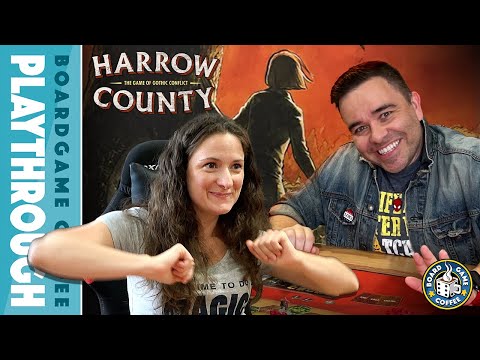
Board Game Coffee's Mark Maya calls Harrow County: The Game of Gothic Conflict a one to three player asymmetric nightmare that will haunt you in your sleep. The game has earned significant respect from the reviewer community for its bold design choices and commitment to thematic asymmetry. Justin from Board Game Animal describes it as a fascinating, fantastic two-player asymmetric experience, sometimes three-player, and wildly asymmetric in all the right ways. The game's willingness to make each faction play under entirely different rules, rather than reskinning the same mechanics, has impressed experienced gamers who appreciate depth and replayability.
Core Mechanics That Define Harrow County: The Game of Gothic Conflict
The Cube Tower Combat System and Action Economy
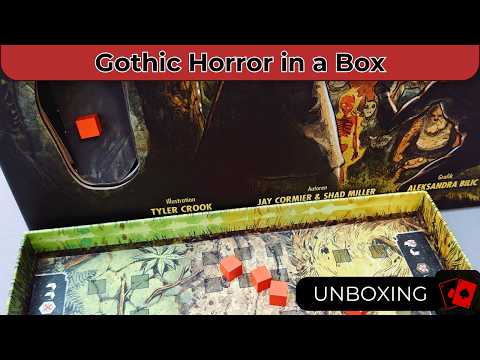
At the heart of Harrow County lies a combat resolution system that feels almost whimsical until the stakes are high. Instead of dice rolls, players drop cubes down a tower integrated into the game box itself, a clever fusion of component and mechanic. As players take turns activating one of five mason jars, they choose between wild tokens, legendary abilities, attack actions, and faction-specific abilities. The cube tower becomes the arbiter of all combat, with cubes trapped and stuck inside creating memory that affects future drops. This makes combat outcomes partially deterministic and partially uncertain, grounding results in physical probability rather than abstract chance. Mark Maya explains that once you use the attack jar, subsequent attack actions can be taken by repurposing other jars, simply forgoing their bonuses. This flexibility within constraint is what allows the action economy to feel tight without becoming claustrophobic.
Wildly Asymmetric Faction Control and Player Powers
The true genius of Harrow County resides in its asymmetric design. The Protectors activate their abilities directly, choosing from upgrade cards that permanently improve their options. The Family, by contrast, pulls tiles blindly from a bag, a fundamental design difference that changes risk tolerance and decision-making entirely. As Mark explains during gameplay, the Family is out to destroy the town while the Protectors are out to save the townsfolk. The Protectors build paths and barbed wire on the board; the Family creates storm chains. Each faction has its own characters, and later chapters introduce a third faction (Kammi) with her own action grid and hide-and-seek mechanic, then Hester, who siphons power and can take control of your units. These asymmetries are not cosmetic; they are fundamental to how each side competes, forcing players to learn and master radically different strategies.
The Harrow County: The Game of Gothic Conflict Experience
Incremental Learning Through Narrative Chapters
Harrow County teaches itself across five chapters, each a complete and winnable session that layers new complexity onto what came before. Chapter One introduces the core concepts. Chapter Two adds more characters and mechanics. By Chapter Five, players have access to three factions with wildly different rule sets, each complete with unique powers and win conditions. Justin notes that the game teaches itself incrementally through multiple plays, adding complexity and elements each time in the form of chapters to introduce the gradually more involved mechanisms. This design is elegant because no two plays need to feel the same, yet newcomers can start confidently at the beginning. The core loop, moving units, triggering abilities, and resolving combat with the cube tower, remains consistent even as the variables spiral outward.
A Thematic Commitment to Gothic Dread and High Stakes
The theme is not decoration; it permeates every decision. The Protectors are genuinely trying to save townsfolk represented by little figurines; the Family is laying storm chains to destroy buildings. A central bramble patch becomes a king-of-the-hill scoring race. The cube tower itself becomes a source of tension, since a player might pour six cubes in and watch them vanish into the mechanism, leaving nothing but hope that something will tumble out the bottom. Justin emphasizes the rich mechanical mix that supports the theme, describing how you manage actions to navigate a hex board, but then there are elements of pick up and deliver, route building, combat with a cube tower, king of the hill, and chit pulling, and it all just works. Characters like Bernice, who nails people to the ground, feel both mechanically distinct and thematically resonant.
What Makes Harrow County: The Game of Gothic Conflict Stand Out
An Unusual and Fearless Mechanical Mix
Most board games that try to blend multiple subsystems end up feeling bloated. Harrow County manages to weave together hex-based area control, route building, pick-up-and-deliver objectives, blind bag chit-pulling, asymmetric player powers, and cube-tower combat into something that feels coherent and genuinely distinctive. Justin observes that there are a lot of moving parts and it takes some adapting to get used to, but it all works. The game never prioritizes one mechanic over another; instead, each mechanism supports both player agency and theme. Combat matters, but it is not the main path to victory. Controlling territory matters, but you are not playing a traditional area-control game. This refusal to simplify is what makes the game memorable.
Exceptional Replayability and Player Perspective Learning
The chapter structure is only half the story. Harrow County truly rewards playing both sides of the asymmetric matchup. A veteran of the Protectors who has never piloted the Family will discover that pulling blind tiles from a bag creates a fundamentally different decision landscape. Justin emphasizes that if you like highly asymmetric two-player games with a lot of richness and depth, Harrow County is one to check out, since it encourages repeat plays, learning the different factions from both sides, and diving deep into what the game has to offer. Players report wanting to revisit chapters not because they won, but because swapping roles reveals entirely new strategies. The three-player variants mean even the fundamental player count shapes the experience.
Potential Drawbacks
A Significant Commitment to Learn and Teach
Harrow County is not a light game, and it does not pretend to be. The chapter structure ensures you learn incrementally, but the first time you teach the game to a new player, you commit to a full session knowing that rules clarifications will come mid-play. Justin acknowledges this head-on, noting that the game is one you will have to dedicate some time to, and if it is your sort of thing, it will be worth it. The asymmetry that makes the game brilliant also means teaching the Protectors and the Family feels like teaching two different games. The cube tower has quirks, since cubes can get stuck and the outcome is partially dependent on the physical state of the tower from previous drops. For groups that love rules-light gateway games, this will feel like friction.
The Wildness of Asymmetry Creates Occasional Balance Concerns
When two factions play under such radically different rules, balancing them across all five chapters is a design challenge without a perfect solution. The Family's blind bag pull means some turns they might pull exactly what they need, while other turns they face decision paralysis with tiles that do not synergize. The Protectors have perfect information over their abilities but fewer activation options. The three-player variants introduce a third faction whose win conditions might not align neatly with the other two. Players new to a faction may feel lost not because the rules are unclear, but because the strategic depth is intimidating. The game's depth is a feature, but it can mean that inexperienced players feel the learning curve acutely during their first few chapters on a given faction.
If You Enjoy Harrow County: The Game of Gothic Conflict
If Harrow County resonates with you, seek out other asymmetric head-to-head experiences like Root, which also makes each faction feel like a different game, or Spirit Island, which offers thematic asymmetry with multiple spirit roles. Justin highlights that Off the Page Games, the publisher behind Harrow County, has impressed him consistently, and recommends exploring their other offerings like Mind MGMT: The Psychic Espionage Game, which shares the asymmetric depth and comic-book source material. The chapter-by-chapter learning curve and incremental complexity will appeal to those who loved the campaign structure of games like Pandemic Legacy, though Harrow County is not a legacy game, since each chapter is standalone and replayable. For those interested in the comic source material, Cullen Bunn's original Harrow County comic series deepens appreciation for the game's thematic choices, though knowledge of the comics is entirely optional.
What Reviewers Are Saying
"Harrow County the Game of Gothic Conflict is a one to three player asymmetric nightmare that will haunt you in your sleep. Well, maybe not the game so much as the story it's based on, but what it's based on is a comic book, and we're here to talk about board games."
— Board Game Coffee
"Harrow County from Off the Page Games is a fascinating, fantastic two-player asymmetric experience, sometimes three-player, and we're talking wildly asymmetric. It's a really fascinating, almost unusual mix of mechanisms. You're managing actions in order to navigate a hex board, but then there's elements of pick up and deliver, route building, combat with a cube tower, king of the hill, chit pulling, and it all just works."
— Board Game Animal
"The family is out to destroy the county of Harrow County, the town of Harrow County, where me playing as Bernice, one of the protectors, is out to save the townsfolk. The townsfolk are represented by these little red figures, and those are the family's little blue demons, called haints, by the way, haint with an H."
— Board Game Coffee