/pic5715770.jpg)
Extended edition includes Crisis & Control expansion.
The Nation is in disarray and a war is waging between the classes. The working class faces a dismantled welfare system, the capitalists are losing their hard-earned profits, the middle class is gradually fading and the state is sinking into a deep deficit. Amidst all this chaos, the only person who can provide guidance is... you. Will you take the side of the working class and fight for social reforms? Or will you stand with the corporations and the free market? Will you help the government try to keep it all together, or will you try to enforce your agenda no matter the cost to the country?
Hegemony is an asymmetric politico-economic card-driven board game for 2-4 players that puts you in the role of one of the socio-economic groups in a fictional state: The Working Class, the Middle Class, the Capitalist Class and the State itself.
The Working class controls the workers. The Capitalist class controls the companies. The Middle class combines elements from both the Working class and the Capitalist. It has workers who can work in the Capitalist's companies but it can also build companies of its own, yet smaller. Finally the State is trying to keep everyone happy, providing benefits and subsidies when needed but trying also to maintain a steady income through taxes to avoid going into debt.
While players have their own separate goals, they are all limited by a series of policies that affect most of their actions, like Taxation, Labor Market, Foreign Trade etc. Voting on those policies and using their influence to change them is also very important. Through careful planning, strategic actions and political maneuvering, you will do your best to increase the power of your class and carry out your agenda. Will you be the one to lead your class to victory?
Hegemony is heavily based on actual academic principles such as Social-Democracy, Neoliberalism, Nationalism and Globalism, and allows players to see their real world applications through engaging gameplay. There are many ways to achieve hegemony- which one will you take?
—description from the publisher

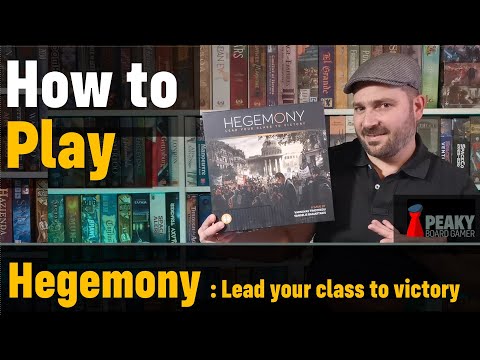

- Feels like it's doing something really different
- Asymmetry reinforces the theme at every level
- Compelling as a model
- Wrestle with uncomfortable decisions
- Not subtle
- Not light
- Not always fair
- political and economic simulation, class struggle
- modern state
Mechanics (from transcript analysis)
- Asymmetric Player Powers — Each player represents a different class (working, middle, capitalist) or the state, with unique rules, incentives, and interaction methods.
- card-driven — The game is card-driven, with policy cards and action cards playing a central role.
- economic simulation — The game simulates economic systems like employment, wages, taxation, and welfare.
Video topics + discussion points
Quotes (from this video)
- It's a ranking of the games that I personally love. Uh the ones that I keep coming back to and the ones that still get me excited to pull them off the shelf.
- In this video, we are covering numbers 40 through 31, which is right around the point that things start to get a lot more personal.
- And that's going to do it for my numbers 40 through 31 in my top 100.
- At this point in the list, these aren't just games I respect. These are games that I actively want to play, teach, and revisit whenever I get the chance.
- And until then, let's get another round for the table.
References (from this video)

Mechanics (from transcript analysis)
Video topics + discussion points
Quotes (from this video)
- As Speaker, I’ve called this council to decide on our placement on the new shelf.
- Blokus, what are you even doing here? You don’t even have a theme. You don’t have artwork. Your box isn’t even two inches thick.
- We have been in the closet, waiting for the right moment. Monopoly! Life! Now is the time! Rise up! Charge!
- Guys, guys! C’mon. We gotta work together!
- Hello! I’ll trade three sheep and two wheat for a place on the shelf!
References (from this video)

Mechanics (from transcript analysis)
Video topics + discussion points
Quotes (from this video)
- Asmodee's buying the uh Welcome To brand and the company. Apparently, it has 3 million plus plays.
- Whenever you have like a degree of news in the tabletop hobby, but not in board games. Like none of the board game sites that I've seen have covered this.
- The problem when you're not transparent with your audience, the problem when you let people figure it out and guess themselves, is sometimes they go to 2 + 2 = 4, when really 2 + 2 = 4.5 in this particular situation.
- Steamforged did release an update I already talked about. Yes, you know, we have it covered. Sorry about that. It's going to be taken care of. It's one of those many things that doesn't look good and probably isn't good, but it doesn't necessarily mean that all the boats are falling over at least not yet.
- Got 5 is strangely addictive. I've been playing it so much. It is a little bit insane.
- Overall I thought Opera Magna was very well done.
- I do like it more than White Castle, that's for sure.
- Overall I enjoyed it. It hit every box. It was a great game. I just didn't feel the wow factor personally. I gave that a 3.5.
- My Island was a disappointment. I I wanted that game to be more for me. It wasn't unfortunately.
- Gloomhaven which I also have been going through a lot. Again, it's another one I want to do a 12 by 12 review of.
- Certain games are just you know, my jam.
References (from this video)
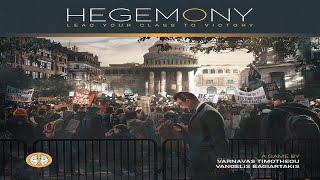
- Game is "special" and "fantastic".
- Heavy game that doesn't feel heavy due to relatable concepts.
- Excellent asymmetry where factions feel familiar yet distinct.
- Masterful negotiation mechanics.
- Phenomenal rulebook and accompanying concept book.
- Components are generally well-designed (aside from the insert).
- Offers depth and replayability through its mechanics and potential expansions.
- The insert is "absolute trash".
- Game has a very long playtime, especially for new players.
- Thematic elements (politics, economics) may not appeal to a wide audience.
- Class struggle, politics, and economics
- Modern political and economic systems
- Brass
- Concordia
- Holler Towel
- Vitals
- Root
- Shawson
Mechanics (from transcript analysis)
- Action Point Allowance — Players get a set number of turns (25) in a game, determined by card plays or discards for basic actions.
- Area Control — The state faction scores based on the prosperity levels of other classes, indirectly influencing their development.
- Asymmetric Player Powers — Four distinct player classes (working class, middle class, capitalist, state) with unique goals and ways of scoring.
- card drafting/hand management — Each faction has a deck of cards, with players managing their hand to perform actions or gain power-ups.
- economic simulation — The game simulates economic concepts like revenue, capital, taxes, loans, and market prices.
- Negotiation — Players engage in negotiation to influence bills, wages, and other game elements.
- Set Collection — Players can gain victory points through collecting specific sets, like trade unions for the working class.
- Voting/Influence — Players vote on policies and use influence cubes to sway election outcomes, adding a controlled random element.
- Worker Placement — Classes manage workers for various tasks, such as working for capitalists or filling roles in education and healthcare.
Video topics + discussion points
Quotes (from this video)
- God damn is he right this game is special this is so fantastic.
- It's a masterpiece this game is awesome.
- On a scale of one to ten it should come as no surprise to that this game is a 10 out of 10.
- The insert was absolute trash I hated it I hated everything about it.
- This game is a 10 out of 10. like I and I honestly I almost gave it the nine because of the commitment this game takes and the theming of it is gonna be of interest to almost no one like except me.
References (from this video)

- Great pick.
- World Order
Mechanics (from transcript analysis)
Video topics + discussion points
Quotes (from this video)
- I've never had a worse convention.
- This is immersion in your gameplay.
- The one ring to rule them all.
- It's like Battleship where you have two players on two sides of like a screen and then each one is creating a dungeon for the other player to go through.
- I much more love Gen Con than Essence.
- Having a tornado. Having a tornado warning at the Gen Con was really interesting.
- This is the first time all day where we don't look around and are surrounded by people.
References (from this video)
Mechanics (from transcript analysis)
Video topics + discussion points
Quotes (from this video)
- Uh if I know that I'm going to be at the table for a number hours. It's not a like I'm going to play this for an hour and then we'll be done.
- Um but I warn people ahead of time like this is this is a big one. It's going to take us a bit.
- Yeah, my head I put it I I would say similar for me, but I I would put it at a at three plus hours.
- Like most of my game nights are around two hours.
- So today I'm going to kind of focus on games that manage to hold my attention even as we get close to or even go beyond three-hour mark.
- Uh because you know, many campaign games are technically like many many hours.
- Um so some of the games that um are on my list wouldn't take that long as a two-player game.
- Like I I but I I it's all relative, you know.
- I feel like another parameter is who you're playing with.
- That can take longer, too. And so, there's another kind of relative thing.
- Right. And even with analysis paralysis, there I I think one of the things that we'll get to in in the top 10 here are games that even if it's taking a while, that you don't end up minding that, because there are certainly some long games that I
References (from this video)
- Absolute masterpiece of a game.
- Amazing game, really, really amazing game.
- Has depth that allows for intricate gameplay.
- Too much asymmetry for some players.
- High barrier to entry due to complexity and needing to learn all faction rules.
- Theme is a turn-off for some.
- Requires playing a lot in succession to understand interactions.
- Socioeconomic themes, classical history (implied)
- Not based on a real place, but models society.
Mechanics (from transcript analysis)
- asymmetry — Features a high level of asymmetry where each faction plays very differently.
- Complexity — Considered very crunchy, complicated, and detailed, requiring significant learning and understanding of all rules.
Video topics + discussion points
Quotes (from this video)
- It doesn't feel like 4 hours.
- This is the player interaction game.
- absolute genius that you are. This is not a war game.
- the perfect level of asymmetry for me.
- This is set in 2010.
- It's an absolute masterpiece of a game.
- it's too much for me.
References (from this video)
Mechanics (from transcript analysis)
Video topics + discussion points
Quotes (from this video)
- Basically, I think this is the third maybe fourth. I think it's the fourth time I've done a top 10 overrated games list, hence more. And I called it you have been warned.
- But actually, surprisingly, despite somebody sharing it on Facebook, which I was not happy about really, cuz I mean I I don't know. I I like my content being shared on Facebook and I do say do it, but that list is a dangerous one to put on Facebook because, you know, we do have this problem in the hobby of toxic positivity.
- No, shut off. It is really is not. I'm doing it because I enjoy it.
- There's certainly examples of this you see in real life and it's just gez, how closed is your bubble that you have to think that that argument still works?
- Do not be misled thinking that you look at this game and it's going to be a charming little farming game. It is everything but.
- This game isn't really a game about cultivating roses. This is a game about debt management.
- This game is multiplayer solitaire through and through.
- This is a solo puzzle.
- Hated this.
- The hobby has become very elitist and very clicky.
- Shame on you if you do it.
- If you are done with the table and you're not playing something next, then get off the freaking table and let someone else use it. Honestly, it is selfish and irresponsible.
- If you are the sort of people who leave your games on a table for hours on end just to hog the table and stop anybody else playing on it. And you essentially don't return to the table for hours on end. [...] If you're doing that to gaming tables, then shame on you.
- For a hobby that is meant to be about, oh, let's be inclusive and let's uh get new people in and stuff like that, it doesn't half do a pretty damn good job of excluding a lot and, you know, being very elitist.
- It's not a good feeling and it is something that is hurting, you know, conventions in general and I think that's the biggest reason that conventions sometimes don't work.
References (from this video)
- Unique and different game experience
- Brilliant economic modeling
- Engaging player interaction through policy and market manipulation
- Thought-provoking simulation
- Played fast despite the length
- High replayability due to different player roles and interactions
- Best with exactly four players, making it a significant time commitment
- Initial setup can take a while
- Some political themes might be sensitive for certain groups
- Socioeconomic classes and political influence
- Modern day
- Prime Minister
Mechanics (from transcript analysis)
- Action Point Allowance System — Players play cards to take actions, with opportunities for basic actions and potentially free actions.
- Asymmetric gameplay — Each player class (Capitalist, Middle, Working, State) has unique rules, objectives, and actions.
- Blind Bid — Players can blind bid influence cubes to sway policy votes.
- economic engine building — Players manage resources, build businesses, set prices, and manage income to achieve their goals.
- influence — Players place influence cubes into a bag to determine outcomes of policy votes and potentially win them.
- Resource Management — Players must manage money, food, healthcare, education, and luxury goods to keep their population happy and score points.
- Set Collection — Players aim to align policy markers in specific sections (A, B, C) to score bonus victory points.
- Take That — Players can influence policies or market prices in ways that negatively affect other players' strategies.
- Variable player powers — The distinct roles of each class provide different ways to interact with the game's economy and policies.
- Worker Placement — Players assign workers (meeples) to companies to generate income or resources.
Video topics + discussion points
Quotes (from this video)
- this didn't feel like anything I'd ever played before
- absolutely loved it
- that to me was the fun of the game and it didn't drag with negotiations
- I love economic modeling games and that's what this was
- we kept saying during the entire time we play just how brilliant this is
- it's such a cool experience
- this is a game I would play any time
- this is from hegemonic Project Games and uh if you get the chance if it comes back in stock and you got the right group I I really think this is cool
- I still love White Castle I think the expansion is a good addition to it
- if you like White Castle I recommend it but I don't think that it's actually absolutely necessary
- The Floor is a game show hosted by Roo
- people falling out like flies
- dropping like flies man they ain't losing because they can't bake they're losing because they're getting sick and stuff
- you need to go out there and sign up for their newsletter because the Black Friday sales are coming
References (from this video)

- doesn't have a BoardGameGeek page
- strategies to work on how to make difficult choices in the world of limited resources
Mechanics (from transcript analysis)
- Strategy — focuses on strategies to work on how to make difficult choices in the world of limited resources
Video topics + discussion points
Quotes (from this video)
- The Last of Us was a game that well honestly it was a devastating emotional rollercoaster.
- Patchwork great game but honestly not something that i thought would be hitting the news unless there was some type of warehouse accident
- Baldur's Gate 3 is the next in a very successful rpg series in the world of D and D where outcomes are based on the roll of the dice
- Stargate SG-1 the role-playing game is currently on kickstarter being bought for us by wyven gaming
- there's going to be a power rangers rpg brought to us by renegade games
- Bard's Song aims to be a new approach to classic dungeon crawling with tactical combat as well as a game that evolves as the story it creates emerge
- giving players agency to choose their own path is at the core of the game's ethos
- the game called hegemony has a calming voice that I found slightly scary
- veil fate is all about hiding in plain sight where two to eight players will carefully plan like a strategy game but also be using the play interaction of a social deduction game
- Spiel digital is a totally free event and boasts to be the largest online board game convention of all time
References (from this video)
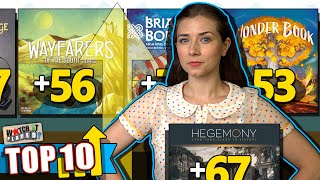
- politico-economic struggle between socio-economic groups
- a fictional state
- asymmetric
Mechanics (from transcript analysis)
- Asymmetric gameplay — an asymmetric politico-economic card-driven board game for two to four players that puts players in the role of one of a fictional state's socio-economic groups.
- card-driven — an asymmetric politico-economic card-driven board game.
- policy voting — voting on those policies and using their influence to change them has a direct result on the game's direction.
Video topics + discussion points
Quotes (from this video)
- we've tracked the board games with the biggest gains in popularity traffic discussion sales and news this month and have compiled the top 10 into this list of games with momentum
- and this episode's first sponsor is no stranger to surprises though these usually turn out to be a dagger sunk into your back
- so it sounds like garfell games is going to give players a lot to look forward to for quite some time to come
- the publisher splatterspellin has been generating a bit of buzz recently
- the momentum of the next highest climbing game on this month's list should come as no surprise to anyone familiar with the popularity of its source material
- who among us hasn't had a potion explode
- so you know a tuesday hegemony is an asymmetric politico-economic card-driven board game
- the success of the historical brian beru rested on four pillars his victories against the vikings the favor he managed to garner with the church the alliances he forged through political marriages and his extensive expertise in decorative napkin folding
- a game that first appeared on store shelves 32 years ago kicks off our top three
- and that is how i knew i was getting older can't even remember the year i was born in
- because mars needs more scented candle stores
- so players looking to trick out their copy of the game may want to keep an eye out for these potential upcoming upgrades
- you know like outside
- congratulations you've survived to the end of this episode but there's more games to discover by continuing on to 25 board games that are available right now or one of watch it plays other entertaining and informative videos
References (from this video)
- Impressive and unique design
- involvement of academics in the design
- pricey
- long playtime may limit tables
- political economy, elections, economic shifts
- asymmetric game where you play as the working class within a state/capitalist system
Mechanics (from transcript analysis)
- asymmetric factions with their own player boards — Each player controls a different faction with its own board and goals
- political/economic interaction with elections — Shifts in the economy and elections influence play
Video topics + discussion points
Quotes (from this video)
- I can't wait to get my hands on this
- it's one of the most exciting things I've seen
- this looks stunning on the table
References (from this video)

- deep governance simulation with meaningful choices
- high replayability due to asymmetry and evolving policies
- educational/edutainment dimension adds learning value
- expansion and four-player mode offer breadth
- noted learning curve and complex setup
- dense rules may be challenging for some players
- governance, economics, elections and public policy
- a country with social classes (working, middle, capitalists, state) and political/economic systems
- edutainment content exploring governance and societal dynamics
- Lords of Water Deep
Mechanics (from transcript analysis)
- asymmetric roles — Different factions (working class, middle class, capitalists, state) each have unique goals and actions.
- Asymmetric Teams — Different factions (working class, middle class, capitalists, state) each have unique goals and actions.
- economic/wage engine and prosperity — Wages, prosperity, and the ability to wage demonstrations/strikes influence scoring.
- election/policy changes — Elections and policy changes alter game state and scoring dynamics.
- open market and trade — Capitalists can trade on an open market to gain points/money.
- scalability — Game scales with player count; four players used in discussion; expansion allows auto players.
Video topics + discussion points
Quotes (from this video)
- it's a clever little card drafter very simple you get card you choose one you give some to your opponents and you're creating a tableau of 18 cards but it's a sequence Tableau and at the end of the game you'll run through that sequence from left to right in order to determine your score
- this is prototype and this is going to Kickstarter soon
- it's very nice and thematic as well from a holiday there is some magic I love the photos I love every single card
References (from this video)

- Deep thematic integration of civics/economics with strong educational potential
- High-quality components (metal coins, well-made boards, tactile tokens)
- Interconnected systems and diplomacy add rich strategic depth
- Excellent for discussion and learning in civics/economics contexts
- Very long and complex; intimidating for newcomers
- Rulebook is thick and some rules can be interpreted multiple ways
- Best experienced with four players; can be less practical with fewer players
- Politics, economics, civics, governance, social systems
- A modern political economy simulation featuring a state, worker class, middle class, and capitalist class vying for influence and victory points.
- Real-world inspired with heavy concepts translated into game mechanisms
Mechanics (from transcript analysis)
- Asymmetric class roles — Each player selects or is assigned a distinct class (worker, capitalist, middle class, state) with unique goals and abilities, creating divergent playstyles.
- Deck-building and hand management — Players hold a deck of action cards; only five are played each round, with two saved for future rounds; discarded cards can still be used for basic actions.
- End-game scoring and track-based victory — Victory points are earned on a circular track with different classes contributing points in distinct ways; end-game scoring adds depth.
- Interdependent economy and diplomacy — Actions affect other players; negotiation, deals, and influence via media or unions shape the board and outcomes.
- Negotiation — Actions affect other players; negotiation, deals, and influence via media or unions shape the board and outcomes.
- Production, wages, and taxation — Wages are paid to workers, production yields resources, and taxes/bills adjust income and strategic options.
- Voting — Before votes, a bag is filled with counters and tokens; players draw and place tokens to influence yay/nay outcomes, with potential pre-vote manipulation.
- Voting with a bag of counters — Before votes, a bag is filled with counters and tokens; players draw and place tokens to influence yay/nay outcomes, with potential pre-vote manipulation.
Video topics + discussion points
Quotes (from this video)
- Hegemony is a heavy heavy strategy game.
- This is a game that should be looked at by folks who are majoring in civics or political science.
- The components, especially these metal coins, there's just some satisfaction when you're playing with those.
- What a game, what an experience.
- It's so realistic.
References (from this video)

- Big game this year
- Conceptual government style
- Did not get a chance to play this year
- Conceptual government style game with different classes
Mechanics (from transcript analysis)
Video topics + discussion points
Quotes (from this video)
- I think it's my favorite coin game of all time now.
- It's so Technical and crunchy and just immersive.
- It comes with these really beautiful standies.
- This is going to be part of the giveaway so just leave a comment below.
- It feels like you're playing Skyrim or Fallout but in this Studio Ghibli style World post post apocalypse.
- The way the mechanics and stuff which I'll talk about in the review which will be linked really lend itself to breathing life constantly through the course of the game.
- And that to me is like such a new breath of fresh air.
- So if you plucked me out of this universe somehow and you said you have a choice between you know Skyrim and Fallout no thanks and uh um you know this is like post postapocalyptic Earth I 100% I'm going to play in the world of the earthborne.
References (from this video)

- It is really, really thematic.
- We enjoyed playing this.
- It took a while for us to learn and teach because of the high asymmetry.
- Asymmetric factions representing workers, businesses, the middle class, and the government.
- Root
Mechanics (from transcript analysis)
- Asymmetric gameplay — Highly asymmetric game where players control different factions with unique actions and goals.
- economic simulation — Small businesses work in between, and the government tries to keep things even and manages their own stuff.
- Worker Placement — Workers try to get jobs in businesses and go on strike for more wages.
Video topics + discussion points
Quotes (from this video)
- 2023 was a great year for board games.
- What we're going to talk about here is games typically in the um in the more Euro mechanical sort of space which went with a theme and then really found a way to make the mechanics match that theme correct.
- It's not a list of the games where we really felt like we were going out fighting dragons because the story that was written was really um you know all that sort of thing.
- This is unpaid and this is completely just our opinion.
- It's really really thematic I think we we enjoy playing this.
- Not a theme for everyone but it does really work with the it's a different way of looking at an investment game I suppose.
- It clicks together in a way that really fits the art theme they're going for.
- It gets less thematic as you go along that line but still the way it all fits together.
- There's clearly a lot of uh airport nerd love that's into the scenarios and I think that's what's good.
- The core mechanism here does something totally new to fit a theme.
- The game is almost impossible to beat.
- Feels like the board games feel like the video games.
References (from this video)

- not a fan of its solo
Mechanics (from transcript analysis)
Video topics + discussion points
Quotes (from this video)
- This is just a dice chuck fest with very, very, very little mitigation and it just constantly kicks you in the face.
- It's like a game from the 80s but good.
- The app that walks you through the game I think is the best I've ever seen at that.
- It just does more of the same, but slightly different.
References (from this video)

- Thematic solo game
- Legacy of You
- War game
Mechanics (from transcript analysis)
- solo — Mentioned as a solo game.
Video topics + discussion points
Quotes (from this video)
- Halls of Hegra and the British way counter Insurgency at the end of the Empire best podcast One winner is the One-Stop Co-op shop okay Beyond soliter running up and talk cardboard runner up board game app unmatched digital Edition runner up Twilight Struggle Red Sea and Fleet the dice game there you go
- BG BG is about playing games not going to and there's you know there's a few panels but it is not a panel convention it's not like packs or you know those things
- It's fine we paying off yes the the hobby was way more intimate because you you could play almost every new release in 2000 that came out that year in those years
- It's like oh it's like the whole like Michael Jordan bet on basketball so he just made him go play baseball for a season
- I firmly believe even with no proof whatsoever I firmly believe that he was absolutely uh suspended from the NBA for for gambling
- I hate YouTube face uh um thumbnails yeah I can't wait till that goes out of style
- The only reason it is because because I went looking to see if I could who posted it who posted it it was part of the it was part of the thing because I just looking based on the the on your your former partners thing and I found the appeal from his mother post
References (from this video)

- Binding negotiations
- Strategic support and raid mechanics
- High intrigue can be overwhelming
- Political Intrigue
- Game of Thrones
Mechanics (from transcript analysis)
- Negotiation — Players negotiate agreements that become binding once fulfilled.
- order tokens — The game used face-down order tokens, suggesting a hidden action or planning element.
- Raiding — A raid could attack an army supporting another, disengaging it and removing its support.
- Support — Armies could support adjacent armies, increasing their strength in combat.
Video topics + discussion points
Quotes (from this video)
- You know, you know what's not a grumpy Lance for the rest of it and then I'm like you know what was not a grumpy
- When you have people that like actively work against the grain to make it less fun that just drives me absolutely crazy
- It's just like you you you you contact me you tell me to do this or else you can't do this so I do this and you still can't do what you told me but apparently they must have got a hold of them or something
- The whole thing was is that you had you had your order tokens where and they looked all they all faced down they all faced down and so you talk to people it's like look you need to like we need to work on like you know like sh up the yeah Shoring up this
- I don't know man what did I do where that happen recently
- You know it's like if look you know I'll give you a break or once you know you know we can try to like send this stuff out to you but you got to pay the you obviously trying to fleece me or or like it was your mistake you screwed up and you're looking for a way to try to like make it my fault so then like I'll send you some I'll send you something on the cheap
- I just don't care about the animals I mean I kind of did at at the beginning like oh wow there's so many cool different animals but there really that many different yeah yeah they're kind of almost there's a lot of the same stuff but it's starting slow then going yeah you got slow on this made a bunch of unique buildings which are that's not that's not a good strategy yeah unique buildings are not good because you only get the one bump from them when you buy them and never and never again
- It just it's it's it's very Vivid In My Memory because and it was like a couple of years ago but it it pisses me off that I that it happened
- You know it's like when um other people are just like oh yeah something came up what what okay you know just like and it's always like something that just you know doesn't seem I mean we're adults you just say okay fine I understand but it's just like you know it's like really you you you just found out your wife was going to be out of town going to a concert with her friends and and it's just like you know it's like you know I just and what do I know I mean my wife is very understanding about like my time and I say I'm going to go do this and she's like that's fine go ahead you know I mean like and I don't I can't speak to anybody else's you really sh that just drives me crazy and what really drives me crazy is that like when the person that is actually like in charge of the person the referee the game master the dungeon master when they're the flake and when they're like it's like when you we can't pin you down to a time and of you showing up and being available on a regular basis it like we can't play without you if you're the Lynch pin dude
- I would have rather he had just done his mind Hunter yeah sure I mean then I mean I don't I mean
- it's a pirating game and it's a choose your an adventure game that's pretty good
- my most favorite game of uh of space space base was when I was at the in California at the with the AG folks and we and we we busted out two copies and put them together and we had a game of uh 12 people crazy
- I don't like the the second expansion I think it adds Pointless Stuff to it
- man that chaos order game it's like good about it it's like every single person's little um your your faction has its own way of winning it's totally asymmetrical
- I ruined a book club with playing diplomacy
- Game of Thrones is good Kabuki
- I was taken aback by the massive amounts of intrigue that I didn't enjoy
- Chinatown is a fantastic game
- everything's binding you can't undo something
- Santiago I love Santiago
- that one's not binding either right no it is not binding at all you have to trust that people will give you the water
- Hegemony so if it if it's it's something you negotiate that can be fulfilled done right that now it's binding anything promised in the future is is not is not yeah
- the number one hot podcast in Hobbies was a knitting podcast
- the NFL is liable for 4.7 billion in Sunday Ticket
- the lawsuit claimed the league broke Anti-Trust laws by selling the package at an inflated price
- Deadpool and Wolverine oh Deadpool yeah
- Twisters comes out July 19th
- Inside out two anybody watch that
- The Right Stuff is a is a classic
- money in the bank you suspend a briefcase above the ring and 10 wrestlers fight it out for the briefcase
- McMahon still part of w no he's gone he's G he's gone yeah something happened with him he got disgraced or something
- well yeah he he he had arrested for sex trafficking so yeah
- everybody said oh it must be awesome working in board games no it's it's stressful and it is tough and it is I have I like every other job on the planet yeah it's just get over yourself
- hegemony so if it if it's it's something you negotiate that can be fulfilled done right that now it's binding anything promised in the future is is not is not
- I was taken aback by the uh massive amounts of intrigue that I didn't enjoy
- it literally took him like 60 70 hours to make and he said it just wasn't worth it because he wasn't getting paid for it
- I don't know man we we there was all kinds of that's also a game that had a this was my early days of gaming with my Dallas game group so
- I think patreon is really the the way of the future for that that kind of stuff
- YouTube is killing this Channel or this isn't working anymore or whatever
- The subscribers say the league restricted compensation by offering competition by offering Sunday Ticket only on a satellite provider so you basically had to buy satellite to get the Sunday Ticket
- I just don't care about the animals I mean I kind of did at at the beginning like oh wow there's so many cool different animals but there really that many different
- It's not that many yeah I don't know you know one person tells you out of like what 10,000 miss the booth
- so many companies are sending stuff so early to to people that people like it used to be that that the first time you you would see the game
- 90% of the people who came up were like big fans of the video game and and you know they're they're board gamers they're didn't even know the game existed
- I don't know what the hell the game is hold on let me see I can figure
- The problem is is David Fincher always has like other stuff going on it's the same reason why mind Hunter like ended which was like supposed to be five seasons long and they only got like two
- Enjoy the birthday of your country by blowing a piece of it up
- Vince McMahon is like million pages long
- Money in the bank you suspend a briefcase above the ring and 10 wrestlers fight it out for the briefcase need to need to get a ladder need to climb the ladder you need to grab the the the the briefcase inside the briefcase is a contract that guarantees a chance to to to to wrestle the champion and you can turn it in at any time you want
References (from this video)
- Very thematic
- Complex and deep gameplay
- Interesting simulation of economics
- Requires significant effort
- Can be overwhelming to learn different factions
- More work than pleasure for some
- Economics and real life simulation
Mechanics (from transcript analysis)
- Area Control — Implied through faction play and interaction.
- asymmetric factions — Four distinct factions with unique playstyles.
- economic simulation — Models real-life economics and societal structures.
Video topics + discussion points
Quotes (from this video)
- everything you do is horrible everything you do is very interactive
- if you are like not looking out for the other players someone going to be like Oh I'm just going to make the same Factory and sell things a little bit cheaper so you don't have to sell sell your things and then you're going to have a big problem because now you have to pay those workers and don't have money so they will stop working for you
- you have so many options of upgrading getting different abilities doing all these things to make your strategy the way that you want to make it and have a fantastic time
- I want to play it more
- it's too much work
- my brain hurts too much
- it was so much fun to do a top 10 list again we haven't done one in a while
- please let us know what is your favorite heavy games
- subscribe because you can it's very simple it's not that heavy we believe in you you just click that button and you are a subscriber
References (from this video)

- The capitalist side was a whole new game dynamic.
- Played totally different.
- The state is the least interesting to play.
- Felt like it was on rails.
- Had to do these events or be punished.
- The way you get punished, you lose your victory points.
- Felt like I was asking the same questions each of the five rounds.
Mechanics (from transcript analysis)
Video topics + discussion points
Quotes (from this video)
- Euro, potentially one of the best of all time, Castles of Burgundy.
- It's two player. I wish I could play this more than we do.
- So, right off the bat, if you like deck building games, this out of the box is going to be feel very standard.
- The twist is how you activate the cards that you put in play.
- There's two ways you can win the game. One is to be the first to get to the top of every mission card. Once somebody does that, game over, they win. Or be the last person standing after every other hero's hit points have been knocked out.
- Four-player game is 90 minutes and that's too long for this type of deck builder.
- They introduced shopping carts. The guy his grocery store wasn't successful but he he patented shop shopping carts and he had models come in and push them so people would use them.
- The Black Friday sale is going to be only 25% off. So you still save money by putting in the RDTN code.
References (from this video)
- Finishing the campaign was a great experience
- Fantastic game
- The completion meant a lot to one of the hosts
- Was kind of done by the end of it
Mechanics (from transcript analysis)
- Campaign play — The game features a campaign with multiple scenarios that were completed over time.
Video topics + discussion points
Quotes (from this video)
- Time is weird because it goes very quickly and also slowly at the same time.
- It was so fun. And it was so frustrating when you try you have a plan and you don't do the thing that you're trying to do, but it was very very fun.
- I'm basically decided that I was going to surprise you with relearning the rules and getting that back to the table so that you didn't have fun with it is kind of sad.
- My biggest surprise for real is Stevens. Uh because I like uh Roll & Costa, the designers. We played games from them before a lot of them that we really liked, but Stevens was like something else and I just keep getting uh what you call it? Like uh impressed by their skills of making games.
- I would rather play Via Nebula if I'm playing like a pick up and deliver like gateway game.
- It's a distilled campaign experience. Every like the the combat has been like 45 minutes. There's only like these called combat scenes because you're going to have only like three or four rounds. It's not like oh this combat might last three hours. It's made to be more bite sized.
- It's just like it is plain fun. It is one of those games where I just have fun while I play it. It gives me that feeling of I am having fun.
References (from this video)

- Plays well at two players
- Big beast of a game
- Root
Mechanics (from transcript analysis)
Video topics + discussion points
Quotes (from this video)
- these are the top 10 new to us games of 2024
- I freaking loved this game
- it's so weird so weird and so fun
- this game is so tense and stressful
- it's very enjoyable
- it is just a logic deduction puzzle that's all it is but it is really really fun
- I adore it every time we play it it's so good so good
- I really enjoy this game
- it's so fun it is again the most beautifully produced game I've ever seen
- it is the most fun I think aboard game can possibly be
- I love I think this game is just the best I I love it so much
- everything as Jamie puts just flows properly and makes sense
- it is incredible
References (from this video)
- Has a license insert that makes setup much easier.
- Brass poker chips are a good replacement for the game's money.
- The money component in Hegemony is considered 'garbage'.
Mechanics (from transcript analysis)
Video topics + discussion points
Quotes (from this video)
- Ark Nova is my favorite game of all time.
- Look at how gorgeous that thing is. Oh my god, I am drooling. This is such a pretty insert to get out.
- So, inserts I think are worth it.
- The money you get in those two games is garbage.
- I do have a lot of inserts in a lot of my games. Now, some of them I probably shouldn't have bought because the game doesn't get played often enough.
- Upgrade it from something that's crap to something that's really good. Don't upgrade something that's already good to something that's just a bit more good. It's not worth the money.
- People don't respect wood enough. Wood pieces are great.
- I don't care about miniatures in games now. I'm getting sick and tired of gray miniatures in all my games.
- The Folded Space insert for Civilization and New Dawn is a thing of genius.
- Do bling your games is good, but remember that you're paying a lot of money for it.
- Live comedy these days has suffered a lot because of all the political correctness nonsense.
- The golden age of comedians is sadly dying out.
References (from this video)
- Big game.
- Confusing due to asymmetric factions.
- Really heavy.
- leading your class to victory
Mechanics (from transcript analysis)
- Asymmetric gameplay — Each player has a different faction and objective.
Video topics + discussion points
Quotes (from this video)
- So, we're going for maximum psychological damage.
- Um, so to start, I got to do it. I got to start big. I got to start big.
- So, we're go with Deal with the Devil, a big chunky Euro game that is tough to play even for experienced gamers.
- I'm going to then crack open the rule book for the first time, sit there and read the rules in front of them, and then try my best to then explain the game, which will require several more references to that rule book. And I think that will really add to the uh torture factor.
- And now we have sand timers and you have to be quick and you have to yell and stuff and I think that will be such a wild shift in the other direction.
- We're going to play this game to completion. You cannot end the game once you start the game until the game ends.
- It's the same thing like the entire box. The entirety of Oath Sword at the end of the night. Huge campaign game. Really complicated. Tough to learn. Tough to play. Great game.
- So, down in the comments, let us know who had the best worst game day for new gamers.
- We want more board gamers, not less. So, don't do this to anybody, but have a thought about what you would if you did do it to somebody you didn't like.
- Hamlet. Um, Mike does not like this game. Hate to say it. Hate to say it. It's not a good game.
References (from this video)

- Brilliant game.
- Considered one of the best games of 2023.
- Session length of 4-5 hours is longer than preferred.
- Did not make the host's top 10 games of 2023 due to preference for shorter, medium-weight games.
- Nucleum
Mechanics (from transcript analysis)
- Campaign play — Long play sessions of 4-5 hours.
Video topics + discussion points
Quotes (from this video)
- Endeavor Deep Sea is very, very high to the top of the list.
- I am 90% sure they would say yes.
- My current three favorite games that don't have any kind of space or science fantasy whatever uh element to them is through the ages feast roadin and Maraca.
- So, yeah, it's very much a multiplayer solitaire game, but it's very good.
- I believe it's a much improve a much better version of Hrien's Wall and I love the way that the combat works against the actual the the puzzle of trying to defend yourself against the different forces that are attacking you. I really like it. So yeah, Anarchy gets a big thumbs up for me.
- Flam Rouge, fantastic game. Definitely Flam Rouge.
- I personally don't feel it's right for me to do them at the end of the year because most of the games I will have only played once and some of them I won't have even played.
- I personally prefer Flam Rouge to heat.
- Anything that wins Spiel Dejars will go on to sell way more copies, especially in the family category if it gets that Spiel Dejars award on it, which they have to pay for. They have to pay to have that award put on there, which is how Spiel Dejares makes its money. But it will sell many, many copies of the game.
References (from this video)

- very difficult teach
- requires a huge amount of time and effort and preparation
Mechanics (from transcript analysis)
- Asymmetric — The game is asymmetric, requiring separate explanations for each player's abilities.
Video topics + discussion points
Quotes (from this video)
- Movie Tricks is really good. Movie Tricks is from Chitty Fox Games. It's a trick taker, but it's got a bit of a kick and I really like that.
- Severton is a game from Vlades Shaattle. You may have heard of Vlad Shaattle, but he's got a new game this year called Severton. It's the first time he's had a new game published for about 10 years. And a little bit like Dutch Resistance: Orange Shall Overcome, it's a cooperative game where you're trying to complete missions. And it's really, really good. And not many people are talking about it.
- The new version for me is an improved version of the game. So, if you like Ingenious or Genal, whatever you want to call it, then have a look at the 3D version. That was really good.
- we played this game called drop alter and I absolutely blitzed it. I mean I think I won I think I won six of five of the six rounds that we played or something like that.
- In general, I don't play abstract games. But there are certain ones which I do play and I do like.
- Project L is another really really good game and I really like Project L and uh and that is a completely abstract game.
- I dread the day when I have to play on Mars again because I don't have the time, mental energy, everything else to go back and relearn on Mars.
- Talisman. 34 year gap between playing it.
- as much as A Trespass Odyssey was the most complicated game that I've ever played and some of the rules were extremely confusing and we weren't sure of some of the rules after 25 games, that game had things in it which I have never had that experience from any other game ever.
- And I've heard that Kingdoms for Lawn offers a similar experience.
- But when I'm playing it solo, if I'm not live streaming it, my brain because of the weird memory issues that I have, literally gets to a point and I go up and it just stops and my short-term memory disappears and I'm like, I have no idea not only what I was doing, but where we are, what phase we're on, or anything like that.
- live streaming it and talking to the audience and keeping things going is the only way that I can actually get my brain to, you know, work and be able to cope with playing the actual game itself.
References (from this video)
- Lots of banter, backstabbing, and negotiation.
- Enjoyable experience where the capitalist role was a comfortable win.
- Effective use of policy manipulation to control wages and taxes.
- The game 'just works' for the host.
- Production could be initially low.
- Neglecting education and healthcare can be a downside.
Mechanics (from transcript analysis)
- Policy manipulation — The host mentions aggressively using policies, specifically lowering wages and taxes.
- Production management — The host focuses on building food establishments and improving companies.
- Sniping policy proposals — A tactic involves using an influence cube on the last action of the turn to make a policy immediate.
- Worker Placement — The host discusses placing workers and building establishments like TV studios and radio shows.
Video topics + discussion points
Quotes (from this video)
- Spike did ages ago. God, that was an old review.
- I don't take Christmas that seriously really.
- Call me a Grinch if you like.
- It's like I don't get that hyped about Christmas.
References (from this video)
- Simulates political/economic themes well without being preachy
- Actions make sense within the game's world
- Rulebook and faction sheets are well-designed for learning
- Expansion content adds historical events
- Middle class faction is a hybrid and less unique
- Theme might not appeal to everyone
- Requires a specific player group to enjoy fully
- Political economic
Mechanics (from transcript analysis)
- Asymmetric gameplay — Players control different factions with unique abilities and goals (Capitalist, State, Working Class, Middle Class).
- Card Driven — Players use a hand of cards to perform actions.
- economic simulation — Players make decisions about wages, production, and resource management.
- Worker Placement — Implied through actions like passing laws and workers going on strike.
Video topics + discussion points
Quotes (from this video)
- Sky Team is absolutely phenomenal.
- This game is just awesome.
- the gameplay itself is is super fun.
- this was a super big surprise for me because I mean I never played Whistle Stop.
- Second edition because it's just improved in literally every way.
- This one is just absolutely fantastic.
- This one is the simplest of the three games.
- this one does a really cool system of like you actually lose.
- It just they knew they knew the assignment with their writing.
- this was I mean I know you like S. Corey if it wasn't so long. I think we both kind of settle on this one in current state being the best of the three.
- it's a 7.3. I could have sworn this was at like a four at one point, which is fair cuz I think uh Portal Games kind of shat the bed on the game.
- the actual gameplay of this one is one of the best uh cooperative survival games out there.
- Awesome thing of like a good example is oh hey you actually when you're exploring you come across a shack that has some preserved food
- this one remastered, they they condensed it down
- The expansions for it um, Well, because now it's all cross compatible.
- it literally is role to resolve. like you can be as strategic and tactile as you want. If dice if you roll blanks, you roll blanks and [censored] off.
- This one's absolutely fantastic.
- It's actually a digestible campaign game. Like you can finish it and feel satisfied
- My only hiccup with this is its expansion. while as good as an expansion is a continuation of the main campaign story except you don't play with the characters that you were playing with.
- The Cloud Spire one, I think you'll like though.
- This game is literally luck the game
- the Tangle Woods ones, I'm like, do I hate this game?
References (from this video)
- I thought it worked pretty well.
- It was fun.
- Takes a bit to get used to.
- Folklore
Mechanics (from transcript analysis)
- Hand Management — You're keeping two cards. So, you'll have three cards and you play one every turn, but you'll keep two cards for the end and the two colors your two cards are the colors that score in the tableau.
- Tableau Building — You are building out these this this tableau and everything's going to score based on where it's put out.
Video topics + discussion points
Quotes (from this video)
- Fiction: Banned Books, this is from All Play. I really like the first Fiction, guessing a five-letter word. If you like things like Wordle, um this is a good sort of one versus others game because one person is trying to stop you from guessing the word cuz they lie they have to lie about a letter each time, but you know they lie, so they're picking the right time to lie. But this offer this adds some special powers and things to it, so it's slightly better than the first one, I think, if you care about the stuff. If not, you can still play it normally, so great little game.
- Got 5, a great deduction game for kids, wonderful components. Basically, um you everyone can see your numbers and you're guessing if this is higher or lower than your numbers and where they fit on a grid really works well for kids. There's a lot of good deduction games for kids these days. Another 8.5.
- And Catan on the Road, what a glorious card game version of Catan, one one few games that I am going to get a copy of this for my house because my kids and family liked it so much. We can play this with anybody. It takes Catan, it distills it down into 15 minutes. What a wonderful thing. Like it a lot.
- So, almost 15 minutes for 36 games.
- If you have thoughts on these games, you disagree, agree, whatever it might be, let us know in the comments.
- Like I said, you can find more information about most of these games on the Dice Tower channel or you will hear more about them in the future.
- Hey everybody, thanks for watching another video from the Dice Tower.
- Do you want to learn more about us, communicate with us? We have a Facebook group. We have a Discord channel. Lots of different ways to get involved with the Dice Tower.
- You can find that in our Linktree link below. So, just click that, it will take you and you can communicate with us on Facebook, join our Facebook groups. There's lots of cool things that you can find and become part of the Dice Tower.
References (from this video)
- Ambitious gameplay with asymmetric class warfare
- Rulebook required two formal revisions
- Meaningful errors and gaps in the initial rulebook
- Asymmetric class warfare
Mechanics (from transcript analysis)
- asymmetry — asymmetric class warfare, up to four players pursuing entirely different objectives in a shared simulated economy.
- Simulated Economy — in a shared simulated economy.
Video topics + discussion points
Quotes (from this video)
- Great games shipped with terrible rulebooks.
- The problem isn't the design, it's the documentation.
- When the gate is broken, it doesn't matter how amazing the garden behind it is.
- The rulebook is supposed to be the gate that lets you into the experience.
- This isn't getting better. We're not talking about ancient games... we're talking about high production releases from the last few years that arrived with rulebooks that simply do not work.
- That's not a learning curve, that is a wall.
- The rulebook tried as hard as it could to hide all the weird stuff.
- The cruelty of it is the context. This is a re-release.
- A reprint is supposed to be your second bite at the apple, your chance to sand down every rough edge.
- The BGG threads at launch were just flooded with rules questions, and people were asking whether later retail copies shipped with a corrected version, which is the most damning signal a rulebook can possibly send.
- The publisher rewrites the rulebook and releases the new version as a paid product.
- The irony is doing some heavy lifting there. That's almost too perfect.
- Players blame themselves first.
- And that is the real damage of a bad rulebook. It makes people feel stupid.
- There is a difference between density and dysfunction.
- A good rulebook scaffolds complexity. It layers information in the order a player needs it.
- The structure is so dense and so poorly sequenced that you consistently have to read it multiple times across multiple sessions before anything coheres.
- Community-built rule summaries became the standard learning tool, more reliable and more frequently consulted than the rulebook the game shipped with.
- More than a decade after release, the standard recommendation for new players is still to skip the rule book and watch a video tutorial first, which is a clear signal that the official documentation never became trustworthy enough to stand on its own.
- That's not an FAQ, that is a corrective supplement to a deficient primary document.
- That's what bad rule books generate, this cottage industry of third-party fixes that should never have been necessary.
- At some point, a pattern is a policy.
- The rule book was written for people who already know how to play.
- A game asking players to invest significantly in both time and money should not require that players outsource explanation to volunteer fans online.
- Simplicity is no protection.
- Writing a clear rule book is a separate skill from designing a clear game.
- When you've spent that much money and waited that long, opening the box to find a document that cannot explain how to play feels like a betrayal of the implicit contract between publisher and backer.
- Complexity is not an excuse for poor structure.
- Game designers are not naturally positioned to ask that question because they already know everything. They need editors who do not.
- Professional technical writers exist. Rule book editors exist as a dedicated specialty within the hobby now.
- Until publishers treat rule book production as a non-negotiable line item rather than an afterthought squeezed into the final weeks of production, we will keep having this conversation, and players will keep arriving at what should have been a great first session armed with a document that sets them up to fail.
- Every single game we've talked about today is worth playing.
- The rulebook failures we've documented are a reason to seek out community tutorials and third-party summaries and how to play videos before your first session. They are not a reason to avoid the games entirely.
- The rulebook is supposed to be the gate that lets you into the experience. And when the gate is broken, it doesn't matter how amazing the garden behind it is.
- The Conan rule books were universally panned, and that experience cost Monolith both bad press and the additional expense of rewriting and posting replacement rule books to backers.
- That's the line that should be tattooed on every studio's wall. A game designer understands their game completely and intuitively, which is exactly why they are poorly positioned to write the document that explains it to someone with zero context.
- Until publishers treat rule book production as a non-negotiable line item rather than an afterthought squeezed into the final weeks of production, we will keep having this conversation...
References (from this video)
- Unique and different
- Not Hegemony 2.0, may disappoint fans of the original
- World Order
Mechanics (from transcript analysis)
- area influence — Competing for control over different regions on the board.
- Asymmetric gameplay — Each faction has its own unique deck and abilities.
- Card Play — Playing cards to perform various actions within the game.
- Deck Building — Players have their own deck of cards that they play from.
Video topics + discussion points
Quotes (from this video)
- Create your hero and go on an amazing adventure in this unique land of Evershade.
- This game has a very robust character creation and upgrading system.
- We love this game a lot. We love the prototype.
- It's a fantastic experience.
- it's a rogue light, which means you go into dungeons, try to get as far as possible, hopefully destroy the bad guy, and call yourself victorious.
- This game has one of the most interesting mechanisms I've heard of lately. Let's see how it works. This game has upgradable dice.
- the art style is epic, is different.
- it's impossible to finish that game.
- It does take a lot of table space.
- Minecraft is one of your, if not the favorite video game, right?
- Is it weird that I want to play it more now?
- support the channel because we make these videos every single month. It takes a lot of time, effort, and we love doing it.
References (from this video)

- Deeply asymmetric gameplay
- Engaging systemic interaction
- Creates a 'live ideological contest' at four players
- Promotes interesting post-game discussion
- Genuinely different from standard game genres
- Dense rules load
- Not suitable for casual play
- Can be perceived as too 'heavy' or complex by some groups
- Social classes, public systems, labor, capital, and the state
- Modern day political economy
Mechanics (from transcript analysis)
- asymmetric roles — Different roles (capitalist, working, middle class, state) experience and score differently, putting pressure on the system in unique ways.
- economic simulation — Involves managing production, employment, welfare, taxation, and public services.
- Systemic Interaction — Player actions create systemic effects that impact other players based on their role in the society.
Video topics + discussion points
Quotes (from this video)
- That's what we're covering today. And we've got a great spread, too. Some of these are tense strategy games, some are chaotic and cinematic, some are cooperative, some are mean, and one of them is basically four people daring each other to ruin their own potion.
- It's a political economic simulation about social classes, public systems, labor, capital, and the state.
- Which is exactly why four players is essential here. This is one of the clearest examples on the list of a design that is most itself at four.
- At four, every policy has a face. Every economic shift has a stakeholder. Every argument at the table suddenly has substance because the people affected are literally sitting there saying, 'Well, this is great for you, but it wrecks my entire round.'
- The Quacks of Quedlinburg, which is pure push-your-luck joy.
- In our experience, it is one of the all-time best examples of simple tension done right, because the entire experience is built around a question everybody understands instantly. Do I stop now, or do I pull one more?
- Four is perfect, because this kind of game thrives on shared reaction.
- So, if your group wants something interactive, accessible, and wonderfully dramatic without a huge rules burden, we think Quacks at four is an easy recommendation. It's loud in the best possible way.
References (from this video)
- Highly interactive.
- Unique class systems.
- All classes are perceived as overpowered on BoardGameGeek, indicating a unique design.
- Designer showed that every class has a forum thread dedicated to it being overpowered.
- Great fun to play, especially at conventions.
- Host loves the game despite it being a 'weird exception'.
- Not recommended for new players due to complexity.
- Some classes are easier to grasp than others.
- Requires players to be hyperaggressive with policies for certain classes.
- Social political class system
- Each class has a unique way of influencing the game state and a dedicated forum thread on BGG complaining about its power.
- Twilight Struggle
- Pursuit of Happiness
Mechanics (from transcript analysis)
- area influence — Players influence the board state through their class actions.
- Asymmetric gameplay — Each class has distinct mechanics and objectives.
- Political — Involves influencing policies and managing societal structures.
Video topics + discussion points
Quotes (from this video)
- It is better than I remember it from the first edition. Certainly, I think it's improved like streamlined a few things.
- This one doesn't seem to know when it wants to finish. It just seems that too much is dependent on the players in this one.
- I hate Concordia. I've hated Concordia since its inception. It's now a running meme that I hate Concordia. I have always hated it. I don't like it. It's boring. It's boring.
- I just find it so tedious and dull that I practically fall asleep playing it.
- it's just not a fun game for me. I just find it I don't I don't like it. It's I find it boring, tedious, and punishing for all the wrong reasons.
References (from this video)
- Insanely unique and thematic factions
- High replayability
- Fascinating theme with X factor implementation
- Massive capacity for banter and thematic stories
- Satisfying voting mechanic
- Crunchy game with lots of interaction
- Theme serves as a relatable backdrop for banter
- Immersive theme
- Rulebook sucks, lacks table of contents and proper labeling
- Player aids are lazy copy-pastes of the rulebook
- Card draw luck heavily impacts the game
- No way to tutor or search for cards
- Long playtime (4+ hours)
- Learning curve is uncomfortable
- Pacing issues, peak is too early
- Not much happening on the board
- Lack of significant mechanical progression
- Proposing a bill feels like an uneasy action with potential for zero outcome
- IMF intervention can be very disruptive, wasting turns
- Not much room for player expression
- State faction can be a snooze-fest, not recommended for Euro players
- class warfare
- modern day society
- Root
- Sid Meier's Civilization (2010)
- John Company Second Edition
- Twilight Imperium 4
Mechanics (from transcript analysis)
- asymmetric factions — each of these factions is insanely unique and thematic... each faction has different ways of winning.
- automation — these tycoons aren't directly beholden to labor complaints because they can automate their businesses.
- Card Play — Each round will have you taking turns of playing one card from your hand using its ability or discarding it to do a faction action.
- Economic policy — these are how big the government is minimum wage taxation cost of public Healthcare and cost of public education.
- economic simulation — The capitalist trying to get the most Capital every round that is cash money after it gets taxed this slot mostly gets money by producing goods via their businesses and selling them to other players or exporting them to the international market.
- Immigration — the working class will get so many workers definitely a lot of unskilled ones every round and they have immigration to deal with on top of that.
- Political track manipulation — You can move these trackers up and down to do their political agenda... you're frequently looking at what policy you can slowly move over to your side or keep it there.
- Resource Management — everyone can secretly spend a resource they have called influence and that contributes to the final result.
- Taxation — then you do upkeep like possibly feeding your workers and paying taxes yes paying taxes I'm not making this up.
- Voting — Then for voting which we didn't mention yet if someone wants to propose a bill as an action a vote happens for it at the end of the round.
- Worker Placement — The working class they are playing a worker placement is game by deciding which of the businesses to work at... The middle class which is also playing a worker placement game.
Video topics + discussion points
Quotes (from this video)
- I can't review this board game I just can't give it an in-depth review I just can't it's too crazy
- Hegemony is a huge Rising Game on BGG with good reason it's a game about IRL Society with everyone playing different classes and yes this is actually class Warfare the game.
- This is not a review I better not be seeing any comments down below saying whether or not this is a good or bad review because it's not really one.
- The state going broke which which is a huge deal in this game.
- Hegemony is super inter play among all these different parts of society all these different classes you're trying to get the best for your class while trying to squeeze out the most out of every other class.
- The stories from Hegemony much more fun than actually playing the game mechanics.
- Hegemony always provides conflict between classes because they're constantly opposed to one another.
- The game is in fact fun the theme is extremely novel and the way it's implemented with your friends sitting across from you is very entertaining.
- I do think this game's pacing is pretty off for me.
- It feels like there's always so much going on the game for the time you invest into it.
- Hegemony has its crowd I'm glad to have covered it in this way.
- Hegemony is straddling two opposing thoughts for me.
References (from this video)
- Thematic depth and mirroring of real-world societal dynamics.
- Interesting concept of playing as abstract societal roles (classes/state).
- Engaging card play and hand management decisions.
- Unique election mechanic that drives player interaction and game dynamics.
- High player engagement and strategic decision-making, especially in 3-4 player games.
- The middle class is considered the most interesting faction to play.
- The base game provides a good number of plays before becoming predictable.
- The solo game is cumbersome, not fun, and takes up too much table space.
- The two-player game (working class vs. capitalist) is not that interesting and lacks depth.
- The capitalist and working-class factions can feel less interesting and more straightforward to play.
- The state faction's role in a 4-player game can feel like a 'punching bag' and less engaged.
- Randomness in election outcomes and events can lead to strategic frustration and feelings of unfairness.
- Expansions introduce additional randomness and unfairness, detracting from the game.
- Can become predictable after multiple plays.
- Hidden agendas can be unbalanced, either being objectively terrible or leading to self-sabotage.
- Playing as different societal classes and their interests.
- Twilight Struggle
- Twilight Imperium
Mechanics (from transcript analysis)
- area control / influence — Players use colored cubes to gain influence on an electoral grid and bid with purple influence cubes to sway election outcomes.
- bluffing / bidding — Players engage in blind bids with influence cubes during the election phase to influence vote outcomes.
- Card Play — Players play cards for their event, action, or to discard for basic actions. Hand management involves deciding whether to play a card for its effect or discard it for a more basic action.
- economic engine building — Players build businesses, set wages, generate revenue, and manage capital, with different factions scoring based on different economic metrics.
- Loan System — The state can take loans, and if they exceed a certain limit due to an issue on the electoral track, they face bankruptcy and IMF intervention.
- Set Collection — The state faction scores based on 'favor' tracks with other classes, and their score is based on the combined score of their two lowest tracks. Prosperity for the working and middle classes involves collecting health care and education tokens.
- Taxation — Players must pay taxes based on various factors like buildings, workers, and revenue, with taxes collected by the state.
- Variable player powers — Each of the four factions (Capitalist, Working Class, Middle Class, State) has unique roles, objectives, and scoring mechanisms.
- Worker Placement — Players use worker meeples to perform actions, such as employing workers, building businesses, or interacting with businesses owned by other players.
Video topics + discussion points
Quotes (from this video)
- I'm having a really hard time trying to talk about this game. I really want to talk about this game. I'm not actually sure how much I like the game. I do like it quite a bit, but I have some problems with it.
- It's basically it's a one to four player game, you play as either it's almost like you're playing as an idea.
- All of like that part of the game really is very interesting.
- Everything is really revolving around that election phase, and that's also very very unique and interesting as well.
- The game has a lot of really interesting concepts where I like that it doesn't shy away from this.
- For my money, the middle class and maybe the state is probably almost like the most interesting factions to play.
- Thematically it makes all kinds of sense, right? And that's a lot of what this game is. It's like thematically like, oh, that's really cool.
- But then on the other side, I'm like, okay, now I'm trying to win the game. I'm trying to play the game, it just kind of like starts to unravel a little bit.
- I would avoid the expansions, that's my only real recommendation. Just play the base game.
References (from this video)

- Highly asymmetrical
- Interesting concept mirroring real-world class struggles
- Not as hard to get into as expected for a heavy game
- Class struggle in a country
Mechanics (from transcript analysis)
- asymmetrical player powers — Players play as different classes (working class, capitalist, middle class, state) with unique goals and mechanics.
- Card Play — Players play cards for either the action on the card or to take a basic action specific to their class.
Video topics + discussion points
Quotes (from this video)
- This is the people's choice.
- the highest ranked Golden Geek Game of the Year winners.
- the consensus overall favorites of all time.
- It's just like that perfect blend of like fun game mechanisms, uh great art to help sell it, a unique theme that we hadn't really seen at that time.
- It really that's I think one of the infinite exploration.
- This is a game of of woodland might and right.
- It's just a complete package.
- Gloom Haven is a classic.
- This was a phenomena like it like we've all played Pandemic for many of us, very much us included. Uh it was our gateway game into the hobby and now like what legacy game? What do you you're ripping up cards the gate?
- Ark Nova doesn't do anything new per se in terms like there's not like a new mechanic that no one's ever seen before.
- It's living and breathing and and things are shifting all the time based on who's playing what, who's clicking on what, how people rate games and stuff.
- It's just most awesome resource we have for board
- This is Pandemic Legacy season 1, which won in 2015.
- Pandemic Legacy season 1 was this phenomena like it like we've all played Pandemic for many of us, very much us included. Uh it was our gateway game into the hobby and now like what legacy game? What do you you're ripping up cards the gate?
- it was it was cool, man. It was a whole event. Yeah, it really was massive because like you said, it'd be hard for something like that to happen again
- But there was like one maybe two and that was kind of it. But you're also taking, right? So yeah, by Rob Davio. But you're also taking one of the most popular to this day games of all time, Pandemic. Yes. And then giving it this kind of treatment.
- I also think they executed so well. And it's also insanely good. That's the thing. It's like it's not just like, oh this look at this like kind of gimmick that it's a legacy thing. Like no, it was really fun. So memorable
- Uh number one is the Ark Nova. You probably knew this one was happening. Um Ark Nova won in 2021. Um, and uh, yeah, Arc Nova is so good.
- Arc Nova is about running a zoo.
- It's got this great kind of tableau engine building uh where you're going to be building enclosures, putting animals in them, which are, you know, the the different uh animals you're taking care of in your zoo.
- And makes it um you know like you get more points through conservation efforts because again the track uh the appeal track has you know for every three spaces on the appeal track there's one conservation space. You are literally rewarded more heavily for doing conservation which I think is how it should be.
- And that's the thing is like Ark Nova doesn't do anything new per se in terms like there's not like a new mechanic that no one's ever seen before. Sure. And I've always argued like you don't need to do anything new. Like you can just take things that already exist and put them into a really excellent package. And that's literally what Arcan Nova is.
- Um, it's it's now number two. It wasn't number two recently, so it's very recently number two. Just passed up Peggandic Legacy. We'll see if it can catch Brass Birmingham.
- Make sure to rate, talk in forums, upvote images, videos, all the different kind of stuff. Engage with BG because it really does change things like this, this list.
- It is userdriven. It's like the hotness. It's like what's on the hotness? Whatever people are clicking on, BG doesn't choose any of that, right?
- It's just most awesome resource we have for board gaming. We love taking a look at like the data to see like what you know what has captured people's interest
References (from this video)
- Remarkable balance given the level of asymmetry.
- A logical next step for players curious about heavier games.
- Provides comprehensive resources to help players.
- Surprising level of balance in adjusting for lower player counts.
- The most dynamic and beautifully messy way of playing is with three or four players.
- Extremely rewarding.
- Gripping.
- Well worth the investment.
- Learning the game was a chore.
- Heavy barrier to entry.
- Can be too much mechanically or emotionally for some.
- Removes personal conviction, irrationality, and demagogue obsessions from the equation.
- Cannot fully capture real-world structures.
- A lot of content is locked away in the box for two or three player counts.
- Mentally taxing, intellectually taxing, emotionally taxing.
- The struggling tensions and interdependency between economic classes.
- Root
- Cthulhu Wars
Mechanics (from transcript analysis)
- action selection — Players discard cards as a cost to take a standard action available to their class.
- Asymmetric gameplay — A two to four player asymmetric game where each player represents one of these classes.
- Card Play — Rounds involve players taking turns playing a card from their hand, either for the effects listed or discarding it as a cost to take a standard action available to their class.
- Market manipulation — Buying or selling various goods.
- Media influence — Influenced your media to determine the outcome of policies.
- Policy making — Proposes a policy change to be resolved at the end of the round.
- Voting — Influencing the number of your factions cubes in the voting bag.
- Worker Placement — Building new businesses to assigning workers.
Video topics + discussion points
Quotes (from this video)
- The capitalists are fighting for closed immigration policies to distract from their intense lobbying for lower wages.
- While the working class struggles to unify and promote worker rights, a dwindling middle class is trapped in between, valuing their own prosperity while delicately providing small business opportunities.
- Hegemony. A complex heavy-duty simulation of the struggling tensions and interdependency between these classes.
- It gives it this really weird almost semi-cooperative feel.
- It is very challenging. It's kind of devious, kind of exhausting, but ultimately super fun.
- Learning hegemony was a chore.
- Even though it looks drier than a box of cornflakes in the San Jose sun, it's very emotionally charged as these are the systems societies are built on.
- What I really love though is like the best teaching tools, it gives you a similacrum to question your own points of view to understand pressures experienced by those navigating issues outside of your own.
- This is a good worthwhile game with pretty remarkable balance given the level of asymmetry involved.
- Hegemony was an intimidating though ultimately extremely rewarding surprise.
- A heavy brain burner that's gripping but also taxing.
- This isn't the type of game that I want to reach for super often, but it is the type of gaming that makes me love this hobby.
References (from this video)
Mechanics (from transcript analysis)
Video topics + discussion points
Quotes (from this video)
- the algorithm has changed to a to a kind of thing where you can't do series of videos easily. It doesn't like that. You need to do long form content in one video.
- If you can't fit it on the shelf, it's not in the collection. And if you have to fit it on the shelf, someone else is leaving.
- It's like, why? You know, it's bad enough to be doing the whole logging plays to say like, 'Oh, I played this at this time. I played this at this time.' I could not care less who won what game and when.
- You do not have to meet a minimum prerequisite. It's just it does get on my wick that.
- It's like there are two people that sort of get on my wick with this or say that try to get out of the idea of helping to pack a game away. Smokers [...] and then the ones doing the BG stats...
References (from this video)
- Muddled ideology
- Ideology
Mechanics (from transcript analysis)
Video topics + discussion points
Quotes (from this video)
- This is a much better game.
- The muddled ideology is gone and we are left with an examination of real politic in the 21st century.
- And it does a great job of showing world geopolitics in a manageable board game.
- I love how the game models soft power.
- Ward Order is highly interactive, and you will be trading with other players, jostling for influence, and moving armies about.
- The best thing about this game is how you can win without aggression by using soft power and military defensively.
- However, the game comes with two expansions and they feel like cut content.
- I also think the deck building system has potential to break the game with the upgrade cards being just that much better.
- I suspect the game would work better without cards and just choosing one of the actions to take each turn.
References (from this video)
- rich four-way asymmetric structure that simulates running a country
- policy interaction and elections add depth
- learning curve can be overcome with the right group
- state acts as an equalizer balancing happiness across classes
- expansions add new dimensions and solo play options
- high complexity and learning curve
- best experienced with four players; 2-3 players may not showcase all rules
- scoring and balancing can be opaque or potentially frustrating
- economic and political power dynamics, governance, taxation, policy, and elections.
- A four-class political-economic system with government, middle class, working class, and capitalists managing a country across rounds.
- policy-driven simulation of a country with interlocking classes and policy decisions.
- Merchant from Crescent Moon
Mechanics (from transcript analysis)
- action_phase — five turns per round; play one card per turn; can resolve card effects or take a basic action.
- asymmetric_roles — four classes with unique powers and scoring interactions: government, middle class, working class, capitalists.
- Compound Scoring — five rounds; end-of-round scoring based on prosperity and capital; end-game scoring with policy alignment.
- economic_scoring — taxation and capital accumulation drive points; prosperity track progression.
- elections_and_bills — propose bills; tie-break via cubes; use influence to sway results.
- Events — two events per round that the state must resolve.
- events_and_government_actions — two events per round that the state must resolve.
- expansions_reference — expansions (crisis and control) add scoring objectives and extra cards.
- Hand Management — each player starts with seven cards; choose to play or ignore.
- hand_management — each player starts with seven cards; choose to play or ignore.
- policy_boards — seven policy boards that shape wages, welfare, taxation, immigration, and other policy levers.
- round_structure_and_scoring — five rounds; end-of-round scoring based on prosperity and capital; end-game scoring with policy alignment.
- Stacking and Balancing — state actions grant legitimacy and attempt to balance happiness among classes.
- state_legitimacy_and_balancing — state actions grant legitimacy and attempt to balance happiness among classes.
- Variable Phase Order — five turns per round; play one card per turn; can resolve card effects or take a basic action.
Video topics + discussion points
Quotes (from this video)
- this is hegemony
- it's really a socioeconomic simulator
- it's a very ambitious game
- the state is the Equalizer
- there's a lot to learn
- it's a really fun game
References (from this video)

- Organic player interaction and role immersion
- Engaging balance between collaboration and conflict
- Strong campaign-like feel despite a simple core loop
- Heavy discussion burden; may be tiring for some players
- Not ideal for players averse to political negotiation
- asymmetric political economy and class struggle
- Modern country with shifting politics and class structure
- organic, table-driven roleplay through argument and negotiation
Mechanics (from transcript analysis)
- action selection — Five-card rounds; players play a card and may add a bonus, while others influence outcomes
- asymmetric roles — Each player controls a different social class with unique powers
- internal market and policy games — Prices, subsidies, taxes, and laws are negotiated and adjusted by players
Video topics + discussion points
Quotes (from this video)
- Sky Team is a cooperative two-player game where you and your partner are pilots trying to land a commercial aircraft safely, guiding planes through different airports and conditions as you roll dice, manage flaps, adjust thrusts, and engage in an endless stream of disastrous non-verbal communication.
- What makes Sky Team brilliant is how perfectly it captures real teamwork in such a short period of time.
- Thunder Road is gleefully and unapologetically loud, dumb, and brilliantly fun.
- Hegemony is an asymmetric political economic game where each player controls a different social class in a modern country pushing their own agendas through laws, markets, and a lot of very loud table arguing.
- Arcs and the Blood Reach tells this like super messy and overly dramatic space opera that you will remember far longer than how many points you scored in the latest euro.
References (from this video)

Mechanics (from transcript analysis)
Video topics + discussion points
Quotes (from this video)
- This might be a very short video on board gaming ramblings.
- Board games are supposed to be fun.
- Thank you so much for watching this weird video.
- Yes, we had fun.
References (from this video)

- deep, systemic strategy
- ambitious scope and teachable concepts
- high complexity for new players
- long play sessions
- card-driven political economy simulation
- country-level political economy with class and state maneuvering
- driven by cards and actions that shape governance and wealth
Mechanics (from transcript analysis)
- Card-driven actions — cards provide political actions, laws, and governance tools
- economic manipulation — players influence wealth and state relations to advance goals
- Market Pricing/Manipulation — players influence wealth and state relations to advance goals
- multi-faceted strategy — combination of political, economic, and social strategies
Video topics + discussion points
Quotes (from this video)
- the story is amazing
- it's the Dune universe, so obviously there will be intrigues, there will be deck building, there will be resource management and bunch of other things which culminate in a great board game.
- Not to mention, all of these spirits work completely differently, and all of them feel like a puzzle.
- I think it's one of the most unique experiences you can get in board game world, even though it's insane.
- This board game encompasses everything you should learn in an economy class.
References (from this video)
- Unknown
- Unknown
- Unknown
Mechanics (from transcript analysis)
- unknown — Unknown
Video topics + discussion points
Quotes (from this video)
- The common thread here is that all of these games held crowdfunding campaigns.
- The common thread here is that all of these games feature voting as a key mechanism.
- We make the rules. We decide the winners.
- If you were able to get three, four, or all five of those common threads, let us know and we will deduct your point and give you the credit.
- Voting is kind of like negotiation.
References (from this video)
- Highly thematic with asymmetric factions
- Deep political-economic simulation feel
- Noted as a very heavy game with a 36-page rulebook
- economic classes and policy influence
- government simulation
- thematically rich with strong ideological roles
Mechanics (from transcript analysis)
- asymmetric factions — capitalist, working class, middle class, and state each have distinct goals and abilities
- Card-driven action selection — round structure involves drawing and playing cards with varying effects
Video topics + discussion points
Quotes (from this video)
- this game is easy to learn yet complex in how much there is to think about
- this is a very heavy game it's 36-page rulebook is based on actual academic principles
- it's kind of like a more complex version of Patchwork
- the most distinguishing characteristic about Earth is that most of the action occurs with every player acting at the same time
- a racing game where players will try to play Speed cards from their hand to move their car around a track
- a tableau building game with a striking resemblance to wingspan gizmos or Earth
References (from this video)

- Strong, thematic integration of politics and economics
- High production quality and deep mechanics
- Long playtime
- Rulebook is lengthy (noted as a 42-page book in the video)
- asymmetric, power-driven governance
- Political and economic simulation
- heavy Eurogame with real-world analogues
- Twilight Imperium
Mechanics (from transcript analysis)
- Area Control — Control zones on a detailed board to score and influence
- Asymmetric Player Powers — Each player has unique abilities and goals impacting strategy
- Engine Building — Manage resources to build a scoring engine
- Resource/engine building — Manage resources to build a scoring engine
Video topics + discussion points
Quotes (from this video)
- "it's not Star Wars and deck building games"
- "Earth super hyped up Kickstarter game"
- "I have enjoyed my place so far"
- "the kickstarter version comes with a 42 Page Long book"
- "this is about Brewing yes and it's actually about distilling"
References (from this video)
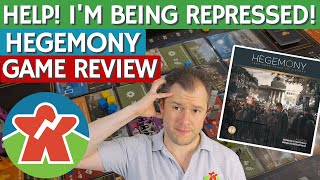
- Excellent theme integration across factions
- Strong interaction and tension between players
- High production quality and component clarity
- Excellent reference aids and well-structured rulebook
- Solid replay value, especially with solo mode expansion
- Very long setup and overall playtime
- Steep learning curve and challenging teach to new players
- Not ideal for casual gamers or random pick-up-and-play sessions
- Voting mechanic can inject luck into outcomes
- Class struggle, governance, and policy interaction across factions
- A politically charged, post-industrial nation with factions representing working class, middle class, capitalist class, and the state
- Card-driven, multi-faction strategy with direct inter-player influence
- Root
- Merchant's Cove
- Crescent Moon
- Vast: Crystal Caverns
Mechanics (from transcript analysis)
- Asymmetric Mechanics — Each faction has unique rules, cards, and victory conditions, creating distinct playstyles.
- asymmetric roles — Each faction has unique rules, cards, and victory conditions, creating distinct playstyles.
- Card-driven actions — Action cards drive turns; players choose to play or discard for actions, creating tension and timing decisions.
- Inter-player interaction — Actions by one faction influence opportunities for others; dynamic negotiation and competition are core.
- Positive Player Interaction — Actions by one faction influence opportunities for others; dynamic negotiation and competition are core.
- Resource and needs management — Wages, goods, services, education and health influence scoring and the economy.
- Resource Management — Wages, goods, services, education and health influence scoring and the economy.
- Solo mode and expansion integration — Expansion crisis and control module yields AI opponents and new modular options for solo or varied counts.
- Voting — Policies are decided via a random bag-drawn set of cubes, introducing luck and strategic risk.
- Voting bag and elections — Policies are decided via a random bag-drawn set of cubes, introducing luck and strategic risk.
Video topics + discussion points
Quotes (from this video)
- it is a 35 plus page rulebook, it's got a lot of information in here
- it's asymmetrical meaning that your roles are different
- this game is a gamer’s game through and through
- the interaction is where it comes through mainly
- the board itself is a really cool Stark board
References (from this video)
- Strong balance and thematic depth
- Engaging strategic play for experienced players
- Long teaching time
- Heavy rules for newcomers
- Power balance and faction abilities
- Futuristic political struggle among factions
- Strategic, heavy, political engine-building
Mechanics (from transcript analysis)
- Area Control — Control zones and influence on a map
- Asymmetric Player Powers — Different powers per faction guide strategy
- Faction Asymmetry — Different powers per faction guide strategy
- Hand Management — Build and play cards to activate actions and scoring
- planning / multi-round opponents — Long-term strategy with balancing choices
Video topics + discussion points
Quotes (from this video)
- Spirit Island's fantastic it is one of my favorite co-ops of all time
- it's not for everybody
- I love teaching games
- I just want a nice Speedy game
- The Crew is a great trick taking game
- Scythe is not a fun one to teach
- it's got the most stuff in it which also makes it the harder one to play with Noobs
- ironically the first game I ever played at a board game club that got me into the hobby was Seven Wonders with leaders included where I actually won the game
- it's a fantastic fun game
- I've played this game a lot
References (from this video)
- Rich four-player interaction with deep strategic choices
- Strong role balance when played with four
- Three-player or two-player variants lose some key dynamics
- Expansion balance can shift the perceived fairness
- Social/economic policy competition
- Governing state with classes and policy
- Asymmetric roles with dynamic policy changes
- Civic structures (thematic peers)
- Power Grid (policy influence)
Mechanics (from transcript analysis)
- Policy & events — Policy changes and events shape player powers and scoring
- Role-based classes — Working class, capitalists, middle class, and state compete via actions and events.
Video topics + discussion points
Quotes (from this video)
- this is essentially a side effect to carcassonne
- I think works best at four players
- Terra Incognita expansion which let's face it is essential for this
- you can't play Mr Nice Guy in dominant species
- Abyss just works that bit better especially much better than two
- you want four players when you're playing it
- Terra Mara is a Quined Games Edition
- the four classes of hegemony hegemony is perfectly good at threee