/pic90721.jpg)
HeroClix is a tactical combat miniatures game where you put heroes and villains from your favorite comics, movies, and TV shows in head-to-head combat. It utilizes the patented Combat Dial System originally found in the collectible Mage Knight miniatures game.
HeroClix miniatures use the combat dial to reflect a change in a characters' combat values, powers, and abilities over time. Some characters will pivot from long range to close quarters combat styles, others will move from acting aggressively to stealing their opponent's energy. The easiest thing to observe will be which characters are worn down by battle and which ones experience rage from getting hurt that helps them strike back at their foes! HeroClix uses gridded maps instead of a measure-and-move system, as well as die rolling.
HeroClix has been around since 2002, and as such there are tons of choices for your favorite characters, and nearly any comic character you can imagine has been featured in the game at one point or another!


- Follow-up to Mage Knight.
- Allows playing with superheroes.
- Host has a soft spot for it.
- Player base was pretty toxic.
- A lot of rules and complexity.
- superheroes
- Mage Knight
Mechanics (from transcript analysis)
- miniatures — Played with miniatures.
Video topics + discussion points
Quotes (from this video)
- Carcassonne: Over Hill and Dale, this is one of those expansions that I just missed.
- This is a big, grandiose game with a lot going on, and it's too slow and too boring for me to enjoy it.
- This is my least favorite Carcassonne game. I hate this game.
- This is one of the biggest, longest games I've ever played.
- It's the bad quality's bad.
- This one is fine. Um this one is not as bad as the other one I played was that you go around and you find stuff. It doesn't look very good though, does it?
- Leaders on the other hand are a great two-player game where you have a bunch of leaders and you're trying to capture your opponent's leader.
- Of all the games I talked about today, I think my favorite is actually Leaders.
- Leaders is a very, very excellent two-player game.
- This is a re-implementation of Survive: Escape from Atlantis.
- A little auction game. There was just some really neat like there wasn't many games like this. Now, there are many, many, many games like it.
References (from this video)
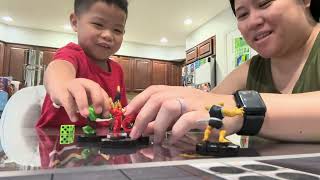
- Fun and engaging head-to-head combat
- Accessible with simpler rules for a two-player game
- Exciting dice-driven combat with clear back-and-forth pacing
- Rules can be tricky to follow when not using full components (cards)
- Some edge interactions can be confusing without full rulebook
- Kids interfering with dice (eye-poking) distracts from play
- Array
- Comic book superhero universe
- Competitive head-to-head tactical combat
Mechanics (from transcript analysis)
- Adjacent combat only — Attacks only possible when characters are adjacent
- Combat: Damage Based — Attacks reduce health; KO marks indicate defeat and end of game
- Combat: Dice — Attacks resolved by rolling dice and comparing values, including ties and rerolls
- Dice combat resolution — Attacks resolved by rolling dice and comparing values, including ties and rerolls
- Grid Movement — Characters move on a grid up to a movement value per turn
- Grid-based movement — Characters move on a grid up to a movement value per turn
- Health/damage tracking and KO — Attacks reduce health; KO marks indicate defeat and end of game
- Turn order by dice — Players roll dice to determine who goes first and who attacks
Video topics + discussion points
Quotes (from this video)
- We're going to play with simpler rules so that we can both have fun.
- Good. How do you like hero clicks?
- You love it.
- We decided to each have a pair of dice.
- KO letters; when you start seeing KO, you lose.
References (from this video)
- Appeals to kids via familiar characters
- Visually striking components
- Rules can be dense for younger participants
- pop-culture and comic/superhero themes via collectable figures
- Miniature figure battles in a shared simulated universe
- miniature skirmish battles with modular scenarios
- King of Tokyo
- Heroscape
Mechanics (from transcript analysis)
- Combat: Damage Based — Tactical movement and combat using detailed miniatures
- Figure-based combat — Tactical movement and combat using detailed miniatures
- Point-based list building — Assemble teams within a point cap for balanced skirmishes
Video topics + discussion points
Quotes (from this video)
- it's so amazing when you get your younger kids into gaming as I've experienced when they get older and then they could sit there and paint 40k miniatures with them and they talk about the lore
- there's no one tried-and-true way that's the right way to do it
- it's the stories and the experiences that you share together that is what you're gonna keep and treasure
References (from this video)
- low entry cost with starter options
- relatively easy entry into play
- often requires additional purchases for a robust playing force
- painted miniatures quality can vary
- Hero vs villain skirmishes
- Superhero battles on tabletop battlegrounds
- arena/hero campaign style
- Star Wars X-Wing
- Age of Sigmar
- Malifaux
- Song of Blades and Heroes
Mechanics (from transcript analysis)
- combat dials — figures use a dial to track stats and damage over time
- Line of Sight — shooting and abilities rely on range bands and LOS checks
- Miniature Placement — tabletop positioning on a grid/board to resolve actions
- Range and line of sight — shooting and abilities rely on range bands and LOS checks
Video topics + discussion points
Quotes (from this video)
- we are talking about relative terms because what one person might think, well, $20 is that's not a lot. That's a lot of money to another person.
- we are making a value judgment.
- If it's really that expensive, then maybe don't play Warhammer. Maybe play something else.
- Song of Blades and Heroes is an $8 PDF that you buy and download.
- for as little as $40, which is again getting us back to the X-wing price, but now it's still something you've got to like, you know, paint.
References (from this video)
Mechanics (from transcript analysis)
- miniature figure-based combat — Referenced as an example of playing with painted or pre-painted figures without focusing on the painting process itself
Video topics + discussion points
Quotes (from this video)
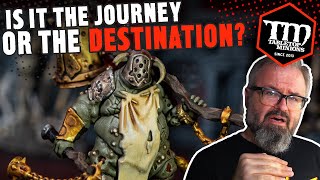
- the journey is generally the building and the painting and the stuff that i down here whereas the destination is the finished model
- different parts of that kind of two-part thing
- i really like obviously having finished models and i like to paint in a way that gets them done generally a little bit quicker but i do really enjoy the process as well
- not every hobby is something that you have to excel at
- the destination is the enjoyment of doing it
- getting better at painting and getting faster
- the journey is the building and the painting and the stuff
- the destination is the finished model
- remember not every hobby is something that you have to excel at
- it's important to understand not just like how you're going to handle the journey but is a painted model really actually the destination
References (from this video)
- Pre-painted minis lower entry barrier
- Strong IP appeal for fans of superheroes
- Accessible entry point for casual play
- Rules can be complex for newcomers
- Model variety and support have fluctuated over time
- Comic-book universe combat and IP appeal
- Superhero battles with pre-painted miniatures
- Character-driven clashes drawn from popular superhero IPs
- Warhammer
Mechanics (from transcript analysis)
- Character-based abilities — Unique powers and stats for individual figures dictating capabilities
- List-building / point-based team construction — Assembling teams within a points limit to balance matches
- Miniature-based combat — Battles using pre-painted miniatures on a modular or grid-based play area
Video topics + discussion points
Quotes (from this video)
- There are two parts to this hobby.
- the craft portion of it doesn't particularly require the play portion of it
- it's the craft and it's the gaming
- the lore is very very very big