







Hive Mind Deep Dive
What the Community Thinks About Hive Mind
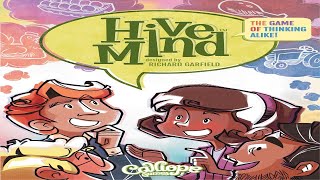
Reviewers agree that Hive Mind is a party game that rewards thinking like your friends, and most of them come away impressed by how little it takes to play. Richard Garfield, the designer of Magic: The Gathering, built the game around a simple premise: everyone answers the same prompt, and points come from matching the other players. Board Game Sanctuary notes that the theme is deliberately light, but that "don't be deceived by its theme" is the right advice, because the game is a genuinely engaging trivia-style experience that works over video calls as well as at a table. Board Games UnLocked, which played it at Gen Con, describes it as one of the discussion-based party games it gravitates toward, the kind that sparks "oh, that's interesting that you put that" moments rather than loud chaos.
The points of disagreement are mostly about the elimination structure and the physical product. Actualol, hosted by John Perkus, is the most critical voice in the group, praising the questions and the humor they produce, but arguing that getting kicked out of the hive feels too mean and demoralizing for such a light party game, and that the game can run longer than its premise justifies. The Broken Meeple, hosted by Luke Hector, takes a more tinkering approach and offers house rules to shorten the back half of a match. Across the channels, the consensus is that Hive Mind is an easy recommendation for groups looking for a low-pressure social game, with the caveat that the competitive edge can sour the fun for players who treat it as a contest.
Core Mechanics That Define Hive Mind
Compound Scoring
Scoring in Hive Mind is layered. Each round, a player reads a prompt and everyone writes an answer. Points are then tallied answer by answer: a player earns a point for each other player who wrote the same thing, so an unusual answer that nobody else shares scores nothing. That per-round tally then feeds a second track. The player with the lowest total moves down the hive, and the game continues until someone is forced out. Reviewers describe this as a loop where the score you earn in a single answer matters less than your standing across the whole round. Board Games UnLocked notes that a player who is the only one to write a particular answer is left "with nothing" that round, which is exactly the tension the scoring is designed to produce. Designer Richard Garfield's approach makes each round feel like a small, self-contained puzzle, while the hive track carries the stakes across the entire game.
Multi-Use Cards
The question cards are the other defining element. Each card carries several prompts on both sides, and reviewers consistently point out that the same card can be used for very different kinds of answers, from concrete lists like "three things that are big and white" to light opinion prompts about everyday life. Players are also free to write their own questions on the included pencil and paper, which turns the card set into a starting point rather than a fixed script. Board Game Sanctuary highlights this as a source of "limitless replayability," and Board Games UnLocked praises the spread of difficulty, noting that a question which seems obvious can quickly become hard when you have to name three things with doors.
The Hive Mind Experience
The Elation of Matching
The most consistent feeling reviewers describe is the lift of finding a match. Actualol captures this best: when your answer lines up with the table, the moment feels disproportionately good, and it briefly makes you feel less like an outsider. The flip side is just as vivid. Players laugh at each other's answers, argue over the merits of one word versus another, and react with mock outrage when an answer that seemed obvious to them lands with no matches at all. Board Game Sanctuary describes the game as a source of "countless laugh-out-loud moments," and that laughter comes from the shared discovery of how other people think.
The Quiet Dread of Being the Outlier
The second feeling is a low, persistent anxiety about being the odd one out. Because a player who falls too far from the group drops down the hive, every answer carries a little risk. Reviewers describe the pressure of trying to guess what the group will write, and the frustration of realizing you have not been thinking along the same lines. The Broken Meeple observes how often players go down the slots as they try to stay in the hive, and that this tension is part of what makes the game lively. The dread is real, but reviewers generally treat it as part of the fun rather than a flaw, provided the group is in a playful mood.
What Makes Hive Mind Stand Out
Accessible to Anyone at the Table
Reviewers repeatedly praise how easily Hive Mind brings new players in. Board Game Sanctuary says the premise is simple enough that anyone can join, and Board Games UnLocked recommends it for a casual, filler-style slot at game day, noting that it can be played across a wide age range. Because the rules state there is no wrong answer, the game sidesteps the knowledge barrier that makes many trivia games stressful. Actualol makes a similar point, calling it "a perfect game to play with family at Christmas," because it works with almost any group. Its lightness is the main reason it earns a place on shelves that already hold heavier games.
A Prompt Library That Keeps Growing
The second standout is the way the question set keeps the game fresh. Board Game Sanctuary highlights the option to invent your own questions, which means the game can be tailored to a particular group's inside jokes and interests. Actualol praises the questions as well written, with plenty of room for funny answers, and reviewers agree that the family-friendly default can be pushed toward more adult territory by a group that wants it. The result is a game that reviewers expect to keep working long after the included prompts are familiar.
Potential Drawbacks
Elimination That Can Feel Harsh
Actualol raises the most pointed criticism: the idea of being kicked out of the hive is "a cute idea but it feels a little too mean and demoralizing for such a light party game." Actualol also notes that the elimination structure can make a match run longer than it needs to, since only one or two players may be dropping down for many rounds. The channel's house rule is to start the game further along the track so that the endgame is reached sooner. Reviewers who share this concern generally recommend the same kind of tweak, or simply playing as many rounds as the group enjoys rather than pushing to a formal finish.
Dice That Feel Clumsy at Smaller Tables
Board Games UnLocked raises a practical concern about the die that determines how many players drop down each round. The die is useful with larger groups, where it helps quicken the game, but at a table of four it can feel punishing. When two players are tied at the lowest score and the die calls for two players to move down, everyone can end up penalized for performing well. The reviewer's suggestion is to skip the die at lower player counts and simply move the lowest scorer. The point is less about the component than about the fact that the game's pacing is tuned for larger groups.
If You Enjoy Hive Mind
Players who enjoy the moment of matching answers with a table full of people will find a natural companion in Family Feud. Both games reward guessing what the group is thinking, both turn a simple prompt into a crowd-pleasing reveal, and both are quick enough to play between longer games. Players who appreciate Hive Mind's light, quick rhythm but want a different kind of focus may also enjoy River Wild, a compact Buttonshy game with a nature theme and a satisfying pace. It lacks Hive Mind's social dynamics, but it shares the same easy-to-teach, easy-to-finish appeal that makes Hive Mind a welcome addition to a party game shelf.
What Reviewers Are Saying
"The elation of matching an answer feels good for a reason. For a moment you're less of a pathetic outcast in this world."
— Actualol
"I really enjoy it. I like all the unique questions. Some of them are hard, some of them are so, you think they're so obvious to answer, like, but then you're thinking, wow, okay, I need to think of three things with doors."
— Board Games UnLocked
"Great little party game. You've got to answer questions, like, you know, things you would keep, name four things you keep in your pocket or something, and then people write down the answers, and you're trying to come up with answers that everybody else has also come up with."
— The Broken Meeple