/pic5608344.jpg)

/pic5608344.jpg)



































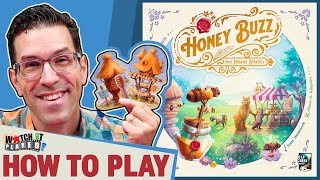















Honey Buzz Deep Dive
What the Community Thinks About Honey Buzz
Honey Buzz has carved out a devoted following among board gamers seeking games that blend accessible mechanics with surprising depth. Reviewers consistently highlight the game's ability to deliver a relaxing, satisfying experience while offering meaningful strategic decisions. The community recognizes it as a gateway game that welcomes newcomers while rewarding players who invest time in mastering its systems. Many describe it as a perfect fit for fall gaming sessions, particularly for players seeking low-stress entertainment with charming production values.
Core Mechanics That Define Honey Buzz
Worker Placement and Hive Construction
At its heart, Honey Buzz operates as a worker placement game where players assign bee tokens to locations on a shared board. Each placement allows players to collect honey hexes and resources, gradually building out their personal hive. The system feels satisfying because actions compound over time. Early choices about where to place workers echo through the entire game, creating a puzzle-like quality that appeals to thoughtful players. The requirement to pay more bees when a location is already occupied adds economic tension without punishing bold moves.
Tile Placement and Double Hex Effects
The mechanical heart of Honey Buzz lies in its distinctive double hex tiles. When players complete a full hexagonal tile during tile placement phases, they immediately trigger all effects associated with the adjacent hexes. This creates cascading rewards that feel genuinely satisfying. Completing one hex might grant additional bees, money to spend at the market, or the ability to pollinate and sell honey. The visual and mechanical payoff of filling a complete tile provides immediate gratification and encourages players to build toward these completing moments.
The Honey Buzz Experience
Cozy and Relaxing Atmosphere
Honey Buzz delivers one of the tabletop hobby's most authentic cozy experiences. The theme of managing a bee colony preparing for winter, combined with soft artwork and tactile components, creates a genuinely comforting play environment. The game does not demand aggressive player interaction or punishing decisions. Instead, it invites players to focus on their own engine and watch it grow. Reviewers consistently describe the feeling as warm and welcoming, comparable to curling up by a fire during autumn evenings. The game moves at a measured pace, allowing conversation and reflection between turns.
Satisfying Engine Building
Players gravitate toward Honey Buzz because the engine-building progression delivers genuine pleasure. Early turns feel modest as players slowly gather resources and position their hive. By midgame, the effects of early placement decisions begin to multiply. A well-constructed hive generates nectar, produces bees, and generates market opportunities in seemingly automatic cascades. This satisfying ramp from modest beginnings to powerful late-game engines makes Honey Buzz rewarding for players who enjoy watching their strategic plans materialize into tangible advantage.
What Makes Honey Buzz Stand Out
Market Economy and Resource Conversion
Honey Buzz features a dynamic market where players sell nectar to forest creatures in exchange for coins and other rewards. Unlike simple resource collection systems, this economy creates meaningful choices about timing and value. Players must decide when to enter the market, which creatures to sell to, and how to balance accumulating resources against spending them. The market responds to player actions, creating emergent complexity within an otherwise approachable system. This economic layer transforms Honey Buzz from a straightforward placement game into something resembling a small business simulation wrapped in a nature theme.
Fall Flavors Expansion and Modular Gameplay
The official Fall Flavors expansion demonstrates the game's design flexibility. Rather than replacing the base experience, it offers modules players can add or remove to adjust difficulty and strategic focus. Options include fall leaves mechanics, sunset bonuses, and the ability to harvest fruit instead of nectar. This modular approach respects both players seeking the original experience and those wanting fresh challenges. The expansion's thematic consistency with autumn imagery makes it particularly appealing during fall gaming seasons, allowing players to refresh familiar mechanics without learning an entirely new game.
Potential Drawbacks
Learning Curve for First-Time Solvers
While the core worker placement loop remains intuitive, some variants can present genuine difficulty spikes. Certain module combinations in the base game and expansion increase the challenge substantially, potentially frustrating players on their first encounter. The interaction between different scoring mechanisms and board states requires experience to navigate smoothly. Reviewers note that completing objectives in harder variants sometimes feels less like clever play and more like struggling against an opaque system. New players should be cautious about beginning with challenging modules until they understand the baseline game flow.
Limited Aggressive Interaction
Honey Buzz prioritizes zen-like solitude over competitive tension. While this appeals to many players, those seeking games with direct confrontation and player-versus-player drama may find the experience too passive. The primary source of player conflict comes from location scarcity and the cost of using occupied spaces. Direct attacks, blocking, or meaningful resource denial are absent. Multiplayer games sometimes feel like parallel puzzles where players construct their own engines rather than engage in head-to-head competition. Players seeking cutthroat strategy will likely prefer more interactive alternatives.
If You Enjoy Honey Buzz
Players drawn to Honey Buzz often gravitate toward other games with satisfying engine-building progression and cozy aesthetics. Everdell offers similar production charm and worker placement mechanics, though with a faster pace and different theme. Viticulture similarly features resource management and tableau building, though with greater economic complexity. For those seeking the specific blend of tile placement and hex-based building, Cascadia and Calico deliver polyomino satisfaction with minimal conflict. Wingspan attracts the same audience who appreciate nature themes and engine development. For players who loved Honey Buzz's solo experience, Scythe offers more substantial mechanical depth in a solo-friendly package.
What Reviewers Are Saying
"Honey Buzz is always a difficult realm to complete, but it's really satisfying when you pull it off."
— Peaky Boardgamer
"The fall flavors expansion adds a whole bunch of different options that you can mix and match and swap in and out to change the difficulty and strategy."
— Neon Gorilla
"It's a worker placement game where you are building out your hive and doing different things. It has really cool double hexes that trigger effects, and I'm excited to get it to the table two-player because I've only played it solo."
— Board Game Spotlight