/pic1608871.jpg)
/pic7340742.jpg)
/pic1311902.jpg)
/pic5283232.jpg)
Hoplomachus [ha-ploh-ma-kuss], or "Hoplo" for short, is a hex-based tactical board game set inside a gladiatorial arena. One to three players, each representing an ancient city/civilization thought to have been lost to the world, are now on Rome's doorstep vying for a place in the prestigious arena games.
Players have a very clear objective: Eliminate the opponent's champion. Champions start the game in the arena but are inactive and defenseless. They will not fight until the crowd is behind them. Each player takes turns drawing, playing and moving gladiators from their "hand" and assisting them with tactic chips.
Based on opponent's moves and play style, each person will need to adjust their strategies. Defend your champ, take over and hold the crowd favor areas, assault opponent's champion, cover deployment zones, eliminate tacticians to reduce enemy options, fight beasts to gain crowd favor, the list of tactical possibilities is endless.
Hoplomachus combines combat, tactics, chip (units) management, level progression (though crowd favor system), team play, player vs board, and so much more.
Part of the Hoplomachus family — see Hoplomachus: Victorum for the combined view.
/pic1608871.jpg)

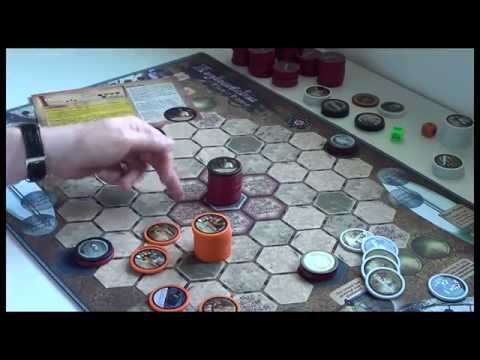
Hoplomachus: Rise of Rome - PART 2
- Engaging solitaire format with a strong thematic link to arena combat
- Innovative titan-pit/die mechanic and AI-driven boss behavior
- Crowd-favor mechanic adds strategic pacing and reward structure
- Versatile setup with modular choices and upgrade options
- Setup and rules can be dense and time-consuming for new players
- Some components and expansions feel optional or PvP-oriented rather than strictly solo
- The complexity may be intimidating without a dedicated reference
- Gladiatorial combat against titans with shard-based power and crowd-favor mechanics
- Ancient Rome arena with Colosseum center, Titan hex, pits
- Procedural AI-driven boss battle with round-based turns
Mechanics (from transcript analysis)
- Crowd favor — Gaining crowd favor provides benefits such as unlocking footholds and upgrading capabilities; health damage to chips or boxes also increases crowd favor.
- Deployment from titan hex — Units can deploy from the titan hex and from the central pit, providing dynamic entry points and strategic options.
- Elevation/elevator deployment — Gladiators can emerge from pits via an elevator to enter the center arena, enabling tactical repositioning.
- Equipment boxes — Equipment boxes require health chips to be broken open; they grant equipment upgrades that enhance gladiator strength.
- Gladiator bag drafting — At setup, a pool of gladiators is drafted into a bag and drawn to form starting units, with some expansion elements adding variety.
- Pillars and health chips — Pillars with health chips act as destructible threats; they are targetable like enemies and influence control of the arena.
- Shard mechanics — Shards grant blue dice to basic attacks; Oceanus cannot be damaged until at least one shard is possessed, and Oceanus cannot be killed until all four shards are collected.
- Titan AI and ramping — Titan Oceanus moves around the pit area, summons units from the pit, and has location-based rules that affect when and how it can be attacked.
Video topics + discussion points
Quotes (from this video)
- This is the Rise of Rome expansion. It's a standalone.
- The arena here is the Colosseum in the center is the Titan hex.
- We're playing solitaire.
- We cannot damage Oceanus until we have at least one shard.
- We can't destroy him that's remove his very last health chip.