


















Iberian Gauge Deep Dive
What the Community Thinks About Iberian Gauge
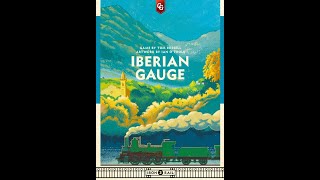
Iberian Gauge has quietly become a favorite among cube rails enthusiasts, occupying a middle ground between accessibility and economic depth. No Pun Included calls it bigger, faster, and better than its predecessors in the Iron Rails series, while Getting Games admits the cube rails genre grabbed a hold of their brain through this very title. Rolling Dice and Taking Names frames it as the sweet spot for anyone who finds heavier train games too much. Designed by Tom Russell and published by Capstone Games, it converts players who assumed they would dislike stock games entirely.
Core Mechanics That Define Iberian Gauge
Stock Claims and Company Direction
The game revolves around buying shares in Iberian railway companies, with the first investor in any company setting the share price within a legal range. That early choice carries outsized influence: price shares too cheaply and you limit the company's funding, too high and you discourage other investors and end up building alone. Once shares are bought, ownership matters less than presence, since every shareholder gets to operate the company in turn. No Pun Included describes the resulting mutually assured destruction, where you might own fewer shares than a rival yet still decide when and where the company expands. Money flows through three distinct pools, your personal treasury, the company treasury, and the bank, and your personal wealth grows only through dividends, creating constant tension between investing now and preserving cash.
Building, Leasing, and the Inevitability of Expansion
Track building drives companies toward profitability, but it is mandatory rather than optional. Rolling Dice and Taking Names explains that any round a company fails to expand, its stock value falls. The company spends its own treasury to build, paying the bank for each space. A leasing mechanic lets a company avoid crawling along its own network: if you are adjacent to another company's track, you can pay that company to hop across its spaces, opening the map dramatically. This creates both mutual benefit, since the leased company earns money, and mutual danger, since rivals control whether you can reach your best destinations.
The Iberian Gauge Experience
The Shift From Cooperation to Cutthroat
The game flows through two distinct emotional arcs. Early rounds feel almost peaceful, with players nudging each other toward shared prosperity as dividends rise and portfolios grow. Then something shifts. A player realizes they own more stock elsewhere and decides this company's growth no longer serves them, suddenly directing it into dead-end countryside routes that create no value, only damage. No Pun Included captures how the same player who was collaborating now twists the knife into shared assets. Reviewers consistently note that this arc, the switch from friendly to hostile, happens naturally within the rules and feels almost inevitable, making the experience distinctive and memorable.
Economic Tension and Cash Flow Management
Iberian Gauge creates relentless economic pressure despite its slim rulebook. The only way to earn money is through dividends from the stocks you own, yet the only way to buy more stocks is to spend what you have earned. A player who over-invests in expensive shares early starves themselves of cash for later rounds. Rolling Dice and Taking Names praises this as a remarkably clean, deterministic system with no random elements: knowing the map and the share positions, you can see exactly what will happen, yet the strategic complexity stays high because the incentives never all point the same way.
What Makes Iberian Gauge Stand Out
A Gateway to Cube Rails and Economic Play
Reviewers describe Iberian Gauge as the sweet spot for players curious about cube rails, a genre many had overlooked for years, mistaking nondescript names for dry, heavy train games. Getting Games proved themselves wrong, finding a whole sub-genre of fast-playing games with remarkably thin rulebooks, and names Iberian Gauge their favorite of the Iron Rails titles. The rules fit on a single sheet, yet the decision space is surprisingly rich, and the game plays in roughly an hour. For players skeptical of stocks and auctions, it demonstrates that these mechanics can be elegant when stripped of clutter.
Affordable Depth and Elegant Systems
Iberian Gauge delivers mechanical sophistication at a modest price. The separation of personal money from company money creates real consequence without heavy arithmetic. Building track benefits the company, which eventually pays dividends to all shareholders, which funds future stock purchases, a cascade of causality that feels both logical and surprising. No Pun Included highlights how the game never feels fiddly or overwrought, with every rule serving a purpose and every turn presenting genuine choices, which is rare in a train-game space where complexity often shadows the economy underneath.
Potential Drawbacks
The Predictability Paradox and Weight of Early Decisions
Because Iberian Gauge removes randomness entirely, every outcome follows from the current state. Some reviewers note this can make individual turns feel less consequential, as the game unfolds according to opening stock prices and early share claims. The first player to claim a stock effectively sets that company's entire arc, and bad early pricing can haunt you all game. There is no comeback mechanic and no shuffle to reset fortunes, so spreading too thin or overpaying early leaves you limping while better-capitalized rivals seize opportunities.
Niche Appeal and Limited Replayability
Reviewers acknowledge that Iberian Gauge is genuinely mean, and that is not for everyone. Some players enjoy it several times then set it aside, as the novelty of the cutthroat shift fades once the arc is known. The game does not surprise you mechanically on repeat plays, since the systems are clear and the map is fixed, and success comes from executing the same principles with different timing. Players drawn to discovery and novelty may feel it solved after a handful of plays, even if those plays remain tense while they last.
If You Enjoy Iberian Gauge
Iberian Gauge sits firmly in the cube rails tradition, alongside Irish Gauge, which adds randomness through bag-pull dividends, and Trans-Siberian Railroad, which introduces a wild non-player element that disrupts the stock market. If its elegant economy and deterministic play appeal to you, the broader cube rails family of lighter, quicker takes on the classic 18xx formula rewards exploration. For a heavier economic train game with shareholding, Railways of the World offers more spectacle at the cost of the streamlined elegance Iberian Gauge is praised for.
What Reviewers Are Saying
"Iberian Gauge is bigger, it's faster, and it's better. Cube rails games combine the heady, raucous, bouncy gameplay of stocks and shares with trains, and the rules fit on an A4 sheet, so you spend less time confused and more time passive aggressively manipulating your friends out of money."
— No Pun Included
"I love Railways of the World, the stocks, the bidding. But if you think Railways of the World is too much, this is it, here's the sweet spot. You've got the stocks, you've got building the track, and you don't have the fiddliness of pickup and deliver."
— Rolling Dice & Taking Names
"Cube rails games have kind of grabbed a hold of my brain in a really interesting way. I see these games with their nondescript names and I assumed they were dry, heavy train games, but it's this whole sub-genre of very fast-playing games with incredibly thin rule books. Iberian Gauge is my favorite of the three Iron Rails games."
— Getting Games