/pic6108487.jpg)
Game Info
Year
2018
Collection
Ratings
Creator Score
Mechanic profile
Not enough video data yet
Vibe profile
Not enough video data yet
Description
Imaginarium is a strategy, combination and development game.
From its Kickstarter description:
Through the mist, you can just about see the gigantic form of the factory. This is where the essence of dreams is shaped! We will enter the factory through the grand entrance. Here are the famous machines! You can repair, combine or dismantle them. They will produce the resources needed to repair more powerful machines. I am sure that you will quickly make the best use of your resources and the space available in your workshop to carry out the projects of the design office and gain Victory points!
Featured Videos

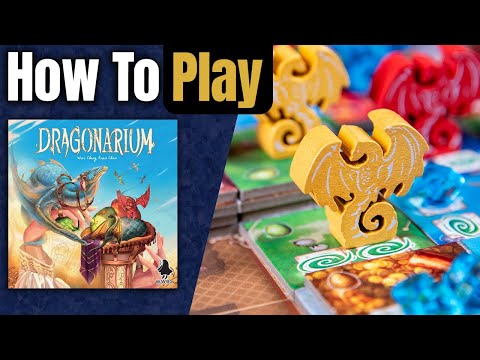

Ask a Rules Question
All mentions
Browse transcript mentions, sentiments, pros/cons, mechanics, topics, quotes, and references.
Total mentions: 9
This page: 9
Sentiment:
pos 6 ·
mix 2 ·
neu 0 ·
neg 0
Showing 1–9 of 9
Video 1D_QDbqf7Gg
Rahdo Runs Through Top List at 2:31 sentiment: positive
video_pk 104297 · mention_pk 300745
Click to watch at 2:31 · YouTube ↗
Overall sentiment (raw)
positive
Pros
- Incredibly puzzly
- Fantastic tiling
- Surprisingly rich
- Brilliant design
Cons
none
Thematic elements
- Creating the ideal Dragonarium, a hatchling space for dragon eggs.
Comparison games
none
Mechanics (from transcript analysis)
- 3D building — Three-dimensional building outwards but upwards.
- Area Majority — Trying to make the biggest contiguous grouping of stuff.
- Drafting — Drafting the right tiles.
- Rondel mechanism — Spread these crystals around representing the different colors of dragons in kind of a rondel mechanism.
- Set Collection — Collecting gems onto the board.
- tile laying — Fast-playing tile layer where you're putting out domino tiles that represent different environments.
Video topics + discussion points
No key topics recorded for this video.
Quotes (from this video)
- This is a worker placement game about the famous Orloj astronomical clock in Prague.
- It is a deck building game from CGE all about we are running sci-fi jalopy broken down um mining equipment trying to build the best deck to go deeper and deeper into the mine to find the minerals and bring them back all the way up so we can sell them so we can buy more cards deck builder style to upgrade our operation as we race to be the first to make the most progress and clear out the most corridors and whatnot to trigger the end of the game.
- Your draw pile in this deck builder, you always see the next card that is coming. It is always face up.
- This was the best game of last year.
- I don't like train games. I am so sick and tired of train games.
- it totally lives up to the hype.
- this game is absurdly expensive.
- And um it is also its box is absurdly huge.
- The real secret sauce here is the dual use components.
References (from this video)
No references stored for this video.
Video MubWq1_zt3A
The Dice Tower Unboxing at 0:46 sentiment: mixed
video_pk 99494 · mention_pk 277091
Click to watch at 0:46 · YouTube ↗
Overall sentiment (raw)
mixed
Pros
none
Cons
none
Thematic elements
Comparison games
none
Mechanics (from transcript analysis)
Mechanics unknown.
Video topics + discussion points
No key topics recorded for this video.
Quotes (from this video)
- Hey everybody, I'm Tom Vassal. Welcome to the most boring unboxings on the planet Earth as we open up stuff that comes into the Dice Tower and see what it is.
- My word, are we ever going to quit with the games that start with EV?
- And there we go, folks. Another most boring unboxing in the world.
References (from this video)
No references stored for this video.
Video uxw-784KOP8
Meeple University Discussion
video_pk 84725 · mention_pk 215713
Pros
none
Cons
none
Thematic elements
Comparison games
none
Mechanics (from transcript analysis)
Mechanics unknown.
Video topics + discussion points
No key topics recorded for this video.
Quotes (from this video)
- The future is here.
- Gen Con happened and was big and successful.
- Please let Taran know as well in the comment to try to convince Taran why Taran should go to Gen Con.
References (from this video)
No references stored for this video.
Video wk6YBpx7YUo
Rahdo Runs Through Top List at 1:02:14 sentiment: positive
video_pk 83658 · mention_pk 211329
Click to watch at 1:02:14 · YouTube ↗
Overall sentiment (raw)
Very Positive
Pros
- Very, very impressed
- Stands out from other tile-laying games
- Freedom and flexibility in stacking tiles
- Makes building upwards fun
- Satisfying gameplay with puzzles within puzzles
Cons
- Sponsored look, but host is genuinely impressed.
Thematic elements
- Hatching and raising dragons
- Fantasy
- Thematic elements integrated into gameplay
Comparison games
- Tile Lang
- Calico
Mechanics (from transcript analysis)
- Area Majority — Players aim to create the largest contiguous areas of specific environmental colors.
- Engine Building — Hatching dragons expands scoring potential and influences future tile placement.
- Resource Management — Managing pillars to build upwards and crystals for placing tiles.
- tile laying — Players place domino-like tiles onto their player boards.
- Worker Placement — Moving an assistant around a rondel to seed crystals.
Video topics + discussion points
No key topics recorded for this video.
Quotes (from this video)
- And countryside is a freaking phenomenal.
- This is one of the best engine building games I have played this year.
- It is very likely going to make it into my top 10 games of the year. It is that good.
- My number three of the month is Rising Cultures.
- Number two is Druids of Adora.
- It's classic feld, making a comeback.
- Number one, Furnish Duel.
- A game that will not be coming out until 2026 will very likely make it into my top 10 games of 2026.
References (from this video)
No references stored for this video.
Video h-BUo-zD0dA
Review at 0:00 sentiment: mixed
video_pk 72642 · mention_pk 172011
Click to watch at 0:00 · YouTube ↗
Overall sentiment (raw)
mixed
Pros
- Smooth onboarding with a good rulebook.
- Execution is pretty good, components work well.
- Plenty of content in the base game.
- Charming, attractive, and different.
Cons
- Interaction can ruin the experience by ending rounds prematurely.
- Images are basic and hard to decipher due to grid limitations.
- Losing is not fun as you may not complete the image.
- Frustrating interaction rather than enhancing gameplay.
- Lack of meaningful feedback.
- Not highly innovative, but gamified a traditional activity.
- Doesn't really solve a need in the market.
- Fancy artwork might mislead players into thinking it's more thematic.
Thematic elements
- Apprentice magicians deciphering spells to conjure shapes.
- Mysterious imagic spells, conjuring shapes in the sky, on water, or in tree leaves.
Comparison games
- Dixit
- Muse
- Mysterium
- Looney Quest
- Decalco
- Telestrations
- Duplic
Mechanics (from transcript analysis)
- Connect the dots — Players connect icons on a grid with a dry erase marker to identify an image.
- racing — Players race against each other to be the first to correctly identify the image.
- set collection / icon matching — Players need to identify and connect specific icons on their grid that correspond to a revealed card.
- timed guessing — Once a player believes they've identified the image, they write down their guess and flip a timer, giving other players 30 seconds to finish and guess.
Video topics + discussion points
No key topics recorded for this video.
Quotes (from this video)
- The problem is that players can guess the image well before it's completed they may not be right but it doesn't stop players taking a shot at it and this ruins the experience for everyone else.
- The most fun part is the moment that that image is completed the mystery solved if another player can dictate the end of the round prematurely it robs everyone else of the best bit the realization of what you've been drawing.
- The images you create are by necessity very basic traditional connect the dots activities lend themselves to detailed attractive line drawings in a magician you're each going to generate a blocky very simplified representation of a random object and often the image is pretty hard to decipher.
- Ultimately i like the game it's charming it's attractive and it's different to almost anything else in my collection i enjoy playing oddities like this from time to time i guess i was just hoping for a little bit more.
References (from this video)
No references stored for this video.
Video f5fXljJUpso
Board Game Dad Review at 0:00 sentiment: positive
video_pk 38503 · mention_pk 115948
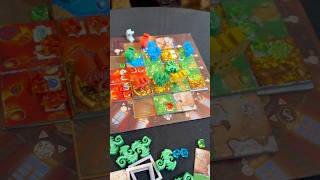
Click to watch at 0:00 · YouTube ↗
Overall sentiment (raw)
positive
Pros
- Stunning visuals and a clever tile placement core that invites strategic depth.
- Fresh scoring approach that ties region size to height, rewarding layered planning.
- Layered puzzle feel that reveals additional strategic depth as you grasp the mechanics.
- Solid potential for tense late-game decisions and dynamic shifts as dragons hatch.
Cons
- Less immediately intuitive than simpler tile-placement games like King Domino.
- Learning curve around the interaction between tile placement, assistant movement, and dragon hatching.
Thematic elements
- Dragons, hatchlings, and region-based scoring drive the tension between spatial planning and vertical growth.
- Dragon-themed grid-tile puzzle where players draft, place, and stack tiles on personal boards that mirror a shared fantasy landscape.
- Abstract puzzle framework that is flavored by the dragon hatch mechanic and the climbing, levelling aspect of tiles.
Comparison games
- King Domino
Mechanics (from transcript analysis)
- assistant movement — An assistant marker moves clockwise around the board; the number of spaces moved affects which tiles contribute stones and where you can influence growth.
- Compound Scoring — End-game scoring multiplies each region's size by the height of the tallest tile within that region, creating a strong incentive to stack thoughtfully.
- Drafting — Each turn involves selecting a tile along with an element or color cue that will influence where stones are added later.
- dragons and region extension — Dragons can be placed to extend contiguous regions, intertwining dragon placement with area growth and shaping the final scores.
- element stones and color tokens — Players select an element type (color) and add corresponding stones to tiles in the associated row or column, linking resource management to spatial strategy.
- grid/row/column progression — Place a tile and then add an element stone to the selected row or column, guiding region development.
- height-based scoring — End-game scoring multiplies each region's size by the height of the tallest tile within that region, creating a strong incentive to stack thoughtfully.
- Resource Management — Players select an element type (color) and add corresponding stones to tiles in the associated row or column, linking resource management to spatial strategy.
- stacking/leveling tiles — If a new tile lands on an already filled space, it creates a higher level and can hatch a dragon, increasing the height of that location.
- Tile Placement — Draft and place tiles onto a personal grid, shaping space and potential scoring opportunities.
Video topics + discussion points
No key topics recorded for this video.
Quotes (from this video)
- Dragonarium is a stunning tile placing game for one to four players with a fresh approach to scoring.
- But once you grasp how the tile placing drives assistant movement, Dragonarium becomes a beautifully layered puzzle.
References (from this video)
No references stored for this video.
Video 1QCBmhmKBtM
kovray Rules Teach at 0:00 sentiment: positive
video_pk 30893 · mention_pk 152495
Click to watch at 0:00 · YouTube ↗
Overall sentiment (raw)
positive
Pros
- Clear teaching-through of the rules via step-by-step narration
- Interesting multi-layered tile placement with pillar support adding depth
- Accessible core loop with tangible dragonarium growth and clear scoring logic
Cons
- Rule complexity and multi-phase setup could be daunting for newcomers
- Requires careful tracking of terrain, polarities, and dragon limits across levels
Thematic elements
- dragon care, territorial expansion, resource management, and vertical growth
- A dragon hatchery in a multi-tiered, tile-based kingdom where players develop a dragonarium over 12 rounds.
- procedural, instructional with scenario flavor
Comparison games
none
Mechanics (from transcript analysis)
- egg/hatching and dragon placement — Tiles that cover eggs hatch dragons drawn from the matching territory type; dragons are placed in the dragonarium and count toward territory type scoring.
- element stones and movement of the assistant — Use fire, water, or air stones to move the assistant around the board, placing stones onto matching spaces to complete royal eggs.
- pillar tokens as structural support — Use pillar tiles to support elevated placements and to enable trading spaces for stone elements.
- planning site replenishment and turn order — Each round replenishes the planning site and passes the first-player marker, continuing for 12 turns.
- scoring by largest domain and height — Score the largest domain of each territory type, multiplied by the height of the tallest square, plus royal dragons' points.
- solo mode — A solo variant simulates two-player play with rules adapted for one player.
- tile drafting — Draft territory tiles from a planning site and place them onto your Dragonarium board.
- Tile Placement — Place tiles on the same level or higher levels; higher placements require at least one tile supported by pillar tokens to maintain stability.
- tile placement with elevation and support — Place tiles on the same level or higher levels; higher placements require at least one tile supported by pillar tokens to maintain stability.
Video topics + discussion points
No key topics recorded for this video.
Quotes (from this video)
- And that's Dragonarium.
- What would you do with it?
- The last player to crack an egg will be the starting player.
References (from this video)
No references stored for this video.
Video 8n2uxynQiCE
Discussion at 12:38 sentiment: positive
video_pk 30818 · mention_pk 190803
Click to watch at 12:38 · YouTube ↗
Overall sentiment (raw)
positive
Pros
- clever 3D/stacking mechanic
- engaging pattern growth and dragons as multipliers
- high tactile appeal
Cons
- steep learning curve for some
- maybe longer playtime
Thematic elements
- mythical dragons and gem resources
- fantasy dragon-collecting/engine-building
Comparison games
none
Mechanics (from transcript analysis)
- Layer Building — three or four different groups to manage and scoring by rows/columns
- layered board/building — three or four different groups to manage and scoring by rows/columns
- pattern-building dragons as multipliers — dragon tiles provide gem multipliers and terrain changes
- Tile Placement — place tiles to form dragon and terrain layouts
Video topics + discussion points
No key topics recorded for this video.
Quotes (from this video)
- Gen Con is the largest tabletop convention in North America.
- There was 72,000 attendees.
- the people are is why we do this.
- secret. secret.
- Five for White Castle Duel.
References (from this video)
No references stored for this video.
Video btibEpPraFg
cardboardrhino Top List at 2:20 sentiment: positive
video_pk 4716 · mention_pk 13758

Click to watch at 2:20 · YouTube ↗
Overall sentiment (raw)
positive
Pros
- Stunning, dreamy art and a cohesive steampunk vibe
- Clear thematic throughline tying resource management to project outcomes
- Engaging word-of-mouth appeal due to co-design angle and designer pedigree
Cons
- Art-forward games can be perceived as heavy on setup and complexity
- Rule clarity may require careful reading or example playthroughs
Thematic elements
- Dream calculus and design, with a focus on transforming resources into realized projects
- A steampunk universe centered on a dream-manufacturing factory
- Dreamy, whimsical, and imaginative with a strong emphasis on aesthetics
Comparison games
- Kodama
Mechanics (from transcript analysis)
- Engine Building — As you progress, you assemble capabilities and tools to unlock better machines and longer-term goals.
- engine-building — As you progress, you assemble capabilities and tools to unlock better machines and longer-term goals.
- Resource Management — Repair, combine, or dismantle machines to build up resources for more powerful projects.
- space/resource optimization — Careful use of workshop space and resources to complete ambitious design projects.
Video topics + discussion points
No key topics recorded for this video.
Quotes (from this video)
- Posthumous Saga is a new tactical survival adventure very rich in story
- The fortress is the last bastion of humanity by racing to complete your objectives
- Posthumous Saga is for wonderful players and promises a challenging as well as immersive experience
- Darwin's choice it's a game for 2 to 6 players with mechanics that require strategic thinking and give you a good understanding of evolution
- The objective for each player is to create animal species that are as optimally adapted as possible to endure through the changes of time
- using sophisticated mutations, players can improve already established animal species or save endangered species from extinction
- it's a game for 2 to 6 players with mechanics that require strategic thinking and give you a good understanding of evolution
- Imaginarium co-designed by one of my favorite game designers
- In Imaginarium you enter the factory which manufactures dreams
- you can repair, combine or dismantle two machines this way you've produced the resources needed to repair more powerful machines
- On Tour is a 20 minute route building rolling rights boardgame
- everyone is getting the same inputs but how you choose to deal with them will determine your success
- last but no way for those who love abstract car games and for those who love trees here comes the two-player version of Kodama
- three branch cards will be revealed for drafting
References (from this video)
No references stored for this video.
Transcript Navigation
Showing 1–9 of 9