
/pic5623567.jpg)






























Imperium: Classics Deep Dive
What the Community Thinks About Imperium: Classics
Imperium: Classics has become a beloved entry point into asymmetric civilization deck-building for both solo players and those seeking deep, strategic gameplay. Community reviewers consistently praise the game's elegant design, where eight distinct civilizations (Carthaginian, Celt, Greek, Macedonian, Persian, Roman, Scythian, and Viking) each bring fundamentally different approaches to building empires. The game has found particular resonance among players seeking immersive, meditative experiences, with reviewers emphasizing its capacity to engage the mind for extended sessions without feeling tedious. What emerges across community discussions is a game that rewards mastery without demanding it immediately, inviting players back repeatedly to discover deeper strategies with each civilization.
Core Mechanics That Define Imperium: Classics
Asymmetric Civilization Deck-Building
At its heart, Imperium: Classics is a civilization-driven deck-building experience where each of the eight playable nations operates under completely different rules, abilities, and victory conditions. Rather than everyone pursuing the same strategy, the Carthaginians might generate materials as a primary resource, while the Romans focus on territorial expansion and the Celts specialize in acquiring technologies. This fundamental asymmetry means that no two games feel identical. A reviewer from the Allies or Enemies channel noted that "each faction plays very differently," and this variance extends across multiple dimensions. The Persians benefit from subjugating opponents by acquiring blue cards, the Greeks want to transition to empire status quickly, and the Vikings acquire numerous cards and territories while operating without history mechanics. This design choice transforms what could be a routine deck-builder into eight interlocking puzzle boxes, each requiring distinct tactical thinking. The more players engage with individual civilizations, the more deeply they discover synergies unique to that nation's card suite and mechanical identity.
Resource Management and Reclamation Systems
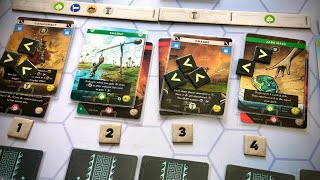
Victory in Imperium: Classics emerges from balancing multiple finite resources: population, materials, and progress tokens. Players acquire new cards from a shared marketplace by spending these resources, with the ability to "break through" to avoid penalties (unrest cards) by discarding their hand and pulling cards of a specific suit. This creates constant decision-making about whether to acquire cards cleanly through breakthrough or pay the price of unrest accumulation. The game also features a sophisticated "reclaim" action that allows players to retrieve previously played cards from their discard pile, enabling engine strategies where the same powerful cards cycle through repeatedly over multiple turns. This mechanical interplay between acquisition, cycling, and penalty management means that success depends not just on which cards enter your deck, but on how efficiently you can manage the deck's composition turn after turn. Players must think several turns ahead to set up cascades where cards recur at precisely the moments they are needed.
The Imperium: Classics Experience
Meditative, Immersive Engagement
Multiple reviewers describe Imperium: Classics as a "chill game" in the most genuine sense, not because it is simple, but because it creates space for deep thought without punitive time pressure or constant player interaction. A solo-focused reviewer from TableTop Wolf explained that they would "sit down for two to three hours" and simply become "engrossed in the mechanics theming and tactical gameplay," finding the experience genuinely relaxing despite the game's mechanical depth. The solo mode amplifies this quality by removing the social pressure of impacting other players' turns. Reviewers noted that even during challenging stretches where the game feels difficult, the experience remains absorbing rather than frustrating. The physical act of managing cards, building tableaus of permanent cards, and watching a nation develop across the empire track creates a satisfying sense of progression. This meditative quality has made the game a therapeutic outlet for players managing stress, anxiety, or mental health challenges, serving as a form of structured escape that engages the mind fully.
Discovery-Driven Progression Through Mastery
Imperium: Classics rewards players who return repeatedly, as each faction gradually reveals deeper strategies and synergies. Reviewers consistently noted that they have not yet mastered any single civilization, and that realization drives engagement: "I would kind of surface play one and think oh that's interesting I didn't play that quite right but let me see how this one plays." The game includes both a barbarian phase (early game) and empire phase (late game), with development cards offering additional scoring pathways once players transition civilizations from barbarian to empire status. This layering means that even players who complete the full arc with one civilization can return to discover they missed optimal sequences or card combinations. The solo bot system, with faction-specific behavior charts, creates meaningful variance through the asymmetric AI as well, ensuring that challenge scales with player familiarity rather than diminishing.
What Makes Imperium: Classics Stand Out
Eight Entirely Distinct Civilizations with Individual Victory Paths
Rather than reskinning a single mechanical core, each civilization in Imperium: Classics pursues fundamentally different end-game scoring engines. This depth of asymmetry means that strategic advice for one faction often becomes counterproductive for another. A reviewer discussing the Carthaginians noted their faction power specifically grants materials tokens instead of progress tokens during cleanup, creating an entirely different economic engine. The Romans are incentivized to expand efficiently through their special rules around expelling unrest. The Macedonians prioritize glory cards and rapid empire development. This structural asymmetry forces players to completely reset their assumptions with each faction they approach, making the box essentially contain eight different game experiences that share core mechanics. The psychological effect is powerful: players feel they have a genuine reason to return, not because the previous play-session was incomplete, but because another entirely different game awaits them in the same box.
Elegant Solo Experience with Meaningful AI Systems
The solo mode transforms Imperium: Classics from a game designed for multiplayer into a complete single-player experience through a bot system where each faction has its own reference chart matching card symbols to specific actions. This is not a bolted-on addition but an integrated mode that rebalances the game for one player versus a mechanically distinct opponent. The bot uses dice rolls to determine which of five available cards it plays each turn and where to place progress tokens on the marketplace, creating meaningful variance in AI behavior. The solo experience has resonated strongly with reviewers who appreciated that they could engage with the depth and tactical richness without the social coordination demands of multiplayer. The bot deck system runs efficiently, keeping turns snappy even though the player's turns remain intellectually demanding. This balance means solo players get the contemplative spacetime they seek without waiting for adversary turns, making the extended playtime (2-3 hours) feel willingly invested rather than padded.
Potential Drawbacks
Substantial Playtime and Limited Multiplayer Viability
The most consistent critique of Imperium: Classics concerns its length. Games regularly extend to 2-3 hours, with some extending to 4+ hours when players are learning, engaging deeply, or encountering specific victory conditions. For solo play, this immersive, meditative quality is a feature. For multiplayer, particularly with more than two players, it becomes a liability. Reviewers noted that in a three or four-player game, the extended playtime translates to significant downtime for non-active players, potentially creating a 40-minute wait between turns. One reviewer stated frankly: "If you're playing three or four people with the extra cards in the deck I have the feeling this will take an entire goddamn day to play." This length renders the game poorly suited to casual social gaming and narrows its audience to either committed solo enthusiasts or couples willing to invest extended gaming sessions together. The game's design optimizes for depth over pacing, which is intentional but creates a genuine constraint on table access.
Rulebook Clarity and Component Quality Concerns
While reviewers praised the game's elegant mechanical design, they consistently noted that the rulebook does not clearly explain some key mechanics on first read. Reviewers found themselves needing to consult video tutorials and forums to understand actions like "innovate," "revolt," and the precise mechanics of reclaiming cards. One reviewer stated: "I would honestly say to you if you're interested please watch some videos on how to play this on youtube because the rulebook gives you the rules but it's just not explained well enough." Additionally, card quality has emerged as a concern. After just several plays, reviewers noted that cards already show visible warping and bending, with cardboard tokens beginning to fray at edges. At a modest price point, this is understandable, but sleeving immediately becomes mandatory rather than optional, adding to the effective cost of entry. These issues do not undermine the core experience but do create friction for new players and longevity concerns for invested ones.
If You Enjoy Imperium: Classics
Players drawn to Imperium: Classics typically appreciate games that reward mastery through asymmetry and offer extended, meditative play experiences. If the depth and discovery-driven progression resonate with you, Imperium: Legends (the companion box with eight additional, more exotic civilizations) provides natural expansion without repetition. Games like Civilization (the board game), which similarly explores asymmetric nations competing across epochs, offer thematic kinship. For shorter or lighter alternatives capturing the civilization-building spirit without the extended commitment, Race for the Galaxy and Res Arcana deliver elegant asymmetric deck-building in 30-60 minute windows. Players specifically seeking solo experiences find strong parallels in Spirit Island's AI system or the bot modes in other civilization games. The most direct recommendation, however, comes from returning to Imperium: Classics itself with a different faction, discovering how fundamentally the game transforms when approached from another nation's perspective.
What Reviewers Are Saying
"Each nation is going to play very very different the guys have put a lot of effort and this is this is a fun thing of being a designer right figuring out all these cards working out those combinations."
— Box of Delights
"For me it fits back into why I play certain games on PC whenever I play this game I become engrossed in the mechanics theming and tactical gameplay having a tough day can really get you down and I just found it so relaxing to just play some cards and engross myself in an experience."
— TableTop Wolf
"I really like the solo mode in this game I find myself playing the arthurians quite a bit more and I really like the weird ones like I like the utopians a lot I find those ones a lot of fun."
— Allies or Enemies