/pic2812825.jpg)
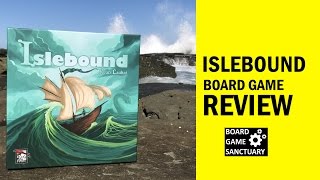
Set sail in a mystical archipelago filled with bustling towns, sea monsters, pirates, and gold! Compete to build the best sea-faring nation with up to three friends by collecting treasure, hiring crew, and conquering or befriending island towns.
In Islebound, you take command of a ship and crew. You sail to island towns, collecting resources, hiring crew, and commissioning buildings for your capital city. Each building has a unique ability, and your combination of buildings can greatly enhance your strength as a trader, builder, or invader. You also recruit pirates and sea monsters to conquer towns, which, once conquered, allow you to complete the town action for free, and charge a fee to opponents if they want to use it. Alternatively, you can complete events that give influence, which can be used to befriend towns.
There are many routes to success. Will you be a ruthless conqueror, careful diplomat, or shrewd merchant in your race to the top?
The player with the most wealth and most-impressive capital city will win the game!


- Fantastic family game.
- Smooth gameplay with uncomplicated actions.
- Sense of adventure and exploration.
- High replayability due to modular board and variants.
- Rewarding progression through the renown track.
- Strategic depth in planning routes and actions.
- Interesting two-player variant that promotes interaction.
- Multiple avenues for winning.
- Not many event cards, leading to repetitive events.
- Potential for falling far behind if money is not spent wisely.
- Seafaring adventure and exploration
- Nautical
- Storytelling through event cards and flavor text
- The Legend of Zelda: The Wind Waker
Mechanics (from transcript analysis)
- area influence — Players take on the role of seafarers and manage crew and workers to gain influence and control over islands.
- Dice Rolling — Used for combat when attacking isles, where dice are allocated to cards to determine attack damage.
- Engine Building — Players can build buildings that provide ongoing benefits or synergies, such as gaining renown for acquiring books.
- Modular Board — The game uses modular hex tiles for the map, which are shuffled and placed to create a unique looking map each game.
- Route Building — Players move their ships on the map to visit different isles.
- Set Collection — Players can collect resources like fish, timber, and books to complete objectives or build buildings.
- Track progression — The renown track is a key mechanism where players gain renown for completing objectives and move up the track for end-game scoring and bonus effects.
- Worker Placement — Players manage workers to perform actions such as visiting isles, attacking, influencing, collecting treasure, building, or solving event cards.
Video topics + discussion points
Quotes (from this video)
- The renown track rewards you for gaining renown and completing a lot of the objectives trading in books resolving the trumpet cards and completing objectives and triggering building effects.
- I really enjoyed the two-player variant I'm really surprised that wasn't actually mandated as a standard rule in the game because the closeness of having to exhaust an administrator when two ships are on the same hex tile really promotes a tougher decision making it makes the game board feel a little bit tighter and stimulates a little bit more play interaction really stops players just from doing their own thing on the board.
References (from this video)
Mechanics (from transcript analysis)
Video topics + discussion points
Quotes (from this video)
- 8 Minute Empire is uh one of the earlier Ryan Locket games of Red Raven fame and it is a game that has inspired his latest game six sojourns
- I think I have two favorites probably like the Magnum Opus for me is probably Sleeping Gods is like the one that you know I play that if I want something truly epic.
- Creature Caravan is this it's popcorn, man. It's comfort food. It's really really good.
- Mallerie Lockett is the is a composer I think um he might be as well I know he plays instruments but yeah she is a composer and has composed if I'm not mistaken for soundtracks for uh you know a variety of their games
- this game is such a It's so interesting. It's like a little minimalistic game and it when I play like if I play this game in person setting it up and moving the little cubes are like little cubes and everything. It's not my favorite Ryan Locket game. I think it's okay. And yet playing this app, it kind of shines.
- the simplicity really comes across just how basic and simple it is and it sort of blossoms because of because of that.
- The mental requirements, sort of the mental load of tracking where you're winning, where you're not winning, is it feels to me not worth it. Whereas the app takes that slight, you know, given, you know, admittedly light mental strain off by highlighting the regions you're winning, the continents you're winning. They're like, just play. We'll take care of all these little things
- I hope you guys are having a lovely Tuesday out there. It is Tuesday, right?
- But other than that, sage advice. Thank you very much for tuning in and checking this out with me, folks. You have been wonderful.
References (from this video)

- Game world and rules change as the game goes on.
- Game world changes every time you play, making the experience different.
- Set up like an open world for player exploration.
- Fantasy
Mechanics (from transcript analysis)
- Adventure — Players take their hero fighting monsters and gathering up gold and new equipment.
- Open world exploration — Players can explore the game world how they want.
- World Evolving Rules — The game world and rules themselves will change as the game goes on.
Video topics + discussion points
Quotes (from this video)
- hey everybody Rodney Smith here along with Luke Smith and we're going to unbox a box that's what the box is for uh but we also want to tell you just a couple quick things
- he's right he knows our philosophy there said he couldn't wait until Christmas have fun and let me know what you think so that was very nice Louis I really appreciate you putting that personal note in there
- Runebound is a game for two to six players and it's an adventure Fantasy game so you'll be taking your hero fighting monsters and Gathering up gold and new equipment and not only are you changing yourself throughout the course of the game but my understanding is that the game World itself will be changing and evolving along with you even the rules themselves will change as the game goes on and it's set up like an open world so you can explore it how you want and the world changes every time you play so each time the game experience should be different as well
- honestly that's a lot more meaningful to me so I really appreciate that guys thanks for sending this game along thanks a lot Lewis check out world of Fantasy games if you get a chance and our other retailer sponsors until the next episode though thanks for watching
References (from this video)
- Fantastic hex crawl
- Easy to get lost in the world
- Easy to get caught up with moment-to-moment questing
- Expansions added great variety
- Simple with not a lot going on (relative to modern games)
- Questing
- Hex crawl world
Mechanics (from transcript analysis)
- Expansions — Lots of expansions that added variety, new maps, and new ways to play.
- Hex Crawl — A 'fantastic hex crawl.'
- house rules — Played with a lot of house rules and fan-made material.
- questing — Moment-to-moment questing.
Video topics + discussion points
Quotes (from this video)
- Fallen land second edition what what can I say about this game it is perhaps the perfect Adventure game
- the best documentation I've ever seen in a board game this is the gold standard for all board games to offer this kind of documentation
- Popper's ladder feels like if um if early King Crimson and and uh like and early Genesis and and steel span and Fairport convention if all of these kind of early British kind of new wavy not New Wave but uh British folk and and progressive rock bands got together and designed a board game it would be something like popper's ladder
- it is my number one
- it's such a special game to the channel and just because it's so different and it's from one guy it's that passion project it's it's it's one guy just making his dream game
References (from this video)
- Fantasy adventure
Mechanics (from transcript analysis)
Video topics + discussion points
Quotes (from this video)
- The Experience doesn't start when they start playing the game The First Time The Experience starts when you open the box
- I like Zone movement because if you if you think about it like I don't know why we have such tightly grided uh games where you're counting out your character's movement spaces
- The app really does for us is it um that barrier of Entry that I talked about earlier um the app really helps with that because what it does is it'll just walk you through the setup process which makes it really easy
- It's going to be more like a you know like a classic pulp sci-fi Adventure it's always going to be a lot of pew pew going on
- Your character starts off you have a deck of 10 cards it's a deck builder and so oh cool you have you start off with 10 cards
References (from this video)
- brilliant and engaging travel system using dice puzzles
- sense of adventure and urgency
- satisfying dice and component feel
- great for completing various missions
- third edition is not as good as second edition
- third edition weakened and neutered the dice puzzle mechanic
- adventuring, leveling up, fighting monsters, completing missions
- fantasy world
- quest-driven
Mechanics (from transcript analysis)
- Adventure — we are adventures. We level up. We travel around the world. We fight lots of things, but we have lots of missions to complete.
- cooperative play — We race against the clock to save a fantasy world
- Dice-based movement — you roll dice when you're going to move and all uh a bunch of different terrain types show up and every time you want to move it's a puzzle of right well with these dice what is going to be the way I travel through the world?
- Puzzle solving — solving that puzzle.
Video topics + discussion points
Quotes (from this video)
- Time Stories is a system to have adventures, and there are a ton of different expansions that let you have adventures in, um, you know, you know, ancient Greece or, uh, you know, the the Roaring 20s or in the future, all kinds of things.
- Every time you play, you get a new adventure. And, um, it's absolutely brilliant. the best some of the best storytelling I've ever seen in board games because this game forces players to become the storytelling...
- the original White Cycle, the I think it was 13 adventures in Time Stories is some of Jensen and my favorite adventuring gameplay we have ever seen and I highly recommend it...
- It is constantly under attack from wave after wave of bad guys.
- This is probably my most combat heavy game that I have talked about today and it's really saying something how good this is considering the combat is very dice roll to resolve which is something I normally don't like. But here the gameplay and the adventure uh and the replayability of the original Andor mission 3 had a really wonderful system...
- one of my favorite cooperative games of all time. Although of all of Andor, it's the original box is still the best.
- Runebound second edition, not third edition. Third edition is okay, but they made some big changes moving away from second edition. and second edition is where it's at.
- what always pulled me in was the adventure of travel. I have to admit travel is often my least interesting element of of an adventure game unless they do something really interesting. And this game's travel system is brilliant.
- you roll dice when you're going to move and all uh a bunch of different terrain types show up and every time you want to move it's a puzzle of right well with these dice what is going to be the way I travel through the world?
- they're the coolest dice you've ever seen. Big and chunky. And then solving that puzzle.
- the original uh Runebound Second Edition is absolutely phenomenal. one of the all-time greats uh for a true sense of adventures. We race against the clock to save a fantasy world and I love it to pieces and that would have been I believe uh my number four
- for honorable mentions, the one that didn't make it on my mind that Richard point out was Dead Reckoning. I really like that one.
- We just had an adventure, folks. The internet blew up on us.
References (from this video)
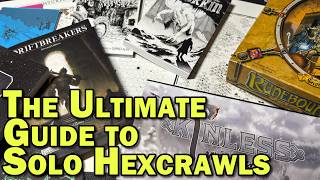
- Fantastic solo hex crawl experience.
- Will never leave the collection.
- Not specifically designed for solo play, but works well with minor adjustments or fan-made additions.
- fantasy
Mechanics (from transcript analysis)
- Hex Crawling — Described as a classic of the board game hex crawl genre.
Video topics + discussion points
Quotes (from this video)
- This is one of the best tools for hex crawling that I know of.
- It just works so effortlessly.
- This little snap box here has everything that you would need to have a little solo hex crawl.
- So just a really really neat little pocket uh hex crawl.
- This isn't a game in and of itself. You will need a game. You will need a system.
- This is one of my favorite subgenres of the tabletop hobby.
References (from this video)
- Definitive competitive fantasy adventure crawler
- Risk calibration is entirely yours
- Dramatic combat reversals
- Meaningful replay from day one
- Polarizing combat
- Bad handful of results can feel unfair
- Fantasy adventure crawler
- The realm of Terrinoth
- Story event cards introduce escalating threats.
Mechanics (from transcript analysis)
- Adventure tokens — adventure at a token
- scenario-based play — The two scenarios in the base game, one around the necromancer Vorakesh and one around the dragon threat Margath, give you meaningful replay from day one.
- Set Collection — Your hero's body, mind, and spirit attributes govern how many skill cards of each type you can hold, which in turn shapes the upgrades and abilities you bring to every fight.
- Token-based combat — Instead of conventional dice, each hero takes a set of double-sided combat tokens, gives them a good shake in hand, and casts them onto the table.
Video topics + discussion points
Quotes (from this video)
- Genuine player-driven freedom, meaningful choice over how to play and what to pursue. An experience that changes because of what you decide at the table, not because some designer scripted three branches and called it open world.
- The sandbox quality is real, but it operates through a narrow lens.
- Gloriously random, outrageously fun, completely impossible to plan for.
- The stories aren't authored by players so much as they emerge from the chaos of the deck.
- Sitting down to Talisman feels like opening a fantasy novel that has been read by millions of people before you.
- Modern tighter designs cannot replicate that.
- The soul of this game is solo, and it's one of the finest solo games ever made.
- The most mechanically innovative game on the list. A pirate sandbox built on top of a deck-building engine unlike anything else in the genre.
- That feedback loop between exploration and crew development is elegant.
- It's not a gimmick, one of the most thematically appropriate combat mechanisms we've ever played with.
- Watching cubes cascade through it during a high-stakes boarding action generates a tension dice cannot replicate.
- A pirate who moves faster than anyone can catch is a pirate who controls the board.
- It does not force you to choose who you are before the game begins.
- The number of ways to accumulate glory is the game's real genius.
- The glory stash mechanic is the best hidden information system on the list. The player who appears to be losing is often the one actually winning.
- The box literally describes it as an open world sandbox tabletop adventure, and for once, that description is not marketing overstatement. It is exactly what this game is.
- Every system serves the theme.
- Western Legends validates every approach at once, and that is extraordinarily hard to design.
- The game we reach for when someone asks us what open world really means in a board game, not as a marketing term, not as a description of a large map with multiple things on it, as a design philosophy carried all the way through to the rules.
- The galaxy builds itself around the decisions the players make.
- Fame points are the victory currency and the number of ways to earn them is the game's crowning achievement.
- Each NPC type has a personality card that governs its behavior. They move, they pursue, they create friction between players without any player requiring to antagonize another directly.
- Xia does not tell you what kind of captain to be. No scenario card, no story objective, no prescribed arc. It gives you a ship, a galaxy that grows as you explore it, and a fame track. Everything else is yours.
- Every single one of those sessions told a story nobody scripted. That is what the top of this list looks like.
- If you're new to this category, Western Legends and Merchants and Marauders are the best entry points.
- And if you want the purest, most complete expression of what a sandbox board game can be, Xia Legends of a Drift System is the answer every time.
References (from this video)
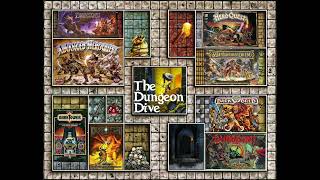
- Noted as an example of a game with useful house rules to shorten play
- Has potential for shorter play with thoughtful house rules
- Original design may be lengthy; needs thoughtful compression
- Array
- Fantasy
- Campaign/story-driven
- Talisman
- Gloomhaven
- Roombound
Mechanics (from transcript analysis)
Video topics + discussion points
Quotes (from this video)
- the board is almost unneeded for most of the game except for when you do a boss fight you have to flip the board over to this other weird configuration
- there's a whole set of rules for like faster runebound and it makes the game better
- mansion of madness 2nd edition
- dungeon crusade has so many chits in the quest system and it really does take a lot of time to sort through them
- the minis aren't even used for any kind of tactical positioning… they are only there to show where you are on the map
References (from this video)

Mechanics (from transcript analysis)
Video topics + discussion points
Quotes (from this video)
- The library to me is never the coolest place in town. It's a It's very rarely the crowdest place in town, but it's a place where people come to learn something to ignite the passion for something.
- My only hope was to to find this uh to get this job at this local representative from London in London from the same company I used to work. And uh yeah and frankly the main reason I also went to London because I had a couple of friends who were very who were just very kind to me and saying you can stay here with us as long as you need to and that's basically was the only place I could ever go without money or anything.
- I realized that even though I love all this nerdy productivity stuff, I'm just truly not really an expert in that.
- And I think it was my wife because she she've been like keep telling me in the background this whole time like dude you're such a nerd. you should do some gaming stuff because you've been playing the whole life and you can talk about games for hours.
- I would rather try doing that than going into the usual top 10 listicles and you know all the hottest latest stuff. It just resonate with me much more partly because I've been doing a lot of self-reflection and wanted wanted to do something I could do long term.
- The fact that you're saying that you're happy doing that you can tell it's one of the things that uh sometimes whenever you know creators you know it's a hard balance whenever you want to make content as you said to feed the algorithm to make you know some videos and but I think like judging you know if you watched a couple of videos from the same person most of the time you can tell whether they're having a blast whether it's genuine experience for them and or not at least that that's kind of my take on it.
- It is not. [laughter]
- Elder Scrolls has the best character customization we have in a board game. Full stop.
- The only reason I haven't done the video about it yet, believe it or not, is because I think I don't know the platform well enough to make a sort of video about this.
- So, the only reason I haven't done the video about it yet, believe it or not, is because I think I don't know the platform well enough to make a sort of video about this. The same stories will reviews as you know, I haven't reviewed Desi.
References (from this video)
- beautiful art
- solid two-player potential
- older title
- economic exploration across islands
- maritime trading and exploration
- competitive strategy with route building
- Near and Far
Mechanics (from transcript analysis)
- Network/area control — control routes among islands
- Tile Placement — tile placement and route building
- tile/board placement — tile placement and route building
Video topics + discussion points
Quotes (from this video)
- you cannot experience everything in one day
- I'm a lot more introverted than I thought I was
- I wanted to stick to having like a hundred dollar budget
References (from this video)

- Emerald edition variant with emeralds replacing books
- Deluxe components
- Large scale, intimidating to start
- Merchant city-building
- Near and Far
- Above and Below
Mechanics (from transcript analysis)
- city-building
- trading / resource management
Video topics + discussion points
Quotes (from this video)
- I'm intimidated to get started with it.
- You're building outposts and in order to increase your trade routes.
- the artwork here is quite lovely
- I'm not super into Political themes.
- it's a dexterity game where you are building up power towers on the island of nikima
- Arctic scavengers I picked this up because I know nothing about it
References (from this video)

- strong thematic feel and hero progression
- good fit for campaign-style sessions
- setup complexity and long playtime
- some editions are out of print
- Heroic quest and dungeon exploration
- High-fantasy adventure
- Progression with character growth
- Descent
- Merchants of Magic
Mechanics (from transcript analysis)
- choose-your-path adventure — Heroes embark on quests with variable events and encounters.
- combat and treasure economy — Fights yield loot; inventory and resource management matter.
Video topics + discussion points
Quotes (from this video)
- you are correct the answer is b
- it's actually a board game not an rpg
- Hanabi you actually got that in just in time
- new york zoo… happy birthday
- through the ages
- your latest game working circuits it's only 20 dollars
References (from this video)
- Diverse world building
- Fantasy