/pic8464379.png)











Jisogi: Anime Studio Tycoon Deep Dive
What the Community Thinks About Jisogi: Anime Studio Tycoon
Jisogi arrives as a standout title that captures the frantic energy of running an anime studio. Reviewers praise its execution across two fronts: a solid worker placement foundation that harkens back to classic Euro design, and artwork so stunning it nearly overshadows the mechanics themselves. The game has resonated strongly with anime fans who find themselves repeatedly drawn back to cards just to admire the illustration work. While some players wanted greater strategic depth, the consensus positions Jisogi as an exceptionally well-crafted middle-weight game that succeeds because its theme and mechanics work in concert rather than against each other.
Core Mechanics That Define Jisogi: Anime Studio Tycoon
Worker Placement Under Pressure
The heart of Jisogi rests on worker placement, but with a twist that creates constant tension. Players place specialized workers (writer, director, animator, producer) onto shared action spaces to claim positions before other players. The catch: once a space is claimed, subsequent players can still use it by paying a monetary premium. This forces real economy decisions each turn. Do you spend precious coins to guarantee access to a critical action, or do you accept that you might be locked out if another player moves faster? The tightness emerges naturally from limited action spaces and tight resource flow, reminiscent of games like Agricola where cashflow pressures dominate decision-making throughout the four rounds.
Set Collection for Anime Creation
Players assemble anime by collecting three script parts that match rotating trend cards. Each script comes in five colors, and matching those colors to the current market trends generates popularity points. What makes this elegant is the feedback loop: more popular anime earn more money, which funds worker hiring and action payments, which enables future anime production. Players also collect Genki staff cards that grant specialized abilities, merchandise deals that generate ongoing income, and networking cards that provide tactical one-time effects. Goal cards reward players for accomplishing specific conditions, adding another layer of optional achievement paths.
The Jisogi: Anime Studio Tycoon Experience
Theme That Breathes Through Every Card
The anime industry theme isn't window dressing; it shapes how players experience the game. Staff members arrive with names, moods, and backstories. Hiring more experienced workers costs more but delivers stronger abilities. Players must pay their workers each round, creating that constant pressure to keep producing anime or risk mounting debt. The "Jisogi" concept itself (barely keeping things going, like a bicycle that falls over when it stops) manifests as a tension mechanic where cash starvation feels authentic to the theme. The artwork deserves special mention: every card features beautiful anime-inspired illustration that invites extended viewing. Anime fans will spot numerous Easter eggs woven throughout the card pool, rewarding thematic literacy with moments of discovery.
Turn-by-Turn Puzzle Solving
Jisogi plays as a tactical game where micro-strategy outweighs grand planning. Each turn demands immediate problem-solving: which worker placement spot should I secure first? Should I risk losing the script colors I need, or preemptively pay to reserve them? Can I afford to hire a new staff member this round, or will I accumulate too much debt? These turn-to-turn decisions generate the game's interactive spine. The worker placement mechanic ensures meaningful player interaction, as contested spaces force subsequent players into expensive choices or alternative plans. Replays feel fresh because goal cards and available workers shuffle each game, creating different priority chains even if the core strategy remains consistent.
What Makes Jisogi: Anime Studio Tycoon Stand Out
Streamlined Euroness Meets Thematic Immersion
Jisogi achieves something many games attempt but few execute: mechanically tight resource management that feels thematically appropriate rather than pasted on. The game is easier to learn than heavier contemporaries like Terramystica or Clans of Caledonia, yet it preserves the tension and economic decision-making those games are known for. Players fresh to the game can grasp the core loop within a round or two, while deeper understanding of worker sequencing and financial planning unfolds across subsequent plays. This accessibility combined with thematic integration has proven powerful. Unlike games where theme exists merely for flavor, in Jisogi, theme explains why resources matter, why workers must be paid, and why maintaining cash flow defines survival. That coherence draws both experienced Euros players and anime enthusiasts.
Artwork as a Selling Point
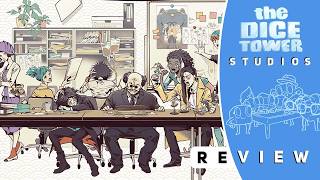
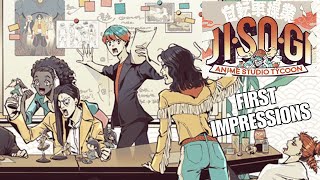
The production quality stands as one of Jisogi's greatest strengths. Artists Guuki, Thomas Roma, and Senawa Tien created work that consistently surprises players. The cover conveys the anime aesthetic immediately. Individual cards feature distinct, detailed illustration that rewards lingering examination. Worker cards display personality through expression and setting. Even the economy cards feel visually purposeful. This artwork doesn't just make the game prettier; it actively enhances the experience by making theme visible at every moment. When teaching the game, new players gravitate toward cards not just for mechanical clarity but because they want to study the illustration. Multiple reviewers ranked Jisogi among the finest artwork achievements of recent years, with one noting it feels "like the anime version of Tintin", high praise from the board gaming community.
Potential Drawbacks
Strategic Lightness in a Euro Package
Some players expecting significant strategic branching may feel disappointed. Jisogi doesn't support divergent path building where one player pursues heavy script collection while another chases merchandise deals and a third focuses on goal card completion. Instead, most players gravitate toward the same core path: collect script colors matching current trends, hire experienced workers for bonuses, release anime, repeat. The set collection system works primarily on color matching rather than thematic synergies within the tile text. While goal cards and available workers create variance, the fundamental decision tree remains narrow. This isn't a flaw for players seeking accessible Euros or anime fans, but competitive gamers seeking deep puzzle optimization may find the experience lighter than desired. The game rewards tactical execution and player order sensitivity more than strategic divergence.
Learning Curve From Rules Clarity
Several players noted that the rulebook flow could use refinement. While individual rules are logical and the core loop is intuitive, explaining how all systems interconnect for new players can prove frustrating. Teaching the game often requires walking newcomers through a full turn before concepts crystallize. The solo mode exists partly to address this, offering a structured way to learn before multiplayer teaches, though the solo challenges have their own complexity progression. Players unfamiliar with worker placement games may need extra patience during first plays, and teach times can stretch toward the hour mark depending on group familiarity with Euros.
If You Enjoy Jisogi: Anime Studio Tycoon
Try Splendor if you want simpler set collection without the worker placement depth. Sweetlands and Hollertow offer similar worker placement tension with contested action spaces. Agricola and newer Rosenberg designs feature the same tight resource management and loan mechanisms that define Jisogi's economy. For lighter, thematically integrated Euros, Ember Heart and Whisperwood deliver accessible gameplay with strong theme presence. If it's the anime theme you're chasing, consider that Jisogi stands nearly alone in capturing industry management through that lens. Many anime-themed games exist, but few integrate anime production mechanics this coherently. For solo play, the game's objective-based challenges provide structured learning, though players heavily invested in automa-style solo modes may find the hybrid approach less satisfying. Most importantly, if you appreciate games where artwork and theme work in service of rather than against the mechanics, Jisogi offers that rare balance.
What Reviewers Are Saying
"The mechanisms that are portrayed here mesh really well in how this game is integrated thematically. A lot of people really praise this game for its simplicity yet its euroness, comparing it to some of the older style mechanisms in Euro games where things were a little bit tighter when it comes to resource management and the worker placement."
— The Board Gaming Doctor
"I'll tell you why it's a banger for me: the theme is so good and it's done so well interwoven with the mechanics of the games that if you are an anime fan you will absolutely love it with the artwork of each card and each single artwork on the entire game is stunning."
— Board Stupid
"The art just screams anime in every way, but in a really cool fashion. Almost feels like the anime version of Tintin in a sense. I would just spend some time looking at the art besides what it does, and I think it's fantastic."
— Dice Tower