























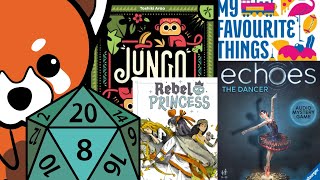





Jungo Deep Dive
What the Community Thinks About Jungo
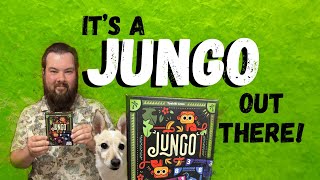
Jungo has emerged as a standout release in 2025, earning recognition as a card game of the year candidate from multiple major reviewers. The game strikes an exceptional balance that appeals across different gaming circles: accessible enough for newcomers yet engaging enough for dedicated hobbyists. Reviewers consistently praise it for delivering meaningful gameplay depth without requiring extensive rulebook reading, making it a rare achievement in modern board gaming.
Core Mechanics That Define Jungo
Ladder Climbing with Strategic Hand Management
At its core, Jungo is a ladder-climbing card shedding game where players race to empty their hands by playing increasingly powerful sets. Players must beat previously played cards by playing higher singles, larger pairs, or more abundant sets. The escalating requirements create natural tension: each beat requires stronger play, yet players need to manage which cards they use. This mechanic encourages planning several moves ahead, as discarding powerful cards now might leave players defenseless later.
The Locked Hand Mechanism and Strategic Card Placement
Jungo's defining innovation is its locked-hand system borrowed from games like Scout. Once dealt, cards cannot be rearranged in hand. However, when players beat played sets and choose to add those cards to their hand rather than discard them, they can place newly acquired cards anywhere, creating gaps and clusters of adjacent values. This flexibility transforms the game: skilled players strategically position cards to unlock future combos, while newer players can still enjoy the game without fully leveraging this depth. The tension between wanting fewer cards (to shed faster) and wanting more cards (to build powerful combinations) becomes a constant decision point.
The Jungo Experience
Approachable Yet Strategically Rich
Reviewers note that Jungo occupies a unique design sweet spot where it welcomes players of all experience levels. The entire ruleset can be taught from the back of the box in minutes. Yet beneath that simplicity lies genuine tactical choice: when to take cards versus discard, which positions offer future advantage, how to read opponents' likely draws from the deck. New players can enjoy their first game purely by playing opportunistically, while veteran players immediately recognize and exploit positional strategy.
Fast-Paced and Eminently Replayable
Games resolve in approximately 20 minutes, with playtime remaining consistent across different player counts. Rather than locking to a fixed round structure, players can seamlessly chain additional hands, encouraging quick replays and extended game nights. Reviewers praise this streamlined pacing: no endless downtime, no rules overhead, just continuous engagement. The quick turnaround invites multiple plays in succession, and the locked hand creates enough variance that repeated plays feel fresh rather than solved.
What Makes Jungo Stand Out
Superior Accessibility Compared to Scout
Multiple reviewers position Jungo as a more approachable alternative to Scout while maintaining genuine strategic depth. Where Scout requires careful hand visualization from the outset, Jungo allows players to build their positioning throughout the game. The card-drawing mechanic (drawing when unable to play, potentially drawing a card that breaks a stalemate) injects moments of luck and drama that add entertainment value without undermining strategy. This element provides positive reinforcement and dopamine-driven moments that keep casual players invested.
Happy Camper's Track Record for Excellence
The publisher demonstrates consistent mastery at identifying and polishing game concepts. Prior releases like Trio and Combo already established Happy Camper as a design house that excels at creating games that bridge casual and hardcore audiences. Jungo represents their most successful attempt yet: it lands even more securely in that sweet spot than its predecessors, appealing equally to family game nights and dedicated gaming circles.
Potential Drawbacks
Limited Appeal at Two Players
Several reviewers note that Jungo plays technically at two players but performs better with three to five. The interaction and timing that make the game exciting benefit from more players creating unpredictability. At two, experienced players can develop more deterministic strategies. The game remains playable and enjoyable at lower counts, but the multiplayer chaos that creates memorable moments becomes muted.
Subtle Strategic Layers May Remain Invisible to New Players
While Jungo welcomes new players, the deepest strategic elements—understanding positional advantage, planning card placement sequences, recognizing draw-deck probability shifts—require time and repeated play to fully appreciate. Newer players might not initially realize they're playing a lighter strategic puzzle; the game tolerates this gracefully, but unlocking its full depth demands engagement. Conversely, some veteran strategy gamers might find these layers, while satisfying, less crunchy than they prefer.
If You Enjoy Jungo
Players seeking similar experiences should explore Trio (Happy Camper's prior release emphasizing elegant hand management), Scout (the spiritual predecessor with locked-hand ladder climbing, though more demanding), Nanatory Dory (another recent card shedding game with locked hands and similar accessibility), and Hotchi Train (a Japanese ladder climber with comparable strategic layers). Combo represents another Happy Camper title that inhabits the same design philosophy. For those wanting pure trick-taking with less hand-management complexity, Perudo offers bluffing-driven play, while Duo delivers two-player dueling with comparable elegance.
What Reviewers Are Saying
"Jungo is the reason why I'll never play Scout again. There are many people on both sides of the fence that like Jungo better than Scout. The fact that it's even in the same conversation and that there's many people on both sides should tell you how good the game is."
— TheGameBoyGeek
"For me, Jungo lives in that sweet spot the best. It's super streamlined, it's better for mass market crowds, it's simpler than Scout, but yet it still has a ton of depth and it has more positive reinforcement, more sort of dopamine hits of fun."
— Board Game Animal
"The modern twist is that you can only play a set if they're next to each other in your hand, and you can't move your hand around. It adds this subtle layer of strategy because you then choose to play certain cards to tidy up your hand and bring the numbers together with their own kind."
— Actualol