/pic302117.jpg)
The most common rule set in games sold commercially as Mancala is for this game of Kalah. Mancala is actually a whole family of games. Kalah was invented in 1940 by an American, William Champion Jr.. He started selling the game in 1944, patented the rules in the 1950's, and founded the Kalah Game Co. in 1958.
The game is played on a board of two rows, each consisting of six round pits. The rows have a large store at either end called the Kalah. A player owns the six pits closest to them and the Kalah on their right side.
The game is started with four (4) seeds in each pit. A player takes all the seeds from one of their pits, and then they are distributed one by one, counterclockwise, in the pits and the player's own Kalah, but not into the opponent's store (Kalah). If the last seed is dropped into an opponent's pit or a non-empty pit of the player, the move ends without anything being captured. If the last seed falls into the player's Kalah, they must move again. If the last seed is put into an empty pit owned by the player, they capture all contents of the opposite pit together with the capturing piece and puts them in their Kalah. If the opposite pit is empty, nothing is captured. A capture ends the move.
The game ends when one player no longer has any seeds in any of their holes. The remaining pieces are captured by their adversary. The player who has captured the most pieces is declared the winner.
Variants:
Beginners may start with 3 seeds in each pit, but the game can also be played with 5 or 6 seeds in each pit. William Champion Jr. recommended the expert game with 6 in each pit.
In the Philippines Version (called Sungka locally) the game is often played with small shells, there are 7 pits on each side as well as the Home and the game is started with 7 shells in each pit.

- Fantastic
- Fantastic
- Good game
- Fiddly
- Complex
- Difficult to learn
- Too many things to track
- Arkham Horror
- Eldritch Horror
- Frostpunk: The Board Game
Mechanics (from transcript analysis)
- iconography — The game has a lot of iconography that needs to be learned and understood.
- Track management — The game involves managing tracks for player actions and progress.
Video topics + discussion points
Quotes (from this video)
- This is just a really solid deck builder.
- It's one of those games that if you're going to bring something to a table that's got a lot of new players, I think it's a fantastic choice.
- It's probably going to take you about 15 minutes to set up.
- But it's a game that feels substantial and it feels like you've accomplished something.
References (from this video)
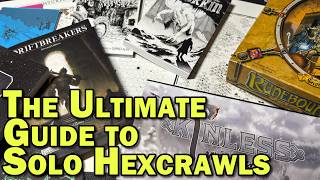
- Strong sword and sorcery theme
- Designed for solo play
- Easy to learn system
- Expansion adds detailed city exploration
- Host has not played it yet, but has read through.
- Lone hero adventures in a dark and dangerous world.
- Conan-style sword and sorcery world
- Sword and sorcery adventure
Mechanics (from transcript analysis)
- exploration — while you are generating your hex map with different terrain and things.
- Hex Map Generation — this does have some relatively simple but but uh good enough rules for creating your hex map and all of your different uh points of interest as you are exploring.
- Point of Interest Discovery — So we have our points of interest that you can discover while you're exploring your hex map.
- Solo Play Focus — this is tailor made or focused on solo play
Video topics + discussion points
Quotes (from this video)
- This is one of the best tools for hex crawling that I know of.
- It just works so effortlessly.
- This little snap box here has everything that you would need to have a little solo hex crawl.
- So just a really really neat little pocket uh hex crawl.
- This isn't a game in and of itself. You will need a game. You will need a system.
- This is one of my favorite subgenres of the tabletop hobby.
References (from this video)
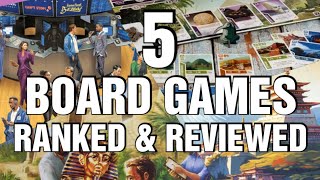
- Charming and enjoyable.
- Interesting decisions to be made, especially trading off dice usage.
- Balances racing to the end with visiting opportunities.
- Modular board offers variety.
- Feels like a Stefan Feld game.
- The dice selection feels more engaging than deck building.
- Equipment cards feel powerful and are worth acquiring.
- Might be polarizing for some Stefan Feld fans due to its less complex nature compared to his heavier designs.
- Can feel rigid with straight-line movement if equipment cards aren't utilized.
- Some may find the point-salad nature overwhelming.
- Potential for clouds encroaching on the board to cause exhaustion and waste turns.
- racing
- The Quest for El Dorado
- Footprints
Mechanics (from transcript analysis)
- Dice Rolling — Players roll six dice at the start of their turn, which correspond to independent resources and movement points.
- Modular Board — The game features a modular map made of different terrain types.
- Movement Allowance — Dice determine how far players can move in a straight line, with equipment cards allowing for turns.
- Resource Management — Dice rolls determine resources needed for equipment cards and compass tokens.
- Set Collection — Players collect sets of animal cards, maps, and Yak tiles for points.
Video topics + discussion points
Quotes (from this video)
- If you're going into this game wanting control um you know best player winning that kind of experience then you're simply not going to get it
- this one hasn't aged well
- the luck factor is simply too much
- it is competing directly with some other games that I think are simply better
- I felt like this game was like neck and neck the whole way I played it and everyone played equally but it worked out in the favor just by happen stance
- I want I want that's probably the best way to say it
- I do find it a little bit more um a little bit more laborious than being just selecting a dice and moving it that way
References (from this video)

- very tight euro with distinct scoring parameters
- stressful, crunchy decision-making
- hard to describe and teach
- scaling can vary with player count
- stone/brick/wood and religious or civic structures
- Dry European euro with tower-like scoring
- dry Euro with heavy tactical play
- Lorenzo Il Magnifico
- A Feast for Odin
Mechanics (from transcript analysis)
- area_control_and_resource_management — Control areas to optimize resources and scoring parameters.
- grid_action_selection — Place tokens on a grid to activate actions and resolve overlapping effects.
Video topics + discussion points
Quotes (from this video)
- It's been a long time coming. We've been trying to do this for several years now.
- This is not law; it's just our top 50 games right now.
- The way we came up with our top 50 is Pub Meeple, a head-to-head ranking site.
- Yes, it's nostalgic and still incredibly strong as a game.
References (from this video)
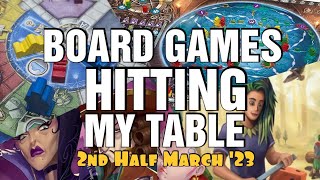
- fantastic and repeatedly enjoyable
- strong closing experience with varied routes
- complexity may deter casual players
- vote-based influence and worker management
- historical/civic building and governance
- procedural, strategic, incremental
Mechanics (from transcript analysis)
- multi-use workers — workers can feed buildings or provide votes, but not both
- vote/worker placement — harnessing votes to influence outcomes and build structures
Video topics + discussion points
Quotes (from this video)
- my favorite game of all time
- Head and Shoulders Above the Rest as my favorite game of all time
- the solo mode might be one of the best renditions of a solo mode I've ever played
- a quite nice filler game that flew under the radar
- definitely got a nice flow
- it's breezy and quick
- the artwork is fantastic
- Hidden Gem treats
References (from this video)
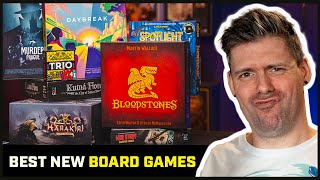
- Solid Euro-game core with multiple viable paths to victory.
- Clear, thematic tension between building and mining actions that create engaging decision points.
- Possibly lacks standout novelty in a crowded Euro-game landscape.
- Economic strategy, resource management, and market-driven tension.
- A Czech-themed city in a dual-action Euro-game frame, focusing on building and mining with dynamic market interaction.
- Euro-game abstraction with a strong emphasis on strategic planning and market timing.
Mechanics (from transcript analysis)
- Euro-style_engine_and_market — Players simultaneously develop buildings and mines to drive scoring while market demand and prices respond to actions, creating a dynamic economic environment.
- market_fluctuation — Actions influence supply-demand curves, affecting income options and strategic choices across rounds.
- tile-based_resource_management — Tiles act as both resource tokens and units; players must manage movement, construction, and extraction through careful tile spending.
Video topics + discussion points
Quotes (from this video)
- this is by far the game that has made me feel like a detective
- it's a detective movie in a box
- the rule book freaking sucks
- the visuals for this game and the components are 10 out of 10
- the play is somewhere way below that
- this goes into my friends collection
References (from this video)
- excessive admin burden with little meaningful decision
- unclear path to victory
- feelings of repetition without learning the system
- dice-driven with admin/sheet-driven outcomes
- abstract filler dice game
- light, mechanical.
Mechanics (from transcript analysis)
- admin sheet dependency — you reference a sheet to determine outcomes based on die results
- Dice Rolling — on your turn you roll dice and consult a rules sheet
- pattern/number combinations — many different possible outcomes; learning the system is not straightforward
Video topics + discussion points
Quotes (from this video)
- this is new feature it's a bit freestyle so please let me know what you think of it
- it's a 15 minute soundtrack and there's noises going on telling you to do things
- the gun is like really exciting
- I didn't get to use the gun once
- the theme really grabbed me and it kind of made me think of Game of Thrones
- this is an abstract game
- every time you play a card you actually take a cube off the board
- it's a heavy deduction game
- you go back in time to repeat your actions
- it's kind of like one of those choose your own adventure books
- I've had this game for over a year now and only played it once
- it's such a long game
- teaching it to new players is incredibly difficult