/pic6985339.jpg)








Keep the Heroes Out! Deep Dive
What the Community Thinks About Keep the Heroes Out!
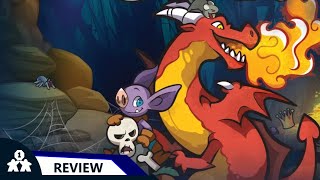
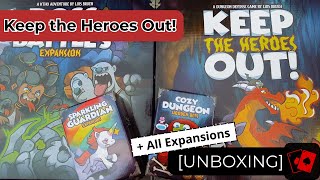
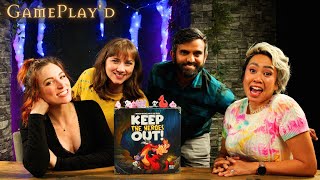
Keep the Heroes Out! flips the script on classic dungeon-defense gameplay. Instead of fighting monsters as heroes, you are the monsters, working together to protect your loot from an endless wave of invading adventurers. Channels like Board Game Hangover, The Dungeon Dive, and One Stop Co-op Shop have embraced it for its accessible design paired with surprising tactical depth, praising it as a cooperative game that families and seasoned gamers can enjoy together.
Core Mechanics That Define Keep the Heroes Out!
Cooperative Tower Defense with Resource Management
The game's heart is pure tower defense, where you and your fellow monsters coordinate to prevent heroes from reaching your vault and stealing your treasure. Each hero that enters the dungeon presents an immediate threat the team must counter. The core loop demands constant communication: who will block this corridor, which room needs reinforcements first, and what resources should the group prioritize? Reviewers note that this structure exemplifies how cooperative games should work, with shared strategy, genuine interdependence, and the realization that if one player neglects their part, the whole team suffers.
Unique Faction Abilities and Card Play
Each playable faction has a distinct starting deck, unit composition, and playstyle. One faction brings a single powerful unit, while another fields a swarm of smaller creatures. During your turn, you play cards to place units, move them, attack heroes, or activate room powers, and you buy new cards from the dungeon's shop to build a personal engine. This hybrid of card buying and worker placement means your choices ripple outward: the resources you generate in one room become the upgrades another player builds with, creating shared prosperity or shared peril.
The Keep the Heroes Out! Experience
Engaging Tactical Puzzles With Accessibility
What makes Keep the Heroes Out! stand out is that, despite its modular complexity, every turn presents genuine tactical decisions. Unlike many card games where cards almost play themselves, here you face choices: a card might power an attack or generate a resource, and movement cards let you reposition monsters or trigger a special dungeon ability. The game stays simple enough to teach in minutes but demands thoughtful play from experienced gamers. Reviewers highlight that new players catch on quickly, yet the puzzle remains engaging even for those who have already cracked the ruleset.
Replayability Through Scenario Modularity
The true breadth of the game lives in its scenario book, with each scenario offering a unique map layout, special rules, and cards that appear in the hero deck. Some scenarios pit you against a witch with a particular agenda, while others feature wizards that break imprisoned heroes out of their cells. You can play scenarios standalone, chain them into campaigns, or adjust difficulty on the fly. With many factions and a deep scenario library, most players have barely scratched the surface after a half-dozen plays, which transforms what could be a one-trick game into a platform for discovery.
What Makes Keep the Heroes Out! Stand Out
The Role Reversal and Narrative Charm
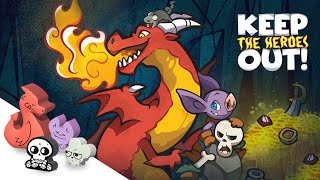
Playing as the dungeon dwellers defending against heroes is not a brand-new idea, but Keep the Heroes Out! executes it with particular charm. The flavor text drips with personality, framing your monsters as put-upon residents simply trying to protect what is theirs. The adorable artwork and pieces make the game visually appealing even to skeptics, and that approachability opens doors to players who might otherwise dismiss cooperative games as heavy or dry.
Strategic Interdependence in Cooperative Play
What reviewers consistently praise is that the game demonstrates how cooperation should function. You must provide resources for one another, place tactical blockers to protect vulnerable allies, and coordinate which heroes get eliminated in which order. Heroes activate in predictable ways based on the board state, so with table talk and planning you can avoid nasty surprises. Yet the game is not solved by analysis; it stays winnable for casual groups and challenging even for optimizers.
Potential Drawbacks
Downtime With Larger Player Counts
The primary friction point is downtime. With three or four players, each participant plays a full hand before heroes activate again. As decks fill with combination pieces, turns balloon, and one player might chain through many cards while others watch. A two-player variant limits cards per turn to cut downtime, but it also narrows the tactical window and reduces turn excitement. For groups that prize brisk pacing, this remains a real limitation.
Random Swings and Difficult States
While the hero deck is largely predictable, card draws can still align in ways that snowball against you. Sometimes the wrong heroes appear in the wrong rooms at the wrong time, triggering chain reactions that eliminate your units faster than you can rebuild. A few unlucky draws can swing a game from manageable to dire in a single round, and higher-difficulty scenarios amplify this effect, making both lucky wins and sudden defeats possible within the same playthrough.
If You Enjoy Keep the Heroes Out!
If you appreciate the cooperative depth of Spirit Island but want something lighter, or if you loved the tower-defense premise of Castle Panic but wanted more player agency, Keep the Heroes Out! bridges that gap. Players drawn to Pandemic's puzzle-solving without wanting a legacy commitment will find fresh air in its scenario library and faction variety.
What Reviewers Are Saying
"It's a fantastic game I can enjoy with my whole family, with kids, and you can enjoy it with non-gamers and gamers alike. It's a really good, really nice asymmetric cooperative game that anybody can enjoy."
— Board Game Hangover
"I have had a lot of fun. It's a very simple game to learn and a very easy game to play once you learn how the heroes move and what stops the heroes and for how long. Very, very fun game."
— The Dungeon Dive
"There's nine of them, so even if a few are a bit of clunkers, it's a great value and a lot of fun to mix and match them. And on top of that you've got this scenario book of twenty scenarios. Just a lot of fun modularity in the game overall."
— One Stop Co-op Shop