/pic7493386.jpg)
Kelp is a two-player asymmetrical game that offers players a unique opportunity to delve into the natural world of Pyjama Sharks and Common Octopuses, set in a South African kelp forest. Hide and seek meets bluffing and manipulation. Deck builder meets dice bag builder.
As players take on the roles of these iconic sea creatures, they will discover that the gameplay mechanics closely mirror their real-life counterparts. Each has a unique path to victory. The Octopus, known for its cunning and adaptability, sneaks around the board by playing cards and managing their hidden and revealed blocks, channeling the creature's remarkable ability to camouflage and deceive. On the other hand, the Shark, embodying the ruthless and determined predator, patrols their territory and attempts to hunt down the elusive Octopus by rolling dice and using special abilities to mitigate their luck, showcasing the creature's natural instincts and predatory behavior. The game is a thrilling mix of deck-building and dice bag building, as well as hide and seek, bluffing, and manipulation.
There are 3 ways the game can end:
The Shark wins by successfully attacking the Octopus.
The Octopus wins by surviving until the Shark is exhausted or by eating all four seafoods.

- Dice game of the year winner
- Strategic and deceptive gameplay
- Predator vs. prey
- Underwater
- Strateggo
Mechanics (from transcript analysis)
- Asymmetric gameplay — One player plays as the shark, the other as the octopus, with different mechanics (deck building vs. bag building).
- Bag Building — The octopus player uses a bag building game approach.
- bluffing — The octopus can move and shuffle blocks to hide its true position.
- Deck Building — The shark player uses a deck building card game approach.
- Hidden Information — The octopus hides its blocks on the board, only it knows their true nature.
- Hide and seek — The octopus tries to eat food while hidden, and the shark tries to find and attack the octopus.
- Trap Mechanics — Some blocks can be traps, which harm the shark if attacked.
Video topics + discussion points
Quotes (from this video)
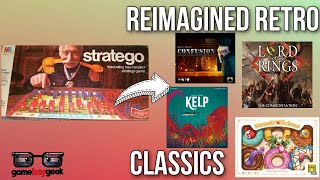
- This is where we're taking a look at old classic board games, looking at the mechanisms of those games, and then seeing how those have been inspired and re-imagined into newer, more modern board games, sometimes even doing bigger, grandio things with those mechanisms.
- It is very strategike, but in reverse with lots of deduction.
- Strateggo is what pretty much inspired the mechanisms of this game.
- So, there's a lot of strateg strateges mechanisms here.
- So it's almost like Strateggo on steroids.
References (from this video)
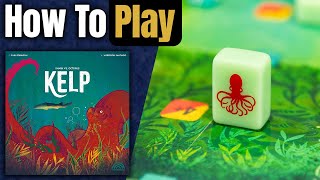
- Clear visual setup and teaching flow
- Engaging asymmetric design
- Accessible entry point for new players
- Rule complexity can be heavy for first-time players
- Components count may be overwhelming
- Asymmetrical pursuit with hidden information and block manipulation
- Underwater kelp forest, asymmetric predator-prey interaction between a shark and an octopus
- Educational, step-by-step teaching with emphasis on how each side operates
Mechanics (from transcript analysis)
- Asymmetric play — Two players have distinct objectives and tools (shark vs octopus) with different win conditions
- block placement and movement — Blocks are moved or swapped on a grid-like board to create opportunities
- Card-driven actions — Players play cards to reveal blocks, move blocks, or gain advantages
- dice bag and resource management — Shark uses a bag of dice to generate currents, search, and strike actions; managing dice as energy
- eat card mechanic — Eating blocks requires matching cards and adjacency; eating blocks advances win conditions
- Grid Movement — Blocks are moved or swapped on a grid-like board to create opportunities
- growth track — Growth tiles and tracking stimulate shark power progression
- hidden information and reveal — Octopus can see hidden blocks; shark reveals blocks when appropriate
- hunger track and risk — Shark energy and hunger track determine end conditions and buying power
- Simultaneous Reveal — Octopus can see hidden blocks; shark reveals blocks when appropriate
Video topics + discussion points
Quotes (from this video)
- the game is designed by Carl Robinson
- we'll be teaching you how to play kelp Shark versus Octopus
- you win the game by either outlasting the shark or by feasting on all four food blocks
- the octopus will take the first turn
- the four food blocks one shell block one double shell and these three traps
- if you don’t want any of the cards you can decrease one of your energy dice by one pip and refresh the row
References (from this video)
- Excellent two-player asymmetry
- Tense, quick decisions
- Rules can be fiddly for new players
- asymmetric duel
- underwater duel
- thematic combat
- 7 Wonders Duel
Mechanics (from transcript analysis)
- asymmetric_roles — shark uses dice-driven moves; octopus uses deck-building
Video topics + discussion points
Quotes (from this video)
- Two sides of the map for two different types of gamer.
- This is one of the strongest games this year, especially for its simplicity with innovative twists.
- Ethical production again Mighty Boards.
References (from this video)

- Incredible tension on both sides
- Outstanding asymmetry
- Beautiful production
- Two-player only may limit audience
- Rules heavy for non-two-player players
- Asymmetric two-player confrontation
- Oceanic duel between predator and prey
- Dramatic, tension-filled, asymmetrical design
- Onitama
- Pax Pamir
Mechanics (from transcript analysis)
- Asymmetric play — Two distinct sides with unique rules and goals.
- Bag Building — Shark side builds a bag of dice to influence outcomes.
- bag-building — Shark side builds a bag of dice to influence outcomes.
- Dice Drafting — Shark manipulates spatial layout with dice; Octopus uses deck-building and hidden movement.
- Dice-drafting/spatial puzzle — Shark manipulates spatial layout with dice; Octopus uses deck-building and hidden movement.
Video topics + discussion points
Quotes (from this video)
- it's easy to teach and bring out at parties, has a lot of replayability
- this is an incredible gift idea for folks who love music
- a tour de force of how to make an asymmetric two-player game
- Not available yet but when it is I highly recommend checking it out
- the greatest card game of all time is a bold claim, but Flip 7 is one of the best
- the rule book is dripping with these vibes
References (from this video)
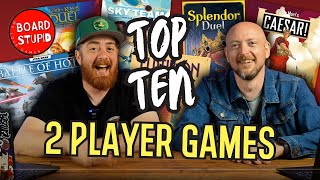
- Beautiful production, striking artwork by Santiago
- High tension and tense, cinematic dueling experience
- Interesting asymmetry with distinct win conditions for each side
- Niche appeal; may not flavor every two-player table
- predator-prey duel in an aquatic setting
- Undersea duel between shark and octopus
- tense, cinematic
Mechanics (from transcript analysis)
- Deck Building — Octopus builds a deck to create decoys and misdirection.
- deck-building — Octopus builds a deck to create decoys and misdirection.
- dice-drawn tension and showdown — Shark uses dice-building/selection; showdown cards decide outcomes.
- Hidden Movement — One player’s octopus uses hidden movement/deception; the other pursues.
Video topics + discussion points
Quotes (from this video)
- cozy. It's cute because of all the beavers.
- There is an actual good game.
- it's the definitive take on Splendor
- this is a meaty, fabulous design
- it's a tremendously tense exciting experience
- the production is beautiful
References (from this video)

- highly strategic for a two-player duel
- strong theme and art
- predator-prey with deck-building
- Underwater duel
- thematic, asymmetric duel
Mechanics (from transcript analysis)
- Asymmetric play — one player is an octopus, the other a shark
- Deck Building — octopus builds a deck; sharks counter-build
- deck-building — octopus builds a deck; sharks counter-build
Video topics + discussion points
Quotes (from this video)
- we're not professional Bo Gamers I don't do this for a living
- these are the games that mean the most to us on that we think are the best or the most fun
- check out the rest of the top 40 as it releases
- Patchwork... a wonderful beautiful tile laying game for two players using polyomino pieces
- it's a fantastic game I love it's a couple of reasons
- Daybreak is absolutely amazing and when I played it for the first time it blew my socks off
- Hanabi is amazing I love that game
- Sky Team succeeds through the lack of communication with your partner
- Everdale artwork is beautiful production with the tree coming out of the board
- Blood Rage and who knows we might talk about it later maybe next
References (from this video)
- strong theme and production
- compact and tense duel experience
- great art and flavor text
- niche audience for two-player duels
- contrast of predators with clever mechanics
- underwater duel between sea predators and prey
- 7 Wonders Duel
- Fox and the Forest
Mechanics (from transcript analysis)
- centerpiece rotating board / thematic components — production and components emphasize theme
- Multi-Use Cards — cards enable multiple effects and decisions
- multi-use cards / resource combos — cards enable multiple effects and decisions
- Two-player dueling mechanics — direct conflict around a single board with asymmetric goals
Video topics + discussion points
Quotes (from this video)
- Harmony is pushing toward the middle, maybe the top end of our beginner category
- it's a fabulous game
- Barbarian Kingdom is a mosH pit of a game of area control
- Ironwood such an amazing game
- Rebirth is absolutely fantastic
- Lord of the Rings DW is a great pick
- Joy Ride Survival of the Fastest is an amazingly striking game
References (from this video)

- fun, thematic, and family-friendly
- quick rounds suitable for fillers
- rule clarity can vary between printings
- some players may prefer more depth
- combat and bluffing with thematic animal pieces
- Oceanic battles featuring cephalopods in a light-warfare motif.
- playful and competitive
- Love Letter
- Sushi Go Party!
Mechanics (from transcript analysis)
- Area Control — Players vie for control-like influence over parts of the board using animal tokens.
- Bluffing and deduction — Partial information and misdirection drive outcomes.
Video topics + discussion points
Quotes (from this video)
- I'm very scared I even like I had a nightmare last night I was like I know I'm going to do so bad
- Camel Up does in fact actually play up to eight players
- you didn't fail you job number two man if I gotten eight that would have been perfect
- ark nova but you did quite well
- Baron Park you can add three points and you are now at four points for the game so far
- takenoko the chibies EXP Manion because it's from a panda