/pic779996.jpg)
Key Market is the sixth game in the Key series of stand-alone games published by R&D Games set in the medieval lands of Keydom, with components in both English and German.
The game is designed by David Brain, who was a playtester on some of the earlier Key games. The game is the first game published by R&D Games that has not been designed by Richard Breese. Richard this time takes on the role of developer and the game consequently has the same look and feel as the previous Key games, with artwork again by Juliet Breese plus its own set of ani-/vegi-/arti-meeples.
Each player controls an extended family of workers. Over the course of two years, players will organise their workers in an attempt to turn their initial scanty resources into a thriving economic system.
After an initial set up phase, the game is played over eight seasons. Each season has three distinct phases, during which players may take a variety of actions. The topography, weather, and seasons will influence the ability of workers to produce crops and livestock in the fields and luxuries in the villages. In addition, resources and luxuries may be bought and sold in the market, or gold and favours sought and acquired. Other workers may be sponsored to join the powerful guilds, where they will acquire skills as they gain promotion to become craftsmen or even the guild master.
Turn order throughout the game is determined by the player’s position on the season track, which changes at the end of each season. At the end of the game, the player who has acquired the most gold will win the game.
David Brain’s designer notes on the box sides conclude by stating that ‘Key Market is a reasonably intricate game. Some of the strategies that can be employed (particularly the effective use of the market) are not immediately apparent, and some of the Guild combinations do not look so devastating at first glance. But for those looking for a challenging medieval resource management/economic engine game, here you are.’
The game is for two to four players, with a game time of approximately 30 minutes plus 30 minutes per player.
Key Market was released at the Essen Spiel in October 2010 as a limited edition of 900 copies. The game was reprinted in 2019.
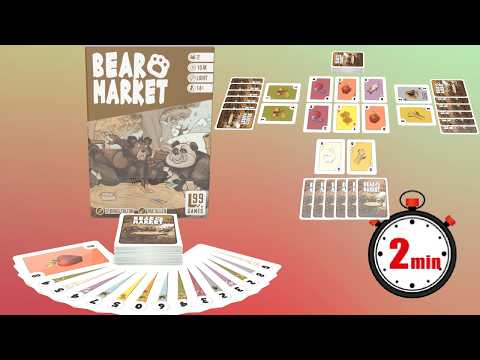
Bear Market Quick Overview
- Reef Encounter
- King's Key
Mechanics (from transcript analysis)
Video topics + discussion points
Quotes (from this video)
- It's about 90% of what it is we're trying to do. Okay.
- So, here is my answer to you, George, and to everybody else out there.
- We sometimes feature games that are obscure, uh, like maybe an incorporated or like a Granville or anything like that to highlight it so that it might get picked up and reprinted.
- The star of the show is whatever game we're featuring. That's what's the star.
- It's a logistics card game for two players.
- I have no affinity for Star Trek or Star Wars for that matter. Different animals, I understand. Don't don't yell at me. I'm just saying it.
References (from this video)
- It's a lot of fun.
- Allows for selling games that haven't been played much.
- Gives Kickstarter exclusives a chance to be acquired by others.
- Opportunity to find very old games.
- The reviewer found 'Chopper Strike' and checked its availability.
Mechanics (from transcript analysis)
Video topics + discussion points
Quotes (from this video)
- Since H of sigmar came out you've had a problem because there's a faction that you wanted to play that you struggled getting an army together.
- The Army's beast carburetors by the way if you're familiar with ages Sigma and this is an army with an extremely low model count on the table and extremely limited unit choice.
- So they have these four grand allegiances now order chaos death and destruction.
- The other faction is brand-new like these models let this beast of bones box is your first chance to get a hold of these models and what are they they are called the Aussie arc bone Reapers.
- Doug has gotten Kapow - white wizard gaming that means it's gonna be able to get a lot more distribution
- So in that same theme same mechanic but instead of cards that you're using dice so I think it's a great arrangement relationship between those two entities
- The model starting at the bottom will go all the way through the top and can be used all the way the big game it's really smart this model that Games Workshop has put together.
References (from this video)
Mechanics (from transcript analysis)
- iconography — Discussion about players asking what icons mean early in the teach, and the teacher's strategy of explaining icons later when they are relevant to the game phase.
Video topics + discussion points
Quotes (from this video)
- The approach to that is so completely different from the approach that I take when I'm creating a script for a video it you know in some ways it's worlds apart but in other ways there's a lot of connections.
- It's okay to look at the rulebook okay yeah so I am the main demo person for check games edition and when I go to Gen Con and origins and things like that I demo all of the check games to and somebody will come up and they'll say I want to play dungeon pets well I know dungeon pets I know dungeon vet really well Do I remember exactly what the three player rule is about the green square no is it so so for that point I will look in the rule book now there is a train of thought that says wait a minute you're the official demo person for this game and you're having to look in a rule book and some people might think that's you know wrong but looking in the rule book for something that's you know a very small detail about all the setup instructions how much money does everybody start with oh yeah it's four five five six right okay yeah just little things like that don't be afraid to look in the rule book if you if you need to it's much better to look in the rule book then you know think oh yeah I think I know what the rule is so I'll tell them and then you end up getting it wrong so yeah that would be one thing I would say definitely keep the rule book handy.
- The problem is by being distracted during the rules explanation you will you will miss certain things yeah so yeah and the other thing as well about people is that they will be constantly asking questions some people you know especially if you've kind of scripted the teach so the teach that I'm gonna do of key market tonight I am planning today to script it not word for word but I am going to have a series of bullet points and I am going to have different parts of right whereabouts am I going to explain this bit and where am I going to explain that of it and then you get somebody interrupting like two minutes in saying what does this icon do here or what does this mean here and you're like yeah I'll get to that later on um and and and this is a thing you've got to be careful that some people don't like that okay so some people if they say what does this icon do here yeah if you don't tell them right then what the icon does they think you're a terrible teacher because they've asked a question and you're not answering it yeah so some people think that but when you know you know you've spent a whole day planning how you're going to teach this game and that icon means absolutely nothing right now and it makes me even if you explain it right now it makes no sense whatsoever yeah it's the way that you would if you say that icon is relevant in the winter phase I'll explain it more in the winter days if I forget remind me so you know basically don't pamper to everybody's needs and desires if they want to know exactly what a specific thing means at that specific time because it can disrupt the flow and it can also end up messing up your flow of information so I believe that there is a there's a right flow of information and if you start focusing on a specific thing specific thing that's going to happen in a specific area of the game and you start Corina just at the start it it kind of messes up and that will disrupt it disrupts that the teach basically.
- The objective of this exercise for the next three or four hours by the end of it you will have learned how to play forget being competitive right we're all going to try and win obviously but forget being competitive forget all of them my new details just play the game learn the game and learn how all of the bits interconnect and move around yeah because then the game goes a lot quicker if you were to say right we're all going to be super competitive from game one I'm going to read out all of the rules everybody's going to sit there and analyze all of those rules yeah very few people can actually then turn those rules into a workable strategy without actually seeing how the game plays out first.
- So I had to lick that clip so that it was nice and nice. we're yeah I would then insert it in not on my belt but actually between my trousers and my skin so that it was touching my skin okay yeah and the static went away now Wow what I was doing is I was obviously providing some kind of earth but what I had to it was quite funny I had literally licket and sticky down my pants and a static went away now I have told this story how time to professional sound people yeah and they they didn't believe me and I'm like look it happened and they said well I've never heard of that but it was a combination of fluorescent lights powered lapel mic yeah an unshielded cable yeah and it was all of those things combined but yeah I accidentally fixed it because what I did is I had some headphones in the camera and I was listening back to occurred here this static and there's suddenly the static would go I'm out it's gone oh and then he's come back yeah well he's gone and he's come back and I'm like what's happening and he was when I was holding the clip every time I touch the metal clip it static when so I thought well I can't hold this on camera because I'm so I'll have to lick it and put it down me challenges and I did I did loads of videos like that
- The mechanics of the game aren't that hard but if you don't know what's coming and what's going to get you most of your points then you're not in a competitive position
References (from this video)
- curious to try the edition; intrigue around key-themed game series
- not yet played; opinions based on anticipation
- key-based trading and market interaction
- market trading theme (key-themed titles)
Mechanics (from transcript analysis)
- set/collection — collection of market-related resources with strategic choices
Video topics + discussion points
Quotes (from this video)
- Dimension was the one that I ended up keeping
- I'm booked up until January of 2020 because I need to make sure that I have you know my mental health at the forefront of things
- it's a pretty lightweight card game as you're trying to do a little bit of tableau building in front of yourself
References (from this video)
Mechanics (from transcript analysis)
Video topics + discussion points
Quotes (from this video)
- I went 17 days without turning on my video camera
- the patreon support is also super important to keep all of this stuff going
References (from this video)

- Is short and silly.
- Enjoyed despite the luck factor.
- Has a huge luck factor and is very swingy.
Mechanics (from transcript analysis)
- Dice Rolling — Implied by the mention of luck factor and being a quick game.
Video topics + discussion points
Quotes (from this video)
- Um I'd have slight concerns about the replayability of the game, but please do correct me uh on that.
- Maybe a little bit maybe a bit oversaturated in terms of how many there are out there.
- Unfortunately, I'm not familiar with either of those.
- Um I also thought that there wasn't enough mitigation in terms of activating the spots that you wanted.
- Um and pretty much the uh the cards not doing anything terribly interesting either.
- Um but I just like it in every way. But I'm a big sucker for really good Dawn games. I think he's a brilliant designer.
- Um hopefully I'll get copies of those for for sale relatively soon.
References (from this video)
Mechanics (from transcript analysis)
Video topics + discussion points
Quotes (from this video)
- They ended really strong in book three. It was a good ending of sorts and I really liked it.
- I don't care about it.
- They have multiple multiple uh points of view which I was fine following the one person.
- I just found it to be maybe the last book will bring everything back together, but I doubt it. I just don't care anymore.
- Look, I'm okay with characters dying and things that you need that to progress a story sometimes, but good grief. Does it have to be that bad all the time?
- The mobs are out there and the mobs are going to hunt you down and no matter what you say.
- It has definitely become a witch hunt in many ways where people like as soon as they hear the word the letters AI, they're like, 'I'm out.'
- I think the backlash is and people going and rating games one on BoardGameGeek is kind of ridiculous.
- That has nothing to do with the game. It really doesn't. That's that's just nonsensical.
- I'm kind of mind-boggled with how much people complain about prices of games.
- Yes, games are expensive. They're really expensive to make.
- You don't go yell at your gas station attendant, you shouldn't when gas goes up. That's not them who are doing it.
- It should be a friendly place to go to.
- I always try to put some monkeys in my zoo, period. Just so I can say I have some monkeys.
- I dislike the cat character a lot and I found it to be okay.
- But I will warn you, I noticed that a lot of people when they do this, they also forget about the part where they you should make money.
- Wash it in the shower?
- If I ran BoardGameGeek, if I saw someone rate a one with a comment of 'I hate what they did here.' I would just delete that rating instantly.
- I think are you kidding me? This is so nonsensical.
- I love going to bookstores.
- Any place that has unique interesting thing, a hot sauce store, a a beef jerky store, whatever.
References (from this video)

Mechanics (from transcript analysis)
Video topics + discussion points
Quotes (from this video)
- A frenetic 10-minute game from Queen.
- This is one of the key games I have not played. This is the sixth one.
- That's a cool name.
- I felt it could have done a little better. Um, it's it's almost too slight for me.
- I found it a little too fiddly, but as you can see, it's moving up in ranks.
- So it it's kind of funny it took him so long to come out with an Axis and Allies World War I game.
- I know I enjoyed it, but also it's 10 years ago, so it's hard to remember.
- This is the prequel to Clue where you're going around trying to kill Dr. Lucky.
- And I found it to be a lot of fun.
- If you like He-Man, this really brings it out.
- I've heard good things about this game, but I have never played it.
- This game is very weird and unique but I like it.
- This is one of the classic war games.
- It's running a kind of like an engine building thing through the space station.
- I liked it, but it has been a while.
- This is the OG Fury of Dracula game.
- I have never played Peanuckle. I know a little bit about it, but it's interesting to see this one kind of rated way here in the middle.
- I find it very odd that they are they're basically the same game. I'm not sure why they have two separate entries.
- Bidding to take Bowolf down a path has almost nothing to do with the theme.
- I liked it fine.
- I do like that you use the box and stuff as terrain.
- This is kind of a holy grail for many people.
- I'm not as big on the horror theme as many other people are, but I know people like this concept here of horror games running around.
- Of the ones I talked about today, I think Masters of the Universe, the board game, um, is my favorite.
References (from this video)
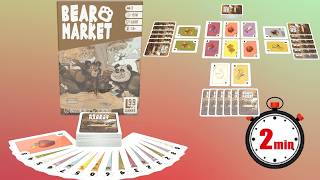
- Paced bidding with minimal downtime due to simultaneous bidding
- Engaging snake draft that adds tension and strategic choice
- Clear endgame trigger with ten suits creates meaningful decisions
- Short playtime makes it accessible for casual play
- Good player count support (2-5)
- Scoring can be tricky to optimize mid-game without keeping careful track
- First-time players may need a few rounds to understand suit-based endgame scoring
- Resource hoarding, market manipulation, and end-of-winter scoring
- A winter market where players bid for high-value food cards to hoard in a growing tableau.
- Abstract mechanic-driven
Mechanics (from transcript analysis)
- Auction / Bidding — Simultaneous bidding where players secretly bid on market cards to acquire resources.
- bidding — Simultaneous bidding where players secretly bid on market cards to acquire resources.
- Compound Scoring — Endgame scores are calculated from types and counts of food collected; multiple strategies exist.
- End Game Bonuses — Game ends when a player achieves the endgame condition (e.g., completing all ten suits).
- endgame scoring / set-collection scoring — Endgame scores are calculated from types and counts of food collected; multiple strategies exist.
- endgame triggers — Game ends when a player achieves the endgame condition (e.g., completing all ten suits).
- set collection / tableau building — Winning cards join the player's tableau and help shape the market for the next round.
- Snake draft — Draft order is determined by bid, offering high-reward choices and risk of a weak end of line.
- Tableau Building — Winning cards join the player's tableau and help shape the market for the next round.
Video topics + discussion points
Quotes (from this video)
- Bear Market is a bidding speculation
- The snake draft allows you to bid high for the best card you need
- If you think you're winning, you can end the game by drafting that 10th suit.
- Bare Market, simultaneous bidding keeps the pace of the game quick and reduces downtime found in most other bidding games.
References (from this video)
- simple, approachable bidding that remains engaging
- solid filler with a nostalgic market vibe
- some players may feel luck-influenced due to dice results
- bidding and speculation
- Auction-style market with a retro feel
- lightweight, social and quick
Mechanics (from transcript analysis)
- dice-determined bidding — bidding is driven by the roll of two dice to decide available goods
- fixed bidding — players bid on items and manage selling for profit
Video topics + discussion points
Quotes (from this video)
- this is going to be one of the coolest examples of a programming game that you will see out there
- Wallenstein has become one of my favorite games of all time
- it's beyond genius
- Tower Up is fantastic
- it's pure system
- this is one of the most overlooked games from the Oink brand
References (from this video)
- clever back-and-forth auction mechanic
- short playtime (~20 minutes)
- accessible and portable
- heavily luck-dependent
- auction/back-and-forth market dynamics
- urban flea market bidding
Mechanics (from transcript analysis)
- bidding/auction — items valued 3 to 18 are auctioned; bidding is determined by dice rolls
- dice-driven bids — players roll dice to create bidding power; higher rolls gain priority but cost money
- resale/value spike — rolled numbers that repeat grant fixed money; pricing escalates over time
Video topics + discussion points
Quotes (from this video)
- these games range from being decent to pretty damn excellent
- it's a very clever game
- criminally underrated
- it's a quick 20 minute game that is a lot of fun
- I cannot even understand why that is rated so low
References (from this video)
- well-designed light auction game
- short, replayable with meaningful moments
- randomness can swing outcomes
- may feel lightweight for some players
- artifact collecting and bidding
- auction-style flea market
- Capital Lux
- For Sale
Mechanics (from transcript analysis)
- Auction / Bidding — dice rolls determine which items go up for auction
- dice-driven bidding — dice rolls determine which items go up for auction
- Push Your Luck — decide how much to bid for items that may or may not pay off
- push-your-luck / bidding gambles — decide how much to bid for items that may or may not pay off
Video topics + discussion points
Quotes (from this video)
- this is definitely one of those games with a bit of laborious start but great payoff after you get your head around it
- it's a wonderful family-friendly filler, a puzzly style game
- one of my favorite games that i played last year
- it's essential if you like your two-player games