/pic4574772.jpg)
/pic4298867.jpg)
/pic5054764.jpg)
/pic5873441.png)
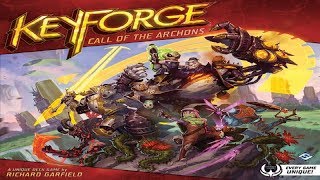
Journey deeper into the world of the Crucible in Age of Ascension, the second age of KeyForge! This continuation of the world's first Unique Deck Game contains 204 new cards seamlessly integrated into a card pool that contains a total of 370 different cards, creating an entirely new collection of Archon Decks for you to discover, explore, and master!
The KeyForge: Age of Ascension two-player starter provides you with all the tools you need to either begin or expand your adventures on the Crucible, featuring two unique Age of Ascension Archon Decks, a Quickstart Rulebook, two Poster Playmats, and all the keys, tokens, and chain trackers you and your chosen opponent need to start playing!
In more detail, KeyForge is played over a series of turns in which you, as the Archon leading your company, use the creatures, technology, artifacts, and skills of a chosen House to reap precious Æmber, hold off your enemy's forces, and forge enough keys to unlock the Crucible's Vaults. You begin your turn by declaring one of the three Houses within your deck, and for the remainder of the turn you may play and use cards only from that House. For example, if you take on the role of the Archon Radiant Argus the Supreme, you will find cards from Logos, Sanctum, and Untamed in your deck, but if you declare "Sanctum" at the start of your turn, you may use actions, artifacts, creatures, and upgrades only from Sanctum. Your allies from Logos and Untamed must wait.
Next, you must strive to gain the advantage with a series of tactical decisions, leveraging both the cards in your hand and those in play to race ahead of your opponent. If you wish to weaken your rival's forces, you may send out your allies to fight enemies on the opposing side, matching strength against strength. Otherwise, you may choose to use your followers to reap, adding more Æmber to your pool.
Notably, no card in KeyForge has a cost — choosing a House at the start of a turn allows you to play and use any number of cards from that House for free, leading turns to fly by with a wave of activity! Yet balance is key. If you simply reap more Æmber at every opportunity, your rival may quickly grow their team of minions and destroy yours, outpacing your collection and leaving your field barren. But if you focus on the thrill of the fight alone and neglect the collection of Æmber, you won't move any closer to your goal! If you succeed in finding a harmony within your team and have six Æmber at the start of your turn, you'll forge a key and move one step closer to victory. The first to forge three keys wins!
This page includes videos and mentions from the whole KeyForge family. Drill into a specific game below.
/pic4574772.jpg)
/pic5940303.png)


KeyForge - How To Play

- Ease of access for new players
- Saves time by not requiring deck construction
- Fast and free-flowing turns
- Vibrant and fantastic artwork
- Players always have a hand of six cards
- Lack of integration between houses in a deck
- Decks can feel repetitive and not unique enough
- Little direct interaction in some matchups
- Frustration with not getting desired deck combinations
- The game can become a slog with certain deck matchups
- Magic: The Gathering
Mechanics (from transcript analysis)
- Chains — Chains are a modifier that affects hand size or the number of cards drawn at the end of a turn. Playing heavy cards can increase chains, potentially leading to a smaller hand size.
- Creature Destruction — A common interaction involves destroying opponent's creatures to prevent them from attacking, capturing ember, or to hinder cards that rely on creatures being on the board.
- Deck construction — The game features pre-constructed, unique decks, removing the need for players to build their own decks, which is highlighted as a positive for ease of access and time-saving.
- Ember — Ember is a resource used to unlock keys, with six ember required to unlock a key. Players cannot 'sandbag' or hold ember indefinitely, as it can be affected by opponent's cards.
- House Selection — On a player's turn, they select one of the three houses in their deck, and can only play cards, activate abilities, or discard cards from that selected house.
Video topics + discussion points
Quotes (from this video)
- my biggest complaint my personal bass biggest complaint with this game as is and I believe that they are going to release other sets similar to how magic releases their different sets I think they're going to do that here but as is based off of the four decks that I have played a lot of this game is you doing stuff on your turn and you waiting for your opponent to do stuff there is very little interaction
- the biggest problem and that I've seen so far is that there is no integration between these houses they are literally just three separate houses put into one deck
- my favorite things about ki Forge is the ease of access that this game has over magic magic is you have to learn all these cards and you have to learn how the deck build and you have to learn how to ex-old well and it just it just kind of never ends
- the artwork is fantastic in this game very vibrant very colorful you know they did a great job on the artwork
- the other thing I do really like is how your turn works very smooth very free-flowing there's no okay well untap upkeep draw okay first main phase combat second main phase and main phases there's none of that
- on the scale of one to ten obviously five being average ten being perfect and one being a straight-up gutter i'ma give it a seven I think it's a solid seven I do think it's an above-average game
References (from this video)

- Safe.
- Super fun.
- Great for two players.
- The game is kind of dead.
- Don't like buying new stuff all the time.
- Arkham Horror
- Lord of the Rings
Mechanics (from transcript analysis)
- Deck Combat — You fight against the other player by trying to get these keys.
- Set Collection — You're collecting these little um embers and then you can spend them to build keys.
Video topics + discussion points
Quotes (from this video)
- Let's check which board games do we recommend 5 years ago and then see if they still hold up, still stay in collections or do we have to and we will provide some alternatives to the best board games for two players.
- You start out with a small deck of cards and during the game you get more cards that you put into your deck.
- It doesn't matter if you like Star Wars or don't. It's just a really, really good deck building board.
- The legacy game is a game where you make permanent changes as you play from game to game.
- Eurogame is an economic game where you're going to produce things mostly resources in the form of cubes and then convert them into other things or victory points.
- This is one of the best games ever. Not only Rolling, right?
- So my pick for that is going to be key forge. And why I like key forge is because it's safe.
- If this video gets a thousand likes, I'll grow a mustache for one video.
- So, Coup, was it Coup?
- Layers is a two-player game where you are building a dungeon.
References (from this video)
- Each deck is unique
- Playable immediately out of the box
- Very popular and selling well
- Easier entry point than traditional CCGs
- Deck names were not impressive to Tony
- Vintage decks from Gen Con remain unplayed by Tony
- Magic: The Gathering
- Warhammer Champions
- Pokemon
Mechanics (from transcript analysis)
- Combat — Players use creatures and abilities to attack and defeat their opponent.
- Deck construction (implicit) — While players don't construct decks, the unique nature of each deck is central to the game.
- Hand Management — Players manage their hand of cards to play creatures, actions, and artifacts.
- Unique Deck Game — Each deck is procedurally generated and unique, with no two decks being the same.
Video topics + discussion points
Quotes (from this video)
- Kill Team is like the quick two-player skirmish game in the Warhammer 40k universe
- we had all six of us playing on these really nice tables with a nice terrain it was a wonderful time maybe even the highlight of my trip
- the building is the hardest thing if you get through that the rest of the actions you can do are simple
- a good game is a good puzzle
- I will play this again but not above Lorenzo
- this one I don't think impressed us as much as Lorenzo
- the iconography was confusing
- it's a good puzzle
- I will play this game I will enjoy playing this game but like you I will put Lorenzo on the table first but I will not turn down a game of Newton
- it looks cool man a co-op worker placement that's kind of cess kind of itching to scratch I didn't know I had
- it's a hard co-op worker placement game
- Stan Lee the very famous American comic book writer died at the age of 95
- he's one of the greatest storytellers of all time
- every hero of his had a flaw and he made sure they did
- Excelsior!
References (from this video)

Mechanics (from transcript analysis)
Video topics + discussion points
Quotes (from this video)
- We're here for fitness game collection.
- This is Rolls in the Family.
- Um Yep. And Daniel finally got his priorities straight
- We're going to argue where you put things on a board game shelf.
- This is we're already to our first big controversial moment here.
- No, it's best.
- The wall is also nonstructural.
- People think this is easy. I tell you what they're think
- This is what the they tune in for.
- You know me. I'm assuming you want this light, bright, and jumbo alphabet puzzle down here, too.
- Structurally sound, folks. Structurally sound.
- Can you imagine the thumbnail? We could like catch it midshelves falling on us.
- This is where we start to test the industrial integrity of these shelves.
- Oh, it better.
- We learned that you can turn a box.
- Millennium Blades is the weird one.
- You actually didn't get enough shelves.
- Primal takes up the same space as like nine games.
- Why play games? You can just move them around.
- We have slightly different taste.
- I'm more willing to sacrifice that for games that like feel like they should be next to each other.
- I love aesthetize their whole collection by color.
- It's like disregard for function.
References (from this video)

- announced at Gen Con
- very cool business model
- unique decks
- eliminates the need for chasing cards
- take the deck out of the box and start playing
- made a serious impression
- pre-order already number two before release
- Magic: The Gathering
Mechanics (from transcript analysis)
- Deck Building — Unique decks where no two are alike, eliminating the need for chasing cards.
Video topics + discussion points
Quotes (from this video)
- personally I love the Arkham Horror card game I've played a lot of strategy games and I've played a lot of narrative games this is one game that really merges those two well together so I'm glad to see that this game is still as popular as what it is
- I think it's one of those games you really need to experience
- I highly recommend it if you haven't checked it out because right now it may be my favorite game of 2018
- every deck that you buy is unique nobody else has it this makes each deck feel different and unique from anybody else that you're going to play against it also helps eliminate that need for chasing cards and deck building as you just take the deck out of the box and start playing right there
- I'm just amazed at how fast this game is taken off people are excited about it they've put in their pre-order for it now they're just waiting to see if they like it
References (from this video)
- Each deck is unique, offering a different experience
- Algorithm ensures decks are playable
- Low barrier to entry for casual play
- Interesting manufacturing and algorithmic process behind deck creation
- The card game itself didn't blow them away.
- Some decks are intentionally better than others, rewarding players who spend more.
- Unique decks for every game, concept originated from 'technique' and 'outcast'.
- Warhammer Champions
Mechanics (from transcript analysis)
- Auction — Some organized play variants involve bidding for decks or using 'chains' which affect bidding.
- Deck construction — While decks are pre-made, players can choose which deck to use for a match.
- Set Collection — Players collect cards from three factions.
- Unique Deck — Each deck is procedurally generated with a unique combination of cards and factions.
Video topics + discussion points
Quotes (from this video)
- I am the one on the far right. Hey Dream Theater, A Rite of Passage. I'm the guy in the red robe on the far right.
- When it boiled down to me was a very rinse and repeat: get resources, build something, advance victory points. That's where I am with this game.
- The whole thing that you're doing the entire time is so story driven that the decisions and stuff you make within the context of story you just stay immersed the entire time.
- I love games where I get to do stuff on other people's turns.
References (from this video)
- Visually stunning art for new factions
- Creative and successful blending of themes in new factions
- High number of registered decks indicates popularity
- Unique gameplay experience due to unique decks
- Requires continuous purchase of new decks to play.
- Unique worlds and factions
Mechanics (from transcript analysis)
- card combat — Players use cards to battle and achieve objectives.
- Deck construction (implicit) — While decks are pre-generated, the core concept involves understanding and playing a unique deck.
- Unique Deck Game — Each deck is a unique, algorithmically generated entity.
Video topics + discussion points
Quotes (from this video)
- I don't feel like I've really seen combined in that way in a game so I kind of had to give them kudos for taking an Arkham game and giving us something kind of different
- it's a dice based combat and it looks like they're gonna use some sort of measuring stick measuring implement
- the game is brutal it defeats so funny the counter pointed that's the first few times I played it was such a cakewalk
- it's a perfect con game cuz you teach it quickly it's portable you just get it out and you play it
- for me like as a miniature painter one of like pause that I have is if I'm gonna paint these I want them to look exactly like the superhero should
- Dead reckoning had theme that you could sort of sink your teeth into
- our art department did a wonderful job they really found a great way to merge the greco-roman themes with the dinosaurs and make it not look crazy
References (from this video)

- No deck building required, which is good for players who dislike that aspect.
- Every deck is unique, offering a novel experience with each new deck.
- The chains system helps to balance gameplay between different decks.
- The game is easy to learn, especially with starter decks that have keywords explained.
- The term 'unique' is questioned as a marketing term.
- The 'chains' system can be confusing or feel unfair initially.
- The game's unique nature makes it difficult to review conventionally.
- The idea of buying multiple decks to find a better one is discussed.
- card dueling
- Magic: The Gathering
Mechanics (from transcript analysis)
- Archiving — Cards can be archived, meaning they are moved to a separate pile to be reclaimed later.
- Combat — Creatures can fight each other, with damage being dealt based on strength and health.
- Hand Management — Players manage a hand of cards and choose which faction to activate each turn, impacting which cards can be played.
- Handicapping — The 'chains' system acts as a handicap for decks that are too powerful, reducing draw power.
- Resource Management — Players collect 'amber' to forge keys, which is the primary objective of the game.
- Set Collection — Collecting sets of specific factions or cards can lead to powerful turns or abilities.
- Unique Deck — Each deck is unique and cannot be modified by the player, as it is sealed and bought as-is.
Video topics + discussion points
Quotes (from this video)
- I think what happened was well I came over earlier this afternoon just to make sure everything was going to work okay
- normally is a whole bunch of stuff we have to do and I think that was almost a problem in its own way cuz as soon as we saw everything working we said well how can we change this
- usually around origins to essence peel things get a little nutty with tutorial videos right now I would say we were in the tutorial apocalypse right after the show
- I said in the last a live show we're getting really close now because we've got the cameras working now we've got cameras that show all the different angles they're high quality hopefully you're finding it's a good viewing experience right now
- the next big trend in gaming and it's already happening is legacy style games
- if you think of mysterium the game of cerium that you put sleeves it cards and sleeves right behind the shield yeah yeah board has got sleeves so when something happens in a region there's a card that will use slide into that sleeve
- I don't know what to think because the game isn't what it sounds like
- the odds that I'm going to be playing against someone who has a similar deck to mine yeah you were saying yeah yeah
- the objective in like magic is not to produce your life force to zero or something like that no we don't have health the idea is you're trying to forge three keys
- the thing is like we're still friends at the end of the day and we're we're we're recording videos about games that we've played and game end games which are fun
- the landscape of YouTube but because I had someone like bourgie me to go and then share those videos gamers found the content right
- I don't want to be pushing my sort of agenda beyond the games I'm picking to put in front of you
- the problem is once I start listing it I'm gonna forget somebody that I would want to have in that tier of people that I really enjoy and think are doing great work
- the game is a little spoiler on the topic I think the game is a slight mistake in labeling this is almost sounds review
- I think the best thing to do is just play the games I'm picking to put in front of you you want to know what my opinion is on the games that I'm going to show you well you have to decide for yourself
- if you have a hand it's kind of plugged up in your like I don't really want any these you could just pick a particular faction like I have a whole bunch of this mercy faction I could just chuck the ball
References (from this video)
- Favorite card dueling game
Mechanics (from transcript analysis)
- Deck Building — Favorite card dueling game, enjoys bringing back multiple decks from different sets.
Video topics + discussion points
Quotes (from this video)
- I always like to start with theme I know some people say start with the objective I like to get you kind of invested in the setting and what we're going to be doing a little bit first
- rules turn all this lifeless junk effectively into possibly an incredibly fun experience that we're gonna have
- the success of an IP based game I think is a good thing for our hobby overall
- The more people I meet in life the more I realize that the way I see things it's you know it's so clear to me the way things are but to somebody else it's something else entirely different
- You know what I was gonna say I was gonna say mechs vs. minions but I completed that game and if I remember correctly I gave that away to someone in my game group so that means now I'm not gonna bring it out but my biggest game box is the reckoners
- The challenge with table talks is I like to pick topics that I feel feel personally invested in some way that I have like what I think is some kind of perspective to share
- So sorry we're late it was yeah well look we're here now right
- Let us know in the comments are you seeing and hearing me
- Write question in all caps and then put a colon and then after that you will write your question
- Ian and Kathy who maybe are watching tonight are having their 31st wedding anniversary
- It's a nice, relaxing little game, I think that's how I'd describe it.
- It's so satisfying to play.
- It has a constant underlying tension.
- The deduction is great.
References (from this video)

Mechanics (from transcript analysis)
- Deck Building — the concept that you just buy a pack and you're good to go and there's nothing to build now
- pre-built deck — the concept that you just buy a pack and you're good to go and there's nothing to build now
Video topics + discussion points
Quotes (from this video)
- tomorrow matthew and i are going to live stream sagrada the physical copy of it actually playing that together
- they introduced me to like catan
- Castell is a big one I like
- Gentes Cinque Terre which is hard to get
- Ticket to Ride is constantly up there
- For Sale... prior to 2000. that's a game I still love today
- Resistance and still play it loads
- Blood on the Clocktower
- Don't mess with Cthulhu it's another great
- Deception Murder in Hong Kong is a big favorite
- the concept's fantastic the idea that you just buy a pack and you're good to go and there's nothing to build now
- this is going to disrupt the entire system
- I love teaching that to people
References (from this video)
- Designed by Richard Garfield; unique algorithmically generated decks.
Mechanics (from transcript analysis)
- algorithmically generated decks — Decks are uniquely designed by computers; no two decks are the same; production depends on an algorithm.
Video topics + discussion points
Quotes (from this video)
- There’s a lot of anticipation surrounding the edges of the galaxy
- Mind Bug you'll be summoning hybrid creatures and then sending them out to battle against your opponent
- there's going to be a jurassic park themed legacy game in the future
- the deck building juggernaut Dominion
References (from this video)

Mechanics (from transcript analysis)
Video topics + discussion points
Quotes (from this video)
- Okay let's introduce you to the third member of all you can board. This is Braden.
- the big announcement is that aycb is uh getting an additional member they're now going to be three people that make up all you can board
- we're not going full time for all you can board
References (from this video)

- Taken over by another company
- Not as popular as other card games
Mechanics (from transcript analysis)
Video topics + discussion points
Quotes (from this video)
- Giving out one deck is sort of like what are you gonna do in one deck?
- The cards look amazing.
- it feels like a Tetris game like if Tetris made this game people would Rave if it was a Tetris branded it would be so far
- great filler weight game
- The way the DMV and where I live goes they they give you a ticket you go and you sit down in this big room with all these chairs and it's like it's in this old mall where that has 95 of them all is is vacant and they're actually planning on tearing the whole thing down
- it has an ending that makes you think and makes you actually go whoa that's huge
- it is the most graphically violent like movie that it is it I don't it's and it's very um it's very psychological as far as the horror goes
- it's one of those things where uh I I I want I I seriously want other people to watch all of Martyrs so I can actually talk to them about the ending so I can discuss what you think theUATION the ending means
- it is it is a extremely difficult watch
- the ending has stuck with me for like days
- it is completely and totally like uh totally popcorn TV it is there's nothing there is it is perfectly solid B material that you can just have on and like you can literally not watch it
- it's like the monster's not gonna come out of the movie
- the one genre that will be affected least by the strike will be horror because most horror films are independent
- Mario made a billion bucks let's not discredit that
- the sound is like unreal it was like one of the best sounding movies I've ever heard
- Dunkirk had the rapid noise
- I hated seeing it the movie before yeah it's awful and then I noticed a bunch of movies followed that afterwards it annoyed me every time afterwards too
- 250 000 views and you only got 30 bucks
References (from this video)
- unique deck, no deck-building required
Mechanics (from transcript analysis)
Video topics + discussion points
Quotes (from this video)
- the one of the biggest board game toxic traits that I hate in other people if I'm perfectly honest is when people complain the whole way through the game that they're not going to win and then they do win
- I hate it when people don't listen when I'm teaching the rules
References (from this video)
- crack-the-deck discovery with unique decks every game
- Magic: The Gathering
Mechanics (from transcript analysis)
Video topics + discussion points
Quotes (from this video)
- it's a game about monsters
- it's a real time Battleship but 4v4 or 3v3 on teams
- the cards that you play determine which spots on the board you can go to
- it's the type of game that every collection should have a game where you split into teams
- it's a great ice breaker
- I would love to play Red Rising
- the end game reveal is the best part of the game
References (from this video)

- Lot of fun
- Nice set with everything needed for many games
- Not fun if played only once
- Never played enough to be fully enjoyed
- Requires dedicated play to be enjoyable
- Star Wars Unlimited
Mechanics (from transcript analysis)
Video topics + discussion points
Quotes (from this video)
- this whole video is US looking at 40 boxes saying this is a great game let's never play it again
- so this is like a nice set for somebody want to play it you have everything need for like a lot of
- this is a game I I thought I had fun while I played it but then we tried to get it played again for keeper K and it just like I it was always something else I wanted to play more than this
- sometimes you have to know that the person you play these games with have the wrong taste and they will not play it with you
References (from this video)
- Favorite card dueling style of game.
Mechanics (from transcript analysis)
- Deck Duelling — Considered a favorite card dueling style of game.
Video topics + discussion points
Quotes (from this video)
- hello and welcome to the it's live live show
- if you want to ask questions it's very easy to do because we will be answering questions later
- our sponsor is board game arena
- the happiest camel is a camel that's wild the camel that's living their own best life akimbo that's a and Yolo and running around the desert with whatever number ups they feel like having because they get to choose their wild
- the best camel is the superior of the camels the bactrian camel
- three two one Nisha yes exactly well done points
- I will say I do really like Everdell yeah and I really like that aspect of it where you are able to take actions on the other turns as well it keeps you engaged
- my favorite game is always situational
- traditionally historically my answer to this has been heroscape
- Magic the Gathering is probably my other pick
- The rulebook was difficult to understand, making the host feel like the writer didn't care if the player understood how to play.
References (from this video)

- Each deck is unique, offering replayability.
- Lower barrier to entry than traditional TCGs due to no deck construction.
- Potential for exciting deck discoveries.
- Lacks deck construction, which is a draw for some TCG players.
- Magic: The Gathering
Mechanics (from transcript analysis)
- Procedural generation — Decks are procedurally generated with unique names and card combinations.
- Unique Deck Game — Each player uses a pre-constructed, unique deck with no deck construction involved.
Video topics + discussion points
Quotes (from this video)
- Like I just I remember thinking if we could play this a lot more, I think we would really like plumb the depths of what what makes this game so special.
- Like it you should know it so well.
- Um and I think it's either got to be lots of cards to explore or something kind of yeah with that classic feel.
- Like that's one that has the depth there that if I was enjoying it, I probably could just get really into Through the Ages.
- But if I could just like have a group where oh yeah, I'm playing Twilight Imperium once a month. I know the rules. I don't have to refresh and I'm just like playing the same faction for a bit then I'm trying a different one.
- Like I don't know if there's really an answer. I more so I just want to get your thoughts on it.
- So, I think it has done two things for me. One is that it has made me sort of upset that I didn't start like branching out sooner.
- But at the same time it's given me the perspective to see the level of depth that games can have competitive to what it what you get on that first impression.
- Gloomhaven is really the only board game that I have played consistently for a long period of time with the same people or same person or whatever um at a table, right?
- It's like a lesson in you can't have your cake and eat it, too.
- Like you kind of have to pick your lane and just commit to it at different points in your life. Otherwise, you're going to feel like you're not fully experiencing either lane to its fullest, you know?
- I've had games that I've thought at times like this could be a lifestyle game, so I'm not going to play it yet because if I do, I'm going to get so into it that it's going to prevent me from getting to those other games that are should be a higher priority for me right now.
References (from this video)

- Shows potential of procedurally generated content
- Discover Lands Unknown
Mechanics (from transcript analysis)
- Procedural generation — Keyforge is one of two games that came out using procedural generation this year.
Video topics + discussion points
Quotes (from this video)
- Awards are always just the opinion of a group or a person who's decided that's what they think is the best thing.
- If a game's new to me, it's new to me. I don't care if a game was published in 1980. If I played it for the first time in 2018, it's a new game to me.
- The one thing that really stood out as revolutionary in board game design was procedural generation.
- It's the first time playing a detective game you've actually been able to detect things.
- The app takes all of that away and just makes it a lot of fun. You sit down, you pick the characters you want to play, you play your powers, and it does all the annoying bookkeeping for you.
- Whereas the other Pandemic games I've played have seemed like a retread, this actually seems like an evolution. It's the next step of the pandemic idea.
- Toy soldiers are serious business.
References (from this video)

Mechanics (from transcript analysis)
Video topics + discussion points
Quotes (from this video)
References (from this video)
- adds variety to gameplay
- interesting card design
- generally good set design across houses
- tide mechanic can slow the game down
- tide mechanic may not be for casual players
- new players might find the set difficult to start with
- untamed house may lack variety or interest
Mechanics (from transcript analysis)
Video topics + discussion points
Quotes (from this video)
- it's probably fourth i would probably have it just above age of ascension
- i think for new players this is one of the worst sets you can start with
- overall i would say they've done a great job with all the cards in the set and i like that
- i think sealed will be a great a great format for it
- logos was my number one rated house in our key forge video and i'm sure you can see why these cards are just amazing
References (from this video)
- Unique decks are a core appeal.
- The game's focus on discovery and exploration is interesting.
- No mana system simplifies gameplay and reduces frustration from bad draws.
- The race to forge keys provides a clear win condition.
- Introduction of new houses (Star Alliance, Saurian, Unfathomable) has been interesting.
- Mechanics like Enhance and Gigantic Creatures add unique depth.
- The Tide mechanic in Dark Tidings offers interesting strategic decisions.
- Evil Twin decks add a unique collectible and community aspect.
- Lack of an official online platform hinders accessibility and investment.
- Pandemic impacted organized play and growth.
- Some mechanics like Alpha and Omega were not well-received.
- Mars and Brobnar houses rotating out is a disappointment for some players.
- The rarity of certain cards (e.g., Evil Twin decks) can be discouraging.
- The world's first unique deck game
- Magic the Gathering
- Hearthstone
Mechanics (from transcript analysis)
- Amber Collection — Players gain amber to forge keys, which is the primary objective to win the game.
- Anomaly Cards — Cards from future sets that appear with lightning borders.
- Board presence — Brobnar and Sanctum houses focus on establishing a strong presence of creatures on the board.
- Card Draw/Archive — Logos house focuses on drawing cards, playing cards off the top of the deck, and archiving cards.
- Enhance — A keyword that affects deck construction by randomly adding symbols to cards, which can modify their abilities or power when the deck is played.
- enrage — A keyword that forces a creature to attack or fight the next time it's used.
- Evil Twin Decks — A rare type of deck that has the same card list as another deck but with slightly different artwork or abilities.
- Exalt — A keyword where a player adds an amber from the pool onto their own creature; when the creature dies, that amber goes to the opponent.
- Gigantic Creatures — Creatures made of two cards that must be played together, forming a single large creature.
- Hand Management — At the beginning of your turn, you must choose one of the three houses in your deck, and for that whole turn, that's the only house you can play cards from, use cards in play from, or discard from.
- House System — Decks are comprised of cards from three randomly selected houses out of seven.
- Stealing Amber — Shadows house has a primary mechanic of stealing amber from opponents.
- tide — A mechanic with 'High Tide' and 'Low Tide' sides, influencing card effects based on the current tide level. Players can raise or lower the tide, sometimes by gaining chains.
- Unique Deck Game — Each deck is unique and one-of-a-kind, generated by an algorithm.
- upgrades — Star Alliance house features upgrade cards that attach to creatures to enhance them.
- Ward — A keyword providing a one-time safety net where any damage or effect is negated when a ward is triggered.
Video topics + discussion points
Quotes (from this video)
- Richard Garfield has referred to this game as kind of being in the jungle...
- In Keyforge there is no mana so you don't have to build your deck or you don't have a deck with cards or you're thinking oh I drew these but I didn't have the other cards I needed to play them.
- The basic premise of Keyforge when you have a deck what I mentioned it's generally or generated uniquely this this algorithm and each deck is going to have 36 cards.
- The game is more about discovery and exploration.
- Shadows was quickly deemed one of the strongest houses because stealing is just such a powerful mechanic.
- Worlds Collide... this was a big big shift for the game because there was the introduction of two new houses...
- Enhance... it's a keyword that comes into play at the construction level of the deck rather than when you're actually playing.
- Evil twin decks where basically you get a counterpart to your deck.
- Personally I think that would make the game come to life a lot more.
References (from this video)
- Unique deck concept ensures no two games are the same
- No deck building removes a barrier to entry and allows immediate play
- Strategic depth through house selection and card play
- Engaging combat system where creatures fight each other
- Variety of card types and mechanics add depth
- The rule of six can limit complex combos
- The 'can't' rule takes precedence over the 'can' rule in contradictions
- Archons competing to forge keys
- Magic the Gathering
- Hearthstone
Mechanics (from transcript analysis)
- Action cards — One-time use cards whose effects resolve immediately and then go to the discard pile.
- Archive — A set-aside area where players can place cards from their hand, which can be picked up later.
- artifacts — Cards that stay in play, usually entering exhausted and usable on future turns.
- Combat — Creatures fight other creatures on the board, dealing damage equal to their power. Damage persists on creatures.
- Creatures — The main presence on the board, creatures have power, health, and can reap for amber or fight opponent's creatures.
- Deck Building — Each deck is unique and cannot be modified by the player. Players receive a pre-constructed deck.
- Hand Management — Players draw cards to maintain a hand size of six and must choose which cards to play from their hand based on the active house.
- Keyword Abilities — Various keywords like Taunt, Stun, Play, Action, Reap, Capture, Steal, Destroyed, Elusive, Purge, Omni, Poison, Armor, Assault, Hazardous, Chains are explained.
- Mulligan — Players have one opportunity at the start of the game to redraw their hand, receiving one fewer card.
- Resource Management — Amber is a key resource used to forge keys, and can be gained through various card effects and by using the 'reap' action.
- Set Collection — Players collect amber to forge keys, with the first to forge three keys winning the game.
- Unique Deck Game — Every deck is procedurally generated and unique, with no two decks being identical.
- upgrades — Cards that attach to creatures, providing ongoing effects until the creature leaves play or the upgrade is destroyed.
Video topics + discussion points
Quotes (from this video)
- KeyForge is the world's very first unique deck game, which means that no two decks in the entire world will ever be the same.
- There are no mana costs or anything like that, uh like in many other games.
- The first player to forge their third key unlocks a vault and wins the game.
References (from this video)

Mechanics (from transcript analysis)
Video topics + discussion points
Quotes (from this video)
- This is in lieu of us doing our yearly top 10; it’s a category-based discussion.
- I think this format is more interesting and adds flexibility in terms of the games we’re talking about.
- Anyone who says this game is luck-based, you’re just wrong.
- Through the Desert is one of the greatest designs ever in my opinion.
- Magic's back in my life now because of drafting.
References (from this video)
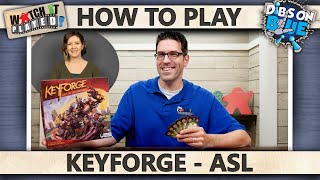
- Each deck is unique, ensuring a novel experience with every game.
- The game has a unique premise of forging keys to unlock knowledge.
- The mechanics of playing cards, reaping Amber, and fighting creatures are clearly explained.
- Quest for knowledge and unlocking secrets within The Crucible by forging keys.
- The Crucible, a planet of power, mystery, and vaults of wisdom
Mechanics (from transcript analysis)
- Action cards — These cards are played, their ability resolved, and then they are placed into the discard pile.
- Area Control — Creatures are played into a 'battle line' on flanks, and when a creature leaves play, the line shifts inward.
- Combat — Creatures can fight, dealing damage to each other simultaneously equal to their power. Damage is tracked with tokens.
- Deck construction — Players use their own unique deck of cards, which is bought as a pack and is a full, totally playable, but completely unique deck. There will be no other deck printed that has this exact combination of cards.
- Hand Management — Players draw cards and must manage their hand to play or use cards from the active house.
- Resource Management — Amber tokens are collected and used to forge keys.
- Set Collection — The goal is to gather Amber necessary to forge three keys and unlock the Vault of knowledge.
- Unique Card Games — Each deck is unique, with no customization or deck building prior to playing. The deck comes as is.
- upgrades — These cards can be attached to creatures, providing ongoing effects. They stay in play until the creature they are attached to is destroyed.
Video topics + discussion points
Quotes (from this video)
- to play key Forge you'll buy a pack like this and it will contain a full totally playable but completely unique deck there will be no other deck printed that has this exact combination of cards ever.
- The game is played over a series of turns beginning with the starting player and then going back and forth until eventually someone is won.
- The first player now draws a starting hand of seven cards from their deck and their opponent takes six.
- The goal is to gather the Amber necessary to forge three keys and unlock the Vault of knowledge to win you the game.
- A player cannot play and or use the same card or copies of that card more than six times during a single turn and this is known as the rule of six.
References (from this video)
- deck-building combat
- fantasy world with unique decks
Mechanics (from transcript analysis)
Video topics + discussion points
Quotes (from this video)
- Stellar is not a super well-known, well-talked-about game. I found it randomly in a local board game store.
- it's basically a two-player only game, asymmetric
- Lost Cities is a hand management game
- Patchwork is a tight, solid Uwe Rosenberg design
- Santorini is my favorite abstract game
- Castles of Burgundy... there's nothing like it for me in two-player
- Race for the Galaxy is my number two two-player game of all time
References (from this video)

- unique deck game concept
- no need to continually buy new cards to play
- state of the game has wavered due to card releases and transfers
Mechanics (from transcript analysis)
Video topics + discussion points
Quotes (from this video)
- it's just such a satisfying game for me to play
- the scoring is so low it makes every point matter so much
- this is a voting game that you are going after you're interested in manipulating tokens on the board
- Mission Deep Sea is the Pinnacle version of the crew
- Ghost Stories is fantastic cooperative game
- Cascadia is such a great game
- Kingdom Builder ... it goes up to five to six players
- KeyForge unlike anything else I've played out there
References (from this video)

- low barrier to entry
- easy to start a game night with a single deck
- finding balanced meta can be tricky without multiple decks
- deck-based combat with no deck-building
- dueling with unique ready-to-play decks
- garage-style fantasy duel
Mechanics (from transcript analysis)
- card play optimization — players learn their deck's idiosyncrasies to maximize synergy
- unique deck duels — each deck is pre-constructed; players compete with no deck-building
Video topics + discussion points
Quotes (from this video)
- this is where it's at
- Scout has this really interesting aspect of you can only play cards that are next to each other in your hand to try to beat things
- it's a great escalation
- such an amazing feeling of like oh my gosh we're gonna go another round
- you either lose because you miscommunicate with your own team twice or you win because you intercept the other team's code
References (from this video)

- pre-constructed decks save time, no deck collection overhead
- fast, tactical gameplay
- decks can feel unbalanced; luck of the draw matters
- deck-building with unique predefined decks
- competitive card dueling in a multiverse
- high-velocity, tactical
Mechanics (from transcript analysis)
- Deck Building — pre-constructed decks, no deck-building during play; unique to each purchase
- deck_building — pre-constructed decks, no deck-building during play; unique to each purchase
- Hand Management — manage a hand of cards to activate House choices
- hand_management — manage a hand of cards to activate House choices
Video topics + discussion points
Quotes (from this video)
- it's easy to get for everyone, even kids
- zero setup time you just roll some dices
- my top played game for seven years straight
- it's amazing i love it
- don't judge this game's horrible cover
References (from this video)
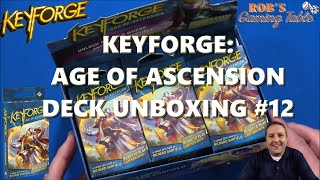
- Strong amber control and mobility options across houses
- Significant board control and removal capabilities
- Rich house synergy, especially Sanctum and Mars interactions
- Depth in late-game engine potential and defensive play
- Flavorful flavor text and thematic identity that players enjoy
- Some decks suffer from limited synergy if specific houses are underrepresented
- Amber control can backfire if opponents recapture amber efficiently
- The deck’s power level shown in the discussion (e.g., SAS metrics) can vary and may feel variable in practice
- Reliance on particular combos may make some matchups feel swingy or inconsistent
- Inter-house rivalry with asymmetric abilities and deck-forging concepts; amber as a resource to be captured and manipulated.
- A multi-house, card-driven arena where factions (houses) vie for amber and strategic advantage across shifting battlefield positions.
- Card-driven, flavor-rich text with emphasis on house identity, with a mix of lore-like flavor and practical gameplay rules.
- KeyForge (Base Game)
- KeyForge: Age of Ascension Dec
Mechanics (from transcript analysis)
- board_control — Cards and effects influence the status of creatures across the board, enabling positional advantages and tactical swings.
- capture_amber — Amber is gained and moved via various actions (reap, fight, or card abilities) and is central to advancing in the game.
- discard_and_replay — Recursion mechanics allow returning cards from discard to hand or play area, preserving pressure or recovery options.
- house_interaction — Each house (faction) provides unique abilities that interact with other houses within a deck, creating synergies and anti-synergies.
- multi_target_removal — Some cards remove or neutralize multiple enemy threats, enabling broader strategic control.
- Neighbor Interaction — Each house (faction) provides unique abilities that interact with other houses within a deck, creating synergies and anti-synergies.
- sacrifice_and_trigger — Sacrificial effects can trigger powerful outcomes, often tied to house-specific objectives or manor-related triggers.
Video topics + discussion points
Quotes (from this video)
- it's awesome getting some amber off playing those two
- that is a great house cheating card
- wow wow that is cool that was a nice finish to that deck
- I like all those together
- it's only a 70 SAS deck I mean not the worst but pretty low
References (from this video)

- Saves time with pre-constructed decks
- No need to purchase boosters
- Great for competitive tournament play
- Good for two-player matches
- Deck quality varies, not always better with more expensive decks
- Competitive card game
- Card game universe
- Abstract
Mechanics (from transcript analysis)
- Collectible Card Game — Pre-constructed deck card game, no need to collect or build decks
- Competitive play — Two player competitive card game suitable for tournaments
Video topics + discussion points
Quotes (from this video)
- if ever somebody says that he has the top 10 games of all time never trust them it's in their opinion
- if i could give a game 11 out of 10 clank legacy would be it
- this is the reason why i fell in love with board games in general
- it's my favorite solo game for sure the more i play it the more i want to play it
- to be honest right now probably next year it will be different maybe tomorrow it will be different
- the unknowing like what's gonna happen what's his agenda it's just an amazing experience
- if you like deck building then i think you definitely like clank legacy like a lot
References (from this video)
- portal/multiverse crossover
Mechanics (from transcript analysis)
- Asymmetric play — decks have distinct houses and abilities that create varied play experiences.
- unique deck system — every library/deck is procedurally generated with no customization or drafting.
Video topics + discussion points
Quotes (from this video)
- these are absolutely stunning and honestly if I get these four I'll probably end up getting all the rest of them but I can't feel too bad about that because it's supporting the hub of our community and recognizing some of the top artists in games of all time
- I wanted radical new ideas not oh let me tweak this and make a four from a three
- no so the question is you get that on your desk it has one of the questions do you make a piece of crap or do you try to make the best game you can because you know that those eight-year-olds may grow up to be gamers and then you know I mean someday you might meet them and be like I played that with a kid as a kid with my dad and I loved it tremendously
- thank you for coming on to the show and if you are interested in checking out that whole interview I'm going to have it on this channel later this week so stay tuned
- this is the hottest most anticipated games of the year is restoration games unmatched
- space cowboys has marvel splendor coming because of course they are