/pic6914114.jpg)
Kinfire Chronicles: Night's Fall is a co-operative campaign game for 1-4 players that blends thrilling fantasy adventure with tactical, edge-of-your-seat combat. Play as one of six unique Seekers, sworn to protect the city of Din’Lux and help rebuild the world beyond. Armed with kinfire lanterns, you’ll brave the Starless Nights, battle the creatures that emerge, and guard each others’ backs against the malevolent forces trying to stop you.
Each quest has three phases: adventuring, battle, and exploration. In the adventuring phase, players make choices based on options presented on the quest cards and need to accomplish something (such as crossing a river or chasing down a suspect) by flipping the correct number and color of cards from their decks. In the battle phase, players work together to defeat enemies on a physical battle map. Turns are determined by drawing chits out of the destiny bag, with each enemy having numbered tokens that correspond with different attacks and actions. Players may play action cards on their own turns to do damage and can play boost cards on other players' turns to do things like reduce damage, move players, or even return a drawn chit to the destiny bag for redraw. The game doesn't end if an objective isn't achieved or an enemy defeats the heroes, but it will affect later gameplay and choice options. Lastly, on certain quests players can return to the city in the exploration phase to speak to NPCs, purchase items, and level up their decks.
Woven throughout each of these phases are cards that require you to make a choice, such as resting before moving on or charging into battle, or whether or not to spare someone's life. The characters in the game have their own set of morals and standards, and playing according to your character can earn you Kinfire tokens that help you level up. Ultimately though, the decisions you make are yours alone.
—description from publisher
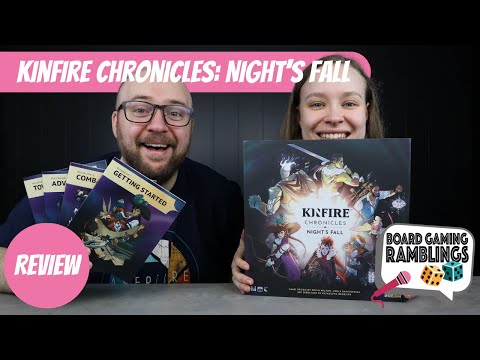

- Flavor text on cards creates strong character identity
- Clean, easy-to-learn card-based combat system
- Cooperative play with meaningful player interaction through boosts
- Initiative bag mechanic adds tension and unpredictability
- Story kernels hint at meaningful progression and replay potential
- No minis may disappoint some players; acrylic standees are used instead
- Unclear how varied/scaled the scenarios will feel after multiple plays
- Uncertain how later scenarios will reflect player choices and how meaningful those choices will be
- Story-driven, character-driven adventures
- Fantasy dungeon crawl with map-based scenarios
- Flavor-text driven character development with kernels of story that unfold through play
Mechanics (from transcript analysis)
- Bag Building — Turn order is determined by drawing from a bag; outcomes may cause multiple activations or delays, with hearts returning pieces to the bag.
- Card-driven actions — Each character has a personal deck; players play action cards to perform moves or attacks.
- Cooperative boosts via color-matching cards — Other players can boost your action by playing matching-color cards from their hands to strengthen your action.
- Flavor-text character development — Character flavor text on cards provides story kernels that hint at deeper character arcs.
- Initiative bag system — Turn order is determined by drawing from a bag; outcomes may cause multiple activations or delays, with hearts returning pieces to the bag.
- Map setup via a book — Maps for each scenario are printed in a book; players flip to the appropriate page to set up the dungeon.
Video topics + discussion points
Quotes (from this video)
- this is a story driven game
- these deck of cards makes each player play completely differently
- i love the initiative system
- it's very easy it is very clean it's very simple to figure out what's going on
- there's no minis
- if you are somebody that likes story based if you like deep characters and if you like card play then this is one that you really want to check out
- i am still exceedingly excited about this game
- there is nothing about this game that i'm going to single out really as a big quibble
References (from this video)

- Really fun
- Great art
- High-quality components
- Good mechanics for deck building and combat
- Underplayed on Kickstarter
- Large box size and cost ($120 for base game)
- Fantasy tropes, monster hunting
- Fantasy
- Scenario-based adventure
Mechanics (from transcript analysis)
- Bag Building — Actions are drawn from a bag, allowing mitigation by drawing more chips.
- Deck Building — Players have an 18-card deck of actions and boosts, with limited swapping.
- scenario-based play — Players progress through scenarios and fight monsters.
Video topics + discussion points
Quotes (from this video)
- Giving out one deck is sort of like what are you gonna do in one deck?
- The cards look amazing.
- it feels like a Tetris game like if Tetris made this game people would Rave if it was a Tetris branded it would be so far
- great filler weight game
- The way the DMV and where I live goes they they give you a ticket you go and you sit down in this big room with all these chairs and it's like it's in this old mall where that has 95 of them all is is vacant and they're actually planning on tearing the whole thing down
- it has an ending that makes you think and makes you actually go whoa that's huge
- it is the most graphically violent like movie that it is it I don't it's and it's very um it's very psychological as far as the horror goes
- it's one of those things where uh I I I want I I seriously want other people to watch all of Martyrs so I can actually talk to them about the ending so I can discuss what you think theUATION the ending means
- it is it is a extremely difficult watch
- the ending has stuck with me for like days
- it is completely and totally like uh totally popcorn TV it is there's nothing there is it is perfectly solid B material that you can just have on and like you can literally not watch it
- it's like the monster's not gonna come out of the movie
- the one genre that will be affected least by the strike will be horror because most horror films are independent
- Mario made a billion bucks let's not discredit that
- the sound is like unreal it was like one of the best sounding movies I've ever heard
- Dunkirk had the rapid noise
- I hated seeing it the movie before yeah it's awful and then I noticed a bunch of movies followed that afterwards it annoyed me every time afterwards too
- 250 000 views and you only got 30 bucks
References (from this video)
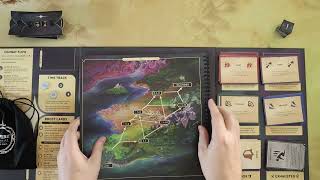
- Cooperative, narrative-driven play with diverse character powers
- Lantern mechanics and fate/resource economy add flavor and tension
- Engaging blend of exploration and tactical combat
- Complex rules and heavy token management can be overwhelming
- Iconography and overlays may slow down play
- Outcomes can be highly dependent on random card draws
- Adventure, exploration, magic, fate, and cooperative combat against looming threats to restore a waning lighthouse.
- Fantasy world with coastal towns, markets, deserts, swamps, and a central lighthouse; locations include Den Luux, Orander, DLux Market, and the library of Orlando.
- Campaign-like, episodic quest-based storytelling with branching outcomes and NPC interactions.
Mechanics (from transcript analysis)
- Boss Battler — Boss-like foes gain overlays and unleash varied attacks; status effects and healing mechanics come into play.
- Cooperative combat with unique abilities and lantern mechanics — Each Seeker has its own abilities; lanterns empower attacks, grant healing, or buffs.
- Deck Building — Players acquire new cards at locations and weave them into their Seeker decks.
- Deck-building / card pool management — Players acquire new cards at locations and weave them into their Seeker decks.
- Enemy mechanics with health overlays and special abilities — Boss-like foes gain overlays and unleash varied attacks; status effects and healing mechanics come into play.
- Resource Management — Characters spend coins and kfire on cards; fate tokens grant bonuses; exhaustion tracks peril and potential penalties.
- Resource management (kfire, coins, fate, exhaustion) — Characters spend coins and kfire on cards; fate tokens grant bonuses; exhaustion tracks peril and potential penalties.
- Terrain checks via color-coded card draws — Cross-terrain decisions rely on drawing blue/green/red cards to determine safety and progression.
- Turn-based order with 'Call out Orders' — Players can coordinate moves and actions for the team, including armor distribution and repositioning.
Video topics + discussion points
Quotes (from this video)
- The Whispers of Magic Place this mag's space isn't fancy
- The great Lighthouse is waning it's the source of all kfire and it's been growing dimmer
- the almanac of fires his last known location was the library of Orlando
- For every three cards I have left I get one fate
References (from this video)
- Atmospheric world-building and ongoing narrative
- Tension-filled, climactic encounters with meaningful choices
- Flexible deck-building that scales with progression
- Learning curve for new players
- Campaign length can be lengthy and intense
- Adventure, discovery, and the fight to rekindle a waning source of power.
- Continued fantasy world with Seeker quests and magical loci; emphasizes exploration and acquisition of ancient knowledge.
- Campaign-style progression with quest-based decision points and shop interactions.
Mechanics (from transcript analysis)
- Market interactions and shopping — Players visit markets to acquire gear and improvements for their Seekers.
- Narrative Choice — NPCs push the story forward and provide objectives that shape the next moves.
- Narrative-driven exploration and NPC interactions — NPCs push the story forward and provide objectives that shape the next moves.
- Quest progression and item acquisition — Completing quests unlocks new abilities and items; players shop and upgrade between quests.
- Resource Management — Careful management of coins, kfire, fate, and exhaustion affects outcomes and survivability.
- Resource management and decision-making — Careful management of coins, kfire, fate, and exhaustion affects outcomes and survivability.
- Track Advancement — Completing quests unlocks new abilities and items; players shop and upgrade between quests.
Video topics + discussion points
Quotes (from this video)
- The Whispers of Magic Place this mag's space isn't fancy
- The great Lighthouse is waning it's the source of all kfire and it's been growing dimmer
- the almanac of fires his last known location was the library of Orlando
- For every three cards I have left I get one fate
References (from this video)
- Intense finale with high-stakes decisions
- Tight turn sequencing under pressure
- High cognitive load due to simultaneous actions and overlays
- Dark mystery, perilous quest, and restoration of the lighthouse
- Final stretch of the campaign; returning to the Seekers Guild and the library realm
- Climactic quest arc with rapid decision points and combat pressure
Mechanics (from transcript analysis)
- Dynamic combat with tokens and overlays — Enemies use overlays and special abilities; combat requires token management.
- Quest prompts and outcome-driven progression — Prompts drive the next objective and shape the journey.
Video topics + discussion points
Quotes (from this video)
- The Whispers of Magic Place this mag's space isn't fancy
- The great Lighthouse is waning it's the source of all kfire and it's been growing dimmer
- the almanac of fires his last known location was the library of Orlando
- For every three cards I have left I get one fate
References (from this video)

Mechanics (from transcript analysis)
Video topics + discussion points
Quotes (from this video)
- your voices mean a ton in those spaces
- it's a Gateway game that will just feel a lot of fun to play again
- it's kind of a brain burner actually
References (from this video)
- epic cooperative campaign
- 21 narrative-driven quests
- large variety of enemies and deck-building options
- smart storage system for setup/cleanup
- epic cooperative campaign
- narrative-driven fantasy cooperative campaign
- story-driven quests
Mechanics (from transcript analysis)
- cooperative quest-based campaign — 21 narrative-driven quests across a campaign
- Deck Building — hundreds of deck-building options for character customization
- deck-building options — hundreds of deck-building options for character customization
Video topics + discussion points
Quotes (from this video)
- this episode was made possible in part by the second printing of kfire Chronicles nights fall
- this is actually one of the nicest board game covers in the world that's what first lured me into this game
- the play time on the box is never right
- everything to know to play this game is going to be in the rule book it isn't
References (from this video)
- fantasy dungeon-crawl vibe
Mechanics (from transcript analysis)
- Dungeon Crawl — card-driven dungeon-crawl style (unspecified)
- dungeoncrawl-like — card-driven dungeon-crawl style (unspecified)
Video topics + discussion points
Quotes (from this video)
- I am not a fan of it at all.
- This artwork is so beautiful. Like look at it's so vibrant and so pretty.
- The Lord of the Rings Fate of the Fellowship though this I am very excited about.
- Cali Mala is a reprint.
- I pre-ordered Cube Express from them because I wanted to take a look at that one.
References (from this video)
- Individual games take about an hour
- Streamlined rules
- Clever card play
- Players can help each other
- Good production quality
- Active Discord community for help
- Solo play requires controlling two characters.
- Cooperative campaign-driven fantasy game.
- Fantasy
- Branching storyline
- Fate Forge
Mechanics (from transcript analysis)
- Campaign play — The game features a campaign-driven structure with a branching storyline.
- card-driven gameplay — Features clever card play where players can boost each other.
- cooperative play — Designed for 1-4 players working together.
Video topics + discussion points
Quotes (from this video)
- I'm actually going to be doing a little bit of rulebook work for Wizards of the Coast, which is quite exciting, but it meant I had to go back and play Magic the Gathering, which still has exactly the same problems as it did back then.
- It's my number one favorite game and I don't get a chance to play it. So, I'm doing a solo playthrough of Mage Knight on Thursday the 3rd of July, which is my actual birthday.
- And then on Friday, we are having a Games Workshop themed day. We are playing a fourplayer game of Forbidden Stars in the afternoon. And then to end the week, we are doing the thing which I said would never happen. I'm going to be playing Talisman.
- Nanolith. It's a cyberpunk themed cooperative narrative driven adventure game, I think, from what I know about it.
- The funny story about this is Dirt and Dust is being published by Albi. Albby are a Czech publisher, and they they've done a number of other games in the past. Last year, they did Tea Garden for one of them. And guess who works in the marketing department at Albi? It's Peta himself.
- Now, it's a Euro game. So, don't let the fact that it's Dungeons and Dragons put you off. It is a Euro style game. It is very much a Euro style game, but it has the D and D Baldersgate theme.
- I'm super excited about next week. You can't imagine just my my joy at at taking a week off work and getting to play games which I really want to play.
- The patron support is fantastic. But if you want to support me, you are you are more than welcome.
References (from this video)

- Individual game sessions are shorter (45-60 minutes).
- Cooperative Adventure
- Fantasy
- Fate Forge
Mechanics (from transcript analysis)
- cooperative play — Mentioned as a fantasy cooperative adventure game.
Video topics + discussion points
Quotes (from this video)
- Endeavor Deep Sea is very, very high to the top of the list.
- I am 90% sure they would say yes.
- My current three favorite games that don't have any kind of space or science fantasy whatever uh element to them is through the ages feast roadin and Maraca.
- So, yeah, it's very much a multiplayer solitaire game, but it's very good.
- I believe it's a much improve a much better version of Hrien's Wall and I love the way that the combat works against the actual the the puzzle of trying to defend yourself against the different forces that are attacking you. I really like it. So yeah, Anarchy gets a big thumbs up for me.
- Flam Rouge, fantastic game. Definitely Flam Rouge.
- I personally don't feel it's right for me to do them at the end of the year because most of the games I will have only played once and some of them I won't have even played.
- I personally prefer Flam Rouge to heat.
- Anything that wins Spiel Dejars will go on to sell way more copies, especially in the family category if it gets that Spiel Dejars award on it, which they have to pay for. They have to pay to have that award put on there, which is how Spiel Dejares makes its money. But it will sell many, many copies of the game.
References (from this video)
- Classed as an adventure game by the host.
- Agamonia
- Gloomhaven
- Frosthaven
- Elder Scrolls: Betrayal of the Second Era
Mechanics (from transcript analysis)
Video topics + discussion points
Quotes (from this video)
- Endeavor Deep Sea is very, very high to the top of the list.
- I am 90% sure they would say yes.
- My current three favorite games that don't have any kind of space or science fantasy whatever uh element to them is through the ages feast roadin and Maraca.
- So, yeah, it's very much a multiplayer solitaire game, but it's very good.
- I believe it's a much improve a much better version of Hrien's Wall and I love the way that the combat works against the actual the the puzzle of trying to defend yourself against the different forces that are attacking you. I really like it. So yeah, Anarchy gets a big thumbs up for me.
- Flam Rouge, fantastic game. Definitely Flam Rouge.
- I personally don't feel it's right for me to do them at the end of the year because most of the games I will have only played once and some of them I won't have even played.
- I personally prefer Flam Rouge to heat.
- Anything that wins Spiel Dejars will go on to sell way more copies, especially in the family category if it gets that Spiel Dejars award on it, which they have to pay for. They have to pay to have that award put on there, which is how Spiel Dejares makes its money. But it will sell many, many copies of the game.
References (from this video)
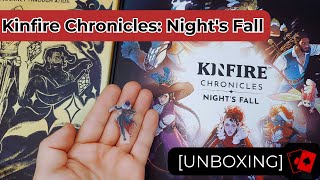
- High quality components (acrylic standees, poker chip tokens, dials)
- Immersive setting and artwork
- Clever and practical scenario setup system
- 'Learn as you go' approach
- Well-organized rulebooks (multiple small books)
- Interesting quest system with story cards
- Adios
- Tales from the Red Dragon
- Tidal Blades 2
Mechanics (from transcript analysis)
- Campaign — The game features a campaign with 21 story-driven quests and scenarios.
- Card Play — The game involves cards, including character decks, status effect cards, and unopened card packs.
- character customization — The game includes six playable characters, each with their own player board and personal card deck.
- Dungeon Crawler — The host mentions this game falls into the category of dungeon crawlers and adventure games.
- scenario-based play — The game is structured around scenarios, with the first scenario components being presented as an example.
- standees — The game utilizes acrylic standees for characters and enemies.
- Token-based System — The game uses various tokens, including poker chip-style tokens for potential counters or initiative, and condition tokens like 'stunned', 'exhausted', 'armor', 'hurt', 'weak', and 'trapped'.
Video topics + discussion points
Quotes (from this video)
- This is a very heavy box.
- Oh, these seem to be acrylic standies. That is very cool.
- It says like learn as you go. So, that would be that's amazing. I love that.
- These are like very small rule books. I love this. This is amazing.
- Oh, these are really nice tokens. These are like poker chips just in small, just like in a small format. Very cool.
- That is actually quite a clever system, right? Because you have like everything is like quite uh handy and practical because you can like just pull out the scenario just like that.
References (from this video)
- comes with upgrade council kit
- comes with expansion Winds of Change
Mechanics (from transcript analysis)
Video topics + discussion points
Quotes (from this video)
- This video is brought to you by Miniature Market. Thousands of board games, miniatures, and paints. Discount prices at miniaturemarket.com.
- Hey everybody. Today's going to start an auction that we're clearing some stuff out. A lot of stuff.
- So, I want to make sure that I make plenty of room for uh everything uh that we are going to be doing here.
- Okay, these have been really popular and the reason being is people usually are paying maybe 200 bucks for them and there's easily $800 worth of stuff in here.
- Make sure you put your address and what you're going to bid.
- Lot number two is going to be a surprise box of war games. And I guarantee you uh that there will be over $500 worth of of of war games in there.
- Good luck trying to find this stuff.
- All these guys are taken care of.
- Some of it's painted um and put together. Uh a lot of it is not. The treasure chest has not even been touched.
- This is a game that I mostly painted. Um and it is right over there.
- You can't find this. There was a very short run of it.
- So, there you have it. everything that you can possibly want.
- Lot of painted stuff, too, so you can't go wrong there.
- On Sunday, this will end on Sunday.
- Until next time, my dear friends. It is your old pal around. We'll see you soon.
- We're trying to clear out so we can make more room. And boy, do we need the room.
References (from this video)

- no bids
Mechanics (from transcript analysis)
Video topics + discussion points
Quotes (from this video)
- I know people have a hard on for for AI, but hey, Zabick, thank you for the 10 bucks, my brother.
- I don't care if it looks nice. I don't care. I get freaked out when I see videos of of, you know, a girl or a guy or something and they look so real until you look at the background and it starts glitching a little bit.
- My subscriptions have gone up. They've gone up almost like 400 people this month, which is unheard of.
- And all the games we went to. So, for me and her, it is a very special thing to do.
- What is this this thing going for? Shopping. Oh, here we go. I said board game. Someone's selling it for 12 or $1,300. That's unpainted.
- This paint job sucks.
- All three games I give you 150 bucks. Smack right in the face.
- I'm going to step away from uh the board game community as a whole and just just concentrate on on games and have fun and stuff and comics and all that other stuff that that I like to cover.
- I think the convention scene is toxic. I think it's stupid.
- I think the only con I think I would go to is next year's Tantrum Con because Richard and my friend Pete are going to be there and we're going to try to make that a yearly thing.
References (from this video)
Mechanics (from transcript analysis)
Video topics + discussion points
Quotes (from this video)
- I think my... I got to clean off that thing.
- Number one, I have no talent.
- All right? I cannot create art or anything like that.
- So it was it was like burning $400.
- But now, at least... and just looking here, you know, I got new covers and stuff like that. And I've been putting new covers to the video and it actually helped. I've gotten more subscribers.
- I did a follow-up with Sam that did 2,000.
- So, I'm doing better things. Yeah. 10,000 for Sam.
- The thing that kills me though, I'm going to tell I'm going to tell you this. Like you're going to see uh LA 1 tomorrow, okay? I take a look at it, all right? It says review, huh? Uh Riftbound, League of Legends. I I take a look at that game. Really, really nice uh um um thing.
- And with the help of AI, I'm able to create things that make sense.
- I don't see the problem why people are crying about this.
- Um and the problem is is that everybody thinks their art is the greatest art in the world. So, they really charge people a lot of money.
- Well, I get that, okay? I get that.
- Um is AI perfect? No, but for somebody that has no talent, all right, and really can't afford to spend the money, if I can put something in there and make my channel look decent.
- Yeah, it's AI, but I have the ability to compete.
- I don't have the time to learn how to do all this other crazy editing and video stuff. I just want to put something in, get something that catches my eye and spice up the channel a bit and it seems to be working and I'm I'm very happy about it.
- I mean, who has time for a lot of stuff? I mean, really, honest to God.
- Canfire is at 150.
- Kingdom Death Monster 475
- video game lot which is really good because it it it's worth about 700 800 bucks.
- I love this game. This is such a good game.
- I mean, I started listing them out of all all the the the people that cheat and are dirty and are scummy, um, and do sleazy things. And I came up with 25.
- I think these people crying over AI are the same people trying to hold us down. They're scared because they're losing their grip around our necks.
- Um Yeah, you'd rather pay a person. You know, you hate taking money out of somebody's mouth, but there comes a point where hey, you want to know something? I'm taking money out of my family's mouth and if I can save money, I'm going to do it.
- Each person for themselves.
- They got killed.
- And we had to sit there. We had to sit there while all the the the Tampa fans losing their minds.
- So, I don't think we have much of a chance. I think we're done.
- We're going to mail it in.
- So, let me see. It would be the top five here, which would be 71 cuz they're top three 69. Yeah, 71. Uh, we are eight points out. There's no way.
- This is This is horrible. This is heartbreaking.
- And if we play anything like we played there's no chance. No chance.
- Oh, this team this team is horrible. Probably maybe the worst team in in in in hockey.
- Month and a half left of hockey.
- Giant comic lot, zero. No bids.
- Uh lot number two, the war game lot. Uh huge lot of stuff that that'll go out. No bids.
- Uh and the Neuroshima Hex, the Lord of the Rings, the Cor- Corolius is at 250.
- No love. No love. None. Godzilla has no love for anyone. Amazing.
- My teams have not been good over the last couple years, but hey.
- You you follow them through thick and thin. That's what That's the beauty of sports, isn't it?
- All right, my dear friends. I hope you all have a wonderful Sunday.
References (from this video)
- We're going to get rid of that.
Mechanics (from transcript analysis)
Video topics + discussion points
Quotes (from this video)
References (from this video)

Mechanics (from transcript analysis)
Video topics + discussion points
Quotes (from this video)
- This is a fundraiser for us.
- Please bid with some decency and help us out.
- We could really use your help.
- It's your old pal Rob.
References (from this video)
Mechanics (from transcript analysis)
Video topics + discussion points
Quotes (from this video)
- It's just an up and down thing.
- FedEx is the worst company in the world. The worst.
- Life is life.
- It's your old pal, Rob.
- I'm looking forward to going to the doctors tomorrow.
References (from this video)
Mechanics (from transcript analysis)
Video topics + discussion points
Quotes (from this video)
- I'm going to set up to learn it solo and see what happens.
- which is definitely not solo.
- Isaac Childres is stepping down as CEO to focus on game design for the company
- I do a rankings breakdown covering my own opinion of what I'm most excited about from those from those games.
References (from this video)
Mechanics (from transcript analysis)
Video topics + discussion points
Quotes (from this video)
- I've been trying to walk with the boot. Well, I not walk, but I I I have a boot that I put on, but I keep it off most of the time because I'll be honest with you, it is bigger and bulkier than the cast.
- The lots that we do have, okay, everybody's waiting to find out what what's been bid on and and you know, it's been not that bad, but
- This may be probably the best baseball game I've ever played and I can't believe I didn't know about it.
- It is the most realistic, fast-paced, easy to learn baseball game I've I've ever played.
- This is a game that has everything except cold beer and hot dogs.
- I'm really on the fence with keeping Chronicles of Drungore.
- I think I'm going to more talk about the expansion than show it because the quality of the prototype isn't good.
- This game feels like you're playing Sidmer Pirate and nothing better than finding treasure, going through life, taking people down, you know, sinking ships, taking them.
References (from this video)
- Easy to dive into
Mechanics (from transcript analysis)
- Campaign — Features a campaign.
Video topics + discussion points
Quotes (from this video)
- The sheer quantity of game here is a downside to me.
- It took over two hours to punch out everything, get organized according to AR's guide.
- The campaign arcs are like 15 hours.
- It's a very clever way to bridge that gap between giving players tons of content while making it accessible at the same time.
- Board games give you that mental satisfaction in a way that video games just don't in my opinion.
- It's probably my favorite from them with the possible exception of Scoundrels.
- The general feedback around Lands of Outshade was so excellent that I think it wasn't just me.
- Even um Shelfside, who generally are very critical of Awaken Realms, uh they they thought it was their best game yet, and I agree with them because it is their best game yet.
- If you like slaughtering hordes of zombies with tactical decisions, I do think Zombicide's a great game. I'm a big fan of it.
- I like to own the things I buy.
- Grim Coven is a mustplay.
- The harder something is to table, the less likely I am to play it, even if I like it a lot.
References (from this video)
- Accessible dungeon crawler
- Incredibly fast setup (2 minutes)
- Nice sense of collaboration
- Solid enough gameplay experience
- Gameplay is not incredible, just fine enough
- Better at 2 or 3 players than solo
- Opinion may change as more content is explored
- Dungeon crawling / Boss battling
- Campaign-based
- Death May Die
Mechanics (from transcript analysis)
- Boss Battler — More of a boss battler where you fight creatures.
- Card Play — Utilize your cards to take down enemies.
- cooperative play — Players boost each other's actions both defensively and offensively.
- Dungeon Crawler — An accessible dungeon crawler.
Video topics + discussion points
Quotes (from this video)
- My biggest issue with it is that I thought it would replace the crew for me. Uh, and it doesn't.
- Everyone has to be willing to submit information to the table. if you just hold your cards to yourself the entire time and just watch. Yes, technically it gives you a leg up over other players to a small degree, but also you're just not fun to play with.
- It's basically like card comboing with like fun worker placement vibes. It's like terrifying Mars adjacent.
- It is literally I timed myself multiple times in this. It is 2 minutes to set up a session of Quinnfire Chronicles.
- So Clover has replaced code names.
- Based on the first game alone, I would say do not buy this. Play terrifying Mars as is based on the first game alone.
- Legacy of Mars is a giant scam.
- Small differences between the base Let's Go to Japan and Let's Go to France. Small differences, but those differences make such a huge difference.
- It is well worth the 20-minute setup.
- It feels like the world is constantly against you as you play.
References (from this video)

- Interesting cooperative campaign mechanics.
- Requires multiple boxes for two players, increasing cost.
- Not a new game.
- Reviewer is not particularly enamored with the Kinfire universe.
- Kinfire universe
- Pathfinder: The Adventure Card Game
Mechanics (from transcript analysis)
- card flipping — Challenges where you'll have to flip over the correct color cards from your deck in order to pass these challenges.
- Cooperative campaign — A cooperative campaign.
Video topics + discussion points
Quotes (from this video)
- So, my throat is like a piece of sandpaper that I've used to wipe my ass with.
- if you have been living under a [__] rock for the last 20 years, the UK Games Expo is the UK's biggest exhibition of tabletop games.
- I don't know, just felt kind of lame.
- So, [__] that. I'm not I'm not going to spend that much money on this dexterity game.
- it was a drab looking game. Kind of like too much work for what it was.
- This could quite easily have been done with a couple of tokens that you flip over. But fact that it comes with these little gimmicky dog things made it absolutely fantastic.
- one of the best Dexterity games, if not the best Dexterity game that we've ever played.
- it is a timeless classic that is only going to grow in stature in the future.
- Birmingham is vile, but luckily for you, the NEC is nowhere near that steaming hole.
- If you've never been or you turn your nose up, then you are missing out and you're a [__] idiot.
- I don't give a [__] what games you picked up.
- I only attack certain people. A people that use breath smells, people with BO, and people who are under 5' 3.
References (from this video)

- Narrative campaign style game
- Upgrading loot and getting stronger
- Awesome story moments
- Fun fights
- Incredible Dream games are so good
- Love the world building
- Art is cracked and looks amazing
- So glad I bought this game
- Can't express how much fun me and my family are having
- Writing is really fun, light, and nice
- Incredibly easy to play
- Nice layer of depth
- Very thematic
- Characters are unique with kick-ass special abilities
- Favorite thing is how player order works (pulling chits)
- Satisfying uncertainty from player order
- Adds a tingle of excitement
- Easy to set up
- Organized like a dream
- Easy to drop back into after a break
- Well organized
- Nothing but good things to say
- Worth every single penny
- Amazing experience
- Very expensive
- Not normally a campaign style person
- Can be a little lucky or unlucky depending on what you pull for player order
- Narrative campaign game
- Story-driven with choices and consequences
Mechanics (from transcript analysis)
- action selection — On your turn, you move and then do damage, with special abilities.
- Campaign play — A narrative-driven campaign game with missions and quests.
- Character progression — Players upgrade loot and get stronger.
- Cooperative — Players work together as seekers on missions.
- Random Player Order — Player order is determined by pulling chits from a bag, which can include enemies.
Video topics + discussion points
Quotes (from this video)
- We're all in this together. And that's exactly what today's video is all about.
- I'm going to be giving you seven amazing co-op games I just can't get enough of.
- It's just an absolute delight to play.
- You always feel like you're teetering on the edge of winning or losing.
- When you manage to work it out and you figure out the puzzle and you get across the finish line, oh, it's just so satisfying.
- My god is that easier said than done.
- It's one of those really really stressful ones where at first it feels like all good and nice, but then by the end of it when you're on like four floors high and you're trying to put the thing on top and your hands are like shaken and it's, you know, it's all on you and you've got everybody watching you. Oh, it's just so delightful.
- This game is just absolutely, sorry I say absolutely a lot, but this one really deserves it. It's just spectacular, man.
- I have never played a game like this before.
- And then my brain kind of exploded because I was like, 'Wow, the design of this game is really, really unique.'
- It deals with like war in a very interesting way because it really makes you think about the decisions that you're making.
- It's easily one of the best games I've played and and and one of if not my favorite games of the year so far.
- I am not a campaign style person. It's just not my jam normally.
- It's organized like a dream. It takes 10 minutes to start playing.
- I just have nothing but good things to say about this game.
- It's just one of those amazing games where I know it's very expensive, don't get me wrong, but I am happy that I bought this and I think it's worth every single penny that I've paid for.
- Co-op games weren't my thing, but now easily one of my favorite genres of all time.
References (from this video)

- deck-building depth
- character uniqueness
- memorable campaign moments
- two-handed mode can be difficult to manage
- deck-building with character customization
- My Island
- Earthborne Rangers
Mechanics (from transcript analysis)
- Deck Building — the speaker enjoyed building a deck to create unique character abilities
- two-handed campaign — described as a hard, potential two-player co-op mode
Video topics + discussion points
Quotes (from this video)
- it's chaotic there's definitely some Randomness to it but definitely there is some planning and mitigation you can do to do the best that you can do it's so much fun
- it's solitaire but you also have to be aware of what everybody else is doing
- the table Pres is gorgeous the way the board really rolls out is fantastic
- Isle of cats duel is on there
- I really like the deck building aspect of it and like creating the uniqueness that your characters can become so that that was really fun
- I can't wait to play it again
References (from this video)
- Strong player interaction on each turn
- Elevated production even in prototype form
- World-building expansion beyond the board game
- Accessible onboarding with an introductory box
- Thematic and dynamic turn order via the chip bag
- Inclusive representation and diverse team
- Excitement for accessibility to a wide audience
- Prototype copy only; not the final full game yet
- Content described as still forthcoming (more content planned, crowdfunding) which could be a caveat until final release
- Saving the world from darkness and rebuilding communities with kinfire-powered lanterns
- A world threatened by darkness protected by kinfire; players escort individuals to towns to rebuild civilization
- deck-builder with story-driven scenarios
- Gloomhaven
Mechanics (from transcript analysis)
- character/party management — Players manage a party and recruit or bring along different individuals to towns.
- Deck Building — Players build a deck to represent their party's abilities and interactions as they progress through scenarios.
- deck-building — Players build a deck to represent their party's abilities and interactions as they progress through scenarios.
- Scenario-based progression — Gameplay progresses through different scenarios tied to the Kinfire Chronicle story.
- turn-order bag-draw — Turn order is determined by drawing from a bag, with potential for players to act multiple times in a round.
Video topics + discussion points
Quotes (from this video)
- Kinfire Chronicles is a deck builder story narrative game where you'll be battling through these different scenarios with your party that you've put together
- there's a ton of player interaction on each turn
- the World building aspect ... there's going to be an entire world built around this
- it's a chip bag and you basically draw from this bag and that determines turns
- non-binary characters
- the standees the chits the artwork is amazing
References (from this video)

- Engaging story with memory-card branching decisions
- Strong character differentiation with unique abilities
- Beautiful art and production quality
- Very fast setup and teardown for a dungeon crawl
- World-building and atmosphere are well-developed
- No rulebook; relies on trust and on getting started guides
- No easy way to save progress between sessions
- Health dials loose and could be improved in later printings
- No mechanic to swap characters mid-campaign; replaying to explore other characters
- Initiative can leave some characters inactive in multi-actor scenarios
- Not ideal at 3-4 players; best at 1-2 players
- Array
- Fantasy dungeon-crawling world with dark fantasy elements
- Story-driven with branching memory-card based exploration
- Tales From The Red Dragon
- Madara
- Oath Sworn
Mechanics (from transcript analysis)
- Bag-draw/randomized resolution — Chits drawn from a bag determine enemy abilities and events
- Card Play — Players play cards from hand to take actions; boosts from other players when color matches
- Chit-Pulling — Chits drawn from a bag determine enemy abilities and events
- Cooperative Game — Players work together to defeat bosses and progress through scenarios
- cooperative play — Players work together to defeat bosses and progress through scenarios
- Memory — Memories on memory cards affect which card you draw or which path you take
- Memory-based branching paths — Memories on memory cards affect which card you draw or which path you take
- Scenario-based campaign with modular boxes — Open scenario boxes to reveal stories and events; 21 scenarios with 15 core ones; town phase uses large decks of cards
Video topics + discussion points
Quotes (from this video)
- No rule book; trust the game; read the getting started guide and then dive in
- I would absolutely do another campaign of somebody wanted to
- I think the production's really good
- I would only play this game at one or two players
- Lightning fast setup and tear down for a Dungeon Crawl game
References (from this video)
- Immersive artwork and presentation
- Strong solo experience with high enjoyability
- Great flexibility via cross-box mixing and hero variety
- Deep strategic options and multiple viable paths to win
- Not easy to win, especially in solo mode
- High learning curve and potential for complexity to overwhelm new players
- Heroic exploration with mixed-team deployment and boss encounters
- Fantasy dungeon-crawl spanning Kinfire World with evolving delve locations
- Procedural, event-driven, with variable bosses and mixed-box content
Mechanics (from transcript analysis)
- Boss Battler — Progression culminates in a multi-layered final boss encounter with four surrounding cards that must be defeated to win.
- Color matching and card abilities — Cards have four colors; players must match color to gain boosts; white can beat any color; some cards combine or stack effects.
- Combat: Dice — Players roll dice to resolve battles, with color-moded cards and card effects influencing outcomes.
- Deck Building — Each hero has an 18-card deck; players start with four cards chosen from their hand; discard to draw; manage hand to maximize attack combos.
- Deck-building and hand management — Each hero has an 18-card deck; players start with four cards chosen from their hand; discard to draw; manage hand to maximize attack combos.
- Delve mechanic — Delve actions allow top cards to be removed from the encounter deck, increasing difficulty and driving progression toward the final boss.
- Dice-based resolution — Players roll dice to resolve battles, with color-moded cards and card effects influencing outcomes.
- Exhaust and hand risk — Exhausting cards or failing events can cost cards or health, creating a meaningful risk-reward dynamic.
- Lantern resource — A powerful lantern item can be activated for significant benefits, but its use is limited and strategic.
- Mix-and-match content — Content across different boxes can be combined to customize teams and experiences.
- Opponent scaling and endgame structure — Progression culminates in a multi-layered final boss encounter with four surrounding cards that must be defeated to win.
- Unique Player Powers — Heroes like Asha and Core have ongoing abilities and distinct decks; each box adds new heroes with their own powers.
- Variable champions with unique abilities — Heroes like Asha and Core have ongoing abilities and distinct decks; each box adds new heroes with their own powers.
Video topics + discussion points
Quotes (from this video)
- this is such a good solo experience.
- I absolutely love the Kinfire Delve series.
- The artwork is incredible.
- Everything can be mix and matched.
- I would definitely recommend Vang Glorious Grotto as it is the one that's a little bit easier.
- It is immersive.
- Not easy to win, solo or otherwise.
References (from this video)
- Array
Mechanics (from transcript analysis)
Video topics + discussion points
Quotes (from this video)
- Cooperative poker with, you know, with some theme added and some rules—it's a two-word description that will do this: Cooperative poker.
- It's about the journey, not about the endgame.
- Cozy Stickerville is comfort food in game form.
References (from this video)
- campaign Euros / story-driven
Mechanics (from transcript analysis)
Video topics + discussion points
Quotes (from this video)
- this video is about the games that we have gotten since Spiel
- it's about dogs in a home
- Simo is a great game one that I highly recommend
- this is a story storytelling puzzle game about Mary Shelly the creator of Frankenstein
- it's a pure negotiation game
- I love the Euros I love all of that but I really enjoy sitting that playing a fun story-driven game
References (from this video)

Mechanics (from transcript analysis)
Video topics + discussion points
Quotes (from this video)
- Cooperative campaign-based fantasy RPG board game
- I'm excited to see if he can capture maybe a little bit of that pandemic Magic
- this appears to be an engine building game
- oh the art the art in this looks incredible
- I'm a huge fan of sleeping gods and so a standalone sequel set in the same world
References (from this video)
- Strong world-building and character appeal.
- Cooperative gameplay that creates engaging tension.
- Base game previously criticized for competitive elements before Winds of Change.
- cooperative fantasy campaign with RPG-style character progression.
- Kinfire world; campaign-driven adventures with cultists and city-building.
- campaign-driven with world-building and character development.
- Kinfire Delve
Mechanics (from transcript analysis)
- board and resource management — Strategic placement and resource use across a campaign world.
- combat and progression — Combat with foes and RPG-style character growth.
- cooperative adventuring — Players work together to explore and overcome foes.
- Resource Management — Strategic placement and resource use across a campaign world.
Video topics + discussion points
Quotes (from this video)
- I love it. It really just takes this game, which is a good game, which is a fine game, and makes it a great experience.
- I love the acrylics. I love the pieces in this game. I love the components. They're just so so beautiful.
- Not a single thing was essentially shorted in this in this copy. I even I mean this is a really nice thick beautiful cardboard first player marker.
- 10 out of 10 on quality.
- If you are a fan of the Kinfire world, you're going to love Kinfire Council because this has that lovely worker placement. It has the resource management and it has this really, really tough, challenging fight against the baddies.
References (from this video)
- Very simple to set up and teardown, enabling quick starts
- Artwork and components are visually appealing and durable in most copies
- Destiny bag mechanic adds a unique tension and variability to encounters
- Narrative plus combat flow provides a satisfying lightweight campaign feel
- Two-player cooperative play works well and pacing is accessible
- Booster packs add variability and a nod to collectible mechanics
- Accessible entry point into campaign games with clear progression
- Rulebook structure is occasionally confusing; many rules are embedded in examples rather than stated plainly
- No in-book index or quick-reference to pull up rules during play, making refamiliarization difficult after a break
- Life trackers and some components can be fragile or jolt apart under use
- Face-up scenario cards can risk spoilers if not managed carefully
- Some scenarios can feel light on depth or overly reliant on luck in encounter draws
- Maps feel smaller than other campaign games, which can lessen sense of exploration
- Heroic fantasy, cooperative adventuring, story-driven progression
- Fantasy world where heroes undertake a campaign to save the world through a series of interconnected scenarios
- Story-driven with branching decisions and a campaign arc
- Gloomhaven
- Frosthaven
- Aonia
- Dragon Eclipse
- Trespass Odyssey
Mechanics (from transcript analysis)
- Bag Building — Drawing fate chits from a bag to determine turn order and enemy actions, introducing randomness and tension.
- Booster packs / randomized card distribution — Booster packs introduce randomized card pools (bronze/silver/gold) for variety and replayability.
- Boss Battler — Story-driven boss encounters on compact maps that emphasize tactical combat and positioning.
- Boss battles on small maps — Story-driven boss encounters on compact maps that emphasize tactical combat and positioning.
- Card-driven combat — Combat is resolved via character action cards, with color-coding and support cards from teammates.
- Color-coded action cards — Cards are color-coded to indicate synergy opportunities and support capabilities across players.
- Cooperative Actions — Cards are color-coded to indicate synergy opportunities and support capabilities across players.
- Cooperative Game — Players work together to progress through the story and defeat enemies, with shared objectives.
- cooperative play — Players work together to progress through the story and defeat enemies, with shared objectives.
- Deck management / refresh mechanics — Hand management with redraw mechanics and refresh options, introducing light deck-building elements.
- Fail-forward progression — If a scenario is failed, players still advance through the campaign rather than resetting completely.
- Fate bag / bag-building — Drawing fate chits from a bag to determine turn order and enemy actions, introducing randomness and tension.
- Map Atlas / modular board — A map Atlas is used to lay out the game board for each scenario, with scorable setup and encounter placement.
- Narrative Choice — Story-driven decisions on cards influence character options and future encounters.
- Shield resource and damage mitigation — Shield cards reduce incoming damage and must be refreshed to regain full protection.
- Story cards / branching choices — Story-driven decisions on cards influence character options and future encounters.
Video topics + discussion points
Quotes (from this video)
- it's the lightest campaign game in this genre that we've played
- it's a great introduction campaign game
- it's very simple to set up
- the Destiny bag
- the maps are so small
- this isn't the rule book it is like how does this combat example work
- there is booster packs
- it's a fail forward system
- the color coding is clever because you use your deck for skill checks as well
- the artwork is really nice
- we've played the game with two players
- this is a great introduction campaign game yes
- you can finish this in three months if you play a little each week
References (from this video)
- Engaging deck-building and tactical combat
- Strong integration of narrative prompts with gameplay
- Varied encounters including boss-like stags
- Armor and kinfire systems add strategic depth
- Expansive town exploration with meaningful upgrades
- Luck of the draw can slow progress and require repeats
- Time track and bag resets can interrupt flow
- Complex rules may be challenging for new players
- Kinfire magic, survival, exploration, and cooperative combat against hostile threats.
- A fantasy caravan journey crossing perilous rivers toward the city of Vinner, following sabotage and threat along the road.
- deck-building, story-driven RPG with memory prompts and branching outcomes; tactical boss-like encounters.
Mechanics (from transcript analysis)
- Armor and shields — Characters gain armor tokens to mitigate damage; armor can be distributed or gained via cards.
- city actions and market — In-town actions include trading, buying new cards, and preparing for upcoming quests.
- combat chits and statuses — Combat uses chits and status effects; enemies gain focus, inflict damage, and apply statuses to players.
- Combat: Damage Based — Combat uses chits and status effects; enemies gain focus, inflict damage, and apply statuses to players.
- deck-building / card-drawing — Players draw and manage a deck of action cards; cards power attacks, defenses, and boosts; decks are reshuffled as needed.
- exhaustion and rest — Discarding cards can generate exhaustion; resting (via in-game or end-of-quest events) removes exhaustion.
- friendly fire and area effects — Some cards damage multiple entities in the same space; friendly fire adds strategic trade-offs.
- kinfire tokens and loot — Kinfire tokens empower certain cards; loot and market interactions expand deck-building options.
- memory cards / story prompts — Memory tokens and memory cards reference and unlock narrative elements tied to the quest and world lore.
- movement across river with color-matching — Crossing a river requires selecting a path (red or green) and flipping the top card to match the color; failure causes exhaustion or damage.
- Time Track — Time track progression and bag resets reclaim or shuffle cards; can reset mid-campaign affecting pacing.
- time track and bag resets — Time track progression and bag resets reclaim or shuffle cards; can reset mid-campaign affecting pacing.
Video topics + discussion points
Quotes (from this video)
- I'm really enjoying it so far.
- Bombs can be useful things, especially against the sort of enemies that seekers often find themselves up against.
- We might just win the fight here.
- Friendly fire affects any seekers in the space as well.
- I think we're going to win the fight here.
References (from this video)
- Strong synergy between character kits and card drafting creates meaningful, satisfying combat sequences.
- The narrative setup around Mika's legacy provides a clear, motivating objective with moral implications.
- Exploration and investigation feel puzzle-like and engaging, with careful memory management driving progression.
- At times the difficulty felt too easy due to favorable synergies and RNG outcomes, leading to a sense of diminishing tension.
- Some expansions or additional packs were perceived as weaker or less compelling by the presenter.
- Complexity of memory and memory-driven clues can be a bit opaque without careful tracking.
- Investigation, legacy, alchemy, and the tension between science and ritual power within a creeping, adventurous mystery.
- A fantasy realm centered around the town of Vinner and its Kinfire shrine, alchemical labs, dwarven scholars, pilgrims, and eerie woodland ruins.
- Campaign-driven, with episodic quests that tie together through memories, clues, and evolving threats.
Mechanics (from transcript analysis)
- Armor, focus, and boosters — Armor and focus tokens mitigate damage and boost attacks; boosts can extend or magnify combat effects, sometimes at the cost of other resources.
- Bag Building — A bag mechanic governs encounters and outcomes; odds of drawing certain cards (e.g., enemies vs. seekers) influence turn structure and tension.
- Bag/draw randomness — A bag mechanic governs encounters and outcomes; odds of drawing certain cards (e.g., enemies vs. seekers) influence turn structure and tension.
- Boss Battler — Enemies like the Urs transform into second-stage forms with new abilities, reshaping the tactical landscape mid-fight.
- Combat: Damage Based — Armor and focus tokens mitigate damage and boost attacks; boosts can extend or magnify combat effects, sometimes at the cost of other resources.
- Cooperative Actions — Character cards (e.g., Loyal Arrow, Quick Shot) synergize between players, enabling powerful combos and shared defenses.
- Cooperative card synergies — Character cards (e.g., Loyal Arrow, Quick Shot) synergize between players, enabling powerful combos and shared defenses.
- Exhaustion tracking — Actions and encounters generate exhaustion; players manage fatigue as the party presses deeper into danger.
- Map/atlas-driven exploration — Exploration and pursuit are guided by atlas maps (e.g., map 20) and memory cues that steer the party toward new areas and encounters.
- Memory/Clue flip — To search Mika's workshop, seekers flip two memory cards to find clues; colors (blue vs non-blue) constrain what can be revealed.
- Multi-stage boss encounter — Enemies like the Urs transform into second-stage forms with new abilities, reshaping the tactical landscape mid-fight.
Video topics + discussion points
Quotes (from this video)
- It's going to be a two-turn fight.
- Not as impressed with that pack.
- The sweet flowers that grow here are the key ingredients in many of my blends.
- This is the only clue you really need, isn't it?
- I think it's going to be Loyal Arrow.
References (from this video)
Mechanics (from transcript analysis)
Video topics + discussion points
Quotes (from this video)
- The bosses are also quite varied in their activations and they have multiple forms and different ways to defeat them.
- You can stun lock the bosses and do kind of silly things.
- components and the storage solution. It's just really nice miniatures, nice components, and they all go in the box extremely well.
- simple stamina card system that gives you cool card combos and gives your characters different attacks to try out.
- emergent storyline, crazy events that can happen, upgrades and penalties, and the amazing enemy activation system
- incredible modularity. You’ve got the different bosses, each with their own unique deck and mechanics.
References (from this video)
Mechanics (from transcript analysis)
Video topics + discussion points
Quotes (from this video)
- The Stranger shoots metal pellets with a sling as he leaps from Branch to Branch
- this game is a fully Cooperative campaign style narrative game for one to four players
- the decision you make in the game will definitely determine how it plays out
- we defeated tree fist and death cap
References (from this video)
- Cooperative RPG without a Dungeon Master (DM), allowing a group-centric experience
- Six playable characters with diverse backstories and abilities
- Rich narrative potential with lore and NPC interactions
- Fully contained production values with large box components (e.g., acrylic stands)
- Prototype conveys scope and potential for a compelling campaign
- Prototype is subject to changes before final release
- Preview shown only about 25% of the game, so full scope is unknown
- May present a learning curve for players not inclined toward RPGs or deck-building mechanics
- Dark fantasy, cooperative dungeon-crawl RPG with a story-driven campaign.
- City of Den Lux and its Lighthouse, besieged by a mystical Darkness that transforms the world around them.
- Story-driven with evolving player backstories and quest-based progression; players learn as they go.
- Descent
- Descent 2
- Descent: Let It In The Dark
- The Witcher 2
- The Witcher 3
Mechanics (from transcript analysis)
- Character-driven narrative and backstories — Six playable characters with individualized stories and progression paths.
- Cooperative Game — Players work together as a team to complete quests against a common threat.
- cooperative play — Players work together as a team to complete quests against a common threat.
- Deck-building / bag-based action selection — Actions and turn order are drawn from a bag, adding randomness and strategic planning.
- Narrative Choice — Six playable characters with individualized stories and progression paths.
- quest-based progression — The game unfolds through a series of quests, each lasting roughly 45–60 minutes.
- Track Advancement — The game unfolds through a series of quests, each lasting roughly 45–60 minutes.
Video topics + discussion points
Quotes (from this video)
- it's a really incredible game and I love that
- this game gives you a lot of options
- it's really like an RPG without the DM
- it's a big box
- I really did enjoy it because I do a lot of you know like Dungeon Crawlers and things like that
References (from this video)
Mechanics (from transcript analysis)
Video topics + discussion points
Quotes (from this video)
- it's kind of a adventure game where you're going to be going on different quests fighting off different things
- it's a story-driven game
- the final production copy of the game is going to come with over 15 quests 20 locations and 100 enemies and NPCs
- this game is coming to kickstarter
- combat follows sort of a hallmark system that has to do with this destiny bag
- lanterns actually have a strong thematic integration which is part of the larger story
- you can boost each other's actions
- the game is totally replayable
- we definitely did not go over everything there are a lot of enemies NPCs and allies for you to discover as well
References (from this video)
- Innovative boss-battler approach
- Concise scenario duration (about 45 minutes each)
- Rules quirks surface; not all mechanics click for every group
- tension-filled boss encounters and strategic crewbuilding
- boss-battler dungeon crawler with deck-building and team play
- Array
- Gloomhaven
- Arkham Horror
Mechanics (from transcript analysis)
- Boss Battler — encounters focused on boss fights with tactical decisions
- boss_battler — encounters focused on boss fights with tactical decisions
- deck_building — build a deck to support allies and boss battles
- teamwork_and_cooperation — players coordinate to overcome challenges
Video topics + discussion points
Quotes (from this video)
- Thank God you said that! Honestly, I was just winging that last bit - I had no idea where I was going.
- You know what I love? Giving a game of the year to a game that didn't win game of the year.
- This is the best jumping in point into the series and if you want to see what the older version was like, the app version on Steam is pretty spiffy for that.