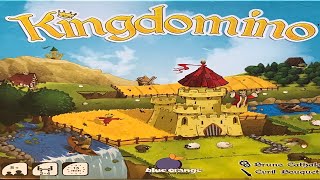
In Kingdomino, you are a lord seeking new lands in which to expand your kingdom. You must explore all the lands, including wheat fields, lakes, and mountains, in order to spot the best plots, while competing with other lords to acquire them first.
The game uses tiles with two sections, similar to Dominoes. Each turn, each player will select a new domino to connect to their existing kingdom, making sure at least one of its sides connects to a matching terrain type already in play. The order of who picks first depends on which tile was previously chosen, with better tiles forcing players to pick later in the next round. The game ends when each player has completed a 5x5 grid (or failed to do so), and points are counted based on number of connecting tiles and valuable crown symbols.
- core mechanics faithfully reflect the physical game
- online multiplayer provides convenient access
- overhead 3D view and small UX touches add life
- perceived predatory marketing and misleading 'Lost Kingdom' mode
- numerous quality-of-life issues and missing conveniences
- online matchmaking is barebones, with non-elo leaderboards and non-ideal player matching
- art direction and two alternate styles fail to stand out
- territory development and scoring through crowns
- Fantasy kingdom-building with tile placement and terrain groups
- light, family-friendly
- Wingspan Digital
Mechanics (from transcript analysis)

- area/territory scoring — points are awarded based on crowns accumulated within contiguous terrain groups.
- set collection — collect crowns to maximize scoring multipliers as the kingdom grows.
- set collection / resource management — collect crowns to maximize scoring multipliers as the kingdom grows.
- tile drafting / selection — players choose from a pool of domino-like tiles to determine their options each turn.
- tile placement — players place terrain tiles adjacent to matching terrain to build a cohesive kingdom.
Video topics + discussion points
Quotes (from this video)
- Disappointment.
- King Domino Digital on Steam feels like a mobile game ported poorly over to Steam that uses predatory marketing language to try and pull in prospective buyers and then doesn't fulfill many of the promises that it makes.
- Ultimately, if you are just looking for a way to play more games of King Domino and can pick this one up on sale, it would get a very, very hesitant recommendation from me.
- Simply put, King Domino deserve better than this.
References (from this video)
- Beautiful design and visuals, both board and digital.
- Addictive and offers cozy, relaxed vibes ideal for casual play.
- Accessible tile-placement mechanics with clear, intuitive scoring.
- Quests and unlocks add replayability and a sense of progression.
- Achievements and event-based goals provide short-term targets and variety.
- Some players (including the host) express uncertainty about optimal strategy, which may affect early enjoyment.
- Online/multiplayer options can be limited by time zones or availability, potentially hindering matchmaking.
- As a lighter game, depth may be less appealing to players seeking heavy strategy.
- Tile placement, crown collection, and area development for score-based progression; with digital quest and upgrade mechanics in the version discussed.
- Whimsical kingdom-building world where players tile a grid to create bordered kingdoms with forests, waters, fields, and mountains.
- Casual, commentary-driven playthrough emphasizing experimentation, small triumphs, and aesthetic appreciation.
Mechanics (from transcript analysis)
- crowns_and_spaces_scoring — Score for each terrain region = crowns in that region multiplied by the number of spaces it occupies (e.g., 4 water spaces with 2 crowns = 8 points).
- drafting — Tiles are drafted from a row; players choose one tile and pass the remaining options to the next player, influencing early-game setup and endgame possibilities.
- drafting_and_selection — Tiles are drafted from a row; players choose one tile and pass the remaining options to the next player, influencing early-game setup and endgame possibilities.
- kingdom_expansion_and_placement_strategy — Strategic placement of castles and ecosystems (water, forest, fields) to maximize crown generation while leaving future tiles placeable.
- quest_system_and_unlocks — Quests provide additional objectives; in the discussed digital version, completing quests can unlock new dominos, meles, and potential abilities, adding replayability.
- tile placement — Players place two-terrain domino tiles onto their kingdom, aiming to connect matching terrains and form efficient, high-point layouts.
- tile_placement — Players place two-terrain domino tiles onto their kingdom, aiming to connect matching terrains and form efficient, high-point layouts.
Video topics + discussion points
Quotes (from this video)
- This is King Domino.
- The game itself is out on Steam right now, so you can go and check it out if you're interested.
- I think it's a tile placement game, so I kind of knew it would be my thing, so to speak.
- The design is very beautiful. I think it's a very addicting game. I can definitely see myself just playing a couple of games back to back just for chill cozy vibes.
- I love the little people working in my kingdom. The peasants. Wonderful. I just love seeing them walk about.
References (from this video)
- straightforward and easy to teach
- pattern-building mechanics that are approachable for all ages
- turn-order drafting adds strategic tension
- high replayability due to variable tile draws
- thematic castle and whimsical art
- kingdom-building through terrain tiles with crowns
- medieval kingdom-building on a modular tiled kingdom
- informational, instructional
- Queen Domino
Mechanics (from transcript analysis)
- pattern_building — players create patterns on their grid as they place tiles.
- rotation_of_tiles — tiles can be rotated before placement.
- scoring_by_area_and_crowns — points are earned by crowns times number of squares in each terrain type.
- tile placement — players place terrain tiles to complete a 5x5 grid around their castle, matching terrain types and edges.
- tile_drafting — tiles are revealed four at a time and players pick in turn order, which is determined by the previously taken tile.
- tile_placement — players place terrain tiles to complete a 5x5 grid around their castle, matching terrain types and edges.
Video topics + discussion points
Quotes (from this video)
- one really straightforward and easy to teach
- I love the turn order selection
- it's a really good straightforward game that has enough strategy
- Let me know what you think.
References (from this video)
- light and approachable
- excellent two-player pacing at 15 minutes
- may feel light for non-casual players
Mechanics (from transcript analysis)
Video topics + discussion points
Quotes (from this video)
- this time on allies or enemies we are counting down our top 10 small box games for two players
- these are great games at low cost that don't take up too much room
References (from this video)
- Array
- Array
- tile drafting and polyomino placement
- Array
- kingdom-building with domino tiles
- Array
- Array
- Array
- positive
Mechanics (from transcript analysis)
Video topics + discussion points
Quotes (from this video)
- it's just like a super easy to teach but super mean game that you can play with your family
- I love games where you're involved on everyone's turn
- the expansions have added a lot to it
- the production value of the aliens those miniatures
- this is basically alien the board game
References (from this video)
Mechanics (from transcript analysis)
Video topics + discussion points
Quotes (from this video)
- you can be the most unlike unlikable person, but if you can just get one person to agree to play with you.
- you get to play both roles within a session.
- this is one of the most playable games I think on our list here in terms of just you could play this a 100 times and still be seeing situations you haven't seen before.
- not an easy game to learn.
References (from this video)
- Accessible, engaging for families
- Elegant drafting-turn mechanic that scales with age
- Beautiful components and approachable rules
- May feel light for experienced gamers
- Strategic depth limited for older kids seeking heavier play
- tile drafting and kingdom building
- Medieval island kingdoms
- light, abstract feel with thematic flavor
- Sushi Go
- Seven Wonders
Mechanics (from transcript analysis)
- area scoring — Points are earned for the size of connected areas and the crowns on tiles; larger, well-connected domains yield higher scores.
- Compound Scoring — Points are earned for the size of connected areas and the crowns on tiles; larger, well-connected domains yield higher scores.
- tile drafting — Players simultaneously draft tiles to form their own kingdom, shaping spatial strategy and determining turn order based on tile quality.
- tile-laying/tiling puzzle — The kingdom forms a grid using interlocking tiles, requiring spatial reasoning and planning for efficient placement.
Video topics + discussion points
Quotes (from this video)
- This is a drafting game where players are simultaneously drafting a tile and their turn order.
- It's a brilliant mechanic.
- It's called King Domino.
- Code Names. But this is the code names pictures edition because I have found with the original code names that processing all of the words can be a lot for children to do.
- It's a lot of information to take in at one time. But when you have simple pictures and you're looking at 20 cards all at once, a child can process 20 pictures a lot better than they can process 20 words.
- Drafttosaurus is a game where players are going to be passing a handful of little dinosaur pieces and they're going to be picking one dinosaur to put it into their park for scoring.
- simultaneous gameplay because everyone is choosing their dinosaur and then passing at the same time.
- This is one of my all-time favorite family games.
References (from this video)
- easy to teach
- fast-paced
- family-friendly
- limited depth for veteran gamers
- dominion and tile placement
Mechanics (from transcript analysis)
- tile drafting — Draft domino-like terrain tiles and place them to form patterns and score.
- tile placement — Place tiles to maximize scoring opportunities and adjacency bonuses.
- tile placement / area scoring — Place tiles to maximize scoring opportunities and adjacency bonuses.
Video topics + discussion points
Quotes (from this video)
- We've been making content for four years.
- Four is a number I love; if we play four games in a game night, that's an ideal game night.
- We are ready to do four more with you.
References (from this video)
- Open drafting and clear spatial decisions
- Encourages pattern building and territorial thinking
- territory development via tile drafting
- kingdom-building with domino-like tiles
- analytical comparison to Sushi Go's drafting
- Sushi Go
Mechanics (from transcript analysis)
- drafting — open drafting of domino-style tiles
- Pattern Building — place tiles to create connected terrain
- pattern building / spatial placement — place tiles to create connected terrain
Video topics + discussion points
Quotes (from this video)
- Mechanics first, theme second.
- The fastest way to lose new players is with a dull 3-hour game.
- This is a perfect entry-level co-op game.
- Open drafting lets you see what everyone is taking as they take it.
References (from this video)
- fast 15-minute play sessions
- four distinct playing modes/variants
- accessible to families and casual players
- digital version can feel less charming or tactile than the physical game
- some players may crave a stronger thematic pull or emotional payoff compared to other titles
- Tile-placement and area scoring as players build a personal kingdom
- Medieval kingdom-building with domino-like tiles that represent different types of terrain and crown opportunities.
- Light, family-friendly tone with quick, accessible decision-making and familiar themes for a broad audience.
- Canvas
Mechanics (from transcript analysis)
- Adjacent-region scoring with crowns — Points are awarded based on adjoining same-type spaces and the presence of crowns, creating a simple yet strategic scoring layer.
- Multiple play formats — The game supports in-person play as well as digital variants and AI opponents, providing flexible entry points for different groups.
- tile placement — Players place domino-like terrain tiles to form grids, aiming to optimize layout and future scoring options.
Video topics + discussion points
Quotes (from this video)
- thoroughly engaging, really pretty
- a really, really nice interface for the game
- This is really cool. It's a fantastically easy streamlined system.
- There are four different ways to play this game
- the game actually just takes you about 15 minutes to play
- the one benefit of having the game on Steam is that it automates that system for you
References (from this video)
- Simple, quick to learn
- Diverse layouts
- Can be luck-driven in early rounds
- Tile-laying, kingdom expansion
- Kingdom-building with domino-like tiles
- Light, family-friendly tableau-building
- Patchwork
- Catan
- King Domino
Mechanics (from transcript analysis)
- set collection — Score points by matching terrain types and completing patterns.
- set_collection — Score points by matching terrain types and completing patterns.
- tile placement — Place domino-like tiles to build a 5x5 kingdom grid.
- tile_placement — Place domino-like tiles to build a 5x5 kingdom grid.
Video topics + discussion points
Quotes (from this video)
- That was clearly and obviously Brass Birmingham.
- Ticket to Ride Europe.
- King Domino.
- Brass Birmingham is a game much beloved by many.
- It couldn't have been clearer. That was quite obviously Great Western Trail.
- Sky Team.
References (from this video)
- Well-implemented digital edition with smooth visuals and responsive controls.
- Clear explanation of rules via tutorial, plus an in-game rule reference.
- Easy to pick up for new players while still offering strategic depth for seasoned players.
- Aesthetic and animation details (like the windmill and farmers) enhance immersion.
- Some minor bugs noted (e.g., instant switching between players after tile placement in certain moments).
- Abstract scoring can be a bit opaque until you grasp the region/crown multiplication concept.
- tile-laying, kingdom-building with crowns and landscapes
- A magical kingdom-building challenge where players lay domino-like terrain pieces to form kingdoms and connect landscapes.
- light, tutorial-forward with casual playthrough commentary
- King Domino Digital Edition (this video)
- Board Game Arena adaptation of King Domino
Mechanics (from transcript analysis)
- quest_and_achievement_system (digital edition) — Digital edition adds quests/achievements that unlock avatars, frames, and other cosmetic or progression rewards.
- scoring_by_regions_with_crowns — At the end of the game, count connected landscapes, tally crowns within each region, and multiply to determine points for each area.
- tile placement — Players select domino-shaped tiles and place them on a 5x5 grid to form continuous landscapes; placement rules require connection to existing tiles and can influence future options.
- tile_placement — Players select domino-shaped tiles and place them on a 5x5 grid to form continuous landscapes; placement rules require connection to existing tiles and can influence future options.
- turn_order_by_tile_selection — Choosing a domino not only places it but also determines the turn order for the next round, shaping strategy and timing.
Video topics + discussion points
Quotes (from this video)
- This is a really well-made implementation.
- It's simple. It's simple, but it's like all that is needed.
- This version is very, very nice.
- You can also play this on Board Game Arena, which I usually do if I play digitally.
References (from this video)
- Relaxing and approachable
- Beautiful production and visuals
- Expandable with a bigger table setup
- For some, it remains casual and light
- Competition for high-value tiles can be tight
- land acquisition and scoring by terrain types
- Tile-drafting domino-like kingdom building
- light, relaxing abstract strategy
- Domino-style drafting games
- Other light tile-laying families
Mechanics (from transcript analysis)
- area scoring — Score based on connected terrain areas and crowns; drafting order adds strategic planning.
- Compound Scoring — Score based on connected terrain areas and crowns; drafting order adds strategic planning.
- tile drafting — Draft domino-style terrain tiles from the center and place them to build a 5x5 grid.
Video topics + discussion points
Quotes (from this video)
- it's the golden age of board games. It is becoming more and more popular.
- visually it just looks incredible out on a table.
- the game just has a ton of fun kind of figuring out what people have.
- dead simple to teach this game.
- an absolute hit and it's been an absolute blast.
- this is the game I could see playing again and again.
References (from this video)
- simple rule set with meaningful choice
- timely drafting decisions
- tidier than deeply strategic for some players
- kingdom expansion with placement
- domino tile drafting to fill a kingdom
Mechanics (from transcript analysis)
- set collection — collect tiles to complete a grid and maximize points.
- set collection / spatial placement — collect tiles to complete a grid and maximize points.
- tile drafting — draft domino tiles representing land tiles and place them to score points.
Video topics + discussion points
Quotes (from this video)
- there's a wealth of replayability in this game box alone.
- Euro point salad puzzle
- I love Wingspan so much. I just love positive effects that you get when you trigger your tableau.
- The Gallerist... probably the one I've gravitated towards the most if I were to try aLacerda game.
- King Domino... that simple little mechanic of going, 'Oh, do I take a lesser powerful tile at the top or in order to pick first on the subsequent turn?'
References (from this video)
- Faithful look and feel to the board game; plays like the real thing
- Beautiful visuals with two art styles and charming details
- Good digital features: dynamic board view, undo, rotation, and tile viewing
- Clear and accessible interface with stats, leaderboard, unlockables, and cosmetics
- Smooth port with faithful mechanics and offline/online play (beta issues acknowledged)
- Tutorial focuses on where to click but lacks upfront rule explanation
- Beta online connectivity issues and a stuck 4-player popup
- Tile flipping can sometimes occur unexpectedly when placing tiles
- Expansion content (Age of Giants) not included in the version reviewed
- Audio cues can be distracting; preference for a lower-noise option or turn-based beeps
- territory expansion and crown-based scoring
- Medieval kingdom-building with domino-style land tiles
- light, whimsical
- Quilts & Cats of Calico
Mechanics (from transcript analysis)
- end-of-game scoring — Scores tallied after all tiles are placed; crown-rich regions multiply when connected, determining final rank.
- pattern scoring with crowns — Points are earned from crowns within connected regions, with larger connected areas providing higher multipliers.
- tile drafting — Players select tiles from a shared display. Higher-numbered tiles yield more land but are chosen later in the round.
- tile placement — Place tiles to connect matching terrain to your existing land or castle; can rotate the tile 180 degrees; placement is constrained by board.
- tile placement and rotation — Place tiles to connect matching terrain to your existing land or castle; can rotate the tile 180 degrees; placement is constrained by board.
Video topics + discussion points
Quotes (from this video)
- This is exactly what I want from a digital version of a board game. It looks pretty and plays like the real thing.
- It is exactly what I want from a digital version of a board game. It's not a video game, but it looks like one, it plays like a board game.
- The game is exactly the same. It looks the same. It plays the same.
- So, I'm definitely keeping this one.
References (from this video)
- Accessible ruleset and quick play
- Appealing artwork and animation in digital version
- Strategic tension in 7x7 grid; allows recovery from mistakes
- 5x5 grid is tight and can feel cramped
- Digital unlocks and paid visuals can be off-putting
- Unlocks like animals/quests sometimes unclear or slow to reveal
- kingdom expansion through land types and crowns
- medieval kingdom building with tile placement to claim landscapes
- light, abstract, cartoonish
Mechanics (from transcript analysis)
- area scoring — areas score by size times crowns, encouraging expansion
- Compound Scoring — areas score by size times crowns, encouraging expansion
- set collection — grow regions to maximize crowns and land types
- set collection / chaining — grow regions to maximize crowns and land types
- tile drafting — draft from a revealed pool of tiles and select strategically
- tile placement — place tiles adjacent to castle and matching terrain to score points
Video topics + discussion points
Quotes (from this video)
- So, in King Domino, we are going to be selecting tiles and building our kingdom and trying to get the most victory points.
- And those victory points are going to come from the land types. the bigger, you know, a big group of land types you make multiplied by the crowns within that area.
- I do like the animation in this quite a bit. It is really well done.
- 7 by 7 is the better game. It allows you to make some mistakes to recover from that gives you more wiggle room.
- 123 to 113. Couldn't quite pull it off.
- That's pretty juicy. 33 points.
- I like that, too.
References (from this video)
- quick to learn and play (about 15 minutes)
- elegant drafting mechanism that also determines turn order
- satisfying tile-laying decisions for a light game
- attractive artwork and thematic visuals
- strong family-friendly risk-reward in a small footprint
- limited depth for players seeking heavier Eurogames
- some may wish for more interaction beyond drafting and placement
- kingdom-building through tile drafting and placement
- medieval kingdom development with tiled landscapes
- light, whimsical, family-friendly
- Dream Home
Mechanics (from transcript analysis)
- Compound Scoring — At the end of the game, each connected landscape area scores by area size multiplied by crowns within that area.
- scoring by area and crowns — At the end of the game, each connected landscape area scores by area size multiplied by crowns within that area.
- tile drafting — Players select a domino-like tile row in order, which also determines turn order for the next round.
- tile placement — Players place tiles on a personal 5x5 grid, connecting matching landscape types to the starting tile.
Video topics + discussion points
Quotes (from this video)
- it's a game with substance within a very short time frame
- as a filler this is fantastic
- beautiful artwork
- small package
- back to Domino's just two squares
- you could do a lot worse than picking up a copy of King Domino
References (from this video)
- very easy to teach
- quick to play
- territory expansion and pattern completion
- domino-based kingdom building
- gentle, accessible
- Queen Domino
Mechanics (from transcript analysis)
- Pattern Building — maximize points by creating valid patterns and adjacencies
- pattern-building — maximize points by creating valid patterns and adjacencies
- tile placement — place dominoes to form connected lands
Video topics + discussion points
Quotes (from this video)
- this is the sort of game that should be in just about every starting collection and that's sushi go
- a well-designed simple game is a thing of beauty and I think we should appreciate
- designing a good gateway game anyone can pick up and play is an art form in some ways
References (from this video)
- Accessible for non-gamers
- Well-designed digital implementation
- Engaging unlockables and progression
- High replayability with multiple variants
- Progress can reset between early access and full release
- Some quest/advanced rules are optional or off by default in the app
- territory expansion through tile placement and crowns
- Medieval kingdom tile-laying
- abstract
- Settlers of Catan
Mechanics (from transcript analysis)
- Compound Scoring — Score is based on the number of tiles of a terrain type multiplied by the crowns on those tiles
- pattern_selection — Tiles are selected from a domino-like pool to shape the kingdom
- scoring_by_terrain_and_crowns — Score is based on the number of tiles of a terrain type multiplied by the crowns on those tiles
- tile placement — Players place terrain tiles to build a kingdom grid
- tile_placement — Players place terrain tiles to build a kingdom grid
Video topics + discussion points
Quotes (from this video)
- King Domino is one of the best games at introducing non-gamers to modern gaming and it still is now.
- It's just such a nice game. This a nice interface.
- There are probably people out there playing the King Domino app who are not board gamers.
- King Domino Digital Edition, which is available on I'm going to say all platforms.
- The more you play, the more you unlock.
References (from this video)
- Fast to learn and quick to play
- Excellent educational potential for counting, basic multiplication, and pattern recognition
- Elegant, lightweight mechanics that interlock cleanly
- Great for family play and both kids and adults can enjoy
- Drafting the turn order adds a satisfying strategic layer
- Theme is not highly immersive or narrative-driven
- Occasionally tiles can create holes or unplayable gaps that require discarding tiles
- Limited depth for experienced gamers seeking heavy strategy
- kingdom expansion and tile placement
- medieval kingdom-building on a grid using domino-like tiles
- abstract
Mechanics (from transcript analysis)
- area scoring — Scores are calculated by multiplying area size by crowns within each terrain zone.
- Compound Scoring — Scores are calculated by multiplying area size by crowns within each terrain zone.
- edge-matching placement — Placed tiles must align with similar terrain edges to continue the garden/kingdom layout.
- restricted placement within a 5x5 grid — Kingdoms must fit within a defined 5x5 area, adding spatial planning constraints.
- tile drafting — Players select from a set of tiles to claim a position in the draft and to influence future turns.
- tile placement — Placed tiles must align with similar terrain edges to continue the garden/kingdom layout.
- Turn Order: Draft — Drafting a tile also determines the next round’s turn order, adding strategic sequencing.
- turn-order drafting — Drafting a tile also determines the next round’s turn order, adding strategic sequencing.
Video topics + discussion points
Quotes (from this video)
- King domino is fast to learn and fast to play
- This is an excellent educational game
- I love this game
- The mechanics are fantastic and the whole game revolves around drafting the tile and turn order
- Drafting not just the tile you're taking but also you're drafting your turn order for the next turn
References (from this video)
- easy to learn
- visual appeal and accessibility
- great family game
- elements of luck
- not deeply strategic for some players
- territory tiling and landscape development
- medieval kingdom-building with land tiles
- light, approachable thematic backdrop
- Queen Domino
Mechanics (from transcript analysis)
- set collection — collect land types to maximize scoring opportunities
- set_collection — collect land types to maximize scoring opportunities
- tile placement — placing domino-like tiles to connect lands for scoring
- tile_placement — placing domino-like tiles to connect lands for scoring
Video topics + discussion points
Quotes (from this video)
- Junk Art might be my favorite dexterity game of all time
- the system is very clever... the way that you select the Domino's and the way that they fit together
- Pandemic Iberia just takes basic Pandemic puts it in olden times and has a bit more theme to it
- When I Dream is a brilliant party game
- Captain Sonar adds a big hit of a game this is a big group game
References (from this video)
- quick play
- family-friendly appeal
- can be luck-influenced depending on tile order
- kingdom building
- medieval kingdoms
- light
- Carcassonne
- Qwirkle
Mechanics (from transcript analysis)
- set collection — score based on diversity of terrains and crown clues.
- tile drafting — select domino-like tiles to place on a grid in your kingdom.
- tile placement — place tiles to form a coherent kingdom grid.
Video topics + discussion points
Quotes (from this video)
- "I love hate drafting"
- "it's christmas when you unbox a game"
- "the sound of dice hitting the side of a wooden dice tray"
- "brew baby"
- "i'm literally miserable playing unicorn fever"
- "I love the first time you get to unbox a board game"