/pic6618515.jpg)


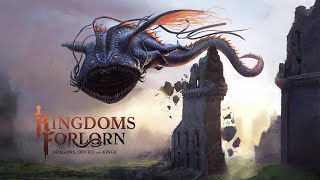
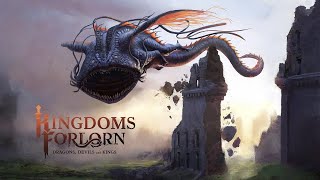
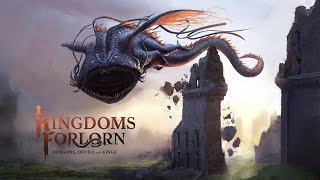

Kingdoms Forlorn: Dragons, Devils and Kings Deep Dive
What the Community Thinks About Kingdoms Forlorn: Dragons, Devils and Kings
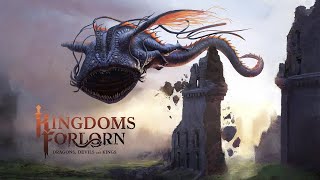
Kingdoms Forlorn: Dragons, Devils and Kings stands out among heavy campaign games as a unique beast that refuses to fit neatly into existing frameworks. From Adamus Games, the team behind Aeon Trespass: Odyssey, this 2024 cooperative adventure defies easy comparison. Reviewers like One Stop Co-op Shop and Meet Me at the Table consistently praise the game's ambitious scope, layered progression systems, and exciting combat, while acknowledging that its non-linear campaign structure and sheer complexity demand patience and table presence. The game has secured spots on several reviewers' end-of-year favorites, driven by compelling character stories, satisfying moment-to-moment gameplay, and systems that reward multiple playthroughs.
Core Mechanics That Define Kingdoms Forlorn: Dragons, Devils and Kings
Campaign Progression Through Tiers
Kingdoms Forlorn: Dragons, Devils and Kings anchors itself on a tiered campaign structure where characters develop across multiple progression paths simultaneously. As players advance, they unlock peril arcs that boost maximum life and a mitigation resource, heroic arcs that level up during combat and grant bonuses to allies, talent cards that enhance special abilities, portrait cards that improve core stats and movement, and new gear. Each quest completion typically unlocks two or three progression pieces, while investigations grant individual items or ability cards. This design ensures that a single multi-hour session delivers tangible character advancement. The fail-forward philosophy means even failed quests grant leveling rewards, preventing time at the table from feeling wasted. The structure lets players pause mid-campaign indefinitely, make characters available for friends' sessions with automatic level-balancing, and pursue character-specific storylines at their own pace through either main quests or side investigations.
Clash Combat: An Inverted Power Curve
At the heart of the experience lie clashes, the battles that occur at timed intervals. The combat system features what reviewers call an inverted paradigm: as fights progress, heroes grow stronger while monsters escalate their tactics. Enemies activate first each round with AI cards that specify targets and actions, but heroes respond with escalating bonuses as their passion track rises. Every hero attack generates tokens for the next character in turn order, creating a cooperative puzzle where positioning, token selection, and action order matter deeply. Combat relies on dice rolling with heavy mitigation: a heat resource, gained through damage or card abilities, allows rerolls, while armor and evasion come from equipment and ability cards. Wounded body parts trigger escalations that swap enemy parts for stronger versions, but heroes simultaneously unlock better abilities on their heroic arcs. The system keeps tension constant without sliding into despair, since both sides grow in power. Squires, the companion characters for lighter player counts, integrate via a card-flipping mechanic rather than full dice rolls, keeping solo or two-player games manageable.
The Kingdoms Forlorn: Dragons, Devils and Kings Experience
Exploration and Kingdom Management
During delve phases, parties explore dynamic maps built from location cards, similar to Seven Citadels or The 7th Continent, but with a crucial twist: player knowledge persists. Learning where regions connect and remembering discoveries rewards careful attention. Each movement advances a time track and a threat track, creating hard-stop moments for mandatory clashes. Players choose directions based on randomized exploration cards that yield clues, triggering location effects, revealing secrets, or earning sanctuary from threats. Quests introduce unique mechanics and story-driven objectives, pushing parties toward specific locations or achievements before time runs out. Investigations task parties with collecting assigned clue types, with a resource pool offering safety nets for incomplete attempts. Character ability cards function as both delve aids and clash upgrades, creating meaningful decisions about which abilities to bring and when to spend them. This layered system rewards mastery of the shared map while staying fresh through rotating exploration cards and quest-specific goals.
Narrative Through Character Stories and Rapport
Kingdoms Forlorn: Dragons, Devils and Kings weaves individual character arcs throughout the campaign, with each knight receiving a full narrative booklet covering a prologue and several chapters of story-driven main quests. In multi-player parties, only one character per session follows their main quest while others pursue investigations, so a character's complete story unfolds across many sessions. This structure feels unconventional but functional, as rapport events trigger during other characters' quests, building relationship bonuses and party cohesion. Characters encounter each other through these side moments, preventing any knight from becoming isolated despite asymmetric progression. The writing itself draws consistent praise for personality and atmosphere. While this deviates from games with a single unified final boss, reviewers appreciate the flexibility it affords, letting groups pick up the game, play a character's current objective, and pause indefinitely. Solo or two-character parties sometimes face sessions with no active main quest and must rely on investigation depth or free roam to stay engaged, which some find less narratively compelling despite the mechanical merit.
What Makes Kingdoms Forlorn: Dragons, Devils and Kings Stand Out
Massive Content Variety and Enemy Design
Even the base game boasts an astounding roster of distinct enemies across multiple difficulty tiers. Rat wolves, pale blood worms, pumpkin-headed monstrosities, ironclad dead, and dozens of others each come with unique traits, special abilities, and escalation mechanics. As parties advance through campaign tiers, enemy trait cards multiply, adding layers to familiar foes. The breadth of encounter types means playgroups rarely face identical boss battles twice. Mob enemies, groups of smaller creatures with collective mechanics, provide tactical variety against the scripted large-boss fights, creating a natural rhythm between concentrated and diffuse threats. Reviewers note that even within one enemy archetype, level variations introduce new wrinkles without overwhelming onboarding, since players learn an enemy's core rules on the first encounter and absorb new layers gradually.
Modular Accessibility Without Simplification
Kingdoms Forlorn: Dragons, Devils and Kings accommodates flexible player counts through squire companions who substitute for missing heroes without reducing tactical depth. Squires use card-flipping for attack resolution rather than dice rolls, accelerating play while preserving meaningful decisions around gear and ability cards. Level balancing ensures characters of wildly different progression can join any session, with weaker knights gaining automatic bonuses while stronger ones face penalties, preserving challenge across a mixed-experience party. The game scales organically whether played solo, with one or two heroes filling out the party via squires, or at the full count. The knight-book system also enables truly portable characters: a player can bring a personal character sheet and miniature to a friend's table and resume progression in a parallel thread, a shared-character experience unusual in tabletop gaming.
Potential Drawbacks
Rules Density and Learning Curve
Kingdoms Forlorn: Dragons, Devils and Kings inherits the keyword and special-rules density characteristic of its predecessor, Aeon Trespass: Odyssey. Enemy cards pack terminology including armor thresholds, toughness, instincts, traits, responsive abilities, and wound effects; even early-game enemies require reading several special rules before resolving an activation. As parties progress and enemies level up, additional traits and conditions stack on top of existing mechanics. Players familiar with heavy euros or previous big-box campaigns adapt quickly, learning enemy rules within an encounter or two, but first encounters with new enemy types demand careful rulebook consultation. Sessions can extend to five or six hours partly due to first-time setup, though experienced groups accelerate substantially. This complexity is intentional, enabling varied and thematic enemy behaviors, but it remains a real barrier to entry.
Encounter Mechanics Underdeliver
A new mechanic absent from Aeon Trespass: Odyssey, encounters introduce random single-round combats during delve phases when monsters catch wandering parties. While encounters generate passion tokens and apply minor wounds or debuffs for the final clash, the mechanic itself lacks tactical depth. Enemies activate in basic patterns determined by facing and proximity rather than complex AI, heroes attack once if in range, and outcomes resolve via quick checks. Setting up an encounter requires unpacking the full clash board, miniatures, and terrain on top of the existing delve map, creating overhead disproportionate to the mechanical impact. In practice, encounters feel like paragraph-length bonus or penalty effects stretched into a five-minute setup. Some reviewers are considering house rules to streamline or skip them. The mechanic remains manageable but ranks among the few elements that divide reviewer sentiment.
If You Enjoy Kingdoms Forlorn: Dragons, Devils and Kings
Consider Aeon Trespass: Odyssey if you love the clash combat system and want to explore its original form; Kingdoms Forlorn refines that foundation with improved modular exploration and character progression. Kingdom Death: Monster shares the collaborative monster-hunting progression loop, gruesome aesthetic, and escalating boss battles, though with a darker tone and less overland exploration. Harakiri appeals to those seeking another giant campaign adventure with persistent character investment and heavy narrative structure. And Seven Citadels serves players drawn to dynamic map-building and discovery, offering exploration mastery even if it lacks Kingdoms Forlorn's structured campaign progression and combat focus.
What Reviewers Are Saying
"The character stories are so compelling, the leveling up is exciting and rewarding, and the combats and adventures are tense and varied and fun. The ability to play for a while, then switch to another knight, then bring your knights to another player's session and join their adventures, makes Kingdoms Forlorn unique among campaign games. I've never seen one like this."
— One Stop Co-op Shop
"This inverted combat paradigm is really cool. It's a fun way to play because your guys are going to be getting so many more dice and tokens as you go through the encounter. You're going to be getting stronger instead of weaker, which is a totally different feel from a lot of games."
— Meet Me at the Table
"Kingdoms Forlorn is now one of my favorite games of the year, easily. I think it's very telling that I've wanted to play this one more, and I've done extra plays beyond what I needed just to cover it, because the character stories are so compelling and the adventures are tense and varied and fun."
— One Stop Co-op Shop