















Knitting Circle Deep Dive
What the Community Thinks About Knitting Circle
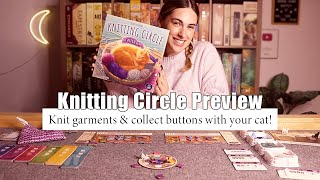
Knitting Circle has resonated with board gamers seeking a cozy, puzzle-driven experience in the Calico universe. Reviewers consistently praise its beautiful presentation and straightforward accessibility, though opinions diverge on whether its gentle mechanics provide sufficient depth for all players. The game stands as a spiritual successor to Calico, emphasizing relaxation and pattern completion over tension and competitive aggression. Community sentiment highlights strong appeal for players who value aesthetics, theme integration, and the tactile satisfaction of tile placement without demanding strategic complexity.
Core Mechanics That Define Knitting Circle
Yarn Drafting and Tile Collection
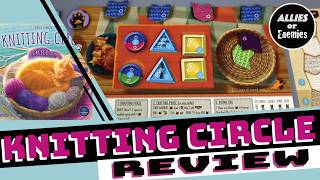
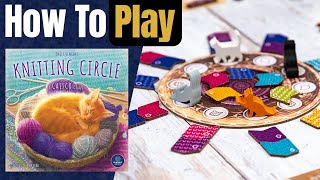
The game's opening phase centers on a rondel-based drafting system where players move their cat tokens one or two spaces around a circular board to claim yarn tiles. Each tile features two sides—knit and pearl—and players must keep tiles in the orientation they drafted them, creating a meaningful decision point before placement. This dual-sided mechanic forces players to think ahead about which garments they can complete with the available yarn, while the optional grabby paw tokens allow players to search the bag for specific colors when they need a particular tile. The rondel's simplicity appeals to newcomers, though some reviewers note that player interaction here remains mostly incidental, with most blocking emerging from natural tile scarcity rather than deliberate player conflict.
Simultaneous Garment Construction
Once drafting concludes, all players simultaneously engage in the crafting phase, where they knit tiles onto garment cards, complete garments, and work toward pattern objectives. Players can hold up to two garments in progress and must place tiles from top to bottom in the correct orientation. The basket mechanism—where tiles can be flipped freely to either side—provides essential flexibility and storage for future rounds. Completing garments triggers immediate rewards, including random tile draws and bonus buttons that award points for color combinations, pattern styles, and garment types. The freedom to knit at one's own pace without turn order creates a relaxed, almost meditative experience distinct from most competitive board games.
The Knitting Circle Experience
Cozy Puzzle Solving
Knitting Circle delivers a deeply satisfying puzzle experience grounded in real crafting metaphor. The garment cards present visual patterns requiring players to match knit and pearl sides while building solids, stripes, color blocks, or symmetrical designs. Reviewers frequently compare the experience to solving a jigsaw puzzle where each round presents new configuration challenges. The game's pacing allows players to contemplate options without rushing, and the simultaneous action phase means downtime is minimal. The tactile nature of placing tiles, drawing tokens from the bag, and physically managing yarn in a personal basket creates sensory engagement that digital adaptations cannot replicate. This mechanical harmony with theme—where players genuinely feel like they are knitting garments—strengthens immersion and makes the puzzle feel natural rather than arbitrary.
Accessible Depth with Optional Complexity
The base game teaches quickly and plays smoothly with straightforward rules explained on every player board. New players can grasp drafting and knitting immediately, while advanced mode objectives add strategic layers without overwhelming casual players. Button scoring rewards specific pattern and color combinations, encouraging planning across multiple rounds. The goal cards present public objectives that early finishers achieve first, earning extra grabby paws that shift momentum toward players pursuing those specific paths. This elegant scaling allows families and newcomers to enjoy a relaxing experience while experienced players find real decisions in timing garment completion, managing their button economy, and pursuing high-value pattern combinations. Reviewers note that the game lacks the tension ramp of Calico but delivers consistent engagement throughout all six rounds.
What Makes Knitting Circle Stand Out
Thematic Integration of Mechanics
Few games merge their mechanics so naturally with theme as Knitting Circle does. The knit and pearl distinction directly mirrors actual knitting notation, while the rondel mimics the circular motion of needles. The basket as a flexible storage system reflects real crafting habits where yarns can be reoriented before use. The "ugly garment" penalty—negative three points for patterns that fail to cohere—creates a stakes system rooted in crafting satisfaction: a garment you complete without intention feels unsatisfying. Players mention that cat tokens collecting yarn from a central circle creates an atmosphere of collaborative, gentle competition. The garment variety (mittens, socks, hats, sweaters, scarves, long johns) and their varied lengths provide visual clarity about game state while maintaining thematic coherence. This consistent theme-to-mechanic alignment makes the entire experience feel like a coherent whole rather than a ruleset tacked onto a coat of paint.
Exceptional Component Design
The game's production quality reinforces its cozy appeal. Double-sided buttons with embossed patterns remain distinguishable even from a distance, supporting quick scanning during simultaneous play. Garment cards illustrate exactly how long each garment is, teaching players visually without referencing rules. The knitting needles tokens clearly signal which garments are active, and the basket bag mechanism proves both functional and thematic. The button tokens that award end-game points and the grabby paw tokens for mid-game flexibility feature delightful art that invites players to touch and manipulate them. Reviewers consistently mention the visual appeal of the game state as garments accumulate buttons and complete, creating a satisfying visual record of progression. The relatively thin cards for buttons did not detract from enjoyment for most players, though some noted they require careful handling.
Potential Drawbacks
Limited Tension and Minimal Player Conflict
Some reviewers expressed that Knitting Circle's gentle design means it lacks the peaks and valleys of tension that drive engagement for certain player types. The simultaneous action phase eliminates kingmaking concerns but also removes the dramatic moment of one player's move forcing others to adjust. The rondel features minimal blocking since tiles spawn randomly; most "conflict" emerges from multiple players wanting the same color rather than strategic attacks. One reviewer noted the game felt "very flatline across the whole way," where the sixth round doesn't feel meaningfully different from the first. Players accustomed to Calico's tightness may find Knitting Circle less gripping once they understand optimal play. The optional advanced mode goals help address this for some playgroups, but the core experience remains fundamentally about personal puzzle solving rather than direct player interaction. This peaceful design serves the game's cozy goals but may not appeal to players seeking nail-biting competition.
Luck-Dependent Button Allocation and Tile Draws
Button refills each round occur randomly, potentially leaving players without the right pattern opportunities despite clear strategy. A player might commit to solid-colored garments only to draw primarily pattern-focused buttons, forcing suboptimal completions. Similarly, garment card draws when starting new garments are semi-random (two cards selected, one chosen), occasionally forcing players into types they didn't prioritize. These luck elements mean even well-planned strategies can frustrate, particularly late in the game when limited rounds remain to pivot. Some players felt moments of regret—completing a mitten and then drawing completely incompatible buttons moments later—rather than the satisfaction of well-executed plans. The grabby paw system mitigates this by allowing specific tile searches, but even with optimal use, a player might run out of paws before the luck reverses. Reviewers who prefer games where skilled play clearly dominates luck found these systems occasionally grating, though most accepted them as part of the game's lighter design philosophy.
If You Enjoy Knitting Circle
Players drawn to Knitting Circle should explore Calico, the spiritual predecessor that introduced the pattern-based puzzle and color-matching satisfaction. Calico offers notably more tightness and tension if you seek deeper challenge. Taco Cat Goat Cheese Pizza shares the lighthearted, cat-adjacent theme and accessibility, though it shifts to real-time card play. For solo puzzle experiences, Cascadia and Verdant deliver similar meditative tile placement without time pressure. Splendor offers accessible engine-building with a different strategic arc. The Isle of Cats combines polyomino placement with card drafting and cat theming, providing more simultaneous player turns. For those craving deeper pattern complexity, Patchwork and Sew Stitched offer two-player quilting experiences. If the cozy theming appeals, Everdell delivers gentle card play in a nature setting, while Mushroom Valley offers pastoral puzzle solving.
What Reviewers Are Saying
"It's one of my favorite parts is the garments all sometimes score differently and kind of influence each other benefits. I really like those. It kind of forces you to think about getting the most points while you're crafting."
— kovray
"I think if you can finish the big garments, they're like the nicest. Yeah, also nine points to finish. Quite a bit for a whole long johns, that is pretty good. If you want to learn more about this game you know what to do you go in that description you click a couple of links and then you'll learn more about knitting Circle."
— The Dice Tower
"I think this is kind of a puzzly tile placement game that's gonna hit for a lot of audiences. For me, it's going to be multiplayer. Probably play solo. I'm also excited because we backed this one. It is giving a different way to play Calico so which mirrors the knitting Circle mechanic with like the circle thing."
— Where There's A Wilz, There's a Play