/pic3210582.jpg)
Game Info
Year
2011
Collection
Ratings
Creator Score
Mechanic profile
Not enough video data yet
Vibe profile
Not enough video data yet
Description
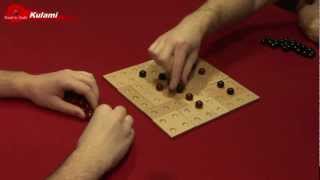
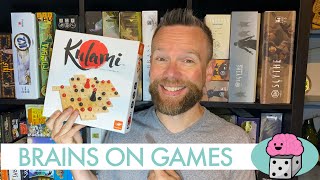
Kulami, a two-player abstract strategy game, is played on several wooden tiles of different sizes, which are put together in a random fashion to form the board. Players place their pieces on the squares on the tiles. The placement of the previous piece dictates the rows in which the next piece may be placed.
The goal is to claim as many tiles as possible by occupying the majority of squares on a tile. Bonus points can be gained by completing rows or areas.
Featured Videos
Review

Kulami Board Game Review
Ask a Rules Question
All mentions
Browse transcript mentions, sentiments, pros/cons, mechanics, topics, quotes, and references.
Total mentions: 12
This page: 12
Sentiment:
pos 11 ·
mix 0 ·
neu 0 ·
neg 0
Showing 1–12 of 12
Video qk4v9du0E6A
Board to Death TV - Board Game Reviews Review at 0:16 sentiment: positive
video_pk 130886 · mention_pk 372452
Click to watch at 0:16 · YouTube ↗
Overall sentiment (raw)
positive
Pros
- Very strategic
- High replayability due to random board setup
- Nice production quality
- Visually appealing components
Cons
- Can lead to long silent rounds
Thematic elements
Comparison games
none
Mechanics (from transcript analysis)
- abstract — The game involves placing marbles on tiles to gain control and points, with strategic placement rules.
- Area Majority — Players check to see what tiles they control by having more marbles on them than the other player.
- Tile Placement — Players win wooden tiles to gain victory points, and the setup involves placing tiles to make a square.
Video topics + discussion points
No key topics recorded for this video.
Quotes (from this video)
- Kami Kami Kami or Sounds like an Asian restaurant.
- The games can be 15 minutes long depending on the players.
- Get ready for long silent rounds.
References (from this video)
No references stored for this video.
Video ZxYeN2NUtEA
The Dice Tower Analysis at 10:19 sentiment: positive
video_pk 125346 · mention_pk 358954
Click to watch at 10:19 · YouTube ↗
Overall sentiment (raw)
positive
Pros
- I like that idea.
Cons
none
Thematic elements
Comparison games
none
Mechanics (from transcript analysis)
- abstract strategy — A remake of a game involving placing marbles on a board.
- turn order control — The placement of a marble determines where the opponent plays their marble.
Video topics + discussion points
No key topics recorded for this video.
Quotes (from this video)
- The spittle speckle that settles on the waddles of chickens and the chins of cattle.
- When they knock on your door in Russia, you're like, "Okay, this is a very interesting eclectic group you got today, Tom."
- There's such a thing as too much clank.
- I hate it.
- I would like a dungeon crawler kind of game set in the Home Alone setting. Like I want to like kick in a door and shoot him in the face.
- It's a whale. They had whales in Star Trek, right? They saved them or something.
- You shot so many kids in the face today.
References (from this video)
No references stored for this video.
Video LcqDIFrg6uI
The Dice Tower Analysis at 2:46 sentiment: positive
video_pk 101056 · mention_pk 281569

Click to watch at 2:46 · YouTube ↗
Overall sentiment (raw)
positive
Pros
- Very solid two-player game
Cons
none
Thematic elements
Comparison games
none
Mechanics (from transcript analysis)
- Alignment — Trying to line up four stones in your color.
Video topics + discussion points
No key topics recorded for this video.
Quotes (from this video)
- So, because of that, I actually never got a copy of it um and haven't played it.
- Um so, you drive cars around and shoot at each other. That's basically the game.
- Looks like Carcassonne with Islands. That looks pretty good.
- Do we need a card game version of it? And the answer to that is we really don't. Just play Camel Up.
- This is a war game from Don Greenwood, Avalon Hill.
- But if you like choose your own adventures type games, that's what this is.
- It is a tile laying game that is about as exciting as it looks in this picture here.
- So if you like Klask, um which is a fantastic two-player game, this is just a version for four.
- I really like awkward guests, so why didn't I play the second one?
- He gave it Seal of Approval. A seven out of 10. Well, there you go.
- I think I'm going to have to go with the Bottom of it. It is a fantastic three-player trick-taking game that I like very much and think you definitely should check out.
- If you really like what we're doing here at the Dice Tower, then there are different ways to support the Dice Tower. One of those ways is through Patreon.
References (from this video)
No references stored for this video.
Video cEI9Y5K9tw8
Brains On Games Review at 0:30 sentiment: positive
video_pk 90843 · mention_pk 243167
Click to watch at 0:30 · YouTube ↗
Overall sentiment (raw)
positive
Pros
- easy to learn and quick to set up
- high replayability due to modular board
- deep strategic thinking and planning develop over time
- strong cognitive value (working memory and executive function)
Cons
- can require larger physical space for the board setup
- score counting across many components can feel fiddly to some players
Thematic elements
- territory control through majority on individual board sections
- abstract strategy on a modular, configurable grid with scored tiles
- abstract puzzle-like
Comparison games
none
Mechanics (from transcript analysis)
- end-state majority scoring — at game end, players count majority on each piece to determine points
- marble placement — players place marbles into divots on board pieces to gain majority on each divot's tile
- Modular Board — a modular board built from pieces that define the playing surface and scoring regions
- Tile Placement — players place marbles into divots on board pieces to gain majority on each divot's tile
- tile/board assembly — a modular board built from pieces that define the playing surface and scoring regions
- turn-based placement with attachment rule — each turn must align with the previous pawn’s orthogonal axis; certain spaces are blocked if a pawn sits on them
Video topics + discussion points
No key topics recorded for this video.
Quotes (from this video)
- it's super simple to explain
- it's easy to learn you can start playing very quickly once you get the board set up
- it is an abstract visual spatial game
- an abstract visual spatial game that requires executive functioning skills and working memory
- it's a game where you're counting and planning
- you can pop just one in a row you can pop three you can pop all of them
References (from this video)
No references stored for this video.
Video sE2AtORTEUo
Watch It Played Discussion at 7:02 sentiment: positive
video_pk 89723 · mention_pk 238785

Click to watch at 7:02 · YouTube ↗
Overall sentiment (raw)
positive
Pros
- absolutely love
- absolutely fantastic
Cons
none
Thematic elements
Comparison games
none
Mechanics (from transcript analysis)
Mechanics unknown.
Video topics + discussion points
No key topics recorded for this video.
Quotes (from this video)
- Amazon is the local shop to a lot of people
- you never really know who you're buying from
- I'm probably going to try an online local game store anyway first
- I don't see it as that much of a problem
- the thrill of the hunt I think probably more than anything else
- more people making more games is a good thing for Innovation and for progression in the board game design and product sphere
- as a consumer wow do I feel overwhelmed a lot of the time
- the entryway into board games more daunting for people
References (from this video)
No references stored for this video.
Video V3pnLjyZNpY
UndeadVikingVideos Discussion at 1:36:14 sentiment: other
video_pk 88258 · mention_pk 232307

Click to watch at 1:36:14 · YouTube ↗
Overall sentiment (raw)
Unattempted
Pros
none
Cons
- Speaker gave up on the desire to learn it.
Thematic elements
none
Comparison games
none
Mechanics (from transcript analysis)
Mechanics unknown.
Video topics + discussion points
No key topics recorded for this video.
Quotes (from this video)
- the early 1990s saw a temporary craze with the release of the Super Soaker
- I went racing out the garage door the garage door had one of those doors that like you know the the The Swinging like door with the spring and everything like that and I was so excited and I was I was leaving the door sland and broke the barrel off one and I was so mad
- Sour grapes is a comedy about things that aren't funny
- Sour grapes however is tone deaf
- I lost a bet and had to go to that movie it was horrible
- Shot glass is correct
- Spice Girls is correct
- Sugar Hill G
- Suicide Girls nice
- I like it better I think than Clash Royale it's it's good worth a try
- The Escapist team put their heart into every piece of work we put out and the talent brought in was UNM the kind of talent isn't cheap and my mission with The Escapist was to not be driven primarily by views but by direct funding through premium memberships and live streams
- he went on some show and went did an interview that basically probably added like 20 years to his sence
- Elizabeth Holmes finally went to jail right did
- you know all of them are going to be it's with AI art now like none of these people that are like you know just they're not going to pay for they're just going to AI art all of their
- if you plead guilty you going to jail for 40 to 50 years you might as well try to have the trial you might get off right
- Seven years of college down the drain I might as well go join the peace score
- the bench isn't wasn't actually there though they moved it
- he was a comedian from Houston
- they basically just have it listen to every single thing that he sung or said and you just take the sounds that's all it is
- The Smoking Gun that was a website
- It's got $225,000 Canadian though
- he said he was let go for not achieving goals that were never properly set for us
- we were given unattainable goals in a very short amount of time
- I won't be taking Zero Punctuation name with me but fans would hear my voice again soon in a new place
- my mission with The Escapist was to not be driven primarily by views but by direct funding through premium memberships and live streams
- I'm pretty hyped for the next yatsi drop not gonna lie
- it's always good like you know you fall down internet rabbit hole and like watch his videos
- it's like it's like him I really like Norm Mitch Hedberg always made me laugh
- it's like they said um we have that audio to play here they say the audio you're listening for you have to listen carefully it's after the third shot and you hear this cow and then no no no it's like kapow then it's like and it's like now here it's right for the third shot and you hear this kapow
- yippe Jerry Ruben died oh I'm sorry that should be yippi Jerry Ruben died
- The curse of the doors
- it's like a slice a life thing you know
- Seven years of college down the drain I might as well go join the peace corps
- the fingers are mostly they're not completely fixed but they're they're a lot better
- he didn't listen to anybody he didn't listen to his lawyers
- turns out turns out it was he
- she's in prison for serving an 11 year three month sentence for the wire fraud
- the victims of the fraud were like giant companies
- when she's making license plates you know that's a lot of license plates
- The actor strike oh yeah
- you guys are going to do for parking
- it's a 30 foot tall realistically rendered fiberglass sculpture of a human eyeball
- I don't think there's anything about I mean it's part of the the lore
- I must told you yeah basically we sat in a room for two three hours and then left done nothing
- The judge that came in and swore us all in threaten to throw somebody in jail
- you basically lied I was I was unknowingly
- so when the cop pulled you over um there were open beers in your car he said yeah he's like but I was he's like and you were outside a bar he's like yeah he's like and you're 19 I was like yeah he's like were you in the bar he's like no I got a call my friends had been drinking and they said they needed to ride home so I went to go pick him up and I should have checked him
- the thing that John balushi does in that scene was not in the script
- Everything is within walking distance if you have enough time
References (from this video)
No references stored for this video.
Video 1dNEZzRzurs
Rolling Dice & Taking Names Event Coverage at 125:46:08 sentiment: positive
video_pk 84736 · mention_pk 215796

Click to watch at 125:46:08 · YouTube ↗
Overall sentiment (raw)
Positive (with a caveat)
Pros
- Interesting mechanics where recipes and ingredients can be stolen.
- Engaging, despite its deceptive appearance.
Cons
- Can be very 'take that'.
Thematic elements
- Food
Comparison games
none
Mechanics (from transcript analysis)
- Set Collection — Players collect ingredient cards (different colors and values) to complete recipes.
- Take That — Players can steal completed recipes if they have higher value ingredient cards, and then their own ingredients can be stolen.
Video topics + discussion points
No key topics recorded for this video.
Quotes (from this video)
- Zombie Princess is brutal. Like, it's just brutal.
- The horde is coming. You just gotta do your best to try and survive.
- It's another one of those train games where you're building routes and delivering goods.
- The economic engine in this game is really satisfying.
- Lost Ruins of Arnak is just gorgeous.
- It's a really interesting mix of worker placement and deck-building.
References (from this video)
No references stored for this video.
Video 5MPpGDRv9RA
Discussion at 1:09:35 sentiment: positive
video_pk 79607 · mention_pk 193123

Click to watch at 1:09:35 · YouTube ↗
Overall sentiment (raw)
positive
Pros
- Easy to teach and learn
- Light 'take that' adds interaction
- Flexible strategy with the ability to reset dishes
- Plays quickly
- Good filler game
- Scales well with more players
Cons
- The 'take that' element might not be strong enough for some
- Can be perceived as a purely solitary set collection game by some players
Thematic elements
- Food/Recipes
Comparison games
none
Mechanics (from transcript analysis)
- Card Drafting — Players take cards from a market of four face-up cards.
- Hand Management — Players manage cards in their hand to play ingredients to their dishes.
- Set Collection — Players collect ingredient cards to fulfill recipe (favorite) cards.
- Take That — Players can steal ingredients or claim favorites before others can.
- variable scoring — Players score points based on completed favorites, ingredient cards with stars, and tie-breaking mechanisms.
Video topics + discussion points
No key topics recorded for this video.
Quotes (from this video)
- And another episode named after a rock star from our childhood has passed away.
- I'm about to bust here. I'm really about to bust. I'm I'm like where's my theme, dude?
- This is a game that could be played with anybody. And if y'all are looking to hoot and holler and cheer and stuff over the holidays with your family and friends, Magical Athlete will be an an absolute hit.
- Steamroller me. Steamroller me.
- It was one of those things and as we've learned in all these TCG games is sometimes your draw is so good that you can't lose and then you get shafted in your draw and that's what happened in that last one.
- This is not a racing game. This is a deck building game with a racing theme.
- I did not like the solo nature of it. This is definitely one of those games where if you get a really cool engine or a really sweet turn, it's very rewarding, but no one ever sees it.
- I'll take anything over a roll and write, a flip and write, just just having to draw and manage all that. I like this so much better.
- All four of those play extremely different.
- To me, they weren't that complicated. When you just look at one and figure out how to play it as an individual faction, it's not that complicated.
- Fighting was pretty straightforward as well and it wasn't a convoluted mess of cards and actions and reactions and things like that.
- I like the little bit of take that because it's now not just a plain old solitary set collecting game.
- This is a small box game that you can throw in and play as that in between filler game. And again, very easy to teach. I think it's a good family type game, too.
- I'm scared. I wouldn't have been able to turn on a single freaking light bulb. Cuz everything is going through that device who will remain unnamed.
- It's It's game changing. Like literally it it changed the game in the next episode.
References (from this video)
No references stored for this video.
Video 0jwpcCgPSV8
Shelfside Review at 0:49 sentiment: positive
video_pk 60614 · mention_pk 153002
Click to watch at 0:49 · YouTube ↗
Overall sentiment (raw)
positive
Pros
- Beautiful art and components, with visually appealing cards and map-like presentation
- Clear visual indications of opponent drafting choices and progression
- High replayability through variants and multiple player counts (2-4 players)
- Satisfying tableau-building interactions and recipe-themed synergies
Cons
- Theme feels somewhat separate or not deeply integrated with the mechanics
- Endgame resolution and certain tracks can feel underdeveloped or lukewarm
- Depth for two-player play may be limited and could lead to shorter, repeatable sessions
- Some edition-specific theme labeling (landmarks) can feel inconsistent
Thematic elements
- Array
- kitchen table / cooking theme
- expository / promotional overview with personal impressions
Comparison games
- Seven Wonders Duel
- War of the Ring
Mechanics (from transcript analysis)
- Asymmetric Player Powers — There are multiple asymmetric character options that change how players approach the game.
- Card Drafting — Players acquire cards from a central pool, selecting options that advance their strategy and trigger costs or bonuses.
- Card Drafting (from a central pool) — Players acquire cards from a central pool, selecting options that advance their strategy and trigger costs or bonuses.
- Combo-driven play — Players create combos by assembling recipes and synergies between cards in their tableau.
- Resource Management — Managing resources (money) and specific costs to acquire cards and advance.
- Resource management / economy — Managing resources (money) and specific costs to acquire cards and advance.
- Tableau Building — Players build a tableau of recipes with abilities, creating a cascading set of effects as the game progresses.
Video topics + discussion points
No key topics recorded for this video.
Quotes (from this video)
- the feeling of a card game mixed in with Tableau building where your Tableau are tons of cool recipes with abilities
- it look absolutely cute and makes me very hungry while playing
- you know me I come from a TCG background and I definitely think it scratches the card game itch like there's tons of asymmetric characters to choose from
- there's tons of variants for two to four players
- Umami friends is constantly expanding
References (from this video)
No references stored for this video.
Video G7d1gjeyCJY
BoardGameBollocks Review at 5:08 sentiment: positive
video_pk 41497 · mention_pk 125822

Click to watch at 5:08 · YouTube ↗
Overall sentiment (raw)
positive
Pros
- Strong player interactivity; you can hinder others by stealing and timing
- Vibrant color palette and table presence
- Looks great on the table; cards look appealing together
Cons
- Ingredient card art is not highly detailed or varied
- Repeated targeting can be demoralizing for some players
- Pyramid-like ramp of options can feel imbalanced or unforgiving
Thematic elements
- Food matching and interactivity through favorites
- Forest setting with edible favorites and animal diners
- Colorful, playful, family-friendly
Comparison games
none
Mechanics (from transcript analysis)
- Compound Scoring — Stars on cards represent points; scoring tallies at the end.
- Favorite matching — Players try to match their tableau cards with the display favorites (red/green) to claim favorites.
- Ingredient drafting / tableau building — Each player starts with four ingredient cards; players select one from hand and one from the display to add to their tableau.
- Secret favorites phase — After favorites are claimed, a secret favorite card is revealed; any player can claim a favorite card from any player.
- Star scoring — Stars on cards represent points; scoring tallies at the end.
- Stealing and blocking — Steel icon allows stealing other players' dishes; higher/lower numbers with blossoms break ties; secret favorites phase adds hidden scoring targets.
Video topics + discussion points
No key topics recorded for this video.
Quotes (from this video)
- I was really looking forward to playing this and I played this a lot of times with two, three, four players and I just don't understand the strategy.
- the mosquitoes adds to the confusion
- I'm glad that they have kept the original artwork cuz it is kind of cute in it.
- it's not really XXL, is it? It's more like just L. The cards are bigger.
- it's basically the same game. It's code names.
- novel use of the Tetris mechanic.
- I love Tetris.
- it's a brain teaser
- Whisperwood, yeah, I genuinely recommend this one.
References (from this video)
No references stored for this video.
Video 3DaJoS5Xweg
Rolling Dice & Taking Names Discussion at 1:09:00 sentiment: positive
video_pk 2611 · mention_pk 116187
Click to watch at 1:09:00 · YouTube ↗
Overall sentiment (raw)
positive
Pros
- easy to teach and approachable
- efficient playtime (20-30 minutes)
- family-friendly with light strategy
Cons
- thematic depth is light
- iconography can be dense for new players
Thematic elements
- Japanese-inspired cuisine
- Cooking competition; recipes and ingredients
- light, approachable
Comparison games
none
Mechanics (from transcript analysis)
- market drafting — take cards from a four-card market to build dishes.
- set collection / recipe fulfillment — fulfill favorites to claim cards and score.
- steal and sabotage — steal ingredients from others via a steal symbol when allowed.
Video topics + discussion points
No key topics recorded for this video.
Quotes (from this video)
- This is not a racing game. It's a deck building game with dice that help you perform your actions.
- Production value top-notch, of course.
- It's chaos, y'all. It is total chaos.
- The sweet spot probably four to five players.
- This looks like a racing game on the cover, but they talk about deck building, and this is not a racing game.
References (from this video)
No references stored for this video.
Video PBmAvMbJLCU
Watch It Played Top List at 7:22 sentiment: positive
video_pk 880 · mention_pk 85928

Click to watch at 7:22 · YouTube ↗
Overall sentiment (raw)
positive
Pros
- Cooperative-simulated kitchen vibe
- Variety of ingredient cards and dish options
Cons
none
Thematic elements
- Chef-driven restaurant simulation with ingredient cards
- Forest culinary market with beacons of flavor
- Cozy, kitchen-focused camaraderie
Comparison games
none
Mechanics (from transcript analysis)
- Drafting and ordering ingredients — Players play ingredient cards to satisfy customer orders.
Video topics + discussion points
No key topics recorded for this video.
Quotes (from this video)
- Simultaneous card selection leads to a tense, bluff-rich face-off.
- Be the first to capture or surround the opposing leader, then ascend to the throne.
- The landscape is varied, weaving between cities, requiring empire architects to employ various modes of transport to score points.
- Two to five players attempt to make the most savory snacks by playing out ingredient cards to satisfy orders.
References (from this video)
No references stored for this video.
Transcript Navigation
Showing 1–12 of 12