







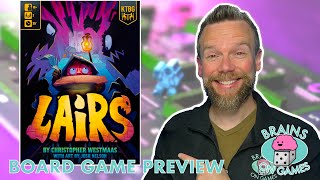




















Leaders box art

Leaders

Game ID: GID0188189
Collection Status
Description

What is the secret of this kingdom, where peace has reigned for thousands of years?
Every spring, aspiring rulers recruit four allies and face off in unusual duels. No armies, no blood: the first to capture their rival wins.
Your time has come... tactical thinking, daring, and
strategy will distinguish the true Leaders!

Create a team of unique Champions in order to defeat the opposing Leader! To win, either position two of your champions next to your opponent’s Leader to capture them, or skillfully maneuver so the opponent’s Leader is surrounded, leaving no adjacent empty spaces.

—description from the publisher

Year Published
2025
Transcript Analysis
Browse transcript mentions, sentiments, pros/cons, mechanics, topics, quotes, and references.
Total mentions: 16
This page: 16
Sentiment: pos 16 · mix 0 · neu 0 · neg 0
Mentions per page
Top
Showing 1–16 of 16
Video 3f0JG6LMgoo Dice Tower game_review at 0:19 sentiment: positive
video_pk 62715 · mention_pk 155414
Dice Tower - Leaders video thumbnail
Click to watch at 0:19 · YouTube ↗
Overall sentiment (raw)
positive
Pros
  • Great art and production
  • Easy to understand cube-action system with flexible options
  • Unique two-player dungeon-building experience
  • Fast play time (~30-45 minutes)
  • Backtracking/peering mechanics add tension
  • Deluxe edition with extensive adventure content
Cons
  • Base box may not include enough sheets; needs expansion to be really complete
  • Adventure add-ons significantly increase complexity and length
  • Potentially too complex for casual purchasers if all options are included
Thematic elements
  • Dungeon exploration with traps, monsters, and treasure
  • Dungeon-building duel where each player constructs a dungeon and the other traverses it
  • Procedural, puzzle-driven, player-directed exploration
Comparison games
  • Hero Quest
Mechanics (from transcript analysis)
  • Backtrack via circles — Move from one circle to another through known routes, enabling quick retreat
  • Combat Dice — Dice: values 1-4; you spend dice to roll against monsters or traps
  • Combat: Dice — Encounter traps/monsters and decide to disarm or fight; disarming/trapping uses dice
  • conserve — Save a cube on the board to spend later; allows future turns to use saved cubes
  • Disarm traps and combat monsters — Roll dice by spending dice; match numbers to beat a monster or disarm a trap
  • Exit-dungeon scoring — Reach exit with required treasures/monsters to escape and score based on monsters/treasures
  • Hustle — Spend two cubes (same color) to move twice; or spend a yellow cube to move three times
  • Move-cube action economy (creep) — Spend cubes to move one space within the dungeon, limited by walls and what the opponent reveals
  • Peering — Spend green cube or two of any to look into an adjacent spot; opponent reveals contents
  • set collection — Treasure chests are drawn; each chest provides treasure tokens and points
  • Traps and monsters — Encounter traps/monsters and decide to disarm or fight; disarming/trapping uses dice
  • Treasure collection — Treasure chests are drawn; each chest provides treasure tokens and points
Video topics + discussion points
No key topics recorded for this video.
Quotes (from this video)
  • This is a two-player game in which one person makes a dungeon or each each player makes a dungeon and the other player is going through it.
  • The idea of moving the cubes is pretty basic if you're a gamer, but it's a completely mindblowing concept if you've never seen it before.
  • Kids Sable Board Games always has great art. They have great production values.
  • It's a good 30 45minute game.
  • The longest part is creating your dungeon and giggling.
  • This is an experience.
  • So, I give this game a seven.
  • My son wants you to know that it's an actual eight.
  • I think it's easy to recommend.
References (from this video)
No references stored for this video.
Video nGbRlfQLx8s Game Night playthrough at 0:54 sentiment: positive
video_pk 62710 · mention_pk 155412
Game Night - Leaders video thumbnail
Click to watch at 0:54 · YouTube ↗
Overall sentiment (raw)
positive
Pros
  • Engaging combination of dungeon-building and exploration
  • Supports four players when using two copies, increasing group play value
  • Clear, memorable core mechanics (peering, backtracking, hustling, cube management)
  • Appealing expansion options and accessory enhancements
Cons
  • Rule complexity can be intimidating for newcomers, especially with four players
  • Dice-based combat introduces luck which may affect perceived fairness
  • Longer playtime with more players may require more setup and coordination
Thematic elements
  • dungeon-crawling strategy with puzzle-like path design and competitive co-op elements
  • Dungeon-building and dungeon-exploration with two phases: build for your opponent, then explore the built dungeon.
  • procedural, player-driven narrative through dungeon layouts
Comparison games
none
Mechanics (from transcript analysis)
  • Cube management system — Each player uses four cubes (green perception, yellow energize, etc.) to perform actions like moving, creeping, backtracking, and saving cubes for later turns. Fatigue mechanics reduce cube freshness over time.
  • Cube tower — Each player uses four cubes (green perception, yellow energize, etc.) to perform actions like moving, creeping, backtracking, and saving cubes for later turns. Fatigue mechanics reduce cube freshness over time.
  • Dungeon Crawl — Phase one has players build a dungeon for another player; phase two involves exploring the built dungeon with known rules about paths, traps, monsters, and exits.
  • Dungeon exploration and mapping — Players reveal walls and features as they explore; known spaces are circled; the dungeon master narrates contents and walls during exploration.
  • End-game and exit rules — Exiting yields points; first exit yields more points; later exits yield fewer; scoring also includes monsters defeated and traps disarmed, with expansion cards providing additional scoring opportunities.
  • Hazards and combat — Monsters and traps occupy spaces; entering triggers combat or requires disarm/avoidance using dice and cube spending.
  • Movement options — Creep (move one space), hustle (up to three spaces), backtrack (move across known spaces), and peering (look into a space before entering).
  • Movement points — Creep (move one space), hustle (up to three spaces), backtrack (move across known spaces), and peering (look into a space before entering).
  • Multi-phase dungeon construction — Phase one has players build a dungeon for another player; phase two involves exploring the built dungeon with known rules about paths, traps, monsters, and exits.
  • Phase two play rhythm — Phase two has players traversing each other’s dungeons, with map-drawing and symbol-coding to track what is discovered.
  • Treasure and scoring — Treasures have front/back scoring; players select which front-side scores, planning around market options and end-game scoring rules.
Video topics + discussion points
No key topics recorded for this video.
Quotes (from this video)
  • This is for two players, but if you have two copies, you can play at four.
  • Hustle is moving two cubes or the energized yellow cube.
  • Peering is a way to see a monster or grease pit and not get immediately hit.
  • You must be able to get a path that does not have two monsters or two traps.
References (from this video)
No references stored for this video.
Video 29I_3YgZTPk Unknown game_preview at 0:00 sentiment: positive
video_pk 62158 · mention_pk 154683
Unknown - Leaders video thumbnail
Click to watch at 0:00 · YouTube ↗
Overall sentiment (raw)
positive
Pros
  • Innovative two-player puzzle where you design the other's challenge
  • Beautiful 3D board and walls; strong artwork
  • Extendable and non-destructive components; upgrade potential
  • Clear path to future expansions and upgrades
Cons
  • Learning curve to grasp the placement rules and constraints
  • Base game is two-player; multiplayer requires expansions
  • Prototype state may change before final release
Thematic elements
  • Exploration, treasure collection, and tactical blocking with a modular dungeon layout
  • Two-player dungeon-building duel where players design a dungeon layer on their own board that the opponent traverses to reach treasure and the exit.
  • Abstract procedural puzzle with physical components
Comparison games
none
Mechanics (from transcript analysis)
  • Action cubes — Players spend action cubes to perform moves or actions; some actions are single cube, some require more.
  • Asymmetric traversal — One player traverses the opponent's built layer to reach treasures and the exit.
  • Layer building — Players place walls, traps, and monsters to create a dungeon layer on their board.
  • Layer/dungeon construction — Players place walls, traps, and monsters to create a dungeon layer on their board.
  • Non-destructive extendability — Prototype components can be removed and reconfigured; future Kickstarter expansions add more content without breaking components.
  • Shortest-path constraint — The shortest route between start, treasures, and exit cannot contain more than two traps or monsters.
  • Treasure collection and synergy — Treasure cards provide private and public bonuses that interact to affect final scoring.
Video topics + discussion points
No key topics recorded for this video.
Quotes (from this video)
  • I'm really excited to see the final product
  • this game is extendable in a non-destructive way
  • you can reset the game
References (from this video)
No references stored for this video.
Video qNgDQSk48xA ktbg playthrough at 0:33 sentiment: positive
video_pk 62159 · mention_pk 154684
ktbg - Leaders video thumbnail
Click to watch at 0:33 · YouTube ↗
Overall sentiment (raw)
positive
Pros
  • Teaches dungeon-building and movement mechanics clearly
  • Promotes strategic planning around treasures and routes
  • Expandable with Kickstarter components
Cons
  • Complex rules with many mechanics to track
  • Scoring requires set-collection strategy and endgame decisions
Thematic elements
  • Exploration, treasure collection, and tactical dungeon design
  • Dungeon crawling with modular, layered dungeon design
  • Procedural, instructional
Comparison games
  • Battleship
Mechanics (from transcript analysis)
  • Cube tower — Cubes progress from fresh to fatigue to spent; conserving cubes yields extra turns.
  • Disarming traps — Disarm traps by rolling a required value (five) using dice, often spending cubes to roll.
  • Dungeon Crawl — Players construct a dungeon with walls, rooms, treasures, monsters, and traps within constraints.
  • Dungeon layout building — Players construct a dungeon with walls, rooms, treasures, monsters, and traps within constraints.
  • Exploration vs exit — Players balance exploring for treasures/monsters against exiting to score points.
  • Fatigue and cube management — Cubes progress from fresh to fatigue to spent; conserving cubes yields extra turns.
  • Movement and action points — Movement is by spending cubes, with actions creep, hustle, backtrack, backtrack to circled spaces, and look-ahead (peer).
  • Set collection and synergy scoring — Some treasures grant bonuses when combined with other specific treasure types (e.g., Harmony items, statues, books).
  • Shortest route rule — The shortest route to a goal can only have at most one trap and one monster, guiding dungeon design.
  • Traps and monsters fatigue — Being hit by traps/monsters fatigues cubes; fatigue pushes fresh cubes to fatigue and reduces available actions.
  • Treasures and scoring — Treasure cards grant points with potential synergies; endgame set collection affects scoring.
  • Turn order and scoring endgame — Players alternate crawling; when one exits, others get one more turn, then scores are tallied.
Video topics + discussion points
No key topics recorded for this video.
Quotes (from this video)
  • this is a Dungeon Crawler game that's fully expandable
  • the shortest route to any one of the goals which is the treasures and the exit can only have one trap and one monster
  • it's kind of like Battleship where we've got a grid on a map
  • we hide our dungeons up here
  • that's how you build your dungeon
References (from this video)
No references stored for this video.
Video 4abdDaKHvP4 Where There's a Will as There's a Play top_10_list at 11:42 sentiment: positive
video_pk 62375 · mention_pk 154909
Where There's a Will as There's a Play - Leaders video thumbnail
Click to watch at 11:42 · YouTube ↗
Overall sentiment (raw)
positive
Pros
  • tight two-player experience with direct interaction
  • familiar, approachable theme from a known designer/publisher
Cons
none
Thematic elements
  • directing opponents through a dungeon layer
  • Two-player head-to-head dungeon exploration
  • competitive dungeon-crawl with focus on pathing
Comparison games
none
Mechanics (from transcript analysis)
  • Dungeon Crawl — players build and traverse a layered dungeon to reach objectives
  • dungeon-layer progression — players build and traverse a layered dungeon to reach objectives
  • head-to-head competition — players direct and challenge their opponent as they navigate a dungeon layer
Video topics + discussion points
No key topics recorded for this video.
Quotes (from this video)
  • The fate of creatures touched by the spark of intelligence hangs in the balance
  • This is a flip and roll and scratch and stamp and whatever else you want to do and write
  • open world Cooperative Adventure game even for solo
  • windmill valley was a big hit for me Solo in 2024
  • you start as a child and as such you will have limited sense of interest and skills that will determine your development
References (from this video)
No references stored for this video.
Video tDW2a0FaqeA Let's table it game_review at 0:02 sentiment: positive
video_pk 61850 · mention_pk 154495
Let's table it - Leaders video thumbnail
Click to watch at 0:02 · YouTube ↗
Overall sentiment (raw)
positive
Pros
  • Fun build and exploration phases
  • High-quality components that enhance gameplay
  • Rule expansions add variety without punishing pace
  • Two-player friendly and accessible
Cons
  • Setup can be fiddly and potentially confusing
  • Two-player only (no official 2+ player mode) may limit group play
Thematic elements
  • Competitive dungeon exploration with layer-building and traps
  • Two-player dungeon-lair building and exploration
  • Abstract/strategic with modular rule additions via boxes
Comparison games
none
Mechanics (from transcript analysis)
  • Action cubes as a control/determination mechanism — Action cubes are used to set Explorer to search and other actions.
  • Cube tower — Action cubes are used to set Explorer to search and other actions.
  • Exploration phase — Explorer moves into the opponent's layer to defeat monsters and loot treasure.
  • Layer building — Players arrange treasure chests, monsters, traps, and walls to create a personalized dungeon layer.
  • Layer-building/board setup — Players arrange treasure chests, monsters, traps, and walls to create a personalized dungeon layer.
  • Resource/score based on treasure, monsters defeated, and escapes — Points awarded for treasure collected, defeating monsters, and escaping the layer.
  • Rule expansion via boxes/envelopes — Open boxes and envelopes mid-game to add new rules and elements.
Video topics + discussion points
No key topics recorded for this video.
Quotes (from this video)
  • layers shines because not only is it a blast to build your layer to try to outwit your opponent but the exploration phase is just as fun
  • There were so many times when we could have left the layer and ended the game but we just wanted to keep exploring
  • I love that Layers starts you off with a simplified version of the game but then you get to open boxes and envelopes to add new rules and elements to the game
  • The monsters and traps don't feel so punishing that when you land on one it feels like you lost the game yes they can slow you down but it isn't insurmountable
  • I've had a blast with layers and after watching Drew and I play a game our 8-year-old was ready to play too
References (from this video)
No references stored for this video.
Video Ssfgw4cY7T0 top_10_list at 0:05 sentiment: positive
video_pk 61960 · mention_pk 154573
Leaders video thumbnail
Click to watch at 0:05 · YouTube ↗
Overall sentiment (raw)
positive
Pros
  • Tile placement concept mentioned as a cool mechanic
  • Leaves motif described as appealing
Cons
  • Publisher/designer not identified
  • Limited detail in transcript
Thematic elements
  • tile placement with leaf motif
Comparison games
none
Mechanics (from transcript analysis)
  • unknown — Not detailed in transcript; brief mention of tile placement and leaves
Video topics + discussion points
No key topics recorded for this video.
Quotes (from this video)
  • five games that you should come and play
  • this is tile placement with tips of the leaves
  • I need someone to come play it with me
  • you would think that those cool little wooden sculptures in the game would make them want to play with me but who knows
  • bloodstones I think when I mentioned that it is a war game no one is going to go and play a war game with me
  • all right guildies of Valeria I think there might be maybe a little bit too much for them in this
References (from this video)
No references stored for this video.
Video ghq8nMUARfc Board Game Co. game_review at 0:00 sentiment: positive
video_pk 36559 · mention_pk 109710
Board Game Co. - Leaders video thumbnail
Click to watch at 0:00 · YouTube ↗
Overall sentiment (raw)
positive
Pros
  • Simplicity and ease of teaching
  • Beautiful components and packaging
  • Budget-friendly with solid tactical depth
  • Interesting character drafting mechanic that drives strategic variability
  • Fast-paced sessions with small board and quick setup
Cons
  • Some characters are less fun to play than others
  • Perceived balance depends on draft luck and composition
  • Endgame can sometimes feel like being boxed in or attrition-heavy
  • Balancing may be difficult to discuss due to asymmetry and luck of the draw
Thematic elements
  • dueling generals with asymmetric unit powers
  • A compact arena where two leaders command an army of drafting characters to outmaneuver and capture the opponent's leader.
  • abstract tactical
Comparison games
  • Mythic Mischief
  • War Chest
  • Azur
Mechanics (from transcript analysis)
  • Activation of characters — On your turn, you can activate your characters (any order) to perform actions.
  • asymmetric character abilities — Each character has unique abilities that interact in combos (e.g., Archer can capture from two spaces away).
  • asymmetric player powers — Each character has unique abilities that interact in combos (e.g., Archer can capture from two spaces away).
  • Character drafting and roster management — On each turn, draft a new character to your roster up to a maximum of five total including the leader.
  • End-of-turn draft restriction — When you reach five characters, you stop drafting.
  • Leader movement — Leader moves one space per action.
  • Spawn zones and deployment — Drafted characters are deployed into spawn zones on the board.
  • Special units and examples — Examples include Archer, Rider, Hermit, Cub, Protector, Manipulator with distinct effects.
  • Win condition via adjacent contact — You win by having two of your characters touching the opponent's leader.
Video topics + discussion points
No key topics recorded for this video.
Quotes (from this video)
  • The simplicity of the game is a big part of it for me.
  • It's incredibly easy to teach.
  • This is an accessible, strategic, variable, abstract strategy game.
  • I love this game.
  • I think it knocks it out of the park.
  • I'm going to give it a 4.5 out of five.
References (from this video)
No references stored for this video.
Video 8hamKMqgvYw The Dice Tower top_10_list at 10:01 sentiment: positive
video_pk 36036 · mention_pk 107906
The Dice Tower - Leaders video thumbnail
Click to watch at 10:01 · YouTube ↗
Overall sentiment (raw)
positive
Pros
  • fast, fun two-player abstract
  • cool art and components
Cons
none
Thematic elements
  • Drafting diverse piece abilities to outmaneuver the opponent
  • Two-player abstract, leader-vs-leader confrontation
  • Compact, tactical duel
Comparison games
none
Mechanics (from transcript analysis)
  • drafting from a side pool — You draft up to five pieces with unique abilities
  • short playtime with drafting tension — 15- to 20-minute duels with back-and-forth play
  • variable piece abilities — Each piece has a different movement or action ability
Video topics + discussion points
No key topics recorded for this video.
Quotes (from this video)
  • I really like this.
  • It's just a fantastic game.
  • The artwork from Vincent Drey does not hurt the matters at all. It's a nice small package.
  • This is a cooperative, hilarious, fun adventure that's unlike most games that are out there.
  • It's almost a role playing game.
  • This is not a silly little game. It looks kind of silly on the front of it, but I found it to be very fun.
  • There's a wheel of cards in the middle. Trying to refill those cards at a critical point is a pretty big deal.
  • Recall definitely feels like a cousin of Revive.
  • it's a back and forth nailbiter.
References (from this video)
No references stored for this video.
Video 2G0JfeqpaRY Chairman of the Board top_10_list at 19:41 sentiment: positive
video_pk 12118 · mention_pk 35470
Chairman of the Board - Leaders video thumbnail
Click to watch at 19:41 · YouTube ↗
Overall sentiment (raw)
positive
Pros
  • dynamic, exciting feeling
  • great variability from different character powers
  • low-stress, fast-paced with high payoff
Cons
  • two-player only
  • potential for stalemate if misplayed
Thematic elements
  • Two-player abstract strategy
  • dynamic
Comparison games
none
Mechanics (from transcript analysis)
  • drafting — Draft a character onto your side and assemble a team to threaten the opponent's leader.
  • drafting / team building — Draft a character onto your side and assemble a team to threaten the opponent's leader.
  • Unique player powers — Characters grant unique powers that affect movement or capture options.
  • Variable Powers — Characters grant unique powers that affect movement or capture options.
Video topics + discussion points
No key topics recorded for this video.
Quotes (from this video)
  • I hate trick taking. I don't like it at all.
  • this is one of the only occasions where my pure disliking of the game brings it down rather than the actual quality of the design.
  • I did not like this game at all, so I was quite shocked why his name was on the box because I thought it was a pretty bad design.
  • It's extremely tactical. And not only that, it seems like the first half of the game, you're just kind of doing things for the sake of it because you do not know how these cues are going to work out.
References (from this video)
No references stored for this video.
Video qK7L05NqZ2k Rolling Dice and Taking Names game_review at 1:31:34 sentiment: positive
video_pk 12105 · mention_pk 35447
Rolling Dice and Taking Names - Leaders video thumbnail
Click to watch at 1:31:34 · YouTube ↗
Overall sentiment (raw)
positive
Pros
  • Fast, elegant two-player abstract with strong drafting and counterplay
  • High replayability through varied champion abilities and drafting order
  • Excellent production quality and clever storage integration
Cons
  • Iconography can be tiny and text on dark cards hard to read
  • Some players may wish for greater thematic depth beyond abstract duel
Thematic elements
  • Area-control via drafting and positioning of champions with unique abilities
  • Two-player abstract strategy arena with leaders and champions
  • Tight, fast, chess-like duel
Comparison games
none
Mechanics (from transcript analysis)
  • character abilities — Each champion has a unique ability influencing movement or combat outcomes.
  • Drafting and optional banishment — Players draft champions; in advanced mode you can banish counterplay to opponent’s picks.
  • Movement and capture — Move units across a hex grid; capture the opponent’s leader by surrounding with champions.
  • Storage-free setup and compact footprint — Nice standees and a drawer-style storage solution for components.
  • Two-player duel format — Quick, approachable combat that scales around a 15-minute playtime.
Video topics + discussion points
No key topics recorded for this video.
Quotes (from this video)
  • The map is absolutely gorgeous. The production value is topnotch.
  • The theme was great, and I'm a huge Lord of the Rings fan.
  • This is a long game, but the depth and strategy are there.
  • Wonders Museum moves quick; it's a 15-20 minute game with surprising engine-building depth.
References (from this video)
No references stored for this video.
Video Ppx_PasmxgQ Unknown Channel general_discussion at 3:11 sentiment: positive
video_pk 4876 · mention_pk 14492
Unknown Channel - Leaders video thumbnail
Click to watch at 3:11 · YouTube ↗
Overall sentiment (raw)
positive
Pros
  • outstanding component quality
  • beautiful wooden stands
  • sturdy presentation and value (~20 quid)
Cons
none
Thematic elements
Comparison games
  • Biblios
  • Captain Flip
Mechanics (from transcript analysis)
Mechanics unknown.
Video topics + discussion points
No key topics recorded for this video.
Quotes (from this video)
  • the stench of BO was everywhere
  • The finish on it was quite smooth
  • absolute [__] bargain
  • I absolutely love this game
  • looked absolutely stunning
  • this game sort of sucked
References (from this video)
No references stored for this video.
Video QiTN-mSwOHA Chairman of the Board general_discussion at 5:07 sentiment: positive
video_pk 4774 · mention_pk 13975
Chairman of the Board - Leaders video thumbnail
Click to watch at 5:07 · YouTube ↗
Overall sentiment (raw)
positive
Pros
  • evolving board with new pieces keeps tension
Cons
none
Thematic elements
  • abstract two-player battle
  • abstract/strategy
Comparison games
none
Mechanics (from transcript analysis)
  • drip-fed piece deployment — new pieces enter the board gradually, each with unique powers
Video topics + discussion points
No key topics recorded for this video.
Quotes (from this video)
  • I really like Feld's AA line of games much more than the Queen collection
  • this is a new Feld design, not a reworking or anything like that
  • two-player only kind of cat and mouse bluffing game
  • I'm quietly optimistic about Mindbug
  • roll and write, OG roll and write
  • I don't like tricktaking
References (from this video)
No references stored for this video.
Video h0d1fZ9jg68 The Broken Meeple game_review at 2:17 sentiment: positive
video_pk 3520 · mention_pk 146712
The Broken Meeple - Leaders video thumbnail
Click to watch at 2:17 · YouTube ↗
Overall sentiment (raw)
positive
Pros
  • Adds depth and variety to Seven Wonders by opening new strategic paths
  • Guides newcomers more than base set drafting
  • Encourages veterans to explore new combinations and synergies
  • Enriches end-game planning with leader-based bonuses and interaction
Cons
  • Increased iconography and reference material = learning curve
  • More setup and tracking complexity
Thematic elements
  • Leadership, governance, and layered strategic options
  • Ancient civilizations and historical figures influencing early game choices
  • Guided drafting of powerful leaders to steer early and mid-game strategy
Comparison games
  • Base Seven Wonders
  • Edifice
  • Other expansions
Mechanics (from transcript analysis)
  • Leader costs and activation — Leaders have varying costs and requirements that alter early-game choices.
  • Leader drafting at game start — Each player drafts four leaders before the start of each age, shaping your deck in meaningful ways.
  • Multi-use cards — Leaders can be used as normal cards, integrated into the standard drafting, or sold for coins.
  • Optional use with existing cards — Leaders can be used as normal cards, integrated into the standard drafting, or sold for coins.
  • Path-driven strategy — Leaders steer player strategy toward specific trajectories (e.g., military, science, culture).
Video topics + discussion points
No key topics recorded for this video.
Quotes (from this video)
  • "Leaders is definitely the one that I actually consider to be pretty much essential for this game"
  • "This is a 10 out of 10 expansion for me"
  • "my favorite by a long shot are two-fold actually one of them is the contingent which gives you 5 shields for military at once"
  • "Armada for me is kind of the expansion that I use if people aren't keen on leaders and cities"
  • "Armada has the most set up and teach capability"
References (from this video)
No references stored for this video.
Video Oa1DT58hxgg Board Gameco general_discussion at 6:41 sentiment: positive
video_pk 3303 · mention_pk 9779
Board Gameco - Leaders video thumbnail
Click to watch at 6:41 · YouTube ↗
Overall sentiment (raw)
positive
Pros
  • Strong two-player dynamics
  • Distinct from other lane/battle hybrids
Cons
  • Played a lot (10–15 plays), which tempered the initial excitement
Thematic elements
  • duel-style military strategy with asymmetric powers
  • two-player asymmetric army-building
Comparison games
  • Airline and Sea
  • Hanamikoji
  • Hanamikoji2
Mechanics (from transcript analysis)
  • asymmetric armies — Each player has unique abilities and pathways to victory.
  • Two-player interaction — Direct competition with tight scoring and tension.
Video topics + discussion points
No key topics recorded for this video.
Quotes (from this video)
  • Kuruka is absolutely fantastic.
  • Barcelona is being added. I really enjoyed it and want more plays.
  • Leaders is replacing Pillars of Fate. Pillars of Fate is my favorite from the Fate series, but Leaders offers a different two-player experience.
  • Recall is subject to more plays. The review still hasn't gone up.
  • Galactic Cruise is great, but I feel a little guided by what the game asks you to do.
References (from this video)
No references stored for this video.
Video PBmAvMbJLCU Watch It Played top_10_list at 1:12 sentiment: positive
video_pk 880 · mention_pk 2515
Watch It Played - Leaders video thumbnail
Click to watch at 1:12 · YouTube ↗
Overall sentiment (raw)
positive
Pros
  • Engaging drafting phase
  • Layered planning between duels and empire-building
Cons
none
Thematic elements
  • Diplomatic duel and royal succession
  • Fantasy kingdom with a unique dueling tradition
  • Tense, ceremonial politics with an aim to become ruler
Comparison games
none
Mechanics (from transcript analysis)
  • Drafting and unique abilities — Players draft champions with individual abilities to strengthen a kingdom’s arsenal.
  • Duel-timing objective — First to capture or surround the opponent’s leader wins; empire-building follows peace.
Video topics + discussion points
No key topics recorded for this video.
Quotes (from this video)
  • Simultaneous card selection leads to a tense, bluff-rich face-off.
  • Be the first to capture or surround the opposing leader, then ascend to the throne.
  • The landscape is varied, weaving between cities, requiring empire architects to employ various modes of transport to score points.
  • Two to five players attempt to make the most savory snacks by playing out ingredient cards to satisfy orders.
References (from this video)
No references stored for this video.
Transcript Navigation
Top
Showing 1–16 of 16
View on BoardGameGeek