

































Collection Status
Your Rating
Description
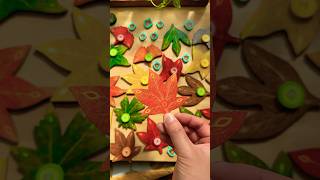
In the game Leaf, players embody the wind by guiding leaves to the forest floor and connecting them to the ones that have already fallen. Each leaf you touch will grant you actions to create a thriving forest. Attract woodland animals, grow mushrooms, lead helpful squirrels up the great tree, and gain additional leaf cards and sun tokens by strategically placing leaves. The player who contributes most to the health of the forest wins!
—description from the designer
Year Published
2023
Featured Videos
Review
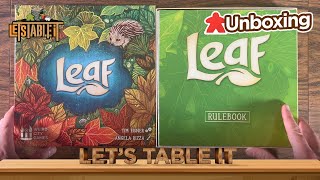
Leaf Unboxing
Transcript Analysis
Browse transcript mentions, sentiments, pros/cons, mechanics, topics, quotes, and references.
Total mentions: 10
This page: 10
Sentiment:
pos 8 ·
mix 0 ·
neu 1 ·
neg 0
Showing 1–10 of 10
Video y0e3A0p_Qwg
Game Night playthrough at 0:45 sentiment: positive
video_pk 62662 · mention_pk 155362
Click to watch at 0:45 · YouTube ↗
Overall sentiment (raw)
positive
Pros
- Engaging, swingy decisions that reward careful timing and risk assessment
- Strong theme integration with humorous bakery workplace premise
- Clear, tense endgame with meaningful player choices and interaction
- Expandable content adds more order cards and endgame scoring variety
Cons
- Rules and scoring can be intricate; there are many interacting parts that require careful learning
- Team dynamics can feel ruthless or sabotaging, which may be off-putting for some players
- Endgame scoring and tie-break rules can become complex and require attention to detail
Thematic elements
- Array
- Bakery workplace
- Casual, humorous banter
Comparison games
none
Mechanics (from transcript analysis)
- Boss review cards (happy vs disappointed) — After an order, a review card is drawn that can either benefit or penalize players and triggers card discard/return interactions.
- Card discard and manipulation interactions — Several card interactions allow players to discard from hand or manipulate another player's discard, creating strategic tension.
- Compound Scoring — Players contribute cards to meet a target order value; totals are compared to the goal to determine success.
- deck manipulation — Several card interactions allow players to discard from hand or manipulate another player's discard, creating strategic tension.
- end game bonuses — At game end, remaining work cards and reputation bonuses determine final scores; endgame bonuses may apply from review cards.
- Endgame scoring with remaining cards and reputation — At game end, remaining work cards and reputation bonuses determine final scores; endgame bonuses may apply from review cards.
- Endgame tie-break rules — If there is a tie, the lowest reputation wins; if still tied, it's a shared win.
- Expansion and variant components (double-sided cards, endgame modifiers) — There are expansions with additional orders and reviews that modify endgame scoring and add new card effects.
- Goal-based scoring round (order goals) — Players contribute cards to meet a target order value; totals are compared to the goal to determine success.
- hand management — Players manage a hand of cards (values 0–11) and discard or keep them for endgame considerations.
- Reputation track with positive/negative values — A reputation track moves up and down; reaching extremes triggers firing or endgame scoring modifiers.
- Simultaneous action selection — All players secretly choose a card from their hand to play; cards are revealed simultaneously.
- Simultaneous Actions — All players secretly choose a card from their hand to play; cards are revealed simultaneously.
- Track advancement — A reputation track moves up and down; reaching extremes triggers firing or endgame scoring modifiers.
Video topics + discussion points
No key topics recorded for this video.
Quotes (from this video)
- the theme of this game is hilarious
- This is such an interesting tricky little game. Like really trying to figure out exactly like when to play your high cards, when to play your low cards.
- Yes, the game works. Amazing.
- It's swingy.
- the theme of the game, which is do just enough, you know
- We did deserve that.
References (from this video)
No references stored for this video.
Video 1pbu-3GDq04
Let's Table It game_review at 0:00 sentiment: positive
video_pk 61992 · mention_pk 154614
Click to watch at 0:00 · YouTube ↗
Overall sentiment (raw)
positive
Pros
- Leaves connect nicely; thoughtful geometry
- High component quality and nice box organization
- Multiple scoring pathways (acorn, mushrooms, seasons)
- Elegant tile-laying puzzle with visual appeal
Cons
- Box setup can be confusing; small components need careful storage
- Some players may run into -3 point penalty if not enough leaves
- Rules can be subtle; setup time may be longer than expected for a light game
Thematic elements
- Seasonal growth, place leaves to maximize scoring
- Autumn forest / seasonal leaf gathering
- Spatial puzzle / tile-laying with color-based actions
Comparison games
none
Mechanics (from transcript analysis)
- Animal cards / den hibernation scoring — Gaining animal cards and choosing winter hibernations for scoring
- color-based actions — Leaf color determines available actions (green/orange/brown/yellow/red)
- Compound Scoring — Mushrooms grow and score; acorns are earned and tallied
- Mushroom and acorn scoring — Mushrooms grow and score; acorns are earned and tallied
- Resource conversion — Leaves and tokens exchange into points at end
- Season track / Sun tokens — Earn Sun tokens to advance the season track
- tile placement — Place leaf tiles to connect tips and gain bonuses
- Tile/leaf placement — Place leaf tiles to connect tips and gain bonuses
Video topics + discussion points
No key topics recorded for this video.
Quotes (from this video)
- the best thing I've seen in this game is just how the leaves connect with each other
- Ultimately the game is a simple tile laying game of leaves that activate actions depending on its color
- the quality of the tiles are good
- Tim's geometry skills are on par
References (from this video)
No references stored for this video.
Video OmUiRJTohH0
Let's Table It top_10_list at 1:18
video_pk 61975 · mention_pk 154592
Click to watch at 1:18 · YouTube ↗
Pros
none
Cons
none
Thematic elements
- Array
- Array
- Nature and leaves forming a forest floor through tile placement
- Array
- Forest floor tile-laying
- Array
- Array
- Array
- positive
Comparison games
none
Mechanics (from transcript analysis)
Mechanics unknown.
Video topics + discussion points
No key topics recorded for this video.
Quotes (from this video)
- geometry in the game is amazing
- oh so so good
- it's such a beautiful game
References (from this video)
No references stored for this video.
Video XbQlTPkVJp0
Unknown Channel rules teach at 0:00 sentiment: positive
video_pk 50899 · mention_pk 139813
Click to watch at 0:00 · YouTube ↗
Overall sentiment (raw)
positive
Pros
- Engaging leaf-placement puzzles that reward forward-thinking setup and pattern recognition
- Beautiful, tactile components (wooden leaves) and a welcoming aesthetic that appeals to families
- Accessible to a broad audience while offering meaningful decisions for casual and hobby gamers
- Clear micro- and macro-mechanics that provide satisfying interdependencies and synergy
- Strong thematic coherence between leaf shapes, colors, and the actions they trigger
Cons
- Rules and interactions can be subtle; new players may need a guided introduction to fully grasp color-touch mechanics
- Initial setup and the visual state can feel busy or chaotic, potentially intimidating for first-time players
Thematic elements
- Pattern-building and resource management through leaf-placement; nature-inspired visuals and whimsical, family-friendly interactions that reward thoughtful placement and foresight.
- A forest canopy and a flat leaf field laid out on a tree-inspired play surface, featuring colorful leaf cards, mushrooms, animals, and squirrels as part of the scoring ecosystem. The environment emphasizes a whimsical, nature-forward aesthetic where leaves become both artwork and strategy tokens.
- Abstract, whimsical, and lightly narrative; emphasis on puzzle-like decision-making rather than a single linear story.
Comparison games
none
Mechanics (from transcript analysis)
- Color-adjacency action triggering — The color of leaf tips that touch other leaves or board elements designates which actions are activated (e.g., collecting mushrooms, drawing animal cards, or moving tokens). This creates a rich layer of interaction where subtle placements shift strategy mid-game.
- Combo-driven scoring — Strategic leaf placements create scoring combos, where chaining patterns yields higher points and unlocks additional actions, encouraging players to anticipate future placements.
- Compound Scoring — Strategic leaf placements create scoring combos, where chaining patterns yields higher points and unlocks additional actions, encouraging players to anticipate future placements.
- Leaf placement / pattern-building — Players place leaf-shaped cards on a field so that touching tips (and sometimes colors) determine which actions become available. The arrangement itself becomes the central puzzle, with evolving opportunities as more leaves are placed.
- Resource growth (mushrooms) — Certain actions can cultivate mushrooms, potentially growing smaller mushrooms into larger mushrooms, providing a tangible resource that interacts with scoring and other mechanics.
- Resource management — Certain actions can cultivate mushrooms, potentially growing smaller mushrooms into larger mushrooms, providing a tangible resource that interacts with scoring and other mechanics.
- set collection — Actions may involve collecting animal cards, introducing a set-collection element that rewards tracking specific card types and sequences as the field evolves.
- set collection / animal cards — Actions may involve collecting animal cards, introducing a set-collection element that rewards tracking specific card types and sequences as the field evolves.
- Token movement along a tree — Squirrels are moved along a vertical tree track, adding a spatial progression mechanic that influences end-game scoring and strategic positioning.
- Track advancement — Squirrels are moved along a vertical tree track, adding a spatial progression mechanic that influences end-game scoring and strategic positioning.
Video topics + discussion points
No key topics recorded for this video.
Quotes (from this video)
- it's in disarray there's actually a huge sense of organization that goes into these Leaf shapes the tip of every leaf
- you place your leaves depending on what color leaves your tips actually touch
- will determine what actions you take
- it might be growing smaller mushrooms into bigger mushrooms
- it might be collecting animal cards or moving these squirrels
- up this really flat tree it's a game
- about collecting different points and
- generating combos based on how you place
- the leaves out in this little scattered
- Leaf field connect more points get more
- actions and you'll discover some
- interesting cool synergies like this
- wooden Leaf it's a beautiful family
- weight game where there's a lot of
- puzzlin to it and I love it
References (from this video)
No references stored for this video.
Video wTOX4TumgBw
Unknown Channel general_discussion at 2:29 sentiment: neutral
video_pk 10991 · mention_pk 104483
Click to watch at 2:29 · YouTube ↗
Overall sentiment (raw)
neutral
Pros
- Engaging long-term campaign potential
Cons
- Awaiting players to grow into the experience
- Limited availability/no long-term play planned
Thematic elements
- Continuation of a legacy gaming approach
- Legacy-style campaign experience; evolving narrative across sessions
- Story-driven, evolving campaign
Comparison games
- Betrayal at House on the Hill
Mechanics (from transcript analysis)
- Campaign progression — content evolves with player choices over time
Video topics + discussion points
No key topics recorded for this video.
Quotes (from this video)
- it's a two-player
- it's a very popular game you know it's spawn loads and loads of expansions
- we back the deluxe version with the big box and all the scenarios in there
- it's a wonderful going we have done our unboxing
- it's a deck of cards with all these celebrities and superhero characters all just different types of people
- times up right so we've talked about it almost also but on the showdown this is a surprisingly fantastic party game
References (from this video)
No references stored for this video.
Video DxHuai-94pY
John Gets Games general_discussion at 48:30 sentiment: positive
video_pk 9018 · mention_pk 26625
Click to watch at 48:30 · YouTube ↗
Overall sentiment (raw)
positive
Pros
- strong visual appeal and emergent forest-floor patterns
Cons
none
Thematic elements
- aesthetic leaf placement with connections
- forest floor leaf ecosystem
Comparison games
none
Mechanics (from transcript analysis)
- leaf tile placement touching mechanics — tiles representing leaves with touch-based benefits
Video topics + discussion points
No key topics recorded for this video.
Quotes (from this video)
- I'm actually going to split this into two parts today.
- I'm going through the board game geek Pages for each one of them in alphabetical order.
- I think it's time to start talking about these games.
References (from this video)
No references stored for this video.
Video q2S--act-9A
Gaming with Edo game_review at 0:50 sentiment: positive
video_pk 8290 · mention_pk 24311
Click to watch at 0:50 · YouTube ↗
Overall sentiment (raw)
positive
Pros
- Beautiful aesthetic and production design; eco-friendly packaging
- Innovative leaf-placement creates rich shape-puzzle and scoring decisions
- Diverse scoring options (mushrooms, animals, sun, acorns) and season progression add depth
- Engaging for families and casual players; scalable to different player counts
Cons
- Can take 30-40+ minutes; may feel longer with more players
- Some players may find color-based scoring a bit confusing until explained
- End-game pacing relies on season track timing; planning required
Thematic elements
- Acorn collection, leaf connections, ecosystem interactions
- Forest floor, nature-themed woodland with seasonal progression
- mechanistic puzzle with natural imagery
Comparison games
- Canopy
Mechanics (from transcript analysis)
- area/shape matching — Leaf shapes and their attachment generate unique pattern opportunities and bonuses.
- color-to-effect mapping — The color of the placed leaf is irrelevant for future turns; bonuses come from what it touches.
- leaf placement / pattern building — Place leaf cards to connect with existing leaves and create scoring points via touch points.
- season progression / end-game trigger — Progress through spring, summer, autumn, and winter; end the game when a season track advances.
- set collection / resource interaction — Collect animals, mushrooms, sun tokens, and acorns to maximize scoring opportunities.
- triggered abilities from touches — Each touch point between leaves yields a specific bonus (draw, animal, move, sun, mushroom).
Video topics + discussion points
No key topics recorded for this video.
Quotes (from this video)
- Leaf is super cool and super beautiful.
- The leaf mechanic is fantastic.
- The core experience is driven by playing the leaf and generating as many sort of ability value as you can.
- It's medium, you know it doesn't play in 20 minutes, it plays in 30 or 40 minutes.
- Easy to recommend this is Leaf.
References (from this video)
No references stored for this video.
Video bHfqdwbOkQQ
The Broken Meeple kickstarter_project_roundup at 9:57 sentiment: positive
video_pk 8089 · mention_pk 23783
Click to watch at 9:57 · YouTube ↗
Overall sentiment (raw)
positive
Pros
- Beautiful game with nice wooden components
- Pleasant nature theme
- Colorblind-friendly design with symbols
- Good artwork
- Designed by Tim Eisner who made Canopy
- Solo mode available
- Sustainable focus reducing plastic
- Fair shipping costs
Cons
- Deluxe edition is expensive premium jump
- Complex to explain mechanics
Thematic elements
- Nature-themed game about guiding leaves through seasons
- Forest setting with focus on nature
- Abstract nature simulation
Comparison games
- Canopy
- March of the Ants
Mechanics (from transcript analysis)
- Abstract action selection — Players take actions to guide leads and build meadows
- tile placement — Players place and connect leaf tiles
- Variable player powers — Different animals and abilities affect gameplay
Video topics + discussion points
No key topics recorded for this video.
Quotes (from this video)
- Kickstarter is here to stay whether you like it or not
- I give my honest opinions regardless of whether someone a hero or not
- Just because the creator of pandemics on it doesn't make it an instant hit
- This is the best fantasy based story driven campaign game I've ever played
- The value you get is obnoxious... it's obscene
- Put the how to play Early in the campaign all right not miles at the end
- Board games just aren't worth this kind of money anymore
- I'm not spending 330 on this thing
- Money is tighter the world economy has gone to pot
- Quick turns and simple actions is such a marketing tool line that I can't place any reliance on
References (from this video)
No references stored for this video.
Video iUIz4uHhI3Y
Might I Suggest a Game game_review at 0:05 sentiment: positive
video_pk 4854 · mention_pk 14406
Click to watch at 0:05 · YouTube ↗
Overall sentiment (raw)
positive
Pros
- Engaging tile-placement puzzle that feels like a fresh take on polyomino placement and set-collection mechanics.
- Stunning art direction and thematic forest-floor presentation that enhances immersion.
- Multiple viable paths to scoring, boosting replayability and tactical depth.
- Balanced action economy thanks to hand/state constraints, which simplifies decision-making without dulling options.
- Beautiful end-state visuals and cohesive theme that encourage broader interest in nature.
Cons
- Scoring balance can be hard to predict on initial plays; some actions may feel under- or over-valued early on.
- Endgame can arrive quicker than expected, catching some players off guard if the engine kicks into gear late.
- Some randomness exists in components and draw order; players may need to mitigate luck with experience.
Thematic elements
- Seasonal change, habitat health, and woodland stewardship
- Autumn forest floor, preparing for winter within a forest ecosystem
- eco-themed, nature-inspired, procedural
Comparison games
- Patchwork
- Lanterns
- The Harvest Festival
- Azul
Mechanics (from transcript analysis)
- color_based_actions — Each leaf color provides a unique action; greens draw a new Leaf card, yellows yield Sun tokens, oranges fetch animal cards, browns climb the tree for resources and actions, reds grow mushrooms.
- end_game_scoring — End-game scoring tallies hibernating animals, completed mushroom sets, and Acorn tokens to determine winner.
- leaf_placement — Place five different leaf shapes on the forest floor to create connections and trigger actions.
- mushroom_growth — Red leaves enable mushrooms; adjacent mushrooms can be grown to score Sun tokens and eventual points.
- season_track — Sun tokens advance a season track toward winter, awarding Acorn tokens and points along the way.
- Time track — Sun tokens advance a season track toward winter, awarding Acorn tokens and points along the way.
- tree_bonus — A big tree bonus track grants better rewards as you climb higher, influencing resource gain and actions.
Video topics + discussion points
No key topics recorded for this video.
Quotes (from this video)
- Leaf at its core is a lightweight tiling and set collection game for two to four players that plays at about 20 minutes per player.
- The end state of the game looks like a forest floor in the fall which is incredibly thematic.
- There's certainly multiple paths to victory for this one which for me means lots of tactical decisions and a lot of replayability.
- If you're looking for a light combo finding tile placement game that's easy to pick up but tough to master and looks just as beautiful on the Shelf as it does on the table, Leaf.
References (from this video)
No references stored for this video.
Video XhmK-POafSw
OfPG Voices general_discussion at 12:04 sentiment: positive
video_pk 1783 · mention_pk 5162
Click to watch at 12:04 · YouTube ↗
Overall sentiment (raw)
positive
Pros
- family-friendly weight
- beautiful autumn theme
- engaging yet calming engine-like feel
Cons
- some players may want more depth
Thematic elements
- tile placement and set collection in a fall forest
- forest autumn, tree and leaf growth
- calm, nature-inspired
Comparison games
none
Mechanics (from transcript analysis)
- set collection / resource management — gather acorns, sun tokens, and mushrooms to progress and score.
- set up to end via seasonal markers — season progression and frost/winter endgame trigger.
- tile placement — place leaf tiles to touch tips and maximize actions.
Video topics + discussion points
No key topics recorded for this video.
Quotes (from this video)
- "This game is a banger"
- "it's mainly about The Vibes"
- "I would give this game a nine"
- "the art is adorable"
- "go check it out on BGA"
- "hilarious prompts"
References (from this video)
No references stored for this video.
Transcript Navigation
Showing 1–10 of 10