/pic8391069.jpg)
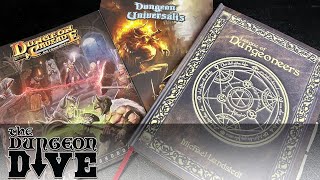
League of Dungeoneers (LoD) is a detailed Dungeon Crawl and party management game. The game is designed to be a solo/coop game but could be played with a game master as well. The main task of the game is to develop your characters both by gaining experience but also by finding gold, equipment, magic and legendary items that can help you in your quest. The game is set in its own fantasy universe, containing many of the races and monsters that you would expect from a classical fantasy setting. You could either run the campaign supplied with the game or run any of the 22 single quests.
All dungeons are procedurally generated, and all monsters and treasures are randomized making the quests different every time you play them. There is however a theme for each quest you embark upon so don’t expect to find a goblin among the undead in a crypt. There are more than 50 different room and corridor tiles, each with details about furniture and 5 different large seized objective rooms. All rooms have different furniture and a chest is likely to contain gold or magic items, where for instance a bookshelf is more likely to contain magical scrolls.
Party morale and sanity are two important factors to monitor in the game. Meeting fearsome monsters and springing deadly traps will take its toll on the mental state of your heroes and too much strain will give your heroes unwanted disorders such as claustrophobia, arachnophobia or stress syndromes. This will make them less effective and maybe even a liability for the rest of the party. To remedy this, you will need to rest in between quests. If you can’t afford to rest due to lack of funds, maybe that stressed out Dwarf will have to stay behind during the next quest, forcing you to solve the task with a skeleton crew.
Characters are designed around several stats such as strength and dexterity but also around skills such as Pick lock or Heal. Depending on their profession the heroes will excel in some of these, while being quite useless in other. Through levelling, you will also unlock talents which will boost certain areas of your character and perks which are powerful boosts that can be used a limited number of times. There are more than 100 talents and perks in the game. As your heroes levels up, the monsters they meet will be tougher as well.
Combat is an essential part of the game and is designed to promote movement and prevent those bogged down battles of attrition. With several types of attacks available, both for monsters and heroes, combat becomes more flexible and less of a chore. Add to this the decision if you should evoke that special perk that could change the outcome of the battle or save it to the next.
Finally, each dungeon has a threat level. This will increase as the Dungeoneers make their way through he dungeon. Making noises such as bashing down a door, or maybe screaming because of your stress syndrome, is a bad idea. This will increase the threat level, which in turn increases the chances of something bad happening. Maybe you will trigger a wandering group of monsters or set of a trap? It can also give the monsters unexpected boosts during combat.
I've have received some question and I thought I would make some clarifications:
Complexity: Medium+ I would say. There is quite a lot of information defining each character which of course makes things more complex. However, the actual gameplay is pretty straight forward once you get the hang of it. A gaming session can easily be paused by just taking a picture of the setup.
What miniatures can I use?: You can use tokens, standees or any other miniatures you have. The tiles are supplied with miniatures about 28mm with a 25mm base in mind but can of course be scaled to any scale you want to.
How many different kinds of monsters are there?: A little more than 80. Some of these are variants, such as Orc, Orc brute and Orc berserker for instance. There are also several special characters that you will face during the quests not included in this list.
Can I use other tiles or a 3D-printed dungeon with this game?: Yes! This is a simple matter of making your own rooms and corridors table. There is even a template for this in the files section.
This game does not focus on stream lining, but rather on creating a detailed dungeon crawler experience. It will require more on the behalf of the player than some of the more modern designs, but for me it's the perfect level of detail.
-description from designer


Mechanics (from transcript analysis)
Video topics + discussion points
Quotes (from this video)
- 64 days straight of dungeon crawls.
- What dungeon crawls do you want to see?
- Put into the comments what you want to see.
- I'll start work Hey, I'm retired. What else do I got to do, right?
References (from this video)

- exploring dungeons
- dungeons
Mechanics (from transcript analysis)
Video topics + discussion points
Quotes (from this video)
- I just don't think Planet B. I just think, uh, another Euro style game.
- Silly balancing dexterity game for kids.
- It was kind of disappointing to me that you have to go through box by box.
- This is essentially a Voltron style game where you are fighting for control of different factions, but you each have two of these gigantic robots that will show up at battles and fight.
- So, I guess I only played the original one. There's some silly fun to it, but it gets old a little quickly.
- This is a deduction adventure game in medieval Europe.
- You know he's evil because it's in the name and it's a decent lighter weight cooperative game.
- When I found you just connecting these different spots with groups of pirates, man, I didn't like this game.
- It looks bad. It's placing dice on these cards. It's just a mess.
- It's a smaller deck builder, so and I gave it a seven.
- Kings and Things. You look at this and there's a bunch of chits of different kinds of creatures on a grid-like map, a hexagonal map. It's one of the first ones to have a peaceable hexagonal map. In fact, it might be the first one.
- Silly, silly game.
- This is a a a uh very light deduction game. Maybe a little too light for me.
- Talk about trying to make a game that no one wants to buy.
- My favorite of this bunch is probably Starship Samurai.
References (from this video)
- One of the greatest games of all time.
- Fantastic game.
- Another masterpiece.
- One of the best dungeon crawlers.
- Adds so much and revamps things.
- Makes things more exciting and intricate.
- Growth is absolutely amazing and awe-inspiring.
- dungeon crawls
Mechanics (from transcript analysis)
- Component Management — You are going to get a whole bunch of different components that you are going to combine together to create different things. Component cards can be broken down.
- Deck Building — Leads to a lot of different type of things that can happen. Treasures are added to an overpopulated deck.
- potion crafting — Revamps the way potions are created. Instead of randomizing outcomes, you can combine components with known properties to create potions of your choosing.
Video topics + discussion points
Quotes (from this video)
- One of the greatest games of all time.
- This is another masterpiece from one of the most brilliant minds out there today.
- The sheer depth of this game never ceases to amaze me.
- League of Dungeoneers is one of one one of the just best dungeon crawlers, plain and simple.
References (from this video)
- Deep and nuanced character creation
- Engaging RPG-style elements
- Controlled and flavorful events
- Manageable complexity despite depth
- Rich world-building
- Modern and satisfying dungeon crawl experience
- Excellent for solo play
- High component count feels appropriate and useful
- Effective hex crawl exploration
- Procedural quest generation works well
- Satisfying character progression (leveling up)
- Good balance of challenge and reward
- Economical component design that avoids clutter
- Well-designed player aids
- Thoughtful inclusion of optional complexity rules
- Rules can sometimes be hard to find or unclear
- The first scenario can be disproportionately difficult
- Initial learning curve due to the amount of information
- Some components (e.g., resin doors) may not be necessary
- Old school RPG-esque Dungeon Crawl
- Warhammer Quest (1995)
- Shadows of Brimstone
- Oathsworn
- Frostgrave
- Star Scrave
- Descent: Legends of the Dark
Mechanics (from transcript analysis)
- Action Point System — Players have two actions per turn, which can be used for movement, attacking, charging, or other specific actions.
- Character creation — Allows for detailed character creation with race/class combinations, male/female options, specialized skills, and background quests.
- Combat — Involves tactical positioning, facing, parrying, dodging, and attacking with modifiers for charging or power attacks.
- cooperative play — The game is a pure co-op game with no game master, procedurally driven.
- Dice Rolling — Utilizes percentile dice for tests, with stats and skills determining target numbers for success.
- Durability — An optional rule for equipment durability, where items can break.
- Encumbrance — An optional rule for tracking item weight, influencing decisions about what treasure to carry.
- Hex map exploration — Features a hex map for travel between locations, with movement points and potential events.
- initiative tokens — Used to determine the turn order between heroes and enemies during combat.
- Mini-Games — Includes sub-systems for alchemy, enchanting items, and potentially others like managing arrow quivers.
- Morale — Party morale can be affected by in-game events and impacts character rolls.
- Procedural generation — The game uses procedural elements for generating quests and monster encounters.
- Resource Management — Includes tracking of hit points, energy, sanity, and mana for spellcasters.
- Sanity — Characters can take sanity damage, leading to conditions if they reach zero.
- Threat level tracking — A scenario die and threat level mechanic are used to introduce challenges and events, similar to other dungeon crawl games.
Video topics + discussion points
Quotes (from this video)
- this is much more in the role-playing vein than even those games
- this has kind of an evenness to it where you know you you kind of know what to expect when you sit down you're not going to sit down and be wanting some epic thing and it have it not delivered
- this to me is replaced it hasn't really replaced warm requests because I still I still will go back and play that one
- he just hit all of those marks so I really enjoy this game
- it's not just like constantly like beating the crap out of you over and over and over again it's just like enough of that
- the opening scenario just a little bit of a caveat there
- it's just like that perfect thing and I still want to play it more and more and more
References (from this video)
- Blown away by the game; feels like it was made specifically for the host's preferences.
- Very procedurally generated and open-ended.
- High stakes but remains fair and interesting.
- Lots of cool, good tactical mechanics and choices.
- Works well solo, and expected to work well with more players.
- Highly recommended for those who like old-school crunchy, detailed, role-playing-esque dungeon crawls.
- Hasn't been played enough with multiple players to definitively rank multi-player experience.
- Potential for a long wait for a second printing.
- Dungeon Crawl Adventure
- Dungeon Crawl
- Procedurally generated / Open-ended
- Great Western Trail: Argentina
- Descent: Legends of the Dark
- Warhammer Quest (1995)
Mechanics (from transcript analysis)
- Dungeon Crawl — Core gameplay involves exploring dungeons and facing challenges.
- open-ended gameplay — Offers a very open-ended experience with player agency in how they approach adventures.
- Permadeath / High Risk — Players can die at any moment, adding a high-risk element.
- Procedural generation — The game features extensive procedural generation for its dungeons and scenarios.
- Tactical Choices — Includes good tactical mechanics and choices for players.
Video topics + discussion points
Quotes (from this video)
- urban sprawl is hands and above like there's nobody else in its class in terms of like a city building game
- it is like SimCity the board game
- the thing that I really liked about it and I think it's been really improved in the Third Edition is the whole narrative play thing
- I do not play it to play it like a match with the Gathering player
- this one I could see move up even higher just like Great Western Trail Argentina I can see League of legendaries get up there higher
- just been blown away by this game
- it's almost like he made a list and he said what are all the things Joel wants in a Dungeon Crawl and then he peeked into my head and said okay these are all the things he wants and so I'm gonna make a game with that
- descent Legends of the dark is like kind of everything I don't want in a Dungeon Crawl but I still really enjoy it
- my favorite version of all of those is the 1995 one and for a lot of the same reasons I like League dungeoneers
- the absolute like brutality of it I really like
- osworn is magical it is absolutely magical
- every single scenario and story arc and that game has just been wow that's really cool this is really neat look at this little twist they did all this kind of stuff and everybody that I've talked to that is either much further than than us or finished I said yeah it just carries it up all the way through it's very very strong all the way through
References (from this video)
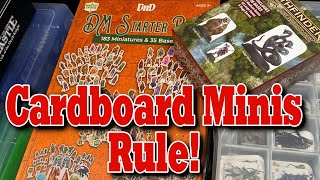
- Very high quality cardboard
- Sturdy construction
- Uniform art style
- Front and back art
- Good for DIY Warhammer Quest
- Slightly less sturdy than the Wanderers Emporium ones
- May be replaced by plastic versions in future campaigns
- Warhammer Quest
Mechanics (from transcript analysis)
Video topics + discussion points
Quotes (from this video)
- I love cardboard minis, especially, you know, really high quality ones.
- I try to limit how much plastic I am responsible for in the world.
- I also really enjoy the kind of handdrawn 2D art on a good cardboard mini.
- I just don't have a lot of time to devote to the modeling aspect of this hobby.
- The ones I really prefer that I really like and I have a whole bunch.
- I find these really useful. I like the Pathfinder pawns a lot.
- These are some of the highest quality cardboard standies that I know of.
- And so, for me, I can just get to my games faster without having to worry about a whole different kind of subset hobby that is plastered on top of a hobby that I already spend a lot of time in.
- And that's why I love them so much.
References (from this video)

- Closely emulates the Warhammer Quest experience.
- Has all the phases of Warhammer Quest.
- Warhammer Quest
Mechanics (from transcript analysis)
Video topics + discussion points
Quotes (from this video)
- It's one of those games that's greater than the sum of its parts.
- The way you explore the dungeon is so unique.
- It's focused on strong female characters, which most games aren't.
- The only huge downside right now is it's nearly impossible to get in the United States because of uh trade wars and shipping is insane...
- Make sure whatever you're doing, make sure you're having fun.
- We are so blessed with variety.
References (from this video)
- opens up the gate to a lot of things
- does everything possible that that you could possibly do with a game and does it fantastically
- sandbox enough
- itself sits in a universe upon itself
- slowly grew with the beastiary and all the acrylic miniatures
- dungeon crawl
- The way it story tells, the way you can build stories from it
Mechanics (from transcript analysis)
Video topics + discussion points
Quotes (from this video)
- I think that is the ultimate as far as dungeon crawls are are concerned.
- The original 1995, not the trash that comes out now.
- It leaves it wide open where it's a sandbox enough.
- it is just a game that it leaves the imagination to a complete crawl.
- the game that I proclaimed as the game of the year for 2025, even though it came out in 2024, but it was impossible to get your hands on.
- The big five. Okay. All you need is five dungeon crawls. Warhammer Quest, League of Dungeon, Dungeon Universalis, Dragons Down, and D100 Dungeon or four Against Darkness.
- everything else is so far second that there's nothing that matters.
References (from this video)

Mechanics (from transcript analysis)
Video topics + discussion points
Quotes (from this video)
- And they always make changes that that really make no sense whatsoever. But hey, it's YouTube.
- I'm so tired of doing auctions. Believe me.
- So, we are $1,700 short of what we need to kind of keep going.
- I want this to be the last auction. And I'll tell you why.
- I really want to try to keep going.
- I really don't know how long I can keep going. I really don't.
- When it stops feeling fun and more like work, it's probably a good time to walk away.
- How much fun I was having was ridiculous.
- But as long as you have a good time, who gives two shits?
- There's no spilled milk.
- I have been swimming upstream for the longest time.
- It's just not in me to to call quits.
- We're just going to do the best we can and that's about it.
- I just want to concentrate on content. Good, solid ideas and content.
- And I've got some things that I'm not even mentioning that I want to do that I'm really looking forward to.
- Just taking things to another level, if that makes any sense, you know.
- We're just going to do the best we can.
- I think that's the most important thing.
- I would almost get rid of the Chronicles of Crime, but when I was sick with CO and I could not sleep at night and I would stay awake all night, I would go out and paint and I painted that entire set.
- I have a real hard time trying to justify getting rid of it. Um because it was so personal painting it, you know, it's one of those things that when you when you paint something like that and you're that sick and you remember that you Oh god, I'm never going to sleep.
- I miss doing them.
- I'm thinking of of just trying and and and playing, you know, playing through the pain more or less.
- It's been a lot of role playing stuff and conquest.
- This better be like the greatest game ever in a condensed little box for 60 bucks.
- All right. So, this opens up and there's these four little boxes in here.
- This is a game and I figured this out afterwards.
- This is like an RPG that you can play very quickly with a bunch of people or by yourself.
- Is it worth 50 bucks? It's only one way to find out, right? 60 bucks, excuse me.
- I guess it's pretty popular overseas from what I read.
- I'm tired of them. They are exhausting.
- If nobody watches it, that's fine. That's fine. As long as I'm enjoying myself, I really don't give two shits. And that's the way I feel.
- I promise you that. I could promise you that.
- I figure I'd come on thank everybody. Got everything out. Everybody should be getting it.
- If this next one that I do can get me over the hump, I'm just not going to worry about anything going forward.
- It'll be a small one just to all we need to do is just raise enough to get over the hump.
- Am I going to go to an Origins? Am I going to go to a Dice Tower?
- It's become a a a convention that's more about the Dice Tower people than it is about gaming and all different events and stuff like that.
- Gen Con is such it's so big. It's so overwhelming.
- Origins is just it's it's a quaint. It's different.
- I got to talk Chris called me the other day. I gotta talk to him, see where he's going.
- I just don't have it the way I did when I was earlier, you know, middle of summer.
- I might just do Origins, keep it nice and quiet.
- I always like that one. It was always nice and quiet.
- I'm going to do something. I just don't know what.
- And then uh you know, too damn old to be going to conventions.
- I got raetball and and wrestling to do.
- I'm going to try to be live more and talk more and hopefully get some things hooked up where I can kind of show some things off more.
References (from this video)
- Dungeons
Mechanics (from transcript analysis)
Video topics + discussion points
Quotes (from this video)
- Undaunted 2200 which is a very good game. Tactics II, very very good.
- I've got all the Killforths.
- Nemo's War, great game.
- Defenders of the Realm, love that game. Love it.
- I got some BattleTech on painting. Going to start painting again.
- Ogre, great game.
- We're going to be back in business, folks. We're going to be back in business.
- We're going to be back to full strength again. Just like the old days.
- People that want to work with me, great. People that don't want to work with me, great. Don't care.
- Getting hacked, man. It was very It took a lot of wind out of my sails.
- I'll get us there. All right, we got the other cable coming within the next month or so. Uh, they're going to be running that up here, so we're going to have fiber.
- I got 10 videos I got to get done. I got more stuff coming.
- We're turning the old game around.
- I don't think I've ever been this busy. And I'm pretty happy about it.
- We'll come back and uh, next week we'll start we'll start doing nice little short live play. Maybe we'll do uh, Val Petra.
- Everything feels better. You know, everything feels good.
- It is your old pal Earl.
- This has been a long time coming and it's showing the subscriptions have gone up.
- It's been a rough 2 days. But don't worry about it. I'll shake it off. I'll come back stronger than ever.
References (from this video)
- light years ahead of so much
- very good, solid
- whole world created by a brilliant brilliant mind
- A whole world created by a brilliant mind
Mechanics (from transcript analysis)
Video topics + discussion points
Quotes (from this video)
References (from this video)
Mechanics (from transcript analysis)
Video topics + discussion points
Quotes (from this video)
References (from this video)
Mechanics (from transcript analysis)
Video topics + discussion points
Quotes (from this video)
- But very rarely do we have a chance where we can go Well, what are the top 10 dungeon crawls of all time? Okay? I mean we can always have our opinion, but I really wanted to put make a video where you, the public, helps makes the top 10 dungeon crawls of all time of all time.
- Spanning the history of dungeon crawls, which ones are your favorites? And I'm going to compile this massive spreadsheet, and then we're going to do another video, probably in a few weeks after we get enough entries, and decide what you guys decided are the top dungeon crawls of all time.
- We're talking dungeon crawlers of all time by the people.
- So, my dear friends, let's get right to it, and let's get going, and start compiling this list.
References (from this video)
- Easy to learn and quick to set up
- Feels like a Warhammer Quest-inspired modern take with true dungeon exploration
- Strong Overland and dungeon exploration with robust quest variety
- Art not as visually stunning as Dungeon Crusade
- Rulebook issues and typos; room for a second edition
- Less depth in some areas compared to the other two
- adventure, exploration, quest-driven progression
- fantasy dungeon exploration with a large hex map and survival elements
- campaign-driven with a mix of random quests and ongoing progression
- Dungeon Crusade
- Dungeon Universalis
- Shadows of Brimstone
Mechanics (from transcript analysis)
- Deck-driven exploration with random quests — cards drive dungeon exploration and provide a large variety of quests.
- Dungeon Crawl — cards drive dungeon exploration and provide a large variety of quests.
- Overland hex map exploration — a large map with settlement phases and overland travel, enabling exploration and decision points.
- Standees with custom art — high-quality standees with front-and-back art; strong storage considerations.
Video topics + discussion points
Quotes (from this video)
- these three games are awesome and it's kind of incredible that all three of these games exist right now at this time
- we are going to be comparing these games in 12 different areas this is a 12 point battle
- none of these games are easy to learn
- visual appeal of Dungeon Crusade is off the charts great
- one of these games will be crowned the champion
References (from this video)
- Fantastic, wonderful game
- Tremendous piece of art by an independent developer
- Great system that continues to grow
- Fantastic sandbox where you can do just about anything
Mechanics (from transcript analysis)
Video topics + discussion points
Quotes (from this video)
- So, those are your honorable mentions. But, there is five, and five that were overwhelmingly picked.
- Some of these kind of shocked me and in the position that they are, uh I kind of thought maybe it'd be a little bit different.
- Gloomhaven, a lot of people are torn on this game. So, I'm surprised to see this in the top five of all time.
- And when you get down to these last three, I mean, it could have gone either way, and you kind of would have just been okay with what no matter where it went.
- HeroQuest has to be considered, you know, out of all the dungeon crests the uh uh the dungeon crawls, probably the greatest of all time, at least in my opinions.
- This is a very very special special game with tons of just absolute greatness.
- But right now, as picked by you, the number one overall pick for the greatest dungeon crawl of all time in our top five, number one, is Shadows of Brimstone.
References (from this video)
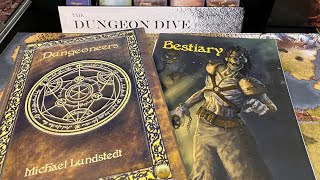
- Strong thematic coherence with classic dungeon crawlers and a clear path for solo and co-op play
- Standee art is appealing and standees offer a cost-efficient alternative to minis
- Tile-driven dungeon interactions add meaningful gameplay beyond mere visuals
- Overland map, settlement phase, and quest structure provide a broad, varied experience
- Deep character progression with many customization options and psychological elements
- Extensive bestiary and quick-reference monster cards improve play flow
- Deck-based dungeon creation and flexible tile system support replayability
- Prototype has grammar and layout issues that may disrupt readability
- Large component count (many tiles, cards, chits) could lead to heavy setup and storage needs
- High complexity and bookkeeping may be daunting for new players
- Some tiles appear visually similar to Warhammer Quest assets and could raise copyright considerations
- Durability and encumbrance aspects may add extra bookkeeping and potential friction
- Old-school dungeon crawling with RPG-like character development and psychological stress elements.
- Classic fantasy dungeon crawl set in a medieval kingdom with an overland map, settlement interactions, and dungeon adventures.
- Narrative flavor derived from tiles, quest cards, and scenario dice; story unfolds through modular rooms, quests, and events rather than a fixed storybook.
- Warhammer Quest
- Advanced Hero Quest
- Dungeon Universalis
- Shadows of Brimstone
- Dark Light Memento Mori
Mechanics (from transcript analysis)
- Advanced combat system — Tactical, multi-option combat with a variety of attacks, weapons, and battle prayers; doors can be locked or trapped with a detailed flowchart.
- Campaign and quest structure — Two campaigns plus a large set of random quests and side quests; objective rooms provide varied play through different quest cards.
- Card-driven dungeon creation — A deck of playing cards can be used to create dungeons, with narrative text on cards to drive encounters.
- character creation and progression — Four races, multiple classes, talents, and class-specific perks; leveling up uses a d100 system and allows deep customization.
- Combat: Damage Based — Tactical, multi-option combat with a variety of attacks, weapons, and battle prayers; doors can be locked or trapped with a detailed flowchart.
- Deck-based treasure and equipment — Three treasure decks (mundane, fine, wonderful) with items that may include tables and multiple uses; equipped items and wealth impact progress.
- Modular Board — Prototype uses standees, with minis as an optional add-on; game designed to be minis-agnostic, with tiles and tokens driving the action.
- Overland travel and settlement phase — Players travel on an overland map, visit settlements, buy equipment, and interact with NPCs and guilds.
- Sanity/psychology tracking — Ongoing sanity track with potential disorders (PTSD, arachnophobia, claustrophobia, etc.) that affect party morale and performance.
- Scenario die and threat level — A scenario die drives the progression of the dungeon with a rolling mechanic that advances threats based on outcomes.
- Standees vs minis and modular components — Prototype uses standees, with minis as an optional add-on; game designed to be minis-agnostic, with tiles and tokens driving the action.
- Tile-based dungeon construction — Two-sided objective tiles are mixed with basic rooms to form a randomized dungeon layout with interactive features.
Video topics + discussion points
Quotes (from this video)
- league of dungeoneers is the game that you would want to get if you want to focus solely on solo play and co-op play
- this is a dungeon crawling tool kit
- back for fans of the dungeon dive
- this could be your ultimate dungeon crawl
- this is a no brainer back this game
References (from this video)
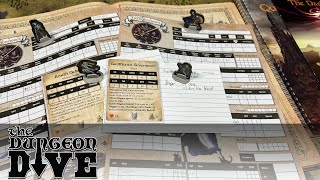
- Deep, option-rich character creation with multiple classes, races, and skills
- Flavorful backgrounds (e.g., Wanderlust) add personal quest hooks
- Attention to equipment, encumbrance, and durability adds tactical depth
- Noted rule mistakes and ongoing errata; some inconsistencies in the rules
- Combat stats tied to dexterity rather than strength challenges common RPG tropes
- Armor/weight interactions and encumbrance mechanics can be confusing
- Character-focused party development, tactical combat, and exploration
- Fantasy dungeon crawl with a party of heroes exploring and managing resources in a dungeon environment
- Character-driven livestream-style commentary with live character creation and party planning
- Warhammer Quest
- Dungeon Universalis
Mechanics (from transcript analysis)
- armor and durability — armor types have encumbrance and durability; starting gear can take damage and be repaired or replaced
- backgrounds and flavor — backgrounds provide flavor and mechanical bonuses (e.g., Wanderlust) and can influence XP or quest paths
- character_creation — multi-hero setup with stats, classes, races, skills, and equipment; includes talents/perks and background options
- Encumbrance — carrying load tracked by Strength; encumbrance influences balance and tactical decisions
- energy and perks — energy is a currency to trigger perks; starting energy is present and affects perk access
- one-handed vs two-handed weapons — weapons classify as one- or two-handed; hand usage affects capability and damage potential
- skills and stats — skills are influenced by base stats (Dex, Wisdom, etc.) and profession modifiers; some skills are tied to specific stats
Video topics + discussion points
Quotes (from this video)
- wanderlust ... such a cool background
- the gold standard it's the Bellwether for character creation in a board game
- I think combat stats should be typically it should come from your strength
- there are quite a few Errata
- I'm not happy with that I am not happy with having less than a 50 chance of hitting
- First Blood
References (from this video)
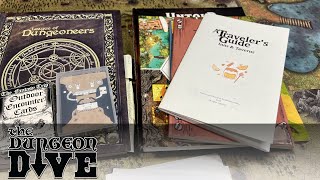
- Flexible, dual-mode play (sandbox and structured) out of the box
- Solid core system providing a strong foundation for solo play
- Integrates well with various tools and random encounter decks
- Encourages journaling and persistent world-building
- Can be very complex and time-consuming to run with multiple heroes
- May require abstraction of mercenaries and NPCs for solo play
- Combat can be heavy and burdensome to manage without house rules
- Array
- Array
- Exploration, dungeon-delving, and persistent world-building with mercenary support
- Array
- Fantasy world with settlements, dungeons, and a persistent hex-map exploration framework
- Array
- Array
- positive
- Mork Borg
- Forbidden Psalms
Mechanics (from transcript analysis)
- Dungeon Crawl — Dungeons provide board-game-like combat with defined rules.
- HP pool management — Use mercenaries' HP as a pool to absorb damage for the main character.
- Journal/notes mechanism — Journal pages or index cards to track settlements, NPCs, and quest sites for persistence.
- Mercenary abstraction — Mercenaries act as peripheral characters; their stats can be recorded on a single card and used to support tasks.
- NPC home locations and hooks — Each settlement linked to NPCs with potential stories and quests.
- Overland sandbox exploration — Exploring a hex map between settlements and quest locations.
- Partial participant abstraction — One PC engages with the world while others serve in background, not represented on maps.
- Random dungeon generation — Maps or tiles to create random dungeon layouts and progression.
- Rerolls/bonuses from party members — Other party members can grant rerolls or bonuses during combat.
- Side quest and encounter cards — Incorporate random encounters and side-quests via deck or card cards.
- Structured dungeon play — Dungeons provide board-game-like combat with defined rules.
Video topics + discussion points
Quotes (from this video)
- League of dungeoneers I actually offers two ways to play
- the core system of League of dungeoneers really does give us a solid foundation upon which we can build our own kind of customized game
- the Soloist is to introduce some Journal writing
- this has all kinds of different encounters that you could use in your solo games of League of dungeoneers
- think of it as combining a Mork Borg with Forbidden Psalms
References (from this video)
- Strong character development and RPG feel
- Modular, plug-and-play options for campaigns
- Complex for solo play; best with a dedicated group
- Requires multiple pieces and possibly expansions for depth
- Character-driven progression; deep lore
- Fantasy dungeon-crawl with heavy RPG elements
- Narrative-rich with campaign-style development
- Shadows of Brimstone
- Tales of Arththeran Knights
- Oath Sworn
Mechanics (from transcript analysis)
- character creation and progression — Roll up characters with multiple stats and class options; substantial leveling choices
- Cruncy-but-accessible rules — Balanced but deep mechanics with optional rules for tracking resources
Video topics + discussion points
Quotes (from this video)
- it's very narratively bent and emphasized
- one of the greatest games of all time in my opinion, honestly
- I can tailor the experience to me
- defenders of the realm is a pandemic co-op type of thing
- Earthborne Rangers is an amazing, fantastic game
References (from this video)
- Rich character customization with race-class interactions and unique talents
- Patreon-driven player involvement in character selection and naming
- Mechanical depth for potions, alchemy, and spellcasting adds tactical variety
- Flexible equipment and encumbrance system with shared party ownership in a cooperative setup
- Rule complexity and potential confusion during learning and application
- Heavy note-taking and handwriting in the transcript could lead to readability challenges
- Durability and encumbrance systems may feel grindy or balance-heavy without careful management
- Potion recipes and alchemy rules can be intricate and require clarifications or FAQs
- Adventure, exploration, and party-based dungeon delving
- Fantasy dungeon crawl with open-world exploration, multiple towns and quest lines
- Story-driven, player-driven character progression with personal quests
Mechanics (from transcript analysis)
- Backgrounds and personal quests — Backgrounds provide starting traits and special quests; estates and wealth influence experience and story progression
- Character creation and stat allocation — Roll base stats with dice, assign values to stats, manage 15-point pool, race-specific stat maximums and class-based adjustments
- Encumbrance and item durability — Encumbrance caps and durability tracking; armor and gear can break; shields and armor durability affect survivability
- Energy points and prayers — Starting energy points tied to class; prayers grant effects such as HP or Arcane Arts bonuses
- Initiative and combat mechanics — Combat uses initiative tracking with potential extra initiative chips; touch vs ranged vs magic effects; weapon classes determine one-handed vs two-handed use
- Potions and alchemy — Alchemist belt expands quick slots; potions have weak/normal/superior variants; crafting involves ingredients, parts, recipes, and alchemy rolls
- Relics and equipment — Relics grant combat bonuses; starting gear includes weapons, armor, and a backpack; equipment has durability and encumbrance
- Spells and arcane casting — Spells have casting values, mana costs, upkeep and incantations; mana equals wisdom; quick spells cost fewer actions; magic items and scrolls introduce complexity
- Talents and perks — Talents are class-based passive bonuses (e.g., Rogue talents like Backstabber and StreetWise); can influence inventory and skills
Video topics + discussion points
Quotes (from this video)
- we're going to be finishing story lines and then other ones we're gonna be able to run into along the way
- we are going to create four characters
- my patreons voted on them and so it's super cool to have them be able to help me decide who is going to be playing in this game
- absolute blast to play this game
- meet me at the table