/pic7634588.jpg)
In Linko! (a.k.a. Abluxxen), you take turns playing number cards, and the more cards of the same number you play, the better as cards score points at the end of the game. If someone else plays the same amount of cards with a higher number, however, your cards get nicked! Stealing cards can be good, but if you can't use them later, and end the game with cards in hand, they'll cost you points.
In more detail, the deck contains 104 number cards (1-13 x8) and five joker cards. Each player starts with a hand of 13 cards, and six cards are laid face-up next to the deck. On a turn, a player lays down one or more cards of the same value, adding jokers if desired; if she already has cards on the table, she lays these cards so that previously played cards are still visible. If any opponent has most recently played the same number of cards and those cards are of a lower value, then the active player "abluxxes" those opponents — that is, the active player can take the abluxxed cards into her hand and the opponent then draws the same number of cards, either from the display or the deck; if she doesn't take these cards in hand, then the opponent either returns these cards to his hand or discards them and draws that many cards. Refill the display only after someone finishes drawing cards. (Jokers can be played on their own, and they are considered to be higher than all values.)
As soon as the deck runs out of cards or a player has no cards in hand, the game ends immediately, even if the player would normally abluxx an opponent. Each player scores one point for each card on the table in front of him, then loses one point for each card in hand. Whoever has the highest score wins. If players wish, they can play multiple rounds and sum their scores over the rounds to determine a winner.

Look Back - 11/19/25


- fun engine building
- requires risk management
- creates tension due to weather effects
- tight actions require strategic choices
- can be quite unforgiving and punishing if not prepared for weather
- planting, growing, and cutting trees and constructing buildings in a province
- province
- Hadrian's Wall
Mechanics (from transcript analysis)
- Drafting — A quick draft at the start of a round to get resources or workers.
- Engine Building — Players build an engine by managing resources like trees and buildings.
- Optimization — Players optimize their board by planting, growing, and cutting trees, and constructing buildings.
- Risk Management — Players must manage the risk of rain events destroying their work.
Video topics + discussion points
Quotes (from this video)
- In terms of light filler card games, this one is a real standout to me.
- It adds this fun bit of tension for a really light little set collecting game.
- And adding that shuffle push your luck mechanism to a draft that you've manipulated really really worked well.
- It's a good game. Highly recommend it. Very approachable. Even though it has those couple of uh very gamery mechanisms in it, it's very family level friendly. It'll be a perfect filler for people who like heavy down to light games.
- They always have great components, great artworks and this is a great engine building.
- Yes, this is, you know, this style of game, the arknova ants, terraforming Mars type of game where you've got the giant deck and the major thing you're trying to do is get a big tableau of those and most of them do something immediately and some of them give you ongoings and some end game points.
- I always say that's the one of the things that frustrates me about or terraforming Mars is that you are mining the deck for things randomly.
References (from this video)

- Modern take on Connect Four
- Dynamic and growing board
- Requires hyper alert awareness
- Enjoyable to explore strategy
- Light but engaging, makes you want to play more
- Good for couples
- Opponent can block your progress easily
- Strategy might still be unclear for some
- Connecting four pieces
- Connect Four
Mechanics (from transcript analysis)
- Area Control — So, you want to put it somewhere to add to your row. The trouble is your opponent can now go there and block you because you can place your disc in any of the rings.
- Line of Sight (Connect Four style) — You're trying to get four of your colored pieces in a line, either rings or discs.
- ring placement — On your turn, you add a disc by placing it in a ring. So, you can only add where there is a ring. Then, you move that ring to a new spot.
Video topics + discussion points
Quotes (from this video)
- And Dice Pool Party plays two to eight players and will work for the whole family.
- It's such a silly little game, but it's such a fresh challenge.
- Her favorite is Suspectto, which is a beautifully simple deduction game.
- It feels like it's teaching her things that most other games for toddlers aren't.
- The other game, Troopo, is a great introduction to pushing your luck.
- It's the classic push your luck dilemma, but distilled down to a format that kids can understand, and it works perfectly.
References (from this video)

- Fun party game
Mechanics (from transcript analysis)
Video topics + discussion points
Quotes (from this video)
- Have we jumped the shark family? Because this shelfie thing is the mini stuff.
- It's a toy. So, Brother Wise is in the toy business.
- It is not underrated cuz it's always on the hot.
- It is evil. It is evil.
- I'm a water connoisseur.
- We want to move forward and show that people from all walks of life can come together, reason together, work together, play together, and get along because we're all human.
References (from this video)
- Specifically designed to help children learn to read and sound out words.
- words
- Conjugu Dingo
Mechanics (from transcript analysis)
- Word Building — A card game where players sound out words or syllables to make sentences or words and score points.
Video topics + discussion points
Quotes (from this video)
- And they realize I can hold my own train pieces and Ticket to Ride how exciting is that going to be
- With some games we won't play them until Zach has read the rules himself which he does as feverishly as reading a Lego catalog
- I don't think children are able to distinguish those differences early on so you're kind of burdening them with um a difficult responsibility if you expect them to know when to turn that on and off when they're quite young
- Letting kids win is not always a good idea
- if winning is not the most important part of the game then why why are you letting your child win every time you're basically making winning the most important part by your own actions
- And then when I finally won it felt so good I felt like I'd really accomplished something
- that's a very important life lesson to teach your children
- because this gives them a legitimate way to win because sometimes they're going to get lucky and that's great it levels the playing field
- and I don't think that any of our gaming systems have been turned on for you know couple of months probably since we started board gaming
- I've seen marked improvements in his reading skills his strategizing his problem solving especially his attit towards attitudes towards uh being fair play and and being a good loser
- you can't force them into it obviously a gentle push in the direction to get them started is fine but you have to let them decide what they do and do not like on their own
References (from this video)

- Doesn't require you to be a mastermind
- Questions are pretty easy
- Gives everyone a chance to have fun
- Older trivia games are only fun for people who know pointless facts
- Trivia with simple connections
- Trivial Pursuit
Mechanics (from transcript analysis)
- Trivia — Players answer trivia questions.
- word association — The challenge is finding the link between the answers.
Video topics + discussion points
Quotes (from this video)
- It's called I Know Mia.
- It's about Mia being murdered.
- It's just one card, you know, so it's very easy to set up.
- You scan the QR code to go to the crime scene, you scan the QR code to talk to the people involved.
- It's essentially like a board game version of a point-and-click adventure game.
- You have to work together to complete the missions.
- It's just a deck of cards, you know, no real board.
- It's basically the same game as The Crew: The Quest for Planet Nine, but with a few tweaks.
References (from this video)

- Ten Forward
- Kalto
Mechanics (from transcript analysis)
Video topics + discussion points
Quotes (from this video)
- gamers new games that's what you people want all old games trash new that's all that matters
- the world of board game IPs is a treacherous amber war during landscape but that doesn't stop the cold hard human emotion of hope
- for me it's games like this that will hopefully bring fresh blood into the ball game hobby which are then just a sinister turn a phrase it's just a really good thing for the Hobby that we all love
- the community-at-large were annoyed right at the community-at-large about a ward where the community-at-large picks the winners
- it's annoyingly good
- just like any good DD campaign is a good story unlike my current campaign where we convinced a reanimated puppet that couldn't lie that we also couldn't lie
References (from this video)
- Nightmare to get working
- Finicky and flaky
- Games were not interesting
- Overpriced
Mechanics (from transcript analysis)
- Programmable Hexes — Little programmable hexes that magnetize and connect to other hexes, sharing rules and game information.
Video topics + discussion points
Quotes (from this video)
- games are like a creation of a puzzle uh to solve
- games are setting up a language exercise in a lot of ways
- we're setting up a chill time together we're agreeing on a system to be happy to chill to be content
- there is something to be kind of said there to kind of step back and look at what is the difference between happiness and contentment
- the whole time i was playing it i'm like oh i'd rather just go fire up tabletop simulator and call billy and say hey let's uh you want to play another game of return to dark tower
- the mechanism of production and progress and you know making of stuff which is part of board games which is very very strange
- to me there is a certain amount of like ceremony and ritual and exercise involved when you sit down and play a game
- carving out those times of leisure so when you're happy and fed and safe and all that stuff you have those moments because otherwise what the hell is the point
References (from this video)

- Expected before Lazy Gamer
- Lazy Gamer
Mechanics (from transcript analysis)
Video topics + discussion points
Quotes (from this video)
- the most gamery one I did was definitely Blood on the clock tower
- welcome to time Jinx you know we almost called this the dating game but they sent us a cease and desist
- the outlier doesn't know they're the outlier it could even be you so think about whose answers don't quite fit or seem a bit odd then on your device vote for whom you think the outlier most likely is
- the curtain for hypnot is about to go up you'll love it there's hypnosis and people thinking they're cartoon characters or inanimate objects then they have to figure out each other's identities laugh Riot
- sadly it was a bunch of you know get this old white men that weren't all that excited about the fact that there was a young woman that wrote a wrote a like a basically an RPG based on D and D that was people were that was doing well and so they were just like shock and awe
- I posted a video of uh of uh the the computer reading Ticket to Ride rules I just threw it up see what would happen in your feed throw it out in the world yeah
- it's actually like reading stuff out of order
- I've never seen that kind of play it's never been done I mean yeah he's and here's this thing that sucks is he's his YouTube channel he's a kid right so he can't have comments turned on
- the lead actor in parasite the main the father not the not the um the businessman father that's it yeah it's a it's odd yeah
References (from this video)
- described as easily the host's favorite race game
- highly engaging and smart
- race with two lemmings around a track
Mechanics (from transcript analysis)
- cardplay — cardplay mechanic that influences movement and incentives cooperation among players while staying competitive
Video topics + discussion points
Quotes (from this video)
- I don't necessarily love stock market games
- this is a very complicated Euro with a whole bunch of honestly very cool stuff going on
- it's a racing game up the mountain
- I paid a lot of money for this game
- it's a gorgeous production
- it's easily my favorite race game
- looks like it has a compelling idea behind it
- I just find those kinds of things really aesthetically pleasing
References (from this video)

- Is the newest one, number seven.
Mechanics (from transcript analysis)
Video topics + discussion points
Quotes (from this video)
- this is where I talk about all of the games that I have acquired over the last couple of months
- this is one of the most interesting um combat systems that I think I've ever seen
- one of the coolest components um of the year for sure that is these pens and shields
- Arboretum which which is one of the best card games probably ever made a very nasty game but um but it's brilliantly designed
- it did feature on a a ranking video and it didn't do as good as I thought it would
- it's safe to say it's not for me
- it has this kind of beer and pretzel feel to it
- I'm sure it'll do well because I know these kind of games have a big audience
- so I'm going to be doing again a full video covering the gy series and talking through them in my you in my priority order and how much I like them
- definitely diversifying in what I cover on the channel here
References (from this video)

- Fantastic luckless design.
Mechanics (from transcript analysis)
- abstract strategy — Games that are purely strategic with no thematic elements or randomness.
Video topics + discussion points
Quotes (from this video)
- Um I'd have slight concerns about the replayability of the game, but please do correct me uh on that.
- Maybe a little bit maybe a bit oversaturated in terms of how many there are out there.
- Unfortunately, I'm not familiar with either of those.
- Um I also thought that there wasn't enough mitigation in terms of activating the spots that you wanted.
- Um and pretty much the uh the cards not doing anything terribly interesting either.
- Um but I just like it in every way. But I'm a big sucker for really good Dawn games. I think he's a brilliant designer.
- Um hopefully I'll get copies of those for for sale relatively soon.
References (from this video)
- Tremendous fun
- Simple mechanically
- Easy to explain and relay
- Satisfies both casual and experienced gamers
- Not malicious despite being 'mean' at times
- Will be a forever keeper
- Host dislikes games like Cockroach Poker, which this is compared to.
- Scoring points by collecting cards, aiming for the lowest score.
- Cockroach Poker
- Cabo
Mechanics (from transcript analysis)
- Card Drafting — Players draw cards and decide whether to keep them for scoring or pass them to others.
- Push Your Luck — Deciding whether to keep a card or pass it, knowing the last player might be forced to take unwanted cards.
- Set Collection — Objective is to score as few points as possible. Pairs of the same number cancel each other out and are worth nothing.
- Special Powers — Getting a run of three cards can activate a special power that affects other players or the current player.
Video topics + discussion points
Quotes (from this video)
- This is where I take a look at the last five new to me board games that I've played and I rank and review them in order of preference.
- The production value is absolutely insane and not an EAS it Gorge to look at.
- I think it's a gorgeous design this is like my tailor made style of artwork kind of has this kind of stained glass medieval look that suits the game perfectly.
- My oh my is this game fantastic.
- This one for me is like s tier Kia like the best of the best.
- Could not recommend this one enough if you like the style of games that I do.
References (from this video)
- A cool game actually
- Cockroach Poker
- Cabo
Mechanics (from transcript analysis)
- bluffing — You can kind of bluff and force cards on other people.
- Set Collection — You're trying to have the lowest total of cards in front of you.
Video topics + discussion points
Quotes (from this video)
- Joy Ride which is kind of a a stolen version of power boats
- Ramy uh tiny little card game where you're drafting these cards Ramy style trying to complete these objectives and that will also tailor your point scoring at the end
- take a Seat this is a you know a polyomino Style game as you're trying to fill up seats uh in a cinema with variable objectives looks like this quite a bit going on here but you know generally speaking I like polyomino style games especially when they tackle that idea from a different perspective
References (from this video)
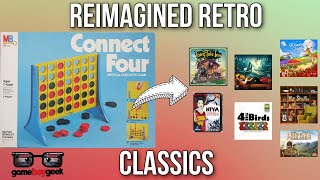
- Uses a Connect 4-like grid.
- Players alternate dropping pieces.
- Objective is to link sides of the grid.
- Cannot leave blank spaces below dropped pieces.
- Connect 4
Mechanics (from transcript analysis)
- Blocking — Players attempt to block opponents' progress.
- line connection — The goal is to connect one side of the grid to the other (e.g., left to right, bottom to top), with diagonals counting.
- No Blank Spaces — Players cannot leave blank spaces below where they drop a piece.
- Tile Placement — Players drop polyomino/tetra-style pieces down a grid.
Video topics + discussion points
Quotes (from this video)
- My channel name is Game Boy Geek. Not for the Game Boy from Nintendo. In fact, before Nintendo Game Boy was out, that's how old I am.
- This is a series that I'm calling re-imagined retro board game classics.
- Connect 4 has a special place in my heart. Played it a lot as a kid.
- So, it's just interesting of all these different things that were inspired by this 1974 classic retro game, Connect 4.
- Game Boy Geek, breaking down barriers, growing relationship, support games by helping you on the next one you love.
References (from this video)
- Host wants to play it again.
- Played quickly.
- Another win for the brother's girlfriend.
Mechanics (from transcript analysis)
Video topics + discussion points
Quotes (from this video)
- RA, uh, 33 minutes and 28 seconds, and this was one of the biggest car crash games of RA that I've played.
- I have to admit, I did bounce off this one quite hard. I wasn't really a fan of it.
- And this one, I really like the gameplay, but it is too long.
- I think for an introductory Euro style game, this game does such a fantastic job of giving you the giving you the seven wonders experience in the most streamlined way possible.
References (from this video)
- Really like this one.
- Managed to build up some really powerful cards that couldn't be beaten.
Mechanics (from transcript analysis)
- card shedding — Described as a "classic card shedding game".
- Hand Management — Players pick up cards and build up hands to play out.
Video topics + discussion points
Quotes (from this video)
- RA, uh, 33 minutes and 28 seconds, and this was one of the biggest car crash games of RA that I've played.
- I have to admit, I did bounce off this one quite hard. I wasn't really a fan of it.
- And this one, I really like the gameplay, but it is too long.
- I think for an introductory Euro style game, this game does such a fantastic job of giving you the giving you the seven wonders experience in the most streamlined way possible.
References (from this video)
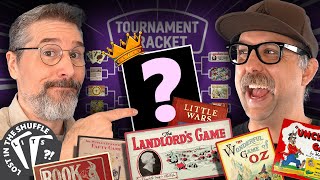
- Not the game you want to be playing
- Ambiguous and potentially haunted
- Potentially haunted card game
- Game of Oz
- Dice game Bunko
Mechanics (from transcript analysis)
- Card game — Explicitly stated as a card game, distinct from the dice game.
Video topics + discussion points
Quotes (from this video)
- And which one of these are going to get lost in the shuffle.
- We'll vote secretly on our candidate and if we are unanimous in our decision, that game will move forward.
- And the Landlord's Game was created 30 years earlier and then stolen from the designer of the game.
- I think The Landlord's Game is what became Monopoly.
- Which of these two antique board games will be now crowned number one?
- So, congratulations, Jyn Rummy. You are the best antique board game out there. Even though you're a card game, but you know, still.
References (from this video)
Mechanics (from transcript analysis)
Video topics + discussion points
Quotes (from this video)
References (from this video)
- Improved version of another game
- Cockroach Poker
Mechanics (from transcript analysis)
Video topics + discussion points
Quotes (from this video)
References (from this video)
Mechanics (from transcript analysis)
Video topics + discussion points
Quotes (from this video)
- It's pretty awesome. Um, but we have been just so so busy.
- I mean, you know, within reason, but what's really cool this year is the nominees really seem to fit their category.
- Man, are we super busy.
- This was supposed to be a regular game night stream but Nikki wasn't prepared.
- I wish I could figure out what's going on with this base. It's gold, which I should have done before.
References (from this video)
- Set in Edo period Japan
- Focus on community building and resource management
- Interesting environmental mechanics (weather, tree regrowth)
- Mechanics blend well with theme
- High production value expected
- Only saw a very basic prototype.
- Cultivating land, building for the community, showing military force, gaining Shogun's favor
- Edo period Japan
- Luthier
- Distilled
Mechanics (from transcript analysis)
- action selection — Fulfilling demands of the Shogun, such as sending wood to the Imperial Palace.
- bidding — Auction bidding for favors from the Shogun.
- Resource Management — Managing resources like wood, balancing cutting down trees with regrowing them.
- Weather effects — Dealing with a weather deck that impacts land and growth.
Video topics + discussion points
Quotes (from this video)
- This is the game of the show so far on the all the previews.
- It's chaotic by in a very good way.
- The new artwork is absolutely beautiful. I find like it looks unreal.
- You are competing to create the best yearbook essentially.
- Each one of the gods will have different powers, will have specific like asymmetric power.
References (from this video)
- Paverson Games has made fantastic games (Luthier, Distilled)
- Most primed to like this game based on gameplay and theme
- Intrigued by the theme
- Saw a prototype last year and intrigued by the development
- Interested without knowing enough about it yet.
- mastering a militia force to support the shogun
- Luthier
- Distilled
Mechanics (from transcript analysis)
- Auction mechanisms — The game includes auction mechanisms.
- Worker Placement — The game features worker placement.
Video topics + discussion points
Quotes (from this video)
- This is one of those incredible games.
- This is a light dice chucking game, but I find it to be so much fun.
- It looks absolutely charming.
- Potatoes is your currency.
- It is incredibly tense.
- I thought this was absolutely brilliant.
- The experience I got was not the experience I was expecting to get.
- I love Dartmouth, I do.
- I think expansions improve the experience.
- one of the things that's actually funny about this one is if you look at the the the reviews on this, the reviews, one of the negative reviews has me more interested.
- I don't care about deck builders.
- similar to Lost Ruins of Arnak, one of my favorite games of all time, but with more deck-building, yes, please.
- this could be a CGE game that knocks it out of the park.
References (from this video)
Mechanics (from transcript analysis)
Video topics + discussion points
Quotes (from this video)
- Cloudspire is one of those games that I would absolutely love to play more of and there are plans for a rematch between me and JP on my birthday week in July.
- The Graft is one of the new factions that just came out and it doesn't have a fortress. What it does is it has one piece on the board which moves around and that is their fortress. So, it's actually a mobile piece and it's big amoeba type thing.
- That's that's nonsense. Um where things like saving the game, the math, the upkeep is made trivial by the video.
- I have Frostpunk the board game. I have Frostpunk the computer game. They're the same game, but they are entirely different experiences.
- As much as I love Agemonia, it's a 30-minute setup each time we play because we're having to get all of these things out and these things and these things and these things. And that's just the nature of the game.
- No.
- Give me a good Uwe Rosenberg game, Feast for Odin. Feast for Odin solo, I love it. It's a beat your own score game, but I I love it.
- The reason why it was a bad experience for me is the solo mode for Perseverance is a very good solo mode at recreating what another player would do, but it was so far beyond my comfort level I really struggled.
- My favorite game in that category is probably either Tower Up or Ingenious. I might have to give it to Ingenious just because of my personal story with that game and the fact that I can play it with Vicky and her family and things like that.
- My copy of Imperium Classics, Imperium Legends, and Imperium Horizons have left my collection.
- I love Star Trek Captain's Chair, so there will never ever be a situation where I would prefer to play Imperium compared to Star Trek Captain's Chair.
- Assyria second edition, which has only just come out, is my favorite game from Garfield Games.
- So, if you're asking honestly for my favorite game from Garfield Games, it has to be Assyria second edition.
- The discussion has been had a number of times.
- It's not as easy as people think.
- 65% of people say that polyomino games are a subset of tile laying games.
- The secret word is scissors.
- As of this morning, we had 1,331 patron supporters.
- I will be back tomorrow at 4:00 with a live unboxing of the deluxe version of World Order.
- And then on Friday is the public public release of the final video in the Star Trek Captain's Chair series, which is the Pike solo play through.
References (from this video)

- gone up for me in the past years
- Does a really good job
- finding connections between words
- Wordle
- Connections
Mechanics (from transcript analysis)
- word association — You get four words. What is the connection between these words? Four more words. What's the connection between them? What's the then the connection between the connections?
Video topics + discussion points
Quotes (from this video)
- Hey everybody, I'm Tom Vasel and welcome to look back where I take a look at reviews that I did last year, 5 years ago, 10 years ago, and 20 years ago during this same time frame. And I tell you what I think about those games now if I think about them at all.
- Wasn't reviewing a lot of great games 10 years ago.
- It blows my mind this game's 10 years old now and everyone has forgotten it ever existed.
- This might have been the first game that I really like noticed who he was.
- Destinies could have been even greater, um, but it was very good for its time.
- And those are the games that I reviewed 1, 5, 10, and 20 years ago. Thanks for watching. I'm Tom Vasel and this is look back on the Dice Tower.
References (from this video)
- Soloable
- Looks cool
- Overseeing a personal province as a daimyo or feudal lord
- Edo period of Japan
Mechanics (from transcript analysis)
- auction and bidding — It is an auction bidding game.
- Worker Placement — It is a worker placement game.
Video topics + discussion points
Quotes (from this video)
- Next we have Song of the Wild Kin one to four players area movement cooperative game deck bag and pool building. That all sounds perfect to me.
- So, we don't have anything to show yet really. So, we only have the box art. But look how cute that looks.
- Action-packed co-op game.
- This could again be very gimmicky. But I'm curious to see.
- I mean, it's obviously Cthulhu themed. Love that.
- I don't know. It might suck, you know.
- This is just an insta buy for me. I'm just going to get it.
- Um they just look so cute and they're both one to four or like at least this one's one to six and this one's one to four players.
- I'm very, very sad that this does not have a solo option because it looks so freaking cute...
- Look at how stunning this looks. I mean, excuse me?
- But, some for some reason this grabs me even more.
- I hope you guys enjoyed um that um I'm very excited about UK Games Expo.
References (from this video)

- Fabulous communication game
- So fun
Mechanics (from transcript analysis)
- communication — It is a communication game.
Video topics + discussion points
Quotes (from this video)
- So, you could say trickery sorcery. So, it's like a um um catch me if you can mechanism.
- I mean, it's a French game so of course the design is beautiful. Awesome.
- It's a fabulous fabulous communication game. So fun.
- It's very basic and nice but it's very thrilling.
- Because sticker, hence the name, you can only play it like 20 times because you glue the stickers to the board.
- So, it's like a choose your own adventure book and legacy family style game.
- He's well known. The evil bow tie man.
- This is Moon Colony Blood Bath. It's satirical. It's bloody. It's It's weird.
- It It's really hard to let go.
- Nothing will get better. Everything will get worse and get worse and worse and worse.
- We are Germans so we have we are organized yeah order order
- The game with the least amount of votes u someone said, 'Okay, this is why I want the game to to be in the run.'
References (from this video)
- Skyrockets
- Four Humors
Mechanics (from transcript analysis)
- Simultaneous worker placement — This is a simultaneous worker placement game.
Video topics + discussion points
Quotes (from this video)
- So, we have two more games to talk Oh, wait, no. I guess four more games to talk about because two to buy and two to demo. Wait, one more to demo, two buy. Oops, silly little figured.
- You're going to play and you're going to instantly get hungry cuz all the unique illustrations and of all the little treats are just
- This is a The Lord of the Rings. The Lord of the Rings and it is a roll and write. It is a roll and write.
- I understand the game being like very much you're playing the person on your right and you're playing the person on your left. You're taking the role of like the good and the bad in this game to uh go on against the opposite on the right and the opposite on the left and I think there's a lot of interactions that go on, a lot of communication that will have to happen around the table to make sure that the turns are flowing.
- I'm a huge fan of Sashi and Sashi and they will be debuting to move Railway Porters at UKGE.
- It is by Taiki Shinzawa and it's a trick taking game where every player has a condition that they must follow in their trick taking. But every condition is different.
References (from this video)

- Looks really really cool
- Likes simultaneous worker placement
- Looks nice with stacked up trees at the end
- Only available to demo
- The Japanese forestry industry.
- Feudal Japan
Mechanics (from transcript analysis)
- Worker Placement — Features simultaneous worker placement.
Video topics + discussion points
Quotes (from this video)
- The goal of the game is to help the animals and guide them to safely back to their home after the animals have secretly snuck out the zoo at night and they're trying to find their way back.
- In Shagendo, each player has their own personal deck of cards. During the game, you improve your deck by replacing your weaker started cards with more powerful settler cards.
- Players take the role of forester is dedicated to sustainable forest management as a euro game focused on strategic action management.
- Forester relies on a dual worker placement system in which players control a harvester and a manager each with distinct responsibilities.
- First Giants is even though it's pretty much the same game, there's no text on the cards. It's just iconography which is going to be a lot easier to teach.
- Players act as urban planners, building a sustainable transit network to connect riders to their destinations before the supply of tiles runs out.
- what appealed to me is just it looks really cute and simple.
References (from this video)

- Incredibly fun
- Had a lot of fun with it
- Word association based on questions
- Players write down answers to questions and compare them, aiming for semi-unique responses.
Mechanics (from transcript analysis)
- Scoring based on matching answers — Players score points for matching one other person, not for being unique.
- word association — Players answer questions and compare their responses.
Video topics + discussion points
Quotes (from this video)
- Battle Station's Lightseed, that would be great. I could use another pair of eyes on it.
- Don't all volunteer at once, y'all.
- I feel like that that that needs to be a a card that you can get in the uh Empire's End expansion or after the Empire expansion. Politically motivated and grouchy.
- So that's homework for next week. Bring bring those three and and we'll uh we'll discuss.
- I would say my favorite game designer is Ryan Mock basically because he somehow managed to make a really good game lugging that anchor Evan behind him.
References (from this video)

- Thinky party game
- Fun little idea
Mechanics (from transcript analysis)
- Clue giving — Players write clues about a word.
- Deduction — Players have a partner and write clues about a word, trying to match.
Video topics + discussion points
Quotes (from this video)
- The Morrigan Game Factory though, what a great escape room game. It might it's it's definitely in my top escape room games.
- Noobs in Space is one of my favorite little games that's so unique and interesting. You have a deck of cards, you deal them out to everybody. Everybody has cards in their hand, and then you just solve those cards by saying things out loud, working together to play cards, and hopefully you solve it. It communication is the key. You can say anything you want, uh but you just can't show cards. And it's hilarious and fun. Very, very enjoyable.
- If you really like what we're doing here at the Dice Tower, then there are different ways to support Dice Tower.
- Tell your friends about the Dice Tower.
References (from this video)

- Interesting environmental theme
- Cool weather system
- Constant tension to build and cut trees wisely
- Strategic turn order bidding
- Simultaneous actions
- Multiplayer solitaire aspect
- Expansion was not present at the show
- Environmental
- Japanese
Mechanics (from transcript analysis)
- action selection — Simultaneous actions for players.
- bidding — Option bidding for turn order.
- Resource Management — Managing trees, wood, and buildings.
- Set Collection — Scoring cards come out throughout the game.
- Tile Placement — Land is represented by different colored zones.
- Worker Placement — Different types of workers perform different actions.
Video topics + discussion points
Quotes (from this video)
- This I was mega excited about.
- We sneak the copy away.
- So, the idea behind this one, of course, card drafting, tableau building, similar to those games that we really enjoy where you're creating your grid of cards and having those have various effects, like for example in Annual X or for example in Car Combo, but with slightly more behind it as well.
- And again, sitting into that lovely sort of 45 minutes to an hour exciting interactive game, which I'm super excited about.
- The artwork is absolutely stunning.
- We can't do a 7-hour video. So, we going to in the upcoming weeks, we're going to in the in the other different episode that we do of the hype factor, the playlist or uh review, stuff like that. We're going to talk about all the other games as well.
- We have the best community of people and we love every single one of you.
References (from this video)

- So much fun
- Very interactive
- Unique mechanics make it stand out
- Strong question list
- High replayability
- One player gave it a three, not liking it as much
- Some questioned if it's better than Subjective or Champions
- Competitive word association game where players score by matching answers.
- Abstract
- Just One
- Subjective
- Champions
Mechanics (from transcript analysis)
- grid placement — Answers are placed on a 3x3 grid.
- player interaction — Players guess each other's answers and try to match.
- Set Collection — Players score by matching answers and creating sets on a grid.
- word association — Players associate words based on prompts.
Video topics + discussion points
Quotes (from this video)
- Rebirth is going to be an evergreen game. So easy to teach, quick to play, great table presence. Just love the game.
- We doing Vegas, baby. This Vegas.
- It was okay. I I would play it again. It was okay, but I I don't like it enough to endorse it.
- Now you talk about a very gateway game. This is a gateway game. But it's fun.
- It is a super fun game. Now, I never thought of like a game about doing needle point and you're doing needle point and but it's fun.
- Threaded is really good.
- Vanity Plates is a creative party game where players design clever custom license plates. It is wild, y'all.
- It makes you think. It does make you think.
- We got more. We going to come with more.
- My my addict addiction friends out here, come on next week.
References (from this video)
- fun game
Mechanics (from transcript analysis)
Video topics + discussion points
Quotes (from this video)
- We actually really enjoyed the turtle decks.
- Too many tabs. Close some of these things.
- Wow, that is not really helping.
- I I kind of need to hear what's going on.
- Um, I guess I could have him run it. It'd be kind of dull.
- I did work on the uh collar. I kind of feel like I need to do a little bit more dark uh up into the V's of the fur.
- It's pretty cool. I'm really excited for Deborah on that.
- So, we mostly buy the games that we do on the show.
- Well, we did the first level, but at a higher
- This is not fun.
- The way you do it for, um, at least the machine we use now, um, and we've always done that, we we, uh, use a, um, box that converts HDMI to um, dang it, paint is on the wrong side again.
- My goal is to finish wave one for everybody that I have.
- I fractured my heel a year and three months uh you and nine months ago.
- And so, uh, so how many how much characters I have to paint? Oh, I have so many to paint, Chris.
- But you get less brush strokes. And then what I do for the final thing, so I guess essentially it's going to be two stages since I'm doing two thin coats, um, is I also use a speed paint or contrast paint over this.
- So, my goal is to get back around roughly before it's dry.
- And that's 100% valid.
- But you can see here it's rubbed through here. Hold on. It's rubbed through here a bit, but it's smooth and it looks pretty good.
- Yeah, this one's actually pretty good already.
- So, the rim of the base look. It looks really quite good.
- My fingers need to be cleaned.
- Wow, that black paint just coming off from my fingers too.
- Boy, that is not a good intensity for these.
- Well, awesome. Thanks for joining me today.
- Thanks for putting up with the little technical glitches.
- It's a Kenner nomination. I'm not sure. I don't know what will win.
- Let's see here. Uh following. Hooray.
References (from this video)

- Matching people with the same color
Mechanics (from transcript analysis)
Video topics + discussion points
Quotes (from this video)
- So, we have a game here called Sequoia. This is from 2022.
- It's It's fine. I'm giving it a six. Uh Beasty Bars is is is a fun style game where you're playing these different type of animals, and I think each additional expansion made it more complex and less fun.
- Trias is an old dinosaur game that originally came with cubes, and eventually they had little dinosaurs in it instead. And it's kind of grow out to different things. This is a very I have this ranked as a seven. Probably now, the next time I go through my rankings, I'll probably rank it as a six because it's fine, but it's showing its age.
- All righty, of all the games we talked about today, my favorite here is clearly David Goliath, although Hooky is a very close second.
- Either way, it's always good to talk to you all.
References (from this video)

- So much fun
- Plenty of laughs
Mechanics (from transcript analysis)
Video topics + discussion points
Quotes (from this video)
- Which was Jinxo, which we brought brought to UK GE to play with people.
- It is one of the spiel de Jarus uh um nominees and we had not played it before.
- It is so much fun.
- We played it with three separate groups every time. We had plenty of laughs.
- This has hit one of our top party games.
- Jump Masters. This is a prototype copy, I believe, of a new game from Chip Theory Games. I actually don't know much about it, but I'm excited to try it out because Chip Theory produces some really high quality stuff.
- So, by limiting the amount of space you have in a suitcase, you can limit the num the amount of money and games you bring home.
- No, you have to. It has to be have six sides, but that's the only rule.
- I didn't follow that rule when making my die.
- Tyler made a ridiculous die because it's more fun that way. Don't try to make a regular dye.
- Paddington, UKG was pretty amazing and honestly just the people along the way.
- Not to not to be dramatic, but I think I would die for Paddington.
- We saw the musical, not just the bear. We saw Paddington the musical, which was 10 out of 10.
References (from this video)

- Interesting stress point in communication.
- Not different enough or good enough to win.
- A different flavor of the same thing.
- Word association matching
- Just one
- Dixit
- Code Names
Mechanics (from transcript analysis)
- Set Collection — If you can get exactly the right answer of someone other person, you will get bonus points. If you match nobody, you'll get zero points. If you match several people, you'll get some points.
- word association — Competitive word association matching game where you are trying to answer questions secretly and trying to match the answer of one other person.
Video topics + discussion points
Quotes (from this video)
- What are you doing?
- What is going on?
- What are you up to?
- What are they smoking?
- The Spielaris is one of the most prestigious board game awards in the industry.
- It is awarded by a group of independent judges who consider lots of games.
- It is insanely what it does. It's very prestigious.
- So, the short list for the Shieldish Yarus 2026 consists of Morty Sorty Magic Shop, Jinxo, otherwise known as Ditto in different markets. Same game, different markets. Uh, and Cozy Sticker Fill.
- This is an interesting list.
- That is the cozy game that everybody's been talking about.
- It's a legacy game.
- It's very cozy because it's nice and easy. There is no stress about it.
- They tend to like throwing in some sort of game that has an educational or communication or word-based element or something like that.
- Micro Macro Crime City won it. So you see where the trend is is going.
- Sky Team was surprising at the time cuz it was in the same year as Captain Flip.
- My prediction for the spiel dish Iris would probably be Cozy Stickerville.
- This award is where Matt and I really sit in terms of the games that we enjoy, the games we tend to cover.
- It's the hobby games.
- Rebirth is a competitive tile laying game designed by Brian Ekitia.
- It was our game of the year in 2024.
- I felt that the game game was playing itself and I was basically spectator of the game.
- This is the interesting one in some respects.
- It's a game that you need to play with a tablet or a phone or or whatever.
- It's a very cool introduction for getting them away from a phone or a tablet and actually start playing with cards.
- In terms of like the game, there's not much of there's not much there more than that.
- Rebirth is the best game on all of six of these games in in every single way that you can think of.
- I've got a feeling that boss fighter QR might win it.
- I want to win Rebirth.
- I think that Rebirth should not be in this category.
- My big things is with with boss fighter because I don't think that belongs in this bucket.
- Why not look at the other team game, which was tag team?
- It feels like a roll the dice each year about what's going to happen.
- It's totally random.
- The Spiritish Irish one especially which seems to be completely almost roll the dice each year about what's going to happen.
- All right. We'll see you in the next one.
References (from this video)
- Fun party game.
- Extremely approachable and easy to learn.
- Pretty replayable.
- Excellent prompts with clever elements.
- Creates fun table talk and laughs.
- Has potential for long-term playability and enjoyment.
- Scoring can sometimes be dragged out.
- Less of a 'board game' feel than Cozy Stickerville for one host, though still considered a party game.
- Trying to think just enough like other players to score points, but not so differently that answers end up alone.
Mechanics (from transcript analysis)
- bluffing — Deciding whether to give a common answer or a riskier one hoping for a match.
- Set Collection — Completing rows and columns on the board for additional points.
- Social Deduction — Matching answers with exactly one other player to score points ('Jinx').
Video topics + discussion points
Quotes (from this video)
- It is the most prominent award a board game can possibly receive.
- Who should win is fact cuz our opinions are facts.
- I had more fun playing Jinxo than I did Morty sorty.
- The masses have spoken.
- It's in the name. Why can't you be cozy?
References (from this video)
- Really fun.
Mechanics (from transcript analysis)
Video topics + discussion points
Quotes (from this video)
- I think Castle Combo has been a game this year in particular. off castle.
- It's a simple draft game where you have to spend resources to play cards and you're building a nine card tableau. Super easy, super simple.
- I think it's definitely on the lighter side when it comes to hobby games as well.
- I feel like every time we play that game, you see people's faces light up and we want to come back to it again and again.
- What cult of the old game, so like 10 years old, have you discovered just this year?
- Last Will.
- Oh, it's so good.
- But the last will is hilarious because your whole goal is you got to spend money and you got to spend all of it
- Oracles of Delelfie.
- I played this game I think two or three years ago at a convention and I loved every minute of it and I have just not been able to find it.
- I'm really intrigued because I love Sweetland so much. I want to try Rosalie.
- I will shout out another store uh local to us called Pomemetto Games run by the owner of David. He is a phenomenal human being.
- A shout out I have is a Instagram creator named Dana from Better Mood Board Games.
- Dana is one of the most talented creators out there.
- What is your personal favorite piece of content we've created this year?
- Most recently, I think the UKG video we did, the tend to demo, tend to buy.
- I think my favorite video I like the one we did in the park.
- That'd be a long video.
- What game right now can you teach from heart? Setup and everything. You just take out the box, you teach the game.
References (from this video)

- Engaging theme of tree planting
- Offers different strategic paths (capitalist vs. preserverist)
- Tree planting and harvesting
Mechanics (from transcript analysis)
- Resource Management — Planting trees and harvesting them for a variety of reasons including but not limited to utilize them to build buildings.
- Set Collection — Research and study those trees which will move you up the track which will also gain you points.
- Worker Placement — Worker placement, trees, samurai, and various um village workers and all that will be helping you out in this worker placement game.
Video topics + discussion points
Quotes (from this video)
- Number one is these are the upcoming crowdfunding campaigns that I have as of right now.
- The things will change, things get cancelceled, things get added, things get pushed off, all of that will happen.
- I try to focus on those that seem to have the most interest or attention.
- So, this usually is going to be campaigns that have 500 or,000 followers or more.
- And I'll admit artifacts did have that. The problem is like what used to be like, oh my gosh, that's so incredible, that's so cute. That's so great. Now is colored with like that's good, but like is it real though?
- It removes some of the magic and wonder of artwork.
- That said, they do have a specific specific little tag over here saying no AI was used in the making of the game.
- I really I really hate like AI has I have mixed thoughts on AI.
- I think it ruins our sense of wonder.
References (from this video)

- Fun little party game
- Lots of laughter
- Belly laughs involved
- Hilarious moments
- Nominated for Spiel des Jahres
- Finding your BFF through shared answers to prompts
Mechanics (from transcript analysis)
- Party Game — This is a party game.
- Prompts — You have three different prompts. Each prompt, you'll write down three different answers into a different square.
- Voting — You will announce one of your answers. And then if anybody is like you, they'll raise your hand, you'll circle it, and that's a point.
Video topics + discussion points
Quotes (from this video)
- Hello everybody. My name is Ia and my name is Tyler. Together, we make up Gre, a couple that loves to play board games and to share with you what we play and why we played it.
- We played a lot of games in June.
- June was our most played games this year so far.
- He has severe obstructed sleep apnnea.
- I stop breathing over 65 times an hour.
- I now am a proud owner of a CPAP machine
- we have played 66 plays.
References (from this video)

Mechanics (from transcript analysis)
Video topics + discussion points
Quotes (from this video)
- We played games again this month. Maybe Yes, but almost a couple of months ago we almost didn't play games.
- The longest trick taking Two Towers trick taking game.
- I had so much fun playing Flip 7 the other day.
- My biggest letdown was Luna.
- My biggest surprise this game also was like a really strong contender for most fun experience because we couldn't stop like laughing when we played this game.
- My number three was the Lord of the Rings: The Two Towers trick-taking game.
- My number three was Lands of Ever Shade.
- My number two is Architects of the West Kingdom.
- My number one is Rosalee.
References (from this video)

- Accessible for various groups and ages
- Simple scoring mechanism
- Conversation starter
- Unique tic-tac-toe aspect
- Good for larger groups
- May feel similar to other party games
- Scoring can cause anguish for some players
- Some references may be too old for younger players
- Just One
- What were you thinking
- Codenames
Mechanics (from transcript analysis)
- Set Collection — Players gain points by matching answers and potentially matching multiple people.
- Tic-Tac-Toe — The board in front of you has a tic-tac-toe aspect, using columns and rows for scoring.
- word association — Players write down answers to clues and try to match them with other players to score points.
Video topics + discussion points
Quotes (from this video)
- I really hope that they... It's like the conclave where they see white smoke.
- It's a choose your own adventure in a board game form. And I think it's great.
- It's a strategy board game that fits the bill and is accessible.
- This game is great. It's really fun. There is a lot of replayability.
References (from this video)

- Very cool game
- Love the theme
- Cool cascading events
- Fun objectives
- Conservation and forest management
- Japanese forest
- Forestry
Mechanics (from transcript analysis)
- action programming — Players program actions based on dice rolls and available resources.
- Area management — Managing areas on a personal board with a pyramid structure.
- event triggering — Events cascade down a pyramid board, affecting terrain and game state.
- Objective Fulfillment — Players work towards public and private objectives.
- Resource Management — Managing trees, wood, and other resources for conservation efforts.
- Worker Placement — Players place workers on action spots.
Video topics + discussion points
Quotes (from this video)
- Hey friends, it is Jenna. What is up?
- And welcome back to the board game garden.
- June ended up being a very board game-filled month.
- I still can't get over the fact that we're still playing trick- taking games that are completely different than all other trick- taking games, but I feel like overall the base game of trick taking works really well with being changed and manipulated in different ways.
- Oh my goodness, this thing broke me.
- Remember, you are somebody's reason to smile.
References (from this video)
- A lot of fun
- Great alternative to Cockroach Poker
- Considered better than Cockroach Poker
- Cards have negative points if not paired
- Bluffing game to avoid negative points
- Cockroach Poker
Mechanics (from transcript analysis)
- bluffing — Players try to pass cards with negative points to others.
- Hand Management — Managing two face-down cards and deciding whether to keep or pass.
- Set Collection — Pairs of cards negate their point values; three in a row can grant special powers.
Video topics + discussion points
Quotes (from this video)
- these games have a tiny footprint so not only is the Box small the actual game itself is pretty small when it's on the table and also these games are very affordable
- it's much more difficult than it sounds and it's actually much more fun than it sounds as well because normally I don't like games like this but this one is tremendous fun
- it's kind of an efficiency puzzle where you are playing with your luck you know can you keep everything in front of you without banking them or are you going to spend that extra time to be a bit more cautious
- it's a lot of fun and if you like games like cockroach poker this is a great alternative that I actually think is a lot better
- it's only six turns so it's lightning fast and again it's a great way to dip your toe into the kind
- very luck dependent but it's charming and it's fast and easy to play
- this one probably the gamest of all of them in terms of I'm being a bit more restrictive and some of the rules being you know a little bit more gamified but it's still super easy to play
- the more cards you play your options quickly start to dwindle and it's all about trying to squeeze every single point out of this game it's a wonderful design and one of the best filler games to come out in the last 5 years or so
References (from this video)
- Fantastic design
- Pivotal decision-making point regarding claiming colors
- Strong potential for long, cool moves
- Wonderful flow, quick gameplay
- Scoring conditions can lead to a runaway leader
- Difficult to catch up if behind
Mechanics (from transcript analysis)
- Chain reactions and pivoting — Existing colors of one's own can be used as pivot points to chain moves together, linking moves and capturing pieces.
- Color claiming — Players can claim an unclaimed color as their own, giving those pieces specific strengths. Claimed colors can capture larger stacks.
- Objective — Create stacks of five pieces containing one of each color, using wild pieces to substitute missing colors.
- stacking and movement — Pieces move along axes, gobbling up other colors. Stacks can increase in size, allowing for the capture of larger stacks if a color is claimed.
Video topics + discussion points
Quotes (from this video)
- hopefully you have enjoyed the video as much as I've enjoyed playing these fantastic abstract strategy games I highly recommend checking them out all of them out actually if you um if you do uh enjoy abstract strategy games
References (from this video)

- Casual party-game feel that’s easy to learn and works well in a live, collaborative setting.
- Engages both teams and chat, providing a social, interactive experience.
- The mechanic of linking four answers creates a satisfying deduction loop.
- word/link deduction party game
- party game setting for social play
Mechanics (from transcript analysis)
- card_trading — Duplicates can be traded or used to obtain cards you don't have.
- Card/Chit Market — Duplicates can be traded or used to obtain cards you don't have.
- clue_mechanism — If neither team identifies the link, a clue is provided to help guide the guess.
- Deduction — If neither team identifies the link, a clue is provided to help guide the guess.
- letter_deck_and_spelling — Backs of the cards display letters that spell the word 'LINKIE'; collecting letters advances or completes the link objective.
- link_finding — After hearing four questions, teams must identify the common link between the four answers.
- team_based_play — Players are divided into two teams and work together to answer four questions per round.
Video topics + discussion points
Quotes (from this video)
- We’re going to do a draw for where are the prizes
- the code word is what's the code word again it is the name of the street that the magic Apple in Los Angeles is on
- I think Watergate would have to be my favorite game of 2019
- this is one of those questions where like can I go have a half hour to think about it I have to answer right now
References (from this video)

- High interaction and social tension during passes
- Tense decision-making with last-card dynamics
- Clear end-game objective with meaningful penalties and bonuses
- Requires 3-5 players; not ideal for two players
- Aesthetics can feel bland to some players
- risk, negotiation, and strategic card drafting through passing and bonuses
- high-interaction, table-talk driven drafting game
Mechanics (from transcript analysis)
- Card Drafting — Players draw two cards, look at one, and pass cards around until all are assigned
- Card drafting with pass-and-choose — Players draw two cards, look at one, and pass cards around until all are assigned
- End-of-round scoring with 10-card threshold — Round ends when someone has 10 cards; points are adjusted based on card counts
- Limited Points — Round ends when someone has 10 cards; points are adjusted based on card counts
- Passing mechanic — Cards circulate the table; last player ends up with the final set
- Run/bonus cards and special abilities — Consecutive cards grant special ability cards; runs yield bonuses
Video topics + discussion points
Quotes (from this video)
- this feels like those little slide puzzles that you play with as a kid
- you always have to slide the number in you can't ever just add it to an empty spot
- it's really satisfying when you can take two numbers that are far apart and make them come together
- it's a puzzle that you are figuring out
- a spatial puzzle that constantly evolving and shifting
- this is one that we're going to keep
- you only have half of the information when you see the cards
- depending on how many cards you have dictates what bonus or negative you'll get
- the silent passing between players creates a fun bit of social interaction
- it's interesting that you can't talk about the card you looked at
- this is definitely four to five players and it's a mean card game
References (from this video)
- clear setup and rules
- flexible clue system with covering/uncoveing cards
- supports solo, co-op, and team play
- multiple difficulty levels
- competitive and cooperative variants
- depends on group discussion; can slow down with larger groups
- may be challenging for players who dislike word-based clues
- word association and deduction
- word cards and clues in a cooperative word-deduction game
- Array
- Link to Food
Mechanics (from transcript analysis)
Video topics + discussion points
Quotes (from this video)
- Link Two is a one to ten player Cooperative trivia game designed by Joel Ganyon and Marie Eve Lupian.
- and that's Link Two.
- you can also keep score if you would like points will be scored for how many tries it takes you to get the correct guess and how many clues you've managed to correctly match with words in the game
References (from this video)

- Adds a twist to typical party word games
- Nice for social dynamics and matching
- May require a specific group to shine
- Some rounds may feel opaque without clear direction
- Matching minds with bonuses for partial matches
- Word-matching with hidden intent
- Social deduction-like vibe with word matching
- Code Names
- Herd Mentality
Mechanics (from transcript analysis)
- Hidden-mind word matching with bonuses — Players try to match with others’ words; bonuses follow if you align.
Video topics + discussion points
Quotes (from this video)
- "an excellent party game because it's just basically trivia"
- "Rabble adds a little twist of some physical challenges sometimes into the mix"
- "Jinxo shares some genetic material with the likes of code names and herd mentality"
- "You need to come up with the same word"
References (from this video)
- Surprisingly fun abstract with quick rounds
- Approachable for casual players and non-gamers
- Luck can influence tile availability; replays depend on tile draw
- Tic-tac-toe
- Rock-Paper-Scissors
Mechanics (from transcript analysis)
- abstract strategy — Tic-tac-toe style objective with top-over flipping and rock-paper-scissors overlays.
- Rock-Paper-Scissors — Tic-tac-toe style objective with top-over flipping and rock-paper-scissors overlays.
- tile flipping / overlay mechanic — You layer tiles and use matching icons to score.
Video topics + discussion points
Quotes (from this video)
- and so I really like that the ramping difficulty is really nice as well
- thematic integration the push your luck mechanism of brewing your beers feels what I imagine to be very thematic
- I soundly lost
- I feel like it is a marriage between The Best of Both Worlds
- I would happily play if someone recommended it
- I really enjoyed the puzzle that this game provides