/pic8548587.jpg)
In Loot, players send out their pirates to attack and defend trading ships in order to get the most gold coins. The game box contains 78 cards consisting of trading ships, pirate ships, captains, and an admiral. Players send out a trading ship on a voyage in which it must survive a round of attacks from other player's pirate ships. You defend your traders with your own pirates and collect the spoils of your attacks elsewhere. The game ends once the draw deck is depleted and one player is out of cards. The player with the most gold coins wins.
Description for the Heidelberger release:
Essen release, 2002. In the nice small black box, with embossed lettering. This game has 25 Trade ships worth different amounts of gold (from 2 to 8), 48 Pirate ships, 12 each in 4 colors. The Pirate ships are worth 1-4 skulls (the player with the most skulls played on a trade ship captures it if the lead is kept for one full pass around the table). There are 4 Pirate Captains (1 of each color) to help win the battles and 1 Admiral to help defend the trade ships. The game is playable with 2-5 players individually. With partners it can be played with up to 6 or 8.

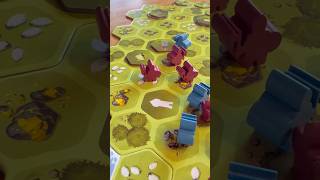
- Fun and unique mechanic
- Great flow
- Doesn't take too long
- Good degree of agency
- Good problem-solving/puzzly game
- Light and easy game
- Replayability is not very innovative
- Same game every time
- No player powers
- No objectives (inherent to the game, not player specific)
- Predictable experience
- Viking
Mechanics (from transcript analysis)
- Area Majority — competing for space in the fjord.
- Objective Fulfillment — Buildings also help satisfy objectives printed on a player's board.
- Pattern Building — Players can raid buildings by satisfying specific patterns or adjacencies.
- Set Collection — Players earn points by collecting resources from an island and storing them on their player boards adjacent to objectives.
- Tile Placement — It's not just the tile placement on your own board, but also competing for space in the fjord.
- Worker Placement — Each worker placed must be connected to either the Viking ships or another Viking.
Video topics + discussion points
Quotes (from this video)
- what makes the game interesting is its two layers of tile placement.
- it's just tile placement twice over.
- It's a really fun, unique mechanic, and I've enjoyed it.
- I think as a gateway game, it's especially nice because it has a good degree of agency to it.
- it's a good problem-solving game or puzzly game.
- just a really solid uh light and easy game.
References (from this video)
- Interesting piece quality and prop design
- Exciting demo with a fresh prototype
- Prototype status; details unclear
- Puzzle and puzzle-like driving mechanisms
- Loop-based board game with modular pieces
- Abstract
Mechanics (from transcript analysis)
- Modular Board — A prototype with modular pieces enabling varied play.
- modular components — A prototype with modular pieces enabling varied play.
- Physical repair story — A tale of a dog-chewed component leading to a reissue moment.
Video topics + discussion points
Quotes (from this video)
- stay dorky and as long as you're dorky you'll win at everything
- the people and the connections and that's what board games do
- my goal in getting into board games is to one day be a community manager
References (from this video)
- Fun name
- Interesting mix of mechanics
- Collecting resources and building a Fjord as Vikings
Mechanics (from transcript analysis)
- Area Control — There's a shared area on the board to take over buildings and get different areas under your control.
- Resource Management — Collecting resources.
- Tile Placement — Building out your Fjord.
Video topics + discussion points
Quotes (from this video)
- ukge which is the UK's biggest board game convention and it takes place from May 31st to June 2nd and it is in Birmingham
- this is just based on the descriptions that we've read about
- Yonder and this is published by Sinister fish with the same designer who did Moon streets and villagers and we really like all three of those
- it's very different than the the trilogy that I just did
- the art looks very Whimsical because the designer also does the art as well and I really like his style
- Terminus and this is published by inside up games and these are in terminous you are competing Subway companies so you are I think building Subway routes and competing with each other to build Subway Roots
- we just like really like the underground and so anything that has that I am immediately interested
- Deep regrets and I actually did get to play a an earlier play test like prototype version of this game and it kind of mixes um cthulu and fishing together like and that what an interesting mix that is
- Shout out to an indie designer who's based right here in Edinburgh and so you always want to support those
- if there's one in particular you're looking forward to please do let us know in the comments
- on Saturday from 1:30 to 4:30 I will be play testing last week of summer in the Play Test Zone
- if you can't make it for that and you just see me around and you want to do a play Test please do ask because I will be more than happy to do that
- please let us know in the comments what new game you're most looking forward to
References (from this video)
Mechanics (from transcript analysis)
Video topics + discussion points
Quotes (from this video)
References (from this video)
- Cozy and nice
- Very fun game
- Can be very tense
- Cozy and nice, but also tense.
Mechanics (from transcript analysis)
- Resource Management — Players place tiles onto their player board.
- Tile Placement — Choosing what tiles to place by placing adjacent to other tiles on a resource board.
Video topics + discussion points
Quotes (from this video)
- this year's V-era game
- it's a game of optimization and timing and what do you call it combo
- everything as a package it's really good
- this is a great like combination of dice rolling combat but also Euro stuff
- flip seven is a stupid game it's a silly game but also probably or most played game of the year
- it is just pure fun in a package and I recommend that this is one that you should just have everyone buy it
- it's a heavy big game
- it's so hard to get victory points but you're having so much fun because this game is great and it looks beautiful as well
- we really like this spatial puzzle
- it looks like this simple game like this very nice artwork and then it really has more depth to it than it looks
- unconscious mind is a really good game
- just and so many things to think about
- flip seven is our go-to game to bring to any where we play games also with people who normally don't play a lot of games
- I don't like push your luck usually that's not my favorite mechanism at all but this is just like it's so fast it's so fun when bad stuff happened you just laugh
- just like an amazing game that I think as you said everyone should have
- spectacular is a it just has things I like it has drafting of D drafting of tiles it has placement of D placement of tiles and a spatial puzzle so it's just like everything I like in the game
- it is just a superb game that I love
References (from this video)
- Visually appealing art
- Quick to play, potentially replayable
- Clever tactical placement
- Good for abstract strategy fans
- Potential for negative points if longships are not fulfilled.
- Can be easy to forget about fulfilling longships.
- Claiming resources and loot as Vikings
- A deserted area being claimed by Vikings
- Calico
- Castle Combo
- Title Blades Rise
- Bomb Busters
- Seasons
- Qo to
- Cto
- Pirates americ Ibo
Mechanics (from transcript analysis)
- Area Control — Players vie for control of buildings by meeting specific placement patterns around them.
- Pattern Building — Buildings require specific arrangements of adjacent tiles to be claimed.
- Set Collection — Players collect sets of resources to fulfill requirements for buildings and longships.
- Tile Placement — Players place Viking figures on the board to claim resources and trigger actions.
Video topics + discussion points
Quotes (from this video)
- hello and happy New Year it is Happy New Year 2025 amazingly we made it
- This is a game that I wished I'd played back at Gen Con.
- The look of it is totally my kind of jam.
- The placement of tiles and the fulfilling of them starts to feel a little Calico e.
- I don't know if you have enough girlfriends you can play the board games you don't even need extra players
- You tuned in for the board games but you're staying for the polygamy it's been a couple years
- The game is described as pretty short and potentially playable twice in a session.
- I completely absolutely forgot about the negative five points per cuz I could have fulfilled this one but I was like it's only three points but actually it was eight because I lost negative five points for it
- you crush you had 94 and I had 83 points I wouldn't have won even without the negative Crush
References (from this video)

- Liked by people the host has talked to.
- Host has not played this game.
- Developing a fjord by gathering resources and capturing buildings
Mechanics (from transcript analysis)
- Set Collection — Players collect resources and buildings.
- Tableau Building — Players build their own village with collected tiles.
- Worker Placement — Players place workers on a common board to take actions.
Video topics + discussion points
Quotes (from this video)
- Nontaku Temple of the Ice. This is a cosmos game by designer Kane Keno. Fantastic game drafting set collection. Building a three-dimensional pyramid area control. Not super heavy. It's pretty light, but it's probably a little too heavy for the spiel. This is a perfect kenner spiel pick.
- Aqua, Biodiversity in the Oceans from the OP. Uh, another great one that is again a little heavier than a Spielus. A puzzly game where you're tile laying, you're trying to attract animals to your coral and then have bigger animals eat the animals that you've already got. It's a puzzly game. Very good. Little too heavy for Spiel, I think, but perfect for Ken Spiel.
- This next one is probably the heaviest of this list. Craft Wagon Age of Engineering. This is a re-implementation of a of a heavier mediumweight Euro game, Craft Wagon.
- And the last one I'm going to mention is Enaria demo by Michael Keesling. This is like a step heavier than Azul, but has lots of similarities to Azul. Uh so, but it's definitely heavier.
- I'm sure I'm going to get a lot of hate mail in the comments just like I did last year when I or two years ago when I uh was blasting the the the challengers whole debacle and then the Sky Team thing. I'm sure I'm going to get a lot of people from Germany hating this video, but this is how people outside of Germany feel about the award and it doesn't seem like the Germans really care.
References (from this video)
- liked by many people
- collecting loot and expanding territory
- Viking
Mechanics (from transcript analysis)
- Grid Movement — players navigate a constricted grid to collect loot and expand territory
- spatial optimization — employing spatial um optimization and limited action choices to outmaneuver opponents
Video topics + discussion points
Quotes (from this video)
- I love Rebel Princess. I want I love it so much. I want to play it again right like right now.
- It was a puzzle, y'all. It was a puzzle.
- We beat Eric three times in a row.
- Can't really communicate, but it's a lot of fun.
- Mike won. Yeah. Mike on.
- Transgalactica has about a thousand stickers that you have to put on there.
- They don't tell you that you got to add a thousand stickers to make those beautiful components.
References (from this video)

- unknown
- Loot themed game
- unknown
Mechanics (from transcript analysis)
- unknown — Promo copy mentioned; specifics not discussed
Video topics + discussion points
Quotes (from this video)
- it's time to log these all into BGG, and we will see you next time.
- the trump changes based off of the phases of the moon
- Has English rules, but it's in Japanese.
- I won that by pulling a duck out of a hat.
References (from this video)

- Classic Euro feel
- Good balance of accessibility and strategy
- Potential for high player interaction
- Tactical scramble for the best loot
- Viking
Mechanics (from transcript analysis)
- Area Majority — you are moving and placing your um um movement your marker adjacent uh or moving adjacent to previously placed uh you know markers which is yours or your opponents. And so you can only get what's in this collective central space that you add to your personal board
- Grid Building — adding tiles to your personal grid
- Resource Management — you're trying to figure out what's your scoring, what's your multipliers, what are you doing, how are you really maximizing this particular, you know, uh, resource is going to be, um, essentially, uh, benefiting two different requirements that it's adjacent to.
- Tile Placement — essentially adding tiles to your personal grid
Video topics + discussion points
Quotes (from this video)
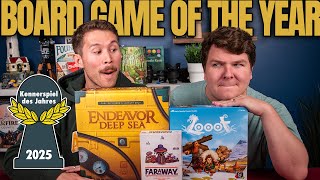
- So, the first nominee is Endeavor Deep Sea...
- Now, the crazy thing about far away is that you are playing down in your tableau going from left to right tiles that will activate at the end of the game going from right to left.
- This is the kind of most classic Euro game in my opinion of all the three that are here.
- So much so that for me the game I think is going to win Kenner Spiel and I am basing this off of the previous winners.
- And I feel like loot is right there in the middle. And I find that it's the one that just again feels so euroy to me. It feels so accessible with still having a lot of strategy, a lot of personal player strategy.
- Yes. And I don't I just I'm really feeling it. And I felt like all the games were very satisfying. I felt like when I got done playing all of them, I wanted to play them again. I just think that Endeavor Deep Sea is big big and I think that Loot is just right. I think it's just right there in the middle.
References (from this video)
- Fun little game
- Endeavor
- Far Away
Mechanics (from transcript analysis)
Video topics + discussion points
Quotes (from this video)
- Bomb Busters has a deeper level of strategy than Flip 7 for sure.
- In flip seven, it's really just a game of statistics and probabilities that you're you're just kind of considering.
- Endeavor is a different class of game.
- Over the years, the spiel, the Kenner spiel has had an identity crisis in my opinion.
- this one was already on my radar now that it's won the Kinder Kinder Spiel I think it's even more so if and when it comes out over here.
References (from this video)
- compact, approachable box
- fast, tense push-your-luck
- colorful dice and fish theme
- Sagrada
- Quacks of Quedlinburg
Mechanics (from transcript analysis)
- dice-rolling with adjustable pool — Players choose how many dice to roll each turn.
- Push Your Luck — Fewer dice rolled means picking first for fish; balance between risk and reward.
- push-your-luck / bidding for fish — Fewer dice rolled means picking first for fish; balance between risk and reward.
- Set Collection — Catch fish cards by meeting dice requirements; score points.
- set collection / fish acquisition — Catch fish cards by meeting dice requirements; score points.
- special dice and color-dice system — Different dice types and colors with unique effects; a mini-expansion adds a D4 die.
Video topics + discussion points
Quotes (from this video)
- I think dogs are better than cats.
References (from this video)
Mechanics (from transcript analysis)
Video topics + discussion points
Quotes (from this video)
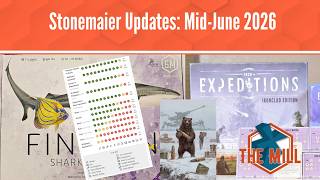
- On the live cast a couple days ago, Jamie mentioned that in 2 weeks he was going to start talking about the Scythe versus Expedition standalone game / expansion for both of those.
- The Scythe versus Expeditions and the 30-minute Wingspan one are both listed as Gen Con events.
- So, if you want to play Stonemaier games at Gen Con, you can kind of see here, there are some Wingspan games, new Sharks and Reefs, and the Scythe versus Expeditions.
- The summer release in the mini expansion, so that's going to be 21 superhero and supervillain cards in the pack. So, you'll have three of them to choose from instead of two.
- It is on Board Game Arena, if you didn't already know.
- So, always fun when you get a new Gloomhaven newsletter if you're into the challenges.
- I love Gloomhaven.
- It was my favorite game last year cuz I love story building, but man, oof.
- It I don't always get to the table as I feel like it's just such a time commitment.
- So, obviously, Forgotten Circles and Fins and Fish are already here.
- Jaws of the Lion versus versus expeditions is Q3.
- Bones is supposed to be here in Q4. It is currently in components, it says here.
- And then Code Name Deep is supposed to be quarter one of next year. Not sure what that is, but that is in the graphic design.
References (from this video)
- Components outweigh the cost
- Charming and easy to play
- Good value for a puzzle Euro game
- Vikings
Mechanics (from transcript analysis)
- Set Collection — almost like set collection style game.
- Tile Placement — those tokens are going to be populating your own playerboard.
- Worker Placement — As you're deploying your little adventurers on or your Vikings onto this map, collecting tokens
Video topics + discussion points
Quotes (from this video)
- And the final one is three chapters.
- very reminiscent to a kind of recent hit called Fantasy Realms.
- In this one, you are playing kind of a trick taking game.
- And then you're building a tableau with all the cards you've collected throughout the game to score points.
- Just over a tenner, so just about10 to buy this one.
- I think it's a great value with tons of, you know, where you get like 50 unique cards with great artwork, different combos throwing themselves at you throughout the entire game.
- And the final game I'm going to talk about is a straightup Euro game, a kind of maybe a lighter Euro game with Loot.
- Loot is a kind of a hybrid of a puzzly almost like set collection style game.
- As you're deploying your little adventurers on or your Vikings onto this map, collecting tokens, those tokens are going to be populating your own playerboard.
- And it's all about this kind of spatial puzzle on how you line things up and position things next to each other to try and optimize your layout and squeeze every point out this game as you can.
- the uh components you get here way outweighs the cost of the game.
- You know, you can get this one for, I think, less than £20 for a full puzzle euro game experience.
- brilliantly done, and it's so charming and easy to play, too.
- So, I definitely recommend casting your eye over that one.
- So, that's all the games I wanted to talk about, and I will say, you know, I will personally advocate all of these.
- They are all in my own personal collection and I'm sure there are way more games out there which I think is a a nice sign of the strength and the position of the hobby at the moment because again despite there being um you know huge price hikes in some aspects of the hobby, there are still tons of great games out there that you can buy at a very affordable price.
References (from this video)
- fun worker placement mechanic that teaches you as you play
- puzzle of collecting tiles and objectives
- surrounding goal tiles scores points and adds strategy
- replayability, especially at higher player counts
- area control / board and set collection synergy
- the cover on the box is gorgeous but the on-table presentation can look like a green blob and lacks character on the player boards
- The Gang
- The Crew
- Quacks of Qued Quedlinberg
- Wingspan
- Daybreak
- Seven Wonders
Mechanics (from transcript analysis)
- area control / set collection synergy — balance area control on your own board with set collection for points
- blocking spaces — players can block worker placement spaces to influence others' choices
- end-of-game scoring with negative points — some long-term goals are worth negative points if not finished
- tile collection / map-building — collect tiles and resources to expand your map and surround goal tiles
- Tile/Map Shifting — collect tiles and resources to expand your map and surround goal tiles
- Worker Placement — place workers on spaces to collect resources and tiles and to block others
Video topics + discussion points
Quotes (from this video)
- Now, this is a big game and this is a big box full of components and glory.
- There's been a snub.
- The board tells you exactly what to do. It's intuitive.
- The first game is going to break people's brains.
- It's only eight rounds.
- artifact cards that are always part of your scoring set.
- the cover of this game is gorgeous. It's such a beautiful game. But on the table it is ugly.
- It's a little bit heavier. Than some of the other games that have won this game in the past.
- Endeavor Deep Sea has table presence that's absolutely fantastic.
References (from this video)
- Tight abstract strategy with attractive visuals
- Engaging tile interaction and scoring
- May be less thematic for players seeking thematic depth
- Building a tableau by placing tiles to match adjacent types
- Abstract tile collection with Viking theming
- Strategic abstraction with area-control flavor
- AUL
- Village Rails
Mechanics (from transcript analysis)
- Pattern matching objectives — Match tile adjacencies to claim points and towers
- Shared board interaction — Interact with neighbors’ boards and tiles for scoring opportunities
- Tile Placement — Place Viking tiles on a shared board and then on your own tableau
- Tile placement / tableau building — Place Viking tiles on a shared board and then on your own tableau
Video topics + discussion points
Quotes (from this video)
- The Mundus cards really only affected the new wonders and diluted the base game.
- I think a 7.0 is a very appropriate score for this game.
- This is a lightweight game that has a puzzle aspect to it.
References (from this video)
- Highly interactive with strong table presence
- Works best in the right group
- treasure hunting and sea-roving piracy
- pirate-themed hand management
- competitive adventure
- Other Knizia hand-management games
Mechanics (from transcript analysis)
- Hand Management — interactive interruption and scoring through card play
Video topics + discussion points
Quotes (from this video)
- Not to mention recording a over-the-top dream sequence music video for one of his games as well.
- Definitely not any sort of objective best of list.
- These are my favorites.
- I definitely don't have time to go into crazy detail on them, especially for the first 50 or 70 or more.
References (from this video)
- tight turn economy with meaningful decisions on every placement
- three different reward streams per action
- downtime can appear in larger player counts
- scoring can feel fiddly for newcomers
- spatial/resource collection and placement
- shared map with working elements and tiles
- abstract, spatial puzzle
- Wingspan
- Sagrada
- Orleans
Mechanics (from transcript analysis)
- multi-path resource gain — each placement yields 1-3 benefits and can unlock tiles
- shared map worker placement — place workers on a map to gain benefits and resources
- Tile Placement — scoring tied to tile placement and spatial requirements
- tile-based scoring and spatial positioning — scoring tied to tile placement and spatial requirements
- Worker Placement — place workers on a map to gain benefits and resources
Video topics + discussion points
Quotes (from this video)
- These aren't necessarily sprawling long games or even complex complicated games, but they're games where you feel like you've accomplished something fairly big over the course of the game despite having a small number of turns.
- the order of operations puzzle is what you're really thinking about on your turn
References (from this video)
- Potentially engaging due to familiar cover art
- Interest sparked by similarities to another title
- No concrete details available in vlog
- Ambiguity about exact edition
- loop mechanics (same cover motif as two girls)
- Unspecified loop-themed concept
- ambiguous, exploratory
Mechanics (from transcript analysis)
- Loop-based mechanic (unclear from video) — Mentioned in passing; exact rules not clarified
Video topics + discussion points
Quotes (from this video)
- Pixies I have played a few times on BGA and I have really really enjoyed it
- I think it's the cutest thing
- milk curo it is very cool looking trick taking game where cards actually have two ends either the black side or the white side
- Harvest ... plays one to six players so does play solo and that is this game right here
- Loop has the same two girls on it but it's purple
- I'm looking for Nana Christmas
- I picked up Nana for my friend Aiden
- this is one that I've really wanted and it is on the board game bliss website
References (from this video)
- Innovative mix of personal board and central actions
- Great value for money
- Appeals to families
- Some resources and flows may be fiddly for newcomers
- Viking raiding and resource gathering
- Viking-era / mythic exploration
- Family-friendly, tile action-based strategy
- Cascadia
- Acropolis
Mechanics (from transcript analysis)
- Area Majority — resources gained by placement and surrounding areas
- Area majority / resource gathering — resources gained by placement and surrounding areas
- Area placement / central actions — each player sends workers to central area to perform actions
- Multi-board action selection — individual player boards and central action area
- Player Board | Main Board — individual player boards and central action area
- Tile/resource exchange — collect and then place resources on your board
- Worker Placement — each player sends workers to central area to perform actions
Video topics + discussion points
Quotes (from this video)
- World Order is very very smart clever
- it's not going to be an easy game
- it's going to be low cost because it's just cards
- I'm super excited for this to come out
- it's an amazing two-player game
- one of the best two-player games ever released
References (from this video)

- Good tile-laying mechanic
- Nice mix of personal player board and competitive placement
- Quick gameplay (45 minutes or less)
- Cool theme and art
- Competitive interaction without being unnecessarily mean
- Can be cutthroat depending on player group
- Randomization of tiles can make some objectives difficult or impossible
- Some luck elements in tile distribution
- Viking exploration and resource collection
- Islands where Vikings land to raid and trade
- Tile-laying exploration
- Rebirth (Cania game)
Mechanics (from transcript analysis)
- player interaction — Competitive placement and resource blocking on main board
- Set Collection — Connecting locations or surrounding them to collect towers or castles
- Tile-laying — Building out from the shore to collect resources
- Worker Placement — Competing for location control
Video topics + discussion points
Quotes (from this video)
- Multiplayer blackjack in two words.
- It's infectious fun and almost everybody enjoys it.
- They just have to be mean sometimes to get what you want.
- It's a really cool idea in a fairly standard game.
- I really think Endeavor is amazing.
- You so want to do so much and you cannot do everything each turn.
- I could play Flip Seven with my entire family from age 7 to 87.
- The reverse scoring is fantastic and brilliant.
- I love the whole theme. I love the exploration. I love going deeper.
- If you bring this to the US, give it a new name.
- It's not approachable for casual family gaming.
- The jury preferences have changed - they're not easy to predict.
References (from this video)
- Spatial expansion feels intuitive and tactical
- Older design; may skew toward mid-weight players
- Resource gathering with spatial goals
- Spatial worker placement where placement expands future options
- Strategic, spatially aware planning
Mechanics (from transcript analysis)
- Spatial worker placement — Workers placed adjacent to existing workers open more options.
Video topics + discussion points
Quotes (from this video)
- Actions always succeed in Vantage; the challenge is how much time, morale, and health you lose along the way.
- the limited information of I can see something that you can't see and how that encourages communication and cooperation.
- one player is playing a card and that card has instructions that the other player must follow or you lose.
- if you roll seven bells on your turn, you just instantly win.
References (from this video)
- Strong production quality and art
- Flexible play modes add replayability
- Rules can be a bit dense on first play
- Theme and mechanics feel loosely integrated for some players
- multi-mode trick-taking/speculation with bidding-like elements
- mythic treasure-hunting with Viking-tinged aesthetic
- abstract with thematic flavor
- Bottle Imp
Mechanics (from transcript analysis)
- Hidden-value card interaction — Different card types interact with price dynamics to score points
- multi-mode play — Includes free-for-all, team play, and two-bottle modes for varied play
- Trick-taking with an innovative price element — A central price track (bottle-like) sets a price; players may bid under the price to win tricks
Video topics + discussion points
Quotes (from this video)
- it's a very strange game
- it's also really cool if you're watching this on YouTube
- the look as we said was really great
- this game might be my favorite Red Raven game to date
- simultaneous turns the dice placement and the races for scoring
- the rules are pretty intuitive
References (from this video)
- deep end-game scoring strategy
- engaging resource management
- scoring can be complex and lengthy to tally
- resource gathering, building construction for victory points
- Viking era, fjords, and shipbuilding
- medium-weight Euro with thematic storytelling
- Santorini
- Ky Mala
Mechanics (from transcript analysis)
- Pick-Up and Deliver — Deliver resources via ships and build sites on map
- pickup_delivery — Deliver resources via ships and build sites on map
- set-collection_and_multipliers — Count matched resources for end-game scoring multipliers
- tile/resource_drafting — Draft Vikings, tiles to place, and load resources on ships
Video topics + discussion points
Quotes (from this video)
- This episode is jam-packed.
- I love the chess nature of Santorini, you know, the strategic.
- The episode was pretty strong, the production values are excellent.
References (from this video)

- Strategic but accessible
- Always feels in control
- Satisfying tile placement
- Resource gathering and territory control
- Viking settlement
Mechanics (from transcript analysis)
- Tile Placement — Place Vikings to gather resources and build structures
- tile placement and resource management — Place Vikings to gather resources and build structures
Video topics + discussion points
Quotes (from this video)
- With vast numbers of games releasing each year, it's surprising that there are very few negotiation games being produced
- I do enjoy revisiting games I've enjoyed in the past with new additions and altered rule sets
References (from this video)
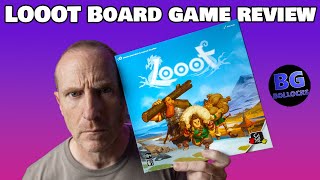
- Wide array of options on both main and personal boards
- End-game scoring remains uncertain until the final tally
- Excellent price-to-content value (~20 pounds for a substantial box)
- Engages players with placement timing and strategic planning
- Non-aggressive but meaningful interaction despite abstract theme
- Theme feels detached from the Viking setting
- Adjacency rules can fiercely constrain early layout decisions
- Late game can feel stale with limited viable moves
- Can overindex on abstract mechanics rather than a strong narrative
- Chaining requirement can be frustrating and slows pacing
- Territory control and resource management with Viking theming
- Viking-era board game where players deploy Viking tokens to occupy spaces and build structures on a modular board
- Abstracted theme framed by Viking imagery; mechanics-driven rather than strongly narrative
- Carcassonne
Mechanics (from transcript analysis)
- action variety — Actions are categorized as mandatory, conditional, or optional, guiding how players use their Vikings
- adjacency and chaining — Certain captures require adjacent pieces or chaining two watchtowers together
- building capture — Capturing houses, watchtowers, and castles by meeting adjacency/line requirements grants bonuses
- long ship mechanic — Proximity of resources to a long ship yields benefits on the linked tile
- Resource gathering — Placing on resource spaces yields corresponding resources; some placements grant extra resources
- resource/structure toggles — Each player has three Shields that can be flipped for a one-time bonus
- Scoring and endgame — Final scoring multiplies points from houses, towers, castles, gold, wood, etc., with penalties for unfilled long ships
- special placement rule — Perks allow placing a Viking on a space already occupied by another Viking under specific conditions
- Tile Placement — Players arrange tiles on their personal boards to form the layout and determine available actions
- Worker Placement — Each turn a Viking is placed on the board to claim resources or build structures
Video topics + discussion points
Quotes (from this video)
- it's absolutely [ __ ] mental how they can cram so much into a box and fog it for so little
- Loot is fine it's a pretty decent game it doesn't really break any new ground and can be frustrating due to the mandatory chaining of your Viking pieces together
- it's well worth the price of Entry at 20 quid it could be great but it's lacking something that I can't quite put my finger on
- carcassonne now being sold for like 35 quid you could pick this up for 20 quid then it's no-brainer
- Never really know who's got the biggest dick until the end of the game
References (from this video)

- easy to teach and quick to play
- strong tension and timing decisions
- surprises when pirate cards come into play
- balanced risk between attacking and drawing
- groups can have lively competition with easy setup
- can become cutthroat in tighter player counts
- depends on others’ choices, which may feel punishing in short sessions
- Gold capture by timing attacks and defenses
- Pirate era trading and ship battles; merchants vs pirates on the table
- Competitive, bluffing/attacking with pirates to seize merchant ships
- Yahtzee
Mechanics (from transcript analysis)
- Hand Management — Players draw, play merchant ships, or attack with pirate ships to win merchant ships
- Set Collection — Winning merchant ships with gold on them by out-timing opponents, collecting loot
- set collection/area control — Winning merchant ships with gold on them by out-timing opponents, collecting loot
- simultaneous/interactive bidding-like timing — Timing when to place a merchant ship for grab by others, inviting counterattacks
- special pirate cards — Four special pirate cards trump other ships when played
Video topics + discussion points
Quotes (from this video)
- it's a game about knowing when to pick your battles
- there's a real balance you need to strike between knowing when to attack a merchant ship because you think you've got the cards to win it and when to just spend your turn drawing up more cards
- it's a simple dice game that's reminiscent of older games
- easy to teach to your parents or grandparents
- truffle shuffle is such a simple engaging game
- Duck has the feel of classic card games like Rummy because you're picking up cards and trying to create sets
- it's actually better to duck out but it's a bigger risk because you don't know what cards other players have
- everything on one card has the appeal of bingo where you're all playing at the same time
References (from this video)
- Clever game design
- Quick gameplay
- Allows player interaction
- Unique puzzle-like experience
- Viking conquest
- Viking raids
- Competitive raiding
Mechanics (from transcript analysis)
- Area Control — Players block opponents and capture resources
Video topics + discussion points
Quotes (from this video)
- I spent an entire year preparing for this video to make this list
- I think this has been a pretty good year
References (from this video)

- Engaging dual-board interaction
- visual appeal
- Not revisited frequently
- score optimization via tableau
- Viking-themed dual-board puzzle
- strategic, interdependent
Mechanics (from transcript analysis)
- Dual-board placement / tableau building — Interact with a communal board and build on personal board
Video topics + discussion points
Quotes (from this video)
- I had so much anxiety about making this change for months and months, arguably years if you watch the last update, but people really took to it.
- You mean Getting Games? That just that really sealed the deal.
- It's just a fun thing to consider.
- I'm really looking forward to it as opposed to putting these things off and like stressing about them.
- recording my opinions episodes live as well as other vlogs. I did a 2024 favorites video talking about all my favorite games from last year.
References (from this video)
- highly interactive and antagonistic
- tactical and satisfying when you score
- can feel unforgiving when opponents block you
- tile drafting with blocking and competition
- medieval town-building
- accessible, competitive, social
Mechanics (from transcript analysis)
- meeple adjacency scoring — tiles score when placed adjacent to meeples—yours or others.
- tile placement with blocking — place tiles to build your town and block others from optimal spots.
Video topics + discussion points
Quotes (from this video)
- Starting off with the two-player game, Agent Avenue.
- It's a boatload of fun and it's another game which I've just brought out and it just never misses.
- This is another two-player abstract game that I can't stop playing and that's Zenith.
- Rival Cities takes Tug of War to another level.
- The production on Shackleton Base is through the roof.
- Ponzi scheme is one of the most stressful games you'll ever play and it's brilliant.
References (from this video)
- Simple to learn
- Depth of strategy
- Flexible play styles
- Quick gameplay (under 30 minutes)
- Optional player interaction
- Variety in each playthrough
- Element of luck in tile drawing
- Potential for unbalanced boat tile draws
- Viking conquest and resource gathering
- Viking raids on mainland
- Competitive resource acquisition
Mechanics (from transcript analysis)
- Area Control — Players place Vikings to capture buildings and resources
- contract fulfillment — Complete boat contracts by surrounding specific structures
- Tile Placement — Players place pillaged tiles on personal board
Video topics + discussion points
Quotes (from this video)
- Light doesn't necessarily mean shallow or too simple
- The important part of making a light game is to provide players with as many choices as possible without giving them too much rules overhead