/pic3592207.jpg)















Lords of Hellas Deep Dive
What the Community Thinks About Lords of Hellas
Lords of Hellas generates mixed reactions from the board game community. While some reviewers appreciate its ambitious scope and thematic design, others find it burdened by balance issues and complexity. The consensus points to a game with genuine strengths that struggles with execution, particularly regarding pacing and asymmetric victory conditions that can leave some players unable to pursue their intended strategies.
Core Mechanics That Define Lords of Hellas
Area Control and Territory Management
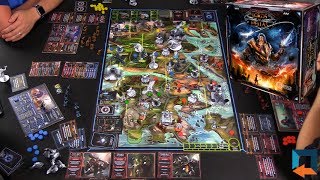
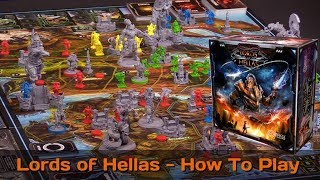
At its heart, Lords of Hellas is a dudes-on-a-map game focused on controlling regions, temples, and monuments across ancient Greece. Players position armies and heroes strategically, building temples in controlled regions to unlock benefits from different gods. The map divides into regions and larger land areas, each requiring a specific military presence to claim. Territory control forms the foundation of gameplay, though it's complicated by a slow buildup of forces and the risk of losing everything in a single failed engagement.
Monster Hunting and Quest Completion
Beyond traditional territory control, heroes can venture across the board to hunt mythological creatures or complete quests. Monster hunting involves drawing combat cards and attempting to match symbols on the monster's hit locations, creating a resource-management layer that rewards both luck and strategic planning. Quests offer narrative flavor and access to glory tokens that enable the powerful usurp action, pushing players toward multiple viable win conditions rather than forcing everyone into the same strategy.
The Lords of Hellas Experience
Rich Thematic Flavor with Sci-Fi Elements
The game's setting pairs ancient Greek mythology with alien technology, creating a unique aesthetic that reviewers consistently praise. Beautiful component work brings the cyborg gods and Greek heroes to life, from the imposing monument sculptures to the hero miniatures. The visual presentation invokes classical mythology while the sci-fi twist prevents the setting from feeling stale compared to other historical games. This thematic grounding helps make the various systems feel purposeful rather than arbitrary.
Pace and Momentum Building
Lords of Hellas develops momentum over time through the blessing draft system. Whenever a player builds a monument, all players participate in a draft of powerful blessing cards, each granting unique permanent abilities. These blessings arrive at key moments in the game and significantly impact available strategies. The system encourages constant activity and provides meaningful decision points that escalate throughout play, though the slow initial buildup of armies means the opening rounds feel more cautious and tentative than the climactic late-game rushes.
What Makes Lords of Hellas Stand Out
Multiple Viable Paths to Victory
Four distinct victory conditions offer players genuine strategic choices. Some pursue temple control across five regions, others focus on slaying three monsters, some work toward controlling two full land areas, and a few attempt the monument completion path. This multiplicity encourages different playstyles and prevents the game from devolving into a single dominant strategy. A hero-focused monster hunting approach plays completely differently from a territory-focused faction building army, allowing for diverse experiences across replays.
Asymmetric Hero Powers and Blessings
Each hero brings unique starting abilities and attribute values, ensuring players don't start from identical positions. The blessing cards expand this asymmetry throughout the game, with different gods offering different strategic advantages. Combined with the random quest and monster draws that vary from game to game, this creates strong replayability and encourages players to adapt their strategies based on what opportunities emerge rather than executing a predetermined plan.
Potential Drawbacks
Balance Issues and Monument Dominance
Several reviewers highlight a significant balance problem: flooding a region with armies and repeatedly building the monument can become overpowering, especially with sufficient blessing cards. Since each player only gets one special action per round and building monuments unlocks it for all, a player with overwhelming numbers can effectively lock others out of their own strategies. Some games see one player pursue such a dominant monument strategy that other players cannot execute their plans, reducing meaningful interaction and agency.
Slow Buildup and Risk-Aversion
The early game suffers from sluggish pacing as players accumulate armies and resources. Building armies takes time, losing them in combat happens quickly, and the disparity creates incentives toward caution. Many players avoid committing to battles, preferring to hold back and build up reserves. While some games reward this setup-heavy play, the slow mechanical pace combined with punishing battles can make the opening hours feel tedious compared to the explosive final rounds. Additionally, the base game's three monuments disadvantages one player in four-player games, requiring an expansion to balance.
If You Enjoy Lords of Hellas
Fans of dudes-on-a-map games should sample Blood Rage, Rising Sun, and Lords of Ragnarok as spiritual companions. If the complex action economy appeals to you, explore other asymmetric area control titles that similarly reward careful positioning and long-term planning. The multiple victory conditions echo games like Chaos in the Old World, while the combat system fans might appreciate other titles featuring dual-purpose combat cards used in different contexts. Player count matters significantly here, as four-player games create far more dynamic interaction than two-player variants.
What Reviewers Are Saying
"The components are incredible, the theme is fantastic, but the balance issues mean it's worth playing other similar games first."
— BoardGameBollocks
"There are so many random elements which is cool, you get to react to what's happening right there in the game. The beginning had four monsters and three quests like that's never happened in the other games we played."
— Board Game Replay
"I would love to see a slightly streamlined version of it. The game would go even higher for me."
— The Dice Tower