/pic5674958.jpg)

/pic5674958.jpg)
















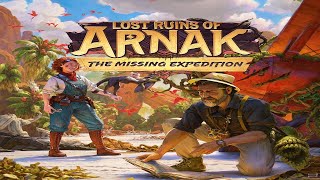























Lost Ruins of Arnak Deep Dive
What the Community Thinks About Lost Ruins of Arnak
Lost Ruins of Arnak has earned consistent praise from the board gaming community for its elegant design and satisfying gameplay experience. Reviewers across multiple channels recognize it as an exceptional execution of layered mechanics that work together seamlessly. The game appeals to both casual players seeking an engaging story-driven exploration experience and experienced gamers who appreciate sophisticated mechanical integration. A clear consensus emerges around the game's ability to deliver meaningful decisions within a contained play experience, though opinions vary on the two board variants, with many preferring the more complex Snake Temple over the Bird Temple for its superior balance and strategic depth.
Core Mechanics That Define Lost Ruins of Arnak
Deck Building
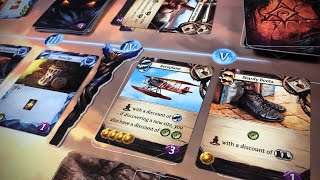
Deck building sits at the heart of Lost Ruins of Arnak, designed by Min and Elwynn and published by Czech Games Edition. Players begin with a small starting deck and gradually acquire better cards to customize their personal engine. What makes this implementation distinctive is that card acquisition must be carefully timed, since purchased items go to the bottom of the deck where they cannot be used immediately, while artifact cards become available right away. This creates a tension between short-term payoff and long-term deck development. Reviewers highlight the "satisfying chain of actions and bonuses when you connect cards, artifacts, and rewards," noting that the deck becomes an increasingly powerful strategic engine as the game progresses. The drafting element adds interactivity beyond typical solitaire deck-building experiences, as players must sometimes purchase cards before opponents do, preventing a purely optimized solo puzzle.
Worker Placement
The worker placement system, combined with the limited card resources available each round, creates the game's central tension. Players have only two workers per round and a hand of five cards. These cards serve dual purposes: they fuel worker placement actions and provide the resources needed to explore, research, and overcome guardians. The placement spaces on the main board force meaningful trade-offs in sequencing and priorities. Reviewers note that players "have many opportunities to remove their unwanted cards from the game to thin out their decks and work out a better lean and main combo," but limited actions mean not everything can be accomplished in a single round. The interplay between what you want to do and what you can actually accomplish with your hand creates a puzzle that feels fresh with each playthrough, particularly as the card market rotates and different cards become available.
The Lost Ruins of Arnak Experience
Satisfying Engine Building
The experience of watching your personal engine accelerate over five rounds defines the emotional core of Lost Ruins of Arnak. Reviewers consistently describe the moment when "you can do one thing, then that funds you the resources to do another thing and another thing," creating a chain reaction of increasingly rewarding turns. This sensation emerges from the tight integration of all mechanics: cards acquired in earlier rounds come online at just the right moment, assistants unlocked through research track progression provide once-per-round bonuses, guardians defeated earlier grant permanent abilities. The game delivers a kind of compounding satisfaction that makes later rounds feel more powerful and purposeful than earlier ones, rewarding careful planning and setup.
Discovery-Driven Exploration
The exploration of a mysterious island populated by guardians and ancient artifacts creates an adventure-game atmosphere that transcends typical worker placement mechanics. Players must balance the known safety of starting dig sites against the mystery and greater rewards of discovering new locations deeper in the island. Each new site reveals an encounter card, a guardian protector, and potential treasures, creating moments of genuine discovery and surprise. The two board variants represent different temples (bird and snake), and reviewers emphasize that the Snake Temple's superior balance makes exploration feel more consequential and rewarding, with its revised mechanics creating a more engaging spatial and strategic puzzle as players uncover the island's secrets.
What Makes Lost Ruins of Arnak Stand Out
Exquisite Game Development and Polish
The most striking aspect of Lost Ruins of Arnak to experienced game designers is its flawless execution of mechanical integration. Every rough edge has been thoughtfully eliminated through elegant design solutions rather than rule exceptions. For example, the card market uses a shifting staff that removes cards from availability as the game progresses, eliminating the need for memory-based optimization and naturally scaling card power to player capabilities. Card icons clearly delineate when effects can be played as free actions versus when they cost a main action, removing ambiguity. Reviewers describe the game as delivering "exquisitely developed" mechanical flow where every action feels intentional and rewarding. This level of attention to detail is particularly rare in games that also deliver strong thematic integration, yet Lost Ruins of Arnak manages both simultaneously.
Gorgeous Production and Thematic Coherence
The visual presentation of Lost Ruins of Arnak elevates the experience beyond mechanical excellence. The artwork and component design create a premium, evocative atmosphere that makes exploration feel consequential and meaningful. Reviewers note that "the vibrancy that comes off of the lost ruins of arnak" contributes significantly to its appeal, with the large vertical board and beautiful illustrations creating an iconic table presence. The theme is not merely window dressing; it is deeply integrated with mechanical systems. The moon staff metaphor controls the pacing of card availability and represents passage of time. The research track represents progression toward discovering the temple's secrets. Resources carry thematic weight as tools of archaeology and exploration. This integration of theme and mechanics creates an experience that feels coherent and purposeful rather than split between story and system.
Potential Drawbacks
Analysis Paralysis and Play Length
The depth of available decisions can trap players prone to overthinking. With limited actions, multiple viable paths to victory, and card synergies to consider, some players fall into extended decision periods. Reviewers note that play time can stretch significantly depending on player experience and decision-making speed. A four-player game has been reported to exceed three hours, while experienced players can finish in 90 minutes. This variance creates challenges for groups mixing experience levels or playing with players who enjoy optimizing every action. The density of decision-making is intentional and adds to the game's appeal for puzzle-oriented players, but it represents a genuine barrier for groups seeking a more breezy experience.
Guardian Mechanics Feel Underwhelming
The system for overcoming guardians, while mechanically functional, lacks the emotional weight of other game systems. Defeating a guardian requires spending specific resources listed on its card, which feels like a straightforward currency conversion rather than a dramatic confrontation. The consequence of not defeating a guardian (receiving a fear card worth minus one point at game end) is trivial and easily mitigated through deck cycling. Some reviewers feel the guardian system could have been developed with greater consequence or mechanical variation, as the current implementation serves primarily as a resource sink and alternative scoring path rather than a meaningful strategic choice that shapes gameplay. The cards defeated guardians grant are valuable, but the act of defeating them lacks drama compared to other game systems.
If You Enjoy Lost Ruins of Arnak
Players drawn to Lost Ruins of Arnak's blend of worker placement and deck building will find similar satisfaction in Raiders of Scythia, which offers a comparable mechanical integration and exploration theme. Those who appreciate the tight resource management and card synergies should explore Istanbul, which delivers quick turn sequences and economic puzzle-solving in a tighter package. For players who love the engine-building arc and moment-to-moment decision density, Ark Nova and Dune Imperium both offer rewarding systems where early investments compound into late-game power. If the archaeological theme resonates, Museum offers a lighter exploration of artifact collection mechanics. Players seeking a longer campaign experience with similar thematic integration should consider Aeon's End Legacy or Pandemic Legacy for the sense of discovery and progression across multiple sessions.
What Reviewers Are Saying
For me it has that satisfying feeling when you can do one thing, then that funds you the resources to do another thing and another thing and another thing. So if you are looking for a twist on deck building where the resources are tight and the stakes are high, you may find Lost Ruins of Arnak satisfying to play.
— Meeple University
I played this game and I like it obviously, but the thing that as a developer myself the thing that shines to me through that game is how exquisitly developed it is. All the little pain points that games have have been not sanded off in a way that makes the game worse but just like integrated so well.
— Going Analog
When that works it just it's an amazing euro game feeling. It's the kind of thing that you know people who like pushing cubes around are going to be all about and I'm certainly one of those people and I love that in this game there are no cubes. There are wonderful components that you are playing with.
— Getting Games