/pic6604414.jpg)
There is a host of terrible tales surrounding the mysterious uncharted depths of the Lost Seas. Rumours of giant krakens, infernal maelstroms, huge sea serpents and hostile deserted islands abound, and only skeletal shipwrecks remain as testament to tentative past expeditions. It is time to arm yourselves with the latest instruments of navigation and prepare to set sail on your most daring expedition yet, knowing that if you succeed, the glory will be beyond your wildest dreams and your map will become the stuff of legends.
Forge your own legend by charting your exploits in the terrifying and hostile Lost Seas. Only the most perilous and daring journey will go down in history.
Plan your Expedition
Explore the dangerous depths of the Lost Seas
Map your perilous journey
—description from the publisher

Lost Seas in 60 Seconds

Mechanics (from transcript analysis)
Video topics + discussion points
Quotes (from this video)
- it's always a really fun time to be a stonewire fan and learn about the next game
- next week will be the announcement of a game that i i'm so excited i don't want to spoil anything
- i can't wait to start talking to you about it next week
References (from this video)
- Quick to set up and play
- Charming appearance
- Provides agonizing decisions within an easy-to-learn system
- Good as a filler game
- Can be frustrating when desired tiles are drafted
- Objectives can become very difficult to meet
- Nautical
- Calico
Mechanics (from transcript analysis)
- Drafting — Players pick tiles from a public display in turn order.
- Objective Fulfillment — Players try to meet the scoring conditions on both axes of the grid.
- Pattern Building — Scoring conditions are set for each row and column, requiring specific patterns or counts of symbols.
- Tile Placement — Players build a 4x4 grid of tiles with different nautical symbols.
- variable goals — Players can choose more ambitious goals or keep it simple, balancing difficulty with potential points.
Video topics + discussion points
Quotes (from this video)
- This is where I take a look at the last five new to me board games that I've played and I rank them and review them in order of preference.
- This one is probably the one of the best ones that I've played because it is so fast and you know you can teach this to you know your auntie who's not played a game since 19 1985 and they're still going to understand what to do here because everything is very clearly written on each card.
- For me this was a little bit too trick takery I'm not a big fan of trick taking games and to get the most from this one you need to kind of have a you know a Rainman style memory and I'm not like that so this one was also a Miss for me.
- This game is going to be directly compared to Magic the Gathering and rightly so you know I'd be lying if I said it wasn't very similar because it is.
- The only issue is I kind of struggle to see who the core audience is because if you like games like this you're probably going to be playing Magic.
- A lovely filler and very charming it looks nice on the table and I think this can fill that little kind of 20 minute Gap at the end of a game's day.
- This game is surely a game of efficiency.
- When I first played it I thought this is fine it's a little bit slow a little bit plotting but by the end of the game I was really enjoying it and you know I think this one has potential to climb for me and it maybe eventually reach a commendation.
References (from this video)

- Great movie
- Potential remake
- Good movie
- Might be corny now
- Lost some edge
- Vampires
- Gremlins
Mechanics (from transcript analysis)
Video topics + discussion points
Quotes (from this video)
- I may have regret backing the latest Cthulhu Death May Die.
- Fabulous minis.
- I remember when they were cool mini or not, and and I liked that.
References (from this video)
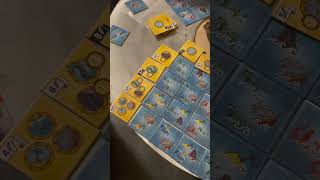
- Very approachable and quick to learn, making it accessible for newcomers
- Abstract, puzzle-like feel that rewards efficient drafting and planning
- Relaxing and it works well as a low-stakes end-of-night game
- Clear potential for tight, tense decisions despite light ruleset
- Compact footprint and suitable pacing for shorter play sessions
- Might feel light for players seeking deeper strategy or heavy interaction
- Depth is highly contingent on the expedition tile mix and drafting luck
- Some players may wish for more thematic flavor beyond abstract scoring
- Sea exploration, collection, and pattern fulfillment; a lightweight abstract focus on efficient tile management rather than narrative storytelling.
- A sea-going tile-drafting puzzle where players assemble a 4x4 grid by selecting sea tiles from a drafting pool and placing them to satisfy a variety of row/column objectives.
- abstract, puzzle-driven, with objective-based scoring rather than a continuous story
Mechanics (from transcript analysis)
- Compound Scoring — At game end, players score each row and column based on how well the objectives are met, creating a two-dimensional scoring tension.
- Expedition tile objectives — Expedition tiles carry specific objectives that, when satisfied (e.g., a certain pattern or quantity), award points. More points are often tied to harder-to-satisfy conditions.
- grid placement — Players place drafted tiles into a 4x4 grid, working to fill all spaces while planning around upcoming tiles and row/column objectives.
- Pattern and set considerations — Players must balance meeting multiple objectives across rows and columns, potentially chasing certain object types or patterns to maximize totals.
- Pattern Building — Players must balance meeting multiple objectives across rows and columns, potentially chasing certain object types or patterns to maximize totals.
- Risk-reward drafting — Choosing Expedition tiles with higher potential points can increase scoring opportunities, but may be harder to fulfill depending on tile availability and draft timing.
- row/column scoring — At game end, players score each row and column based on how well the objectives are met, creating a two-dimensional scoring tension.
- tile drafting — Each round presents a pool of Expedition tiles; players select one tile to draft and add it to their personal action area or to place later, balancing immediate gains against future needs.
Video topics + discussion points
Quotes (from this video)
- Lost Seas is a quick to learn abstract game focused entirely on efficiently drafting tiles to fill your Grid it's light fare suitable for new Gamers or something relaxing to end a night.
- 8 points for exactly five sea monsters in the row
- 7 points for exactly five objects of the same type
- It's quick to learn abstract game focused entirely on efficiently drafting tiles to fill your Grid
- This continues until every grid is full and then the players score each row and column
- Expedition tiles with more points are harder to satisfy so players should weigh this decision carefully
References (from this video)

- puzzle feel with approachable rules
- intricacies may be light for some
- treasure/quest in a sea-themed puzzle
- puzzly grid-based placement
- clever, cerebral
Mechanics (from transcript analysis)
- grid placement — placing tiles on axes to score via layout alignment
Video topics + discussion points
Quotes (from this video)
- newest release from fil that isn't a reprint
- it's a racing style game
- spoiler I did really like this one
- this one intrigued me
- the art style in this game is absolutely gorgeous
- Sandbox prison brawler for up to eight players
- complete reworking of Rum and Pirat
- wind tiles will direct your ships
References (from this video)
- simple drafting and placement
- adaptive difficulty with easy or hard modes
- Sea exploration and scoring via objectives
- Nautical exploration with a simple seas-themed grid
Mechanics (from transcript analysis)
- set collection / objective scoring — achieving border-based goals for scoring points
- tile drafting — drafting nautical symbols to fit on a grid
Video topics + discussion points
Quotes (from this video)
- this is spectacular so spectacular
- it's a very simple um tile drafting game where you are placing these different kind of nautical symbols rows and columns trying to achieve these different goals or objectives that are on the border of your little grid
- the tile drafting is kind of inconsequential it's all about how you place them
- one of the best little dexterity games out there
- Kodama Forest this is such a cool polyomino Style game
- this is such a cool party game
- Wits and Wages... definitely one of the best party games out there full stop