/pic4766499.png)
/pic1401448.jpg)
/pic2290765.jpg)
/pic2293327.jpg)
/pic4766499.png)
/pic2491956.jpg)
/pic3124998.jpg)
/pic2986375.jpg)
/pic3485528.png)
/pic5509189.png)
/pic6583306.jpg)








































Love Letter Deep Dive
What the Community Thinks About Love Letter
Love Letter has become a staple in modern board gaming, earning consistent praise across the community for its elegant simplicity and surprising depth. Reviewers celebrate it as an accessible entry point to social deduction gaming that never feels patronizing. The game's pocket-sized packaging and 20-minute playtime make it approachable for newcomers, yet the psychological dynamics—reading opponents, managing risk, and pivoting strategy mid-round—give experienced gamers something to chew on. Community consensus positions Love Letter as a modern classic: a game that proves quality design doesn't require complexity, and that a 16-card deck can hold more narrative tension than many box games ten times its size.
Core Mechanics That Define Love Letter
Hand Management & Risk Assessment
Each turn forces a binary choice that belies the game's strategic richness. Players draw one card, then must immediately play one of the two cards in hand, committing to an action without knowing what comes next. This forced discard creates a puzzle: do you play the card you want to use now, or hold it hoping better circumstances arise? The tension escalates because each card played reveals information—both about your hand and your thinking. A Guard played suggests you may hold a high-value card you're protecting. Holding the Princess while playing low cards broadcasts vulnerability. The hand management loop rewards planning two turns ahead while punishing greedy holds that leave you exposed to targeted effects like the Prince (forcing discard and redraw) or the Baron (forcing a private comparison with elimination for the loser).
Deduction & Bluffing Under Incomplete Information
Love Letter transforms deduction into a real-time negotiation between logic and psychology. The setup removes some cards face-down, ensuring no player knows the complete deck—a mechanic that prevents memorization and keeps probability fuzzy. As the round progresses, each played card becomes intelligence. The Priest and Baron offer moments of hidden information gathering, while the Countess forces a tell: she must be played if you hold King or Prince, making her appearance almost a confession. This creates a feedback loop where skilled players track what's in play, infer what remains, and predict opponent behavior. But the game rewards audacious bluffing too—playing low cards while holding high ones, or making an early Guard call on a wild guess that happens to land. The deduction never becomes algorithmic; it remains social, conversational, and genuinely uncertain.
The Love Letter Experience
Breezy & Quick-Playing
A complete round of Love Letter often resolves in under five minutes once players learn the cards. Turns are rapid—draw, play, resolve—creating a rhythm that keeps energy high and attention focused. There's virtually no downtime; while one player resolves a card effect, the next is already considering their draw. The quick pace means elimination stings less: knocked out in round two? Back in the game in 90 seconds. This brevity also makes Love Letter perfect for casual play spaces—a pub game, a commute filler, a party interlude—where teaching and playing must happen within a coffee break. The game's breezy nature never sacrifices tension; instead, the speed amplifies it, forcing split-second reads and gut-call decisions that feel thrilling rather than overwhelming.
Intimate Table Dynamics
Love Letter creates close, personal engagement despite its simplicity. The 2-6 player range means no one is sidelined for long. Even with five players, the round structure ensures frequent interaction through card effects targeting specific opponents. The hidden information—knowing your own card but not others'—forces genuine eye contact and attention. You must watch how others react to draws, who plays confidently versus hesitantly, whose hands linger or move quickly. The deduction becomes interpersonal: you're reading the table, not solving a puzzle. Victory often comes not from the best cards but from reading the room and making the right call about who's bluffing. This creates memorable moments—the shocked faces when a bold Guard call lands, the groans when the Princess slides into someone's hand, the knowing nods when the Countess confirms suspicions—that stick with players long after the tokens are tallied.
What Makes Love Letter Stand Out
Elegant Component Economy
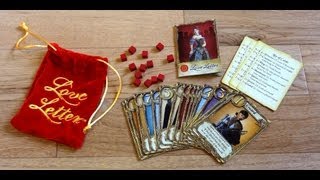
The physical design is a masterclass in constraint. Sixteen cards, favor tokens, and a quick-reference card—that's the entire package. Yet this minimalism feels intentional, not restrictive. Each card carries meaningful iconography; the reference card (which also serves as a quick setup guide) reduces teaching time to minutes. Multiple themed versions exist—Marvel, Batman, original fantasy—allowing players to choose an aesthetic while preserving the core game. This economy extends to the game's footprint: Love Letter fits in a coat pocket, a travel bag, a purse. No dedicated table space needed. The portability and low cost-per-play make it an accessible gateway, yet the quality of components and artwork ensure it doesn't feel cheap. This is professional design at an intimate scale.
Layered Social Deduction for All Skill Levels
Love Letter works as a first introduction to social deduction (teaching someone their first Hidden Roles or Bluffing game) and as a quick palate-cleanser for experienced players returning from heavier games. Newcomers engage with surface-level strategy: play safe cards, avoid obvious eliminations, hold the Princess. Veterans hunt micro-tells: hand hesitation, bluff frequency, play patterns under stress. The Countess reveal (forced play with King or Prince in hand) teaches information-as-signal. The Priest and Baron create moments where knowledge itself becomes currency. Yet the game never punishes casual play; lucky draws and bold bluffs can still win. This accessibility without compromise is what makes Love Letter exceptional—it scales from party game to competitive deduction puzzle depending on the table's investment.
Potential Drawbacks
Player Elimination & Feeling Sidelined
In longer rounds or with higher player counts, elimination can leave some players watching passively. A careless Guard call or an unlucky Prince draw in round two can knock a player out for the remaining five minutes of the round. While the quick pace minimizes frustration, some players resent sitting idle, especially if the round drags (which happens when players are cautious or when the deck runs long). The recent edition expanded to 2-6 players from the original 2-4, which mitigates this somewhat—six-player games mean shorter per-person downtime—but the mechanic remains inherent to the design. Players seeking constant agency may find Love Letter's elimination frustrating.
Variance & Luck-Driven Outcomes
Card draw luck can overshadow skill. A player who draws the Princess early and manages to protect it can win a round by simply never playing it. An opponent who gets only low-value cards faces an uphill battle regardless of play quality. A fortunate Guard call wins through probability, not deduction. While skilled players win more often over multiple rounds, individual rounds can hinge on chance. Some players find this variance liberating (anyone can win; newcomers feel competitive); others find it frustrating (the best decision-maker doesn't always prevail). The game requires acceptance that luck is a feature, not a bug, and that this keeps everyone engaged. Tables that demand perfect information or deterministic outcomes may not embrace Love Letter's chaotic joy.
If You Enjoy Love Letter
Love Letter enthusiasts should explore Coup for a more aggressive hidden-role game with player elimination, Secret Hitler for social deduction with higher player counts, and Masquerade for card-play deduction with interactive trading. For a lighter, faster fix, try Red Seven, which shares Love Letter's minimalist design and hand-management puzzle. Citadel offers character powers and drafting in a similar footprint. For those wanting Love Letter's intimacy with trick-taking mechanics, The Crew provides cooperative tension without social deduction. Carcassonne works beautifully with Love Letter's hand-holding variant, and Marvel Infinity Stones (a Love Letter variant itself) expands the formula with asymmetric roles and larger player counts. Werewolf and The Gang provide deeper social deduction at the cost of higher overhead, while Cockroach Poker distills bluffing into pure psychology.
What Reviewers Are Saying
"Love Letter is a delight and it packs away into a pouch that can be put into your pocket or a purse. You can teach it in a few minutes and there are small player aids to help folks familiarize themselves with the different cards. Each round is quick but it's full of fun moments."
— 3 Minute Board Games
"As a gateway game into social deduction this game really can't be flawed. It's a really easy game just to pull out your pocket, pull out your handbag, pull out your coat and just play when you're out and about in a park in a pub in a beer garden."
— Get Into Games
"It's essentially 16 cards and some tokens. At your turn you get two cards in your hand and you have to play one of them and this card can tell you that you swap cards with other people or you can say that other person has to drop their card. The main idea is to play the last one alive or make sure that somebody drops the princess. Very simple, fantastic game."
— Board Game Hangover