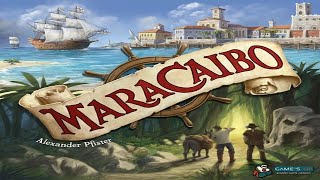
Maracaibo box art

Maracaibo

Game ID: GID0201547
Collection Status
Description

Maracaibo, a strategy game for 1-4 players by Alexander Pfister, is set in the Caribbean during the 17th century. The players try to increase their influence in three nations in four rounds with a play time of 40 minutes per player.

The players sail on a round course through the Caribbean, e.g., you have city tiles where you are able to perform various actions or deliver goods to. One special feature is an implemented quest mode over more and various tiles, which tells the player, who chase after it, a little story.

As a player, you move with your ship around the course, managing it by using cards like in other games from Alexander Pfister.

NOTE: The Spanish and Portuguese editions of Maracaibo contain La Armada mini-expansion packaged inside the base game's box.

Year Published
2019
Transcript Analysis
Browse transcript mentions, sentiments, pros/cons, mechanics, topics, quotes, and references.
Total mentions: 15
This page: 15
Sentiment: pos 14 · mix 1 · neu 0 · neg 0
Mentions per page
Top
Showing 1–15 of 15
Video swQ5oZs81kI Unknown Channel playthrough at 0:00 sentiment: positive
video_pk 62071 · mention_pk 154659
Unknown Channel - Maracaibo video thumbnail
Click to watch at 0:00 · YouTube ↗
Overall sentiment (raw)

positive
Pros
  • Varied and modular board setup with many strategies
  • Engaging engine-building through upgrades and questing
  • Thematic and flavorful components like figure heads
  • Playable solo mode with a dedicated solo deck
Cons
  • Rulebook and iconography are dense and complex
  • Difficult to track rounds; no obvious round counter
  • Rule sheet could be more accessible; learning curve high
  • Icon clutter and board warping can be confusing during play
Thematic elements
  • commerce, exploration, raiding, and ship-based empire-building
  • Caribbean region including the Gulf of Mexico and Maracaibo area
  • tutorial playthrough with live commentary; heavy iconography
Comparison games
  • Maracaibo
Mechanics (from transcript analysis)
  • black market tiles — Place black market tiles on locations to gain points or other benefits.
  • burying/unburying treasure — Manage markers to bury or unbury treasure on treasure islands for points.
  • end game bonuses — Draw quest cards to earn endgame points; some quests reward endgame bonuses.
  • Endgame scoring — Scoring based on rivers crossed, treasures buried, quests, improvements, and conditional bonuses on gray scrolls.
  • exploration — Move explorers along the board to reach locations and gain effects or movement bonuses.
  • figure heads and upgrades — Acquire figure heads with bonuses; upgrades grant immediate or ongoing benefits.
  • gaining quests — Draw quest cards to earn endgame points; some quests reward endgame bonuses.
  • location actions and cards — Each location offers actions in any order; combining them via slash logic (or) for complex sequences.
  • Raiding — Raid spaces to gain treasures, upgrade ships, or activate other effects, using raiding power.
  • Resource management — Use currency to perform actions and upgrade; resources are unlimited on board for exchange.
  • resource management (dloons) — Use currency to perform actions and upgrade; resources are unlimited on board for exchange.
  • upgrading ships — Place upgrade markers to unlock immediate and ongoing benefits for the ship and actions.
Video topics + discussion points
No key topics recorded for this video.
Quotes (from this video)
  • This board is completely variably set up.
  • I am really liking this.
  • I like the flow of this.
  • The rule book sucks.
  • This does play very smooth once you understand what the rules are.
  • I wish there was like a quick reference action sheet here because this is just too much all at once.
References (from this video)
No references stored for this video.
Video Rp8vOUPx-7k Allies or Enemies top_100_list at 6:19 sentiment: positive
video_pk 61186 · mention_pk 153814
Allies or Enemies - Maracaibo video thumbnail
Click to watch at 6:19 · YouTube ↗
Overall sentiment (raw)
positive
Pros
  • Mechanical depth with thematic flavor
  • Great integration of card actions and movement
Cons
  • Campaign text is often criticized for quality (not central to play) — may affect immersion
Thematic elements
  • Crewed ships, campaigning narrative
  • Caribbean trade and exploration on a voyage
Comparison games
  • Great Western Trail
Mechanics (from transcript analysis)
  • Campaign/board changes — Campaign mode reshapes the board and challenges over time.
  • card drafting — Acquire crew/agents and utilize them for action choices.
  • Card drafting and crew management — Acquire crew/agents and utilize them for action choices.
  • Rondel — Move a ship along a river/sea track to activate actions.
  • Rondelle movement — Move a ship along a river/sea track to activate actions.
Video topics + discussion points
No key topics recorded for this video.
Quotes (from this video)
  • it's gorgeous
  • everything about this game is gorgeous
  • it's jazz chess with insects
  • it's a combat game that I really like
  • don't be turned off by it being too pretty
References (from this video)
No references stored for this video.
Video 1RcXw6gbP18 Allies or Enemies top_100_list at 23:31 sentiment: positive
video_pk 61082 · mention_pk 153522
Allies or Enemies - Maracaibo video thumbnail
Click to watch at 23:31 · YouTube ↗
Overall sentiment (raw)
positive
Pros
  • clever pace control and strategic depth
  • rich thematic feel and interactions between players
Cons
  • can be dense for newcomers
  • requires careful planning to avoid overload
Thematic elements
  • ship navigation, route planning, and resource management
  • Caribbean trading voyages under the banner of a cruise-era exploration
  • pacing-driven rondel movement with card-driven actions
Comparison games
none
Mechanics (from transcript analysis)
  • Multi-use cards — cards can be used for resources or ongoing benefits
  • pace control — the distance you move limits or enables actions, shaping endgame timing
  • Rondel — players move around a circular track to determine actions
  • rondel movement — players move around a circular track to determine actions
Video topics + discussion points
No key topics recorded for this video.
Quotes (from this video)
  • it's ugly as is a game comes
  • Prelude expansion which I'm going to say is the only expansion you need for this game
  • it's the chess of racing games
  • it's a game of inches
  • the Wind Waker-esque board game that is out there
  • the campaign element really nicely and I like that they group The like the each play is three chapters in a setting
  • you can play a game of this in an hour and a half with two players
  • you are building that Tableau and your Tableau gets outrageous
References (from this video)
No references stored for this video.
Video P4eHtwCKkko Board of It top_10_list at 1:07 sentiment: positive
video_pk 42357 · mention_pk 128532
Board of It - Maracaibo video thumbnail
Click to watch at 1:07 · YouTube ↗
Overall sentiment (raw)
positive
Pros
  • Solid euro design with a strong engine
  • Thematic integration and high replay value
  • Elegant action economy once learned
Cons
  • Steep learning curve
  • Potential downtime during others' turns
Thematic elements
  • mercenary crews, competing colonial nations, fame and wealth
  • Caribbean trading and piracy during the colonial era
  • system-driven with thematic flavor and exploration
Comparison games
none
Mechanics (from transcript analysis)
  • Crew recruitment and fleet management — Hiring crewmates and coordinating fleets to optimize actions and scoring.
  • Economic engine and area development — Trade routes, ship/crew management, and rapid expansion to gain income and influence.
  • Rondel — Players move around a fixed action ring to select actions in a strategic order.
  • Rondel action selection — Players move around a fixed action ring to select actions in a strategic order.
Video topics + discussion points
No key topics recorded for this video.
Quotes (from this video)
  • this is a really solid euro game by one of our favorite designers Alexander Pfister and one of our favorite publishers Capstone Games
  • the reason we're not drinking this right now is because this is actually a friend's bottle
  • it's elevated if you have a glass of wine to go with it
  • it's an excellent euro game and alexander definitely has a very distinct style
  • it's a very very funny game and also the RPG elements
  • this is a really great game to play and you should check it out
  • it's a lovely little cocktail try it out
  • it's a very popular game
References (from this video)
No references stored for this video.
Video uacc39cBrx0 Board Game Garden general_discussion at 21:19 sentiment: positive
video_pk 40667 · mention_pk 123291
Board Game Garden - Maracaibo video thumbnail
Click to watch at 21:19 · YouTube ↗
Overall sentiment (raw)
positive
Pros
  • Rich thematic feel
  • Excellent table presence and depth
Cons
  • Steep learning curve
  • Can run long at higher player counts
Thematic elements
  • Campaign-style engine-building with route planning
  • Caribbean piracy and trading routes
  • Story-like exploration of seas and decisions
Comparison games
none
Mechanics (from transcript analysis)
  • engine building — develop routes and ships to optimize actions
  • engine-building — develop routes and ships to optimize actions
  • route planning / dice-driven actions — plan voyages with dice mechanics to fulfill objectives
  • set collection — collect goods to gain points and special abilities
Video topics + discussion points
No key topics recorded for this video.
Quotes (from this video)
  • My heart is set on Miyabi it's happening
  • Paint the Roses is gonna win
  • Seize the Bean that's the winner
  • I think I'm going with Katan y'all
  • I think Cascadia is still going to be my choice
References (from this video)
No references stored for this video.
Video pqnjMEhvvzY Barrel & Tally game_review at 0:00 sentiment: positive
video_pk 34613 · mention_pk 103098
Barrel & Tally - Maracaibo video thumbnail
Click to watch at 0:00 · YouTube ↗
Overall sentiment (raw)
positive
Pros
  • Interlocking mechanics feel cohesive and well balanced when combined
  • Legacy elements add a meaningful, story-driven layer without being mandatory
  • Accessible learning curve: the loop is repetitive but varied enough to stay engaging
  • The theme and nautical flavor are strong and immersive
Cons
  • Component aesthetics are functionally solid but visually underwhelming; tokens and color choices feel muddy
  • Cube placement on villages can create tracking clutter and counting headaches
  • Potential analysis paralysis in card choices due to many similar but distinct options
  • Ship upgrade stacking can be fiddly and risks accidental knock-overs if not on a stable surface
Thematic elements
  • swashbuckling exploration, ship enhancement, influence across nations
  • Caribbean mercenary trade during the Age of Sail
  • dynamic, evolving through legacy-style choices
Comparison games
  • Great Western Trail
Mechanics (from transcript analysis)
  • Card-driven actions and ship upgrades — cards provide either upgrades by discarding or playing with immediate effects; some require managing a two-disk system
  • City and village actions — stops in cities unlock upgrades and one-time bonuses; villages grant money, card plays, or quest progress
  • Combat points and nations interaction — points are spent to gain influence or place influence cubes, affecting endgame scoring
  • Explorer track — replaces trains from Great Western Trail; rewards advance as you move along and unlocks bonuses
  • Influence Points — combat and influence points move nations on a track, affecting endgame scoring and strategy
  • Influence tracker — combat and influence points move nations on a track, affecting endgame scoring and strategy
  • Legacy elements (optional) — story tiles and cards alter the board and game state across sessions; optional to enable
  • Legacy game — story tiles and cards alter the board and game state across sessions; optional to enable
  • quests — quest tiles require certain resources to gain rewards and victory points
  • Rondel — players move their ship around a board loop and trigger city or village actions at each stop
  • Rondel/ship movement loop — players move their ship around a board loop and trigger city or village actions at each stop
  • Track advancement — replaces trains from Great Western Trail; rewards advance as you move along and unlocks bonuses
Video topics + discussion points
No key topics recorded for this video.
Quotes (from this video)
  • this is one of our personal favorites
  • it's just a really fun game
  • this is definitely a must own
  • all these mechanisms link into each other really well
  • it's just fun to sail around the map
  • the legacy elements elevate the gameplay
References (from this video)
No references stored for this video.
Video flS0zGlE6xY Unknown Channel game_review at 0:00 sentiment: mixed
video_pk 34097 · mention_pk 101520
Unknown Channel - Maracaibo video thumbnail
Click to watch at 0:00 · YouTube ↗
Overall sentiment (raw)
mixed
Pros
  • Highly interlocking mechanisms with emergent strategies
  • Rich campaign structure with evolving Caribbean map
  • Deep card selection and building choices that reward planning
Cons
  • Heavy rules overhead and dense setup
  • Tone-deaf portrayal of colonial era; white-centric characters
  • Rulebook readability and narrative text criticized as poor
Thematic elements
  • privateering, trade, exploration
  • Caribbean during the 17th century, colonial trade era
  • campaign-driven narrative with evolving locations and chapters
Comparison games
  • Great Western Trail
  • Mombasa
  • Blackout Hong Kong
Mechanics (from transcript analysis)
  • campaign progression with chapters and evolving map — 11 chapters; evolving Caribbean setting; non-linear progression.
  • combat system using country cubes and influence — combat value to increase influence or place cubes for rewards.
  • deck-building and card management — cards provide actions, resources, and permanent abilities when built.
  • quest/mission system and location-based rewards — special locations and quests give unique rewards, often bypassing standard actions.
  • Rondel — movement on a central track where each space offers different actions depending on city/village and paid costs.
  • rondel-like modular action selection — movement on a central track where each space offers different actions depending on city/village and paid costs.
  • set collection — gather goods, coins, and disks to perform actions and fulfill quests.
  • Set collection and resource management — gather goods, coins, and disks to perform actions and fulfill quests.
  • variable card effects and chain interactions — cards interact to unlock future bonuses and persistence across rounds.
Video topics + discussion points
No key topics recorded for this video.
Quotes (from this video)
  • Maracaibo is the new heavy euro game from Alexander Pfister
  • it's a campaign game which takes you through 11 chapters of a narrative
  • these cards have three functions you can spend it as a good when arriving at cities you can spend it as an object when arriving at special locations which have been designated as quests which lets you forego a city or village action or you can build the card and unlock whatever ability it provides
  • the master builder is amazing
  • Maracaibo somehow remains not annoying
  • there's hundreds and hundreds of cards with multitudes of different characters and all of them are indeed very white
  • the open nature of the campaign mode makes it irrelevant whether you played from start or finish or you played with the same people or constantly revolving cast
  • this is scarcely an opportunity to explore on this board
  • the waves will sweep you aside on to expensive side tracks
References (from this video)
No references stored for this video.
Video sz5Dmz7xpbw Chairman of the Board general_discussion at 7:32 sentiment: positive
video_pk 13314 · mention_pk 39047
Chairman of the Board - Maracaibo video thumbnail
Click to watch at 7:32 · YouTube ↗
Overall sentiment (raw)
positive
Pros
  • great stock/investment-like mechanism
  • engaging and varied play
Cons
  • can be punishing if misplayed
Thematic elements
  • deck-driven action selection with tension
  • Caribbean exploration
  • thematic euro with systems-driven play
Comparison games
  • Pulsar 2849
  • Luxor
Mechanics (from transcript analysis)
  • dice drafting — dice-derived actions with variable effects
  • dice_drafting — dice-derived actions with variable effects
  • engine building — cards and actions build up efficiency
  • engine_building — cards and actions build up efficiency
Video topics + discussion points
No key topics recorded for this video.
Quotes (from this video)
  • probably my favorite tire placement game of all time
  • this one is like a companion game to el grande
  • Arc Nova certainly the hotness at the moment
References (from this video)
No references stored for this video.
Video mKyUOX-fKJc Chairman of the Board top_10_list at 25:56 sentiment: positive
video_pk 12377 · mention_pk 36148
Chairman of the Board - Maracaibo video thumbnail
Click to watch at 25:56 · YouTube ↗
Overall sentiment (raw)
positive
Pros
  • deep integration of multiple design influences
  • campaign-like with strong thematic hooks
Cons
  • can be dense and heavy for two players
Thematic elements
  • influence with nations and quest completion
  • Caribbean sea exploration and quest-based play
  • story-driven with helper recruitment
Comparison games
none
Mechanics (from transcript analysis)
  • area control / quest completion — player moves through a map completing quests with helper recruitment and influence mechanics
  • multi-use card system — cards have multiple uses; choosing one sacrifices another
Video topics + discussion points
No key topics recorded for this video.
Quotes (from this video)
  • I think Concordia is one of the best games ever made, full stop
  • two players it works extremely well because the downtime is gone
  • it's a brain burner game
  • the tension in the two-player game is great
  • loads of content to explore, tons of replayability
References (from this video)
No references stored for this video.
Video thllkDb_HJI Unknown Channel general_discussion at 4:37 sentiment: positive
video_pk 10228 · mention_pk 30200
Unknown Channel - Maracaibo video thumbnail
Click to watch at 4:37 · YouTube ↗
Overall sentiment (raw)
positive
Pros
  • deep strategic options
  • strong thematic resonance
Cons
  • steep learning curve
Thematic elements
  • ship routes and campaign-style engine-building
  • Caribbean trade and piracy era exploration
  • n/a
Comparison games
none
Mechanics (from transcript analysis)
  • engine-building / area movement — players build engines of their shipyard and travel to different regions with varying effects
Video topics + discussion points
No key topics recorded for this video.
Quotes (from this video)
  • representation is really really important you know like this is speaking from experience growing up as a people of color
  • we are curious to know what your experience was like with spiel digital and online conventions
  • calico, i really enjoyed learning and playing calico
  • we would like to know what your thoughts are on Patreon and what you would like to see
  • this month you'll probably see beyond the sun and at least on two Fridays we're going to be live streaming
References (from this video)
No references stored for this video.
Video hfP2PJYR3r0 Side Game LLC top_10_list at 1:32:13 sentiment: positive
video_pk 9127 · mention_pk 26918
Side Game LLC - Maracaibo video thumbnail
Click to watch at 1:32:13 · YouTube ↗
Overall sentiment (raw)
positive
Pros
  • innovative campaign structure with story decks
  • great thematic immersion and flavor
  • elegant card-driven progression that stays fresh across games
Cons
  • some scenarios can be highly luck-driven
  • learning curve for the card interactions can be steep
Thematic elements
  • exploration, piracy, and opportunistic quests
  • Caribbean mercenary exploits in a sea-trade-pirate backdrop
  • campaign-style with a chain of story-driven story decks
Comparison games
  • Oath: Chronicles of Empire and Exile
  • Eldritch Horror
  • Mage Knight
Mechanics (from transcript analysis)
  • campaign deck/story deck integration — story cards provide ongoing quests and add new board elements.
  • multiflow route progression — story strands and side-quests dynamically alter scoring and routes.
  • open-world island exploration — you visit islands, discover quests, and manage resources.
Video topics + discussion points
No key topics recorded for this video.
Quotes (from this video)
  • easy to set up and it's short
  • the new modules that you get in this really cool they change up the game for the better
  • this is the open-ended thing open-ended so the story you tell in between you kind of make up as you go along
  • the campaign system is tiny all you're going to be doing is adding a card
  • it's a one-and-done game so you open this one up you throw it away
  • the dream world or real world
  • the story deck add new cards to the deck and narrative arcs on the board
References (from this video)
No references stored for this video.
Video DyhgWCUdKoY John Gets Games general_discussion at 2:20 sentiment: positive
video_pk 7467 · mention_pk 22117
John Gets Games - Maracaibo video thumbnail
Click to watch at 2:20 · YouTube ↗
Overall sentiment (raw)
positive
Pros
  • Rich comparison with other Alexander Pfister titles
  • strong thematic flavor and interactive play
Cons
  • not as varied as some rivals; could be dense for new players
Thematic elements
  • commerce, exploration, and voyage logistics
  • caribbean-scale maritime trading and exploration setting
  • multi-path scenario-driven play with evolving states
Comparison games
  • Boone Lake
  • Nova Luna
  • Terraforming Mars
Mechanics (from transcript analysis)
  • deck-building with action cards — cards provide actions and bonuses; players manage timing and combos
  • story-driven scheduling — timed events and decisions influence sequence and scoring
Video topics + discussion points
No key topics recorded for this video.
Quotes (from this video)
  • "I think this is my favorite Alexander Fisher game"
  • "it's just it just works for me like it just clicks with my brain"
  • "I adore teach you it's one of my favorite games"
  • "terraforming mars is one of my favorite games"
  • "you can gain hopefully some insight from that"
References (from this video)
No references stored for this video.
Video h-yy4z6P0ow Maven University tutorial at 0:41 sentiment: positive
video_pk 5538 · mention_pk 16471
Maven University - Maracaibo video thumbnail
Click to watch at 0:41 · YouTube ↗
Overall sentiment (raw)
positive
Pros
  • Deep, multi-layered economy with upgrades, quests, and city actions
  • Campaign/story content variability through legacy/story cards
  • Tight integration of exploration, combat, and trade mechanics
  • Rich thematic flavor with multiple scoring paths
  • Clear, modular component design and visual cues
Cons
  • Steep learning curve and rule depth for new players
  • Potential for longer play sessions due to four-round structure
  • Component management and tracking can become fiddly during heavy action turns
Thematic elements
  • trade, exploration, naval power, empire-building
  • Caribbean, 17th-century colonial era
  • campaign/legacy-driven with evolving map and quests
Comparison games
none
Mechanics (from transcript analysis)
  • Assistants — Blue scrolls create optional main actions; assistants cost figures and may be activated once per visit.
  • Campaign/Legacy Integration — Standalone campaigns with evolving content stored in a special bag to separate legacy materials.
  • Combat System and Influence — Engage combat to gain nation-specific benefits, using combat value and spending points/figures to activate actions.
  • End-Game Scoring and Prestige — Points come from tracks, completed quests, prestige buildings, and nation-based scoring with nobility adjustments.
  • Main Actions and Destination Abilities — On your turn, perform a main action at your destination; options depend on where you finished.
  • Movement and Sailing — Move 1–7 spaces clockwise around the board; you may share spaces with opponents.
  • Quests, Story Cards, and Legacy — Story cards drive quest tile placement and can alter map state; campaigns yield variability and legacy changes.
  • Resource management — Three resources—balloons, combat points, and figures—are earned, spent, and tracked to drive actions and scoring.
  • Upgrade system — Player boards offer 12 upgrade slots; you unlock them by clearing discs and acquire upgrades throughout the game.
  • Village Actions and City Actions — Visit villages and cities to gain upgrades, money, goods, or to buy cards; the number of village actions scales with movement.
Video topics + discussion points
No key topics recorded for this video.
Quotes (from this video)
  • In Maraco, players are seafaring merchants in the colonial era of the Caribbean.
  • The game plays in four rounds and each round plays in turns round and round the table until one player has completed a lap of the board.
  • There are three main resources: the balloons, combat points, and figures.
  • On your turn, you can move a card from your hand to one of these three planning spaces.
  • The most important village action is to buy a card from your hand or planning area.
  • There is a special blue colored bag with the game, letting you keep your active legacy content separate from the rest.
References (from this video)
No references stored for this video.
Video ZOGmcdM3JEI Roto Run Through top_10_list at 30:19 sentiment: positive
video_pk 2276 · mention_pk 6619
Roto Run Through - Maracaibo video thumbnail
Click to watch at 30:19 · YouTube ↗
Overall sentiment (raw)
very_positive
Pros
  • Transforming a competitive design into a cooperative experience with Marrabo/Uprising
  • Strong integration of narrative and theme with gameplay mechanics
  • Innovative deck-building that remains punishing yet fair
Cons
  • Rule explanations can be lengthy due to campaign complexity
  • The merged cooperative variant requires players to align values and strategy
Thematic elements
  • Cooperative (in uprising variant) and epic campaign storytelling
  • Caribbean privateering era with colonial and indigenous dynamics
  • Narrative-driven, with an emphasis on empowerment of indigenous populations
Comparison games
none
Mechanics (from transcript analysis)
  • Deck-building with campaign progression — Characters and cards unlock through a campaign, with optional standalone or narrative-linked play
  • Multi-use cards — Cards function as crew, goods, or events; some are used for trading and others for actions
  • Rondel — Movement around a large circular track to reach ports and manage actions
  • Rondelle movement — Movement around a large circular track to reach ports and manage actions
Video topics + discussion points
No key topics recorded for this video.
Quotes (from this video)
  • It's the castles of Burgundy. Oh my gosh, this is Euro perfection.
  • Everything about Tiny Towns is fantastic. It's phenomenal.
  • The Loop is a very pandemic inspired style game.
  • This is the greatest cooperative fantasy deck building game of all time.
  • The most powerful things we can do in this game is call a meeting between department heads.
  • Earth is a masterpiece of positive player interaction. Really fun, tight, constrained tableau building and one of the best engine builders ever.
References (from this video)
No references stored for this video.
Video 7NXLNADQTtY Unknown Channel general_discussion at 7:07 sentiment: positive
video_pk 526 · mention_pk 1596
Unknown Channel - Maracaibo video thumbnail
Click to watch at 7:07 · YouTube ↗
Overall sentiment (raw)
positive
Pros
  • immersive theme and Pfister signature engine work
  • varied routes and decision-rich play
  • great for fans of Pfister-style euros
Cons
  • complex to teach
  • can be lengthy and heavy for some groups
Thematic elements
  • commercial empire building, risk management, engine-driven play
  • Caribbean trade routes, piracy era, voyage-driven exploration
  • story-like progression through voyages and decisions
Comparison games
none
Mechanics (from transcript analysis)
  • Deck building — Build an engine through card play and actions.
  • deck-building / hand management — Build an engine through card play and actions.
  • Modular board — Different ship routes and event triggers shape each session.
  • Resource management — Manage ships, resources, and effects across voyages.
  • Resource/crew management — Manage ships, resources, and effects across voyages.
  • Variable board / modular structure — Different ship routes and event triggers shape each session.
Video topics + discussion points
No key topics recorded for this video.
Quotes (from this video)
  • it's a very difficult game
  • a fully cooperative game where you are trying to protect this island from invaders essentially
  • each player plays as a different spirit who is protecting the island
  • each spirit has their own thematic asymmetric card
  • we vow to do more play-throughs of because we really enjoyed it
  • it's a dry euro
  • this is a big combo-tastic game
  • chronicle Darwin's journeys throughout the Galapagos Islands
  • it's a party style game where you're going to be drawing
  • it's hilarious
  • I'm terrible at it
  • we played with the sisters and everybody had a really good time
  • we definitely want to do another top 10 this month
  • maracaibo this week
  • we're going to release maracaibo this week
  • we think cloud age is on its way
References (from this video)
No references stored for this video.
Transcript Navigation
Top
Showing 1–15 of 15
View on BoardGameGeek