/pic2004618.jpg)














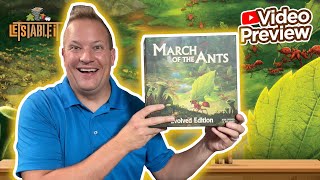


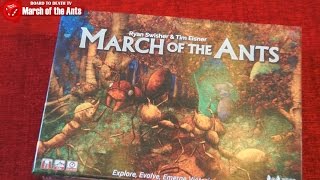
March of the Ants Deep Dive
What the Community Thinks About March of the Ants
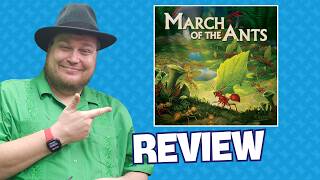
March of the Ants has earned genuine enthusiasm from the board gaming community as a fresh take on the light 4X genre. Reviewers from Board to Death TV to Let's Table It consistently praise its well-executed theme, solid mechanics, and the surprising depth it offers despite an approachable ruleset. Designed by Tim Eisner and published by Weird City Games, it manages to deliver multiple viable paths to victory while maintaining strong player interaction throughout. What stands out most is how the game invites both tactical positioning and long-term planning, creating a dynamic experience that feels different each time players sit down to the table.
Core Mechanics That Define March of the Ants
Multi-Purpose Cards and the Evolution System
Cards in March of the Ants serve dual roles as both immediate actions and permanent upgrades, creating a meaningful tension in how you acquire and deploy them. The evolution system lets players upgrade their ant species across three body parts: head, thorax, and abdomen, each offering distinct mechanical benefits. Head evolutions increase battle strength, thorax upgrades grant additional movement, and abdomen improvements enhance feeding efficiency. This layered design means players constantly balance the urge to play cards now against the long-term value of building complete evolutionary sets for bonus points at game end. The card system becomes a core expression of each player's colony strategy.
Area Control Through Exploration and Expansion
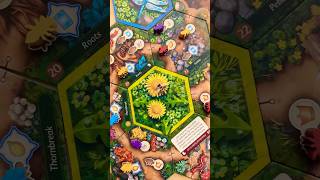
The meadow grows organically as players explore, drawing and placing hexagonal tiles to expand the map. Each tile features collection sites that reward players with food, larvae, cards, or colony points. Control sites determine who claims territory, while the central Great Tunnel serves as the battleground where colonies compete for dominance. This exploration mechanic ties resource gathering to territorial expansion, so players must constantly decide whether to consolidate current territory, push into new areas, or prepare for coming battles. Movement across the expanding landscape, aided by wormholes that shortcut across distant tiles, creates organic pathways for meaningful tactical decisions.
The March of the Ants Experience
Dynamic Turns with Constant Player Agency
March of the Ants keeps all players engaged throughout every turn via its reaction system. When the active player chooses an action, whether explore, forage, march, or play a card, all other players immediately respond with their own minor actions. This creates a cohesive network of player-to-player interactions that eliminates downtime and keeps decisions happening at the table constantly. No player sits passively waiting for others to finish; instead, the game encourages tactical positioning and proactive resource management by everyone at once.
Emergent Strategy Across Multiple Victory Paths
Victory in March of the Ants emerges from various sources: controlling hex tiles around the Great Tunnel, evolving your ant species, completing colony goal cards, winning battles, and collecting the most of certain resources. This multiplicity means players rarely feel locked into a single approach. Some flourish by building powerful evolutions and dominating through superior ants, while others excel through careful resource collection and steady territorial expansion. As the game progresses and more tiles enter play, new opportunities continually open, rewarding players who adapt their strategy as the meadow grows and battles erupt.
What Makes March of the Ants Stand Out
A Refreshing Theme That Shapes Gameplay
Rather than forcing an ant theme onto generic mechanical bones, March of the Ants genuinely implements colony biology into its ruleset. The progression from larvae to ants, the need to balance colony growth with feeding requirements, and the evolutionary adaptation of your species all flow naturally from the mechanical design. The artwork strikes a pleasing balance between realism and caricature, creating an appealing aesthetic that complements rather than distracts from play. Reviewers consistently note that the theme feels integral, recalling fondly the SimAnt computer game while offering a distinct tabletop experience.
Elegant Depth Without Overwhelming Complexity
March of the Ants succeeds at a difficult design goal: offering genuine strategic depth while remaining approachable to new players. The turn structure is straightforward and the individual actions are easy to understand, but the combinations and interactions create surprising complexity. With multiple solo, cooperative, and variant modes, plus the flexibility to play across a range of counts with rule adjustments, the game adapts to different group sizes and preferences. Players find themselves making meaningful decisions consistently, yet rarely feel bogged down by rules overhead after the initial setup.
Potential Drawbacks
Card Balance and Rule Density
Some cards possess notably higher efficiency than others without proportional downsides, particularly certain event cards that offer strong effects at minimal cost. While reviewers note this imbalance does not overwhelm strategic play, it does create a subtle incentive to prioritize certain cards, potentially narrowing the range of viable strategies at the margins. Additionally, despite a clear rulebook with good examples, the game contains enough detail that players may need to reference it during early plays to confirm specific interactions around battles, feeding, or special tile effects.
Tactical Play Demands Careful Resource Planning
Success in March of the Ants requires disciplined resource management, particularly around food tokens and larvae reserves. Players who commit their resources carelessly can find themselves unable to feed their ants, which not only removes pieces from the board but blocks them from claiming end-game scoring bonuses. This creates moments of genuine tension and the potential for self-inflicted setbacks, which some players may experience as frustrating rather than rewarding. The learning curve involves discovering which resources matter most at different stages, and early mistakes in this area can meaningfully dent your competitive position.
If You Enjoy March of the Ants
If the ant-colony theme and 4X mechanics appeal to you, a few titles offer complementary experiences. Eclipse shares March of the Ants' approach to resource management, technological progression through card selection, and player interaction within a comparable strategic scope, rewarding long-term planning while keeping tactical decisions relevant throughout. For those who love the colony-building fantasy itself, the classic SimAnt captures the same joy of growing and evolving a complete organism, which several reviewers cite as the nostalgic touchstone that March of the Ants evokes at the table. Both share the satisfaction of watching a small colony grow increasingly sophisticated through deliberate choices.
What Reviewers Are Saying
"The gameplay is very solid. It offers players lots of choice and avenues for different tactics and strategies. Players gain points through attacking, controlling hexes, getting a set of evolution cards, meeting objectives, and having the most of a type of resource or card at the end of the game."
— Board to Death TV
"It's not super complicated, yet there are a lot of choices and a lot of combos that you can do to change things up. The design is great, and it lets me relive my SimAnt experience from the past. Rarely are you looking back through the rulebook in this game. You need to be aggressive while also being smart."
— Let's Table It
"March of the Ants is a 4X civilization game where each player grows an ant colony. Throughout the game, you'll explore the meadow, gather resources, evolve a unique ant species, and march to battle. This is a game that has multiple different paths to victory."
— Board Game Sanctuary