/pic6937963.jpg)
/pic4490309.png)
/pic3962955.jpg)
/pic4441140.jpg)
/pic4457040.jpg)
/pic4455600.jpg)
/pic4455104.jpg)
/pic4457038.jpg)
/pic7486291.jpg)
/pic7486290.jpg)
/pic6018347.png)
/pic6018341.png)
/pic6937964.jpg)
/pic6937963.jpg)
/pic6937962.jpg)
/pic6948439.jpg)



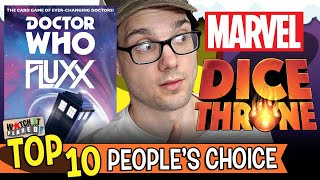
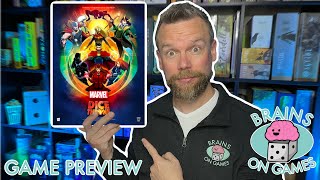







Marvel Dice Throne Deep Dive
What the Community Thinks About Marvel Dice Throne
Marvel Dice Throne occupies a unique place in the head-to-head combat game landscape. It sits at the intersection of accessibility and strategic depth, drawing players who crave asymmetry and thematic immersion. Channels like Tim Chuon celebrate it as a favorite two-player duel, while Chairman of the Board, though admiring the design, notes the pure player-versus-player format is not for everyone. What makes Marvel Dice Throne resonate is not just that the mechanics work smoothly, but that they feel tied directly to the fantasy of piloting a Marvel hero in direct combat.
Core Mechanics That Define Marvel Dice Throne
Yahtzee-Style Dice Rolling
At its heart, Marvel Dice Throne is a Yahtzee variant reimagined for asymmetric dueling. Players roll a pool of dice, keep or re-roll as they see fit up to twice per turn, then allocate the results to trigger their hero's unique abilities. Unlike classic Yahtzee, the focus is on matching dice faces to powers on your character board, which unlock everything from direct attacks to resource generation. Each roll carries consequence, and each decision about which dice to re-roll shapes your turn's trajectory. Published by Roxley Games, the system rewards both luck and tactical play, creating moments where a lucky roll feels earned and a bad roll offers a pivot rather than total punishment.
Asymmetric Hero Powers and Upgrade Decks
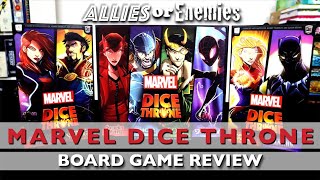
Every Marvel hero in Dice Throne functions as its own mini-ecosystem. Black Widow, Doctor Strange, and the rest each bring a distinct character sheet with bespoke abilities, triggered by specific dice combinations. Beyond the baseline powers, players build out an upgrade deck during play, purchasing new cards with combat points earned from successful dice activations. These upgrades unlock new attacks, modify dice results, introduce status effects, and enable reactive plays. The deck-building loop means no two turns play identically for the same hero, and no two heroes feel like reskins of each other. Learning one hero teaches you the system but not the answer key.
The Marvel Dice Throne Experience
Thematic Immersion Through Mechanics
What elevates Marvel Dice Throne beyond a clean system is how fully it commits to making you feel like the hero you pilot. Each special attack, each counter-ability, each resource-generation moment is designed to echo the flavor of the character. Black Widow's tactical card plays and Doctor Strange's reality-warping each tell a story that matches the source material. This is not a generic combat system with Marvel stickers applied; the theme is baked into the core loop. Players consistently report that after a game or two, they do not just play their hero, they inhabit the role in a way purely mechanical games rarely achieve.
Reactive Card Play and Tense Decision Windows
A standout feature that separates Marvel Dice Throne from other dice-combat games is the presence of instant action cards that can be played reactively. These cards introduce pressure that simple activation systems cannot match. When you play an attack or ability, your opponent has the option to respond with their own cards, forcing you to think constantly about timing, resource management, and bluffing. This interaction creates a tug-of-war where both players remain engaged every turn, not just on their own. Being down on health is not a death sentence if you have the right card at the right moment.
What Makes Marvel Dice Throne Stand Out
A Polished Design That Feels Intentional
Marvel Dice Throne succeeds where many licensed games fail because the design respects the system over the brand. The Marvel license is the draw, but the game's success rests on mechanics that work independently of it. The rules are clean, the turn structure is intuitive once learned, and each component serves a clear purpose. Setup is straightforward, gameplay flows smoothly, and downtime between turns is minimal. This combination of polish and clarity makes the game accessible to newcomers while retaining enough depth to reward experienced players with meaningful decisions.
Scalability from Solo to Team Play
The game's architecture supports multiple formats: one-on-one duels, teams battling together, or solo and cooperative play against scripted opponents. This flexibility means Marvel Dice Throne works as a compact two-player game or as the centerpiece of a larger game night with heroes rotating through matches. The core loop remains satisfying regardless of player count, and the asymmetric hero powers ensure that every matchup feels fresh, without requiring house rules or complex adjudication.
Potential Drawbacks
Repetitive Combat Loop at Extended Play
The head-to-head dueling structure, while engaging, can begin to feel cyclical after many plays. Your turn follows a rhythm: upkeep, income, card play, roll phase, allocation, opponent turn. The specific abilities change with each hero, but the meta-rhythm persists. Some players report that after a dozen or more plays, the satisfaction of a successful attack becomes routine. This is less a flaw than a consequence of the game's focus; if you do not enjoy the core fantasy of dueling, no amount of dice manipulation will change that.
High Cognitive Load for New Players
While the rules are clean, the first play can overwhelm newcomers. Each character brings a unique board with multiple abilities, each ability ties to specific dice results, and the upgrade deck introduces new cards every turn. New players often need a couple of games before the character sheet stops requiring constant referencing. Once that curve is climbed, the game becomes self-explanatory, but the initial learning period is steeper than a straightforward roll-and-move or deck-builder.
If You Enjoy Marvel Dice Throne
If Marvel Dice Throne has captured your attention, you might find similar thrills in Kemet, a territory control game with direct combat and tactical card play. Mindbug brings similar mind-reading pressure to a lighter footprint, rewarding the same anticipation of an opponent's response. Wonderland's War delivers tense player-versus-player conflict through card interaction and battles, scratching the same competitive itch on a larger scale. And for fans of asymmetric powers in a different mode, Root offers wildly varied factions, each playing by its own rules.
What Reviewers Are Saying
"I can certainly see why this is super popular, because it's so well designed. It's just not exactly my cup of tea, because this is a head-to-head, dueling style game where you're trying to deplete each other's health points."
— Chairman of the Board
"What keeps me playing this game over and over again, and why it's one of my absolute favorites especially at two players, is because Marvel Dice Throne allows you to really feel like you're playing as the character. The theme is off the freaking charts."
— Tim Chuon
"In a dueling game, it always feels like there is this pressure involved in playing cards at the right time, because if you play at the wrong time, the other person can react and have a card ready for whatever you're about to play. For me, it increases the level of strategy tenfold."
— Tim Chuon