/pic7632081.jpg)
/pic6242068.jpg)
/pic7316130.jpg)

/pic7632081.jpg)
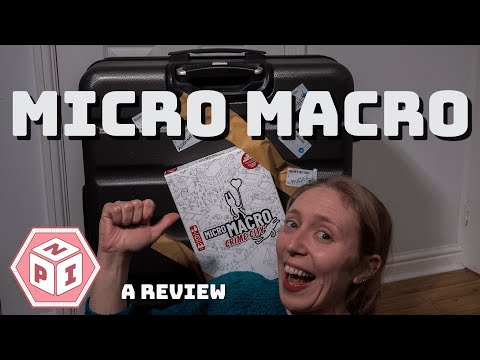















































MicroMacro: Crime City Deep Dive
What the Community Thinks About MicroMacro: Crime City
MicroMacro: Crime City arrives at the intersection of childhood nostalgia and sophisticated deduction. Reviewers across the board gaming community celebrate it as a rare achievement: a game that feels nothing like traditional tabletop gaming yet delivers genuine investigative satisfaction. The game has earned consistent praise as a standout experience, with one prominent reviewer declaring it "my favorite solver mystery game ever made."
Core Mechanics That Define MicroMacro: Crime City
Deduction Through Visual Investigation
The core mechanical loop centers on visual deduction. Players receive task cards that pose questions about the crime at hand. Rather than following rigid rulebooks, they examine the sprawling city map, locate specific scenes, and match visual evidence to answer queries. The lead investigator validates their discoveries by flipping cards. Incorrect matches send players back to searching; correct matches unlock the next layer of the mystery. This structure mirrors the flow of actual investigation: hypothesis, evidence gathering, hypothesis testing, and refinement. The expert mode strips away the guided card structure entirely, proving the underlying logic is robust enough to sustain play with pure visual reasoning alone.
Progressive Complexity and Pattern Recognition
Each case teaches new methods of visual analysis without introducing new rules. Early cases establish basic search patterns. Later cases demand recognizing temporal sequences, spatial relationships, and behavioral patterns across the map. The design trusts players to discover that characters appear in multiple locations at different times, simulating their journey through the city. This progression from simple observation to complex inference creates a learning curve that keeps engagement high across all sixteen cases.
The MicroMacro: Crime City Experience
Detective Noir Atmosphere
The game drips with noir sensibility. The city teems with morally ambiguous characters engaged in predictable but entertaining criminal behavior. Suspects spritz perfume before affairs, lovers betray partners for obvious motives, and the cast reads like a catalog of genre tropes. Yet this reliance on noir clichés becomes a strength rather than a weakness. Because players intuitively understand these patterns, they can focus on the investigative process itself rather than struggling with arbitrary logic. The atmosphere converts a puzzle game into something that feels like stepping into a crime thriller, complete with the satisfaction of working backwards from evidence to motive.
Tactile, Physical Engagement
The game's oversized map demands movement and collaboration. Players stand, lean over the table, point, trace paths with magnifying glasses, and circle locations together. This physicality transforms a seated cerebral experience into something more theatrical and communal. The map itself becomes a character through its density of detail and incidental storytelling. Beyond the crime at hand, players spot background characters living their own lives, momentary glimpses of the city's narrative fabric. This abundance of detail rewards curiosity and creates the sensation of inhabiting a living, breathing world rather than solving an abstract puzzle.
What Makes MicroMacro: Crime City Stand Out
Accessibility to Non-Gamers and Families
MicroMacro requires no rules explanation, no card decks to manage, and no turn order to navigate. Newcomers to gaming grasp the premise instantly and begin contributing immediately. This radical accessibility makes it exceptional as a gateway experience. Couples describe it as ideal for date nights. Parents report it works with older children. The game trades the barrier-to-entry of traditional board games for pure collaborative problem-solving. The cases scale from easy to challenging, allowing players to warm up before encountering genuinely difficult deductions.
Hybrid Nature: Not Quite a Board Game
Reviewers consistently note that MicroMacro exists in a liminal space. It plays more like a Where's Waldo book than a traditional board game, yet it delivers gaming satisfaction that traditional mechanics often struggle to achieve. The format frees it from conventional design constraints. Without turn order or resource management, it can focus entirely on investigative narrative and visual puzzle design. Players report that each completed case triggers an urge to tackle "just one more," a sign of design integrity. The absence of traditional gameist elements paradoxically makes it feel more authentic to the detective fantasy.
Potential Drawbacks
Physical and Practical Limitations
The gigantic map creates genuine challenges. Players with eyesight difficulties report that the intricate artwork blurs together during extended play. The map demands a large, well-lit table and can feel cramped with more than four players, despite the cooperative nature inviting larger groups. The sheer size makes storage and transport inconvenient for casual play. Additionally, the game's lifespan is finite: once all cases are solved, replayability depends entirely on memory of solutions. While the game can be recycled and gifted to players unfamiliar with the cases, this one-time-use aspect differs significantly from traditional games with variable setup options.
Problematic Content and Tone
The game's heavy reliance on noir tropes occasionally lapses into regressive territory. Some cases trivialize serious topics through dark humor in ways that undermine rather than enhance the experience. Problematic terminology and insensitive storytelling choices appear in specific scenarios. The age rating of eight-and-up is misleading; the game contains mature thematic content requiring parental discretion. These issues are frustrating because they needlessly compromise an otherwise exceptional design, creating discomfort for players who otherwise love the core experience.
If You Enjoy MicroMacro: Crime City
Players drawn to MicroMacro likely appreciate the detective fantasy without complex systems. Sherlock Holmes Consulting Detective delivers similar investigation through reading rather than searching, ideal for those preferring a seated experience. Escape room games like Unlock share the collaborative problem-solving and case-by-case structure. Where's Waldo books and I Spy games provide the visual search satisfaction without narrative. Detective: A Modern Crime Board Game introduces deduction with slightly more traditional mechanics. Two-to-four-player cooperative games like Spirit Island offer complex teamwork, though with heavier rules. Hidden object puzzle games capture the search element but lack the deductive framework. Those loving the noir tone might explore Nemesis for darker themed cooperation, though with significantly higher mechanical complexity.
What Reviewers Are Saying
"This is my favorite solver mystery game ever made, and frankly, I don't think you'll believe me. But every time we finished a case, all I wanted to do was play just one more case."
— No Pun Included
"This game won a bunch of awards a year or two ago, and it's not really a game. There's this giant map, and it reminds me of Where's Waldo, and you're finding places on this map and looking for clues. Eventually you'll end up solving the crime, and it's just a fun way to play Where's Waldo, essentially."
— Neon Gorilla
"It's a perfect game for like a date night with your significant other. You just get a huge map, it's Where's Waldo the board game. There's 16 different mysteries that you have to solve, and it's great for two people. It's great for this category because it's a slow game, and you don't have to be a gamer to play it."
— Board Game Hangover