













Mille Fiori Deep Dive
What the Community Thinks About Mille Fiori
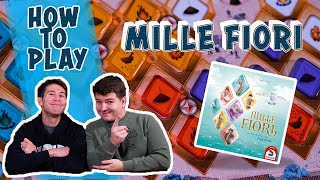
Board game reviewers across the community have embraced Mille Fiori as a standout title from designer Reiner Knizia. The game consistently draws praise for its elegant combination of simple rules and satisfying, fast-moving gameplay. Reviewers highlight it as a game that delivers constant engagement without overwhelming players, making it accessible to newer gamers while offering enough strategic depth to keep experienced players coming back. The general consensus is one of enthusiasm: a game that plays faster than advertised, creates exciting moments throughout, and leaves players eager for another round.
Core Mechanics That Define Mille Fiori
Card Drafting and Tile Placement
At its heart, Mille Fiori uses closed card drafting to drive player decisions each turn. Players receive five cards, select one to play, and pass the rest to their neighbor. This drafting mechanism creates the primary strategic tension in the game, as you decide which action to take while considering what you're passing to opponents. The chosen card indicates which area of the game board you'll interact with and lets you place one of your diamond tokens. This elegant connection between card selection and board action keeps the game flowing smoothly from turn to turn.
Multi-Area Scoring System
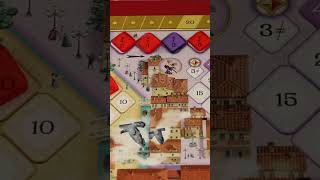
Mille Fiori features five distinct sections on the board, each with its own scoring rules and mini-game structure. The workshops reward connection between your placed pieces. The residences score based on the values of spaces you occupy. The townspeople section builds pyramids for escalating point values. The trade area measures commodity scarcity and distribution among players. The harbor uses fleet completion to trigger bonuses. This diversity means that every placement feels meaningful in a different way, and each section encourages different strategic approaches. The variety ensures that no two games play identically.
The Mille Fiori Experience
Constant Point Fluctuation and Momentum
What reviewers consistently call out is the game's thrilling point volatility. Players experience dramatic score swings throughout the game, creating emotional peaks and valleys. One moment you might feel behind, only to execute a well-timed series of placements that triggers bonuses and extra card actions, launching you back into contention. This creates genuine tension and excitement, as anyone can catch up with the right sequence of cards. The game never feels decided until it ends, keeping all players invested from turn one.
Satisfying Combo Chains and Engine Building
A defining joy of Mille Fiori is triggering cascading actions. Complete the right objective and earn an extra card play. Land on a bonus space and take another turn. Finish a fleet and score for every placed diamond plus bonuses. These chains reward observation and planning, letting skilled players set up sequences where one clever placement unlocks multiple additional actions. Reviewers describe this feeling as addictive and deeply satisfying, capturing the essence of what makes engine-building games compelling without the weight of heavier systems.
What Makes Mille Fiori Stand Out
Speed and Accessibility Despite Complexity
Mille Fiori advertises a play time of 60 to 90 minutes, but reviewers consistently report finishing in 30 to 45 minutes, sometimes faster. This gap between box time and actual play time is a major selling point. The rules are straightforward once you understand how each board section works, yet the game delivers surprising depth in decision-making. Players who know the rules can teach a full three-player game in under 10 minutes and be playing within 40 minutes total. This combination of quick play time with meaningful gameplay makes it exceptionally valuable for groups that want substance without sacrificing table time.
Elegant Theme Integration Without Theme Dependency
While Mille Fiori has a glass-manufacturing theme on paper, reviewers note that the theme is largely abstract. The board has workshops, residences, townspeople, trade, and harbor sections. The game works mechanically whether you engage with the theme or treat it as window dressing. This abstraction is actually a strength: players can focus entirely on the puzzle of placement and scoring without feeling forced to role-play or narrate their actions. The theme provides just enough flavor to make the game world feel coherent without demanding mental energy.
Potential Drawbacks
Lack of Solo Mode
Mille Fiori is fundamentally a multiplayer game. While this works beautifully in group settings, it means solo players have limited options for engaging with it. The drafting mechanic loses its core strategic tension when playing alone, as there's no meaningful pass to opponents. Reviewers who prefer solo gaming note this as a limitation, though dedicated fans have reportedly created fan-made solo modes to fill this gap.
Player Count Sensitivity
Reviewers strongly recommend Mille Fiori for three or four players and suggest that two-player games feel less dynamic. With only two players, the drafting mechanic becomes predictable, and the interactive tension diminishes. Some players find the game somewhat dry at two players compared to the excitement of higher player counts. This player-count dependency means the game requires the right group size to shine at its brightest.
If You Enjoy Mille Fiori
If Mille Fiori captivates you, consider exploring other closed-drafting games with satisfying point-salad scoring. Seven Wonders offers similar drafting with longer play and civilization building. Sushi Go delivers faster-paced drafting with set collection elements. Its a Wonderful World combines drafting with tableau building and engine construction. For players who love the multi-area puzzle aspect, Cascadia provides a gentler tile-drafting experience focused on environmental satisfaction. Each of these games shares Mille Fiori's core appeal of making you feel like you're accomplishing something meaningful every turn.
What Reviewers Are Saying
"It just was like one of those games that's like constant fun, there's like no down time, but the other big thing that I think I was just excited about playing it for the first time was we had a group of three and we're playing it none of us have played it before and we still finished in 40 minutes."
— Rolls in the Family
"Every time you place it down you get one point for each one in the cluster, another area of the board you're trying to score for each consecutive glass, so if one area the first time you put it down it has two points, the next area has three points on it, not only do you score the three points but also the one previous to that, five points, so then you can continue to chain."
— Before You Play
"This game is definitely a bunch of fun, you know that's what I could describe it as. Plays in about 45 minutes, cool decisions from start to finish and it's an absolute blast to play."
— Chairman of the Board