/pic151268.jpg)
The year is 1888, and Steampunk technology has advanced at a prodigious rate! Probes have been sent to Mars, and soon astronauts will be manning rockets in order to mine the planet for newly discovered resources. The first is a brand new element, Celerium, that could prove to be a combustible energy source the likes man has never seen. The second is Sylvanite, an incredibly dense material unlike anything found on earth. In addition to these resources, glaciers have been discovered on the planet. Whoever controls these icy masses could work to create a livable atmosphere on Mars
In Mission: Red Planet, players work as mining companies compete to send astronauts to Mars in order to colonize and mine for recently discovered materials. Over the course of 10 rounds, players play one of their special agents every round to help fill the rockets heading to Mars with their own astronauts while simultaneously working to prevent their opponents from doing the same. Once landed, these astronauts must gather to control specific regions of the planet, each yielding one of the three resources: Celerium, Sylvanite, or Ice. After rounds 5 and 8, players gain score tokens for every region where they control the majority of the astronauts. At the end of the game, players score one final time, adding any bonuses received from Discovery Cards and Bonus Cards. The player with the most score tokens at the end controls Mars, and all the riches it can bring!
From Bruno Faidutti's website:
This one, designed with Bruno Cathala, started with the theme. We wanted to make a game about colonizing Mars, with shuttles leaving the blue planet towards the red one. The theme is strong, and well caught in the steampunk graphic style decided by Asmodée. In Mission: Red Planet, each player plays a colonial power which sends astronauts, in space shuttles, to occupy the most promising zones on the planet. For scholars, the systems merge a majority game, à la El Grande or San Marco, with a character/action card system, somewhere between Citadels and Hoity Toity/Adel Verpflichtet. Nothing really new here, but there was much work on it and we're really proud of the result.


- Quick paced
- Less vicious than other area control games
- Can't really get that upset about the mean moves
- Quick to set up
- Easy to learn
- Play space for serious gamers to make serious decisions
- Role selection system opens up play options
- Series of mean moves served with a side order of extra meanness
- Competitive and cutthroat
- High level of take that actions and meanness may be unappealing for those who do not enjoy conflict
- Mars as the new frontier for colonial exploitation and resource harvesting, assembling a team of pioneers to harvest resources and stake claims for the Empire.
- the late 1800s in the reign of Queen Victoria and during the height of European imperialism
- Citadel
- Small World
- Tammany Hall
Mechanics (from transcript analysis)
- Area Control — Players gain points by having the most units in an area. It's a brutal area control game.
- Role selection — You have a hand of nine role cards and select one to use each turn. The roll selection system seems to open up play options rather than close them down.
- Secret Missions — There are also secret missions which has scored at the end of the game for extra points.
- Take That — The share level of take that actions and meanness in this game might make it unappealing for those people who do not enjoy conflict in their games.
Video topics + discussion points
Quotes (from this video)
- the late 1800 in the reign of Queen Victoria and during the height of European imperialism bars is the new frontier right for colonial exploitation and resource harvesting
- The winner of this game is to play with the most victory points after ten rounds of play
- the roll selection system seems to open up play options rather than close them down
- Area control games are very competitive and cutthroat and some people might find that off-putting
- the share level of take that actions and meanness in this game might make it unappealing for those people who do not enjoy conflict in their games
References (from this video)

- It is on one of the host's lists.
- A new edition just came out.
- People talk about this game.
- One host has never played it.
- colonize Mars taking advantage of crew's special abilities
- Mars
Mechanics (from transcript analysis)
- action selection — Take advantage of crew's special abilities.
- Set Collection — Implied by colonizing Mars and using crew abilities.
Video topics + discussion points
Quotes (from this video)
- so we have a list of every single game that was released in 2005 and we're going to go through all of them in a three-hour episode absolutely not
- we have a potential pool of 25 board games but only 10 can be inducted into our newly minted Hall of Fame that's the rules that's the rules only 10 we made them up that's the rules
- you could argue with us in the comments and tell us why we're wrong you could do that always an option
- I'm going to be real honest with everyone that this list of games from 2005 there are a bunch on here I don't know
- that is like the oldest of old school hidden Trader Trad
- it spawned so many other games right we have a ton of games in this Arkham Horror World which is obviously the world of HP Lovecraft
- I think wits and wagers is a is a classic
- it is on my list it's one of the very early like kind of worker placement kind of mean Euro dry Euro kind of game that I played
- this is like a grill game for people
- wow we didn't even rehearse that
- it sounds like if your jam is hidden rolls or social deduction style games and you haven't played Shadow hunters and you see it out in the wild maybe pick KCK it maybe give it a whirl you might like it
- if this isn't a classic game I don't know what it is
- it is ubiquitous when it comes to board games not just the theme but sooner or later if you're talking about board games eventually Arkham Horror is going to hit the table
- many aboard gamer covet this
- people still talk about I mean any game that you're still it's 20 years old and you're like I should play that sometimes
- I may have my Nostalgia goggles on and uh you know be looking at it through those rosecolor glasses
- it's a game 100% you can play with your kids
References (from this video)
- Highly discussed and anticipated.
- On both hosts' lists.
- Neither host has played it.
- Colonizing Mars, using crew abilities
- Mars
Mechanics (from transcript analysis)
- action selection — take advantage of your crew's special abilities
- Area Control
- Resource Management
Video topics + discussion points
Quotes (from this video)
- so we have a list of every single game that was released in 2005 and we're going to go through all of them in a three-hour episode absolutely not
- we have a potential pool of 25 board games but only 10 can be inducted into our newly minted Hall of Fame that's the rules that's the rules only 10 we made them up that's the rules
- you could argue with us in the comments and tell us why we're wrong you could do that always an option
- I'm going to be real honest with everyone that this list of games from 2005 there are a bunch on here I don't know
- that is like the oldest of old school hidden Trader Trad
- it spawned so many other games right we have a ton of games in this Arkham Horror World which is obviously the world of HP Lovecraft
- I think wits and wagers is a is a classic
- it is on my list it's one of the very early like kind of worker placement kind of mean Euro dry Euro kind of game that I played
- this is like a grill game for people
- wow we didn't even rehearse that
- it sounds like if your jam is hidden rolls or social deduction style games and you haven't played Shadow hunters and you see it out in the wild maybe pick KCK it maybe give it a whirl you might like it
- if this isn't a classic game I don't know what it is
- it is ubiquitous when it comes to board games not just the theme but sooner or later if you're talking about board games eventually Arkham Horror is going to hit the table
- many aboard gamer covet this
- people still talk about I mean any game that you're still it's 20 years old and you're like I should play that sometimes
- I may have my Nostalgia goggles on and uh you know be looking at it through those rosecolor glasses
- it's a game 100% you can play with your kids
References (from this video)
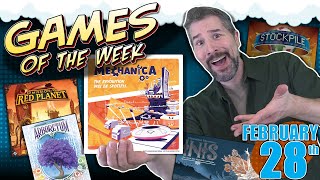
- Features same gameplay as original while increasing player count up to six
- Includes several minor rules revisions
- Includes more brass and purposeful looking diodes
- Interstellar mining corporation head seeking to exploit Martian resources
- Alternate Earth's Victorian era with rapid technological development and growing population
Mechanics (from transcript analysis)
- resource harvesting — Players harvest Solarium, Silver, Knight, and Ice from Martian zones.
- Secret Deployment — Players secretly deploy characters and place astronauts on spaceships.
- Team-based actions — Players work in a team of nine professionals, each with unique skills like navigation or spaceship sabotage.
Video topics + discussion points
Quotes (from this video)
- sometimes new sometimes old sometimes overlooked but always worth a second look these are pair of dice paradises picks for the games of the week
- welcome to an alternate Earth's Victorian era in which technology is rapidly developing while the human population continues to grow leaving society in dire need of fuel land and top hats covered in superfluous gears and rivets unfortunately scientists have discovered solarium and or that can be combusted to produce 10,000 times more power than a steam engine
- as species human beings are untidy let's face it we're slobs I mean seriously I don't even try anymore and while this may be good news for the paper towel industry it means a lot more maintenance for the rest of us in our personal and professional lives
- Being a British person one may assume that I have a proclivity towards drinking tea leisurely activities and saying words like proclivity and one may also soom that a card game about trees will fit right into the realm of sophisticated pursuits but that's where one would be wrong
- He said Authority because he absolutely understands what all of those words meant
References (from this video)
- A pretty good area control game
- Light and pretty easy to teach
- Just taking up space
- No one really wanted to play it that much
- Area control, resource acquisition
- Mars
- Tammany Hall
- El Grande
- Galilean Moons
Mechanics (from transcript analysis)
- Area Control — Described as a primary mechanic.
- Set Collection — Implied by the theme of resource acquisition.
- Worker Placement — Implied by the context of resource acquisition and competition.
Video topics + discussion points
Quotes (from this video)
- it was raining I said to him we really need to solve this case and he agreed
- Detective a modern crime board game might be the most disappointing game I've played in a very very long time
- so what was billed to me is a fantastic detective just felt like busywork it felt like drudge work it felt like repetition
- the sitting was weird you like some elite crime unit but you're investigating a theft from 70 years ago
- this is an old game it's been out of print forever it's one of the Holy Grails of board game collecting
- it's just a mess of a game city remnants just doesn't deliver on its promise of being this intricate gang building area control game
- and it's got these wonderfully big taro sized cards that that look gorgeous
- and the second thing is one of the people of my regular group has rather poor eyesight and literally cannot play the game
- Between 2 cities love that game it's still one of my top twenty or so games in my collection I absolutely endorse and adore it
- Megaland is fine for what it is and that's an easily accessible short playtime push your luck game you can set up play and be done in 15 minutes
- and that is how you make money off board game media is buying games that 80% off and then selling them for $10
- just because there's a new edition doesn't mean that editions going to be better for you new doesn't mean better for everyone
- good games that are just ok they're just they're solid leave me in this weird space from like ok I've played that and that's about the level of engagement
- but the simple fact is this game takes up so much damn space it takes something that same space as six other games
- at some point a collection becomes unmanageable or unplayable
- there's a danger in this hobby of overloading yourself with cardboard
- I now have games that I've had for months that I haven't been able to get to yet simply because of the demands of a channel and work
- if you're looking to buy a game ask yourself am I actually going to be able to play this anytime in the future
- I mean I run a YouTube channel that reviews board games so I will eventually get through all the games I have and I will put them on the channel
- but I worry that for some people the gating is more important than they're having and that's kind of troubling to me
- it's okay to get rid of some games it's okay not to have everything in your collection it's okay for another friend of yours to own a game and for you to borrow it off them if you want to play
- there's literally no need to have a thousand unplayed board games sitting in your garage
References (from this video)
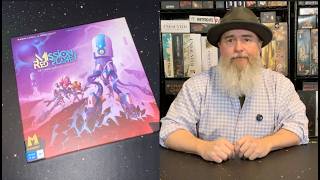
- tight, tense area-control competition
- high interaction and Take That style
- layered scoring with discovery tokens and end-game cards
- enjoyable despite edition differences; still a solid game
- Madagot edition has some printing and rulebook clarity issues
- artwork not as striking as Fantasy Flight edition
- grammar mistakes and minor printing errors (e.g., misprinted card text)
- space exploration, area control and resource collection with tense, high-interaction play
- Mars with areas on a map of the planet, including Phobos and a Lost in Space area; discovery tokens and ice/other resources
- competitive, take-that, high-tension decisions
- Fantasy Flight's Mission Red Planet edition
Mechanics (from transcript analysis)
- area control and token scoring — Control of locations on Mars and Phobos determines who claims discovery and production tokens for points
- board manipulation and disruption — Players can move pieces, destroy rockets, or alter rocket destinations to influence outcomes
- carrying astronauts as resources — Astronauts are limited resources that can be killed or captured, creating brutal, high-stakes decisions
- deck management and card timing — Each player has an identical deck; cards launch when enough astronauts occupy the corresponding card location
- Deck Manipulation — Each player has an identical deck; cards launch when enough astronauts occupy the corresponding card location
- discovery and end-game cards — Discovery cards underneath the board sides and end-game reveal mechanisms affect final scoring
- event deck and discovery interplay — Event deck cards can influence draws and scoring; some cards help scoring while others introduce variability
- ice token scoring — An ice token card near the end awards nine additional points to whoever has the most ice tokens
- production and scoring phases — Production phases place tokens next to discovery tokens; scoring phases tally points from tokens and end-of-game discoveries
- simultaneous card play with countdown — Players secretly choose a card from a shared hand, reveal in countdown order, and resolve actions; ties resolve clockwise from the first player
Video topics + discussion points
Quotes (from this video)
- This is a game I always enjoyed.
- This is a game that has just some fierce competition and it's a game where you're trying your best to manipulate the board, but you just don't know what everybody else is going to be doing.
- This game is absolutely brutal.
- I love Mission Red Planet.
- I think the artwork on this edition is good.
- The Fantasy Flight version from 10 years ago looked better.
- The game itself for me is an eight on the Cody scale. I love it.
References (from this video)

- fast, tense games around 40 minutes
- quick to teach and play
- editions and components can vary
- area control with countdown mechanics
- Mars colonization and exploration
- short, tense rounds with cascading choices
- Citadels
Mechanics (from transcript analysis)
- Area Control — players vie for control of locations on the board
- simultaneous action/character countdown — turn order and actions resolved by a countdown reveal
- Simultaneous Actions — turn order and actions resolved by a countdown reveal
Video topics + discussion points
Quotes (from this video)
- Meadow I just think is a fantastic game. Gorgeous, gorgeous artwork here.
- one of the most like sort of distinct two-player games ever made.
- It's very fast; every round is tense and the reveals are sharp.
- I enjoy Marvel Champions. I love the versatility of this game.
References (from this video)
- Previously played and enjoyed
- Good tension between going first and powerful later abilities
- Space exploration
- Mars colonization
- Abstract
Mechanics (from transcript analysis)
- action selection — Pick cards which reveal simultaneously to determine action order
- Resource Management — Limited rocket space creates tension for who gets to travel
Video topics + discussion points
Quotes (from this video)
- We're back from SL with one of the biggest board game holes we have ever had
- hottest Euro game of the fair
- engine building and playing out cards and taking them back
- racing game without racing
- one of the best covers illustrations
- really thinky game
- This is a really fun and simple game
- don't judge board games from their cover
- makes your turn feel great if you have great cards
- they're actually really, really good
- don't know what's going on in that game right now
- There aren't a lot of good pirate games out there
- I'm always a sucker for cool historical themes
- unique twist to the already known detective genre
References (from this video)

- highly interactive and chaotic in a fun way
- enjoyable with larger player counts; tempo remains engaging
- can stall with slower groups
- beat-to-beat tension can be volatile for some players
- area control, space mission coordination and resource collection
- Mars exploration
- semi-theme-driven, chaotic negotiations
- Area majority games
- Twilight Imperium (epic space game reference context)
Mechanics (from transcript analysis)
- area_control — Mars zones yield resources to the leading players; majority grants rewards
- randomized_event_flow — face-down tokens and events alter the game state across rounds
- resource_management — collect and allocate resources to dock ships and move astronauts
- simultaneous_action_selection — players choose actions from a shared, identical set and resolve from 9 down to 1
Video topics + discussion points
Quotes (from this video)
- it's basically it's an auction tiling game
- it's a classic Euro but with fresh mechanics that you don't really see in newer games
- the best scoring that you can get is one building amongst all these things is is four points
- I really liked it I think the very first uh work that I scored I took it all as money and I thought like this is great I'm gonna have so much money for the rest of the game but I think that hurt me in the end
- it's mean that it was comical
- it's a very silly game
- it's a strong mix of chaos and strategy
- it's better with higher player counts
- it's one of those games where there's very limited communication; it's fully cooperative
References (from this video)
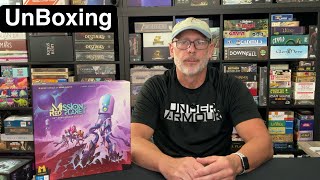
- Fantastic artwork (Derek Stanging) and strong visual presentation
- Nostalgic reprint bringing a classic back into print
- Modular board enables multiple map configurations
- Accessible, concise rulebook and clear setup guidance
- Map configuration can be fiddly to assemble and reconfigure
- Differences between card sets in the new edition are not fully clarified
- Limited new mechanics; may feel similar to the original for seasoned players
- resource extraction, sabotage, and territorial competition on a planetary frontier
- Mars, a colony/post-terraforming context where players compete for resources and influence
- unboxing/retro-review with retrospective commentary
Mechanics (from transcript analysis)
- area_control — Players vie for control of map regions to gain resources and advantages.
- mission_cards_and_events — Event decks and global missions drive objectives and variability.
- modular_board — The board is assembled from multiple pieces, enabling different configurations.
- resource_management — Gather and allocate resources to perform actions and progress objectives.
- sabotage_and_interaction — Players attempt to foil opponents' plans through strategic actions.
Video topics + discussion points
Quotes (from this video)
- This artwork is absolutely fantastic.
- I cannot wait to see what the inside looks like.
- This was a great game when out of print and it finally came back.
- This game just looks phenomenal.
- I'm happy to see this game back on the shelves again.
- I'm really curious and I'm excited to see if that map can turn those tiles and maybe have different configurations.