/pic4305058.jpg)
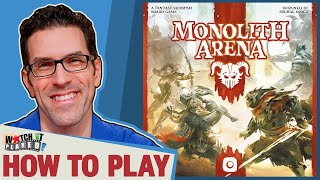
Wage war against opponents on a hexagonal board. Prepare your armies to face off on the battlefield and surprise your enemy with your choice of special abilities!
Monolith Arena is a fantasy battleground board game built around the base engine of Neuroshima Hex, which is also from designer Michał Oracz. The game includes four factions, with unique abilities and units. Players take turns placing tiles on the hexagonal play field, building offensive and defensive advantages, all of which are activated when the field is filled or when a player uses a "battle" order.
A new feature is the three-level "monolith" for each player, where the faction banner is set into the top level. The other two levels are secretly set with battlefield tokens chosen by the player at the outset, providing a strategic choice in setup that will play out during the tactical operations of the game. The monoliths mitigate the influence of the random tile draw that otherwise drives the game, giving players more choice and control.



- Very well done game.
- Game did a great job as far as being very very action-heavy.
- The hybrid of planning and action phases worked well.
- Strong asymmetric characters.
- Cards were very impactful.
- Least favorite part is the monolith itself, due to the large element of luck.
Mechanics (from transcript analysis)
- asymmetric characters — Features strong asymmetric characters.
- Card Play — Bidding limited resources on cards that help throughout the game.
- Dropping system — A dropping system where players drop hearts into the monolith, and where they land affects actions.
Video topics + discussion points
Quotes (from this video)
- Honestly, it really is an interesting deep dive that I almost want to do a full video on it because it kind of talks about the nature of how the industry has changed over the years or over how a distributor publisher relationship has changed over what it takes to make a game stand out and be popular and be received and the the unfortunate and fortunate reality. It kind of is both.
- Crowdfunding to a large extent is both a glorified pre-order, a marketing system, and a way to bring games to life. It's a little bit of everything.
- I will say I really enjoyed it. I thought they did a great job with the various uh, leverage and options you have to control things.
- Ironically, my least favorite part of it is the monolith itself.
- I think Drillers is excellent.
- I think the Hive expansion is really really well done, but I need to play it more because right now I'm still feeling stifled by whether I can do enough in the game.
- Oh my gosh, I think this might be my favorite way to play Tend, but that is said after game one.
- I think it's so good. I think it's a really, really good game. I love the puzzle of it, and I want to put it back on my table now.
- Get rid of games that you are not sure about. Every once in a while you will need to get one back. Don't worry about it. Is well worth it.
- I will always pick a game that is accessible and easier to dive into over a game that requires a homework assignment to dive into.
References (from this video)
Mechanics (from transcript analysis)
Video topics + discussion points
Quotes (from this video)
- I've never heard a song called October trees.
- Unless there's free stuff to it but I'd rather dress like a cow to get free chick-fil-a or go in a Krispy Kreme and get a free donut then it's long john silver's to get fish.
- There should be no time limit on dress like a cow day Tony.
- Fool I'm dressed like a cow right now could you just throw a brother a free sandwich or something and he didn't did he he did not.
- Why do you guys build power lines and canals?
- You are now mr. Instagram that's it it's done it's over.
- Good god there's people everywhere it's oh it's it was on real Wow lots of people dude lots about but the tube is amazing that was fun.
- And their main exports are sheep and coos all highland coos coos what Koot howls okay okay yeah.
- One thing I noticed and I know I didn't get all of them but I did notice that every gaming store I went into there was no place to play.
- I was watching one and they were like what what component of this game I'm like seven wonders people.
- Me I know you don't have a switch but let me tell you for a little portable handheld gaming system these games are gonna be amazing on that system so let me understand this you're now making me want to go buy a switch I had
- now and some one of the hottest games it's number one at BoardGameGeek and that is mezzo from colossal games so if you haven't checked it out Marty and I got to play to Gen Con and it was fun it was good it was like it was like blood rage mixed in with some other stuff it has that kind of feel to it
- I'm sure it's already funded go check it out Tony and I'd really liked it and Tony I'll be getting this game yes I agree it's it's one of those games that I'm excited for
- Wilke Forge be number one and two again we'll find out I was gonna ask you what was number one so key Forge and key for starter right yep he forged starter set was number one he forged X we're number two
- so be sure to head over to miniature market calm and get your pre-orders in for key forge and save your money and not spend it on eBay where they're going for $75 just wait people
References (from this video)
- Offers a new take on a beloved game style.
- Integrates mana into the gameplay.
- Fantasy combat with mana.
- Nourish My Hexes
Mechanics (from transcript analysis)
- Combat — Features combat between units or players.
- Mana system — Incorporates mana as a core resource.
Video topics + discussion points
Quotes (from this video)
- it's gonna be a standalone game for the original game stronghold but it's gonna be published by stronghold games
- we are proud and thrilled to announce a new line of expansion for you for detective written and designed by the best storytellers in the industry robbed of you pandemic legacy and Mike's a linker Pathfinder this will be a standalone case is a one case you can save your friends not campaign not something you have to devote the whole crew for that some of the weeks
- I love the name of this I love it Imperial settlers rolling right it leaves nothing to the imagination you know exactly what the theme is you know exactly the time for game of it it is it's like so blunt that it's perfect
- the fact that you can sit down and this this is true the example that they use with monolith arena is a fantastic idea because I can totally see sitting there and and asking a question hey how does this unit work and I'll explain to you how that unit works so I think that's a fantastic idea
- I personally I like it when publishers put out less games cuz you could put more focus on those games
- I was honestly surprised honestly surprised that he didn't have a video montage I may be looking at a portal through the years some games they released early on pictures of them early in the year so I'm really surprised that he didn't put that that together maybe on his youtube channel maybe the eventually he'll do that in the future
References (from this video)
- Fantastic idea for Alexa integration
- Tutorials via Alexa would be very helpful
- Uncertainty about Alexa's ability to handle highly specific or 'what-if' rules.
- Fantasy/Arena Combat
- App-integrated
Mechanics (from transcript analysis)
- Alexa Integration — The game features integration with Alexa for rule lookups and potentially tutorials.
- app integration — An app is used for game functions, including rule explanations.
Video topics + discussion points
Quotes (from this video)
- it's gonna be a standalone game for the original game stronghold but it's gonna be published by stronghold games
- we are proud and thrilled to announce a new line of expansion for you for detective written and designed by the best storytellers in the industry robbed of you pandemic legacy and Mike's a linker Pathfinder this will be a standalone case is a one case you can save your friends not campaign not something you have to devote the whole crew for that some of the weeks
- I love the name of this I love it Imperial settlers rolling right it leaves nothing to the imagination you know exactly what the theme is you know exactly the time for game of it it is it's like so blunt that it's perfect
- the fact that you can sit down and this this is true the example that they use with monolith arena is a fantastic idea because I can totally see sitting there and and asking a question hey how does this unit work and I'll explain to you how that unit works so I think that's a fantastic idea
- I personally I like it when publishers put out less games cuz you could put more focus on those games
- I was honestly surprised honestly surprised that he didn't have a video montage I may be looking at a portal through the years some games they released early on pictures of them early in the year so I'm really surprised that he didn't put that that together maybe on his youtube channel maybe the eventually he'll do that in the future
References (from this video)
- Expansions are coming out (Academics, Sand Runners).
- Solid game with a long life.
- One of Marty's favorite two-player games.
Mechanics (from transcript analysis)
Video topics + discussion points
Quotes (from this video)
- The fashion world being a magnet
- I've never seen Devil Wears Prada you're dead to me
- this is a heavy euro I'm not talking like an imperial settlers he said this is a heavy crunchy euro heavy euros kind of have a niche market
- The art of those units that is so flippin cool
- there's going to be an Alexis skill such that there's going to be a standalone case that's narrated and handled by an Amazon Alexa its k-6
- this is to me personally I think this is trailblazing if other publishers don't see this going on and doesn't duplicate this they're crazy
- I think to this day that's - this is still one of my favorite two-player board games of all time
- The boxart for academics the art of those units that is so flippin cool
- I love economic games any I don't know why because it is so dry it is dry when you've got a market and you have a supply and demand and you drive up the price you drive down the price that sounds so boring to people when you explain it but I love love those games like stockpile
- The flowchart for how to play raccoon Tycoon which by the way if it's approved by bgg you should see it out there
- money is secret and if you had a bunch of stacks of coins and things like that it's not as easy as taking those paper bills fanning them out under the table to count them real quick versus a bunch of little tokens that you need to do
- The game ends when two out of the three items are void in other words the towns the railroads or the building tiles two out of the three have to be void before the game will end
- this game blew me away it is simple to play your flowchart is amazing
- Raccoon Tycoon top game for 2019 yes it's February imagine that
- it's always a fun tradition for us each year
- I can't believe it's our fourth annual fourth annual squirrely award I know I can't believe you came up with this four years ago amazing
References (from this video)
- Comfort food game
- Soothing to play
- Easy to get back into after breaks
- New faction 'academics' is liked
- Mana mechanic adds strategic depth
- Need to recall specific rules like range interaction with shields.
Mechanics (from transcript analysis)
- Area Control — Players attempt to knock each other's units out.
- Combat — Units attack each other, with mechanics like range and melee having different interactions with shields.
- Hand Management — Players draw and play tiles from their hand.
- Healing — Introduced with the new faction, allowing units or the banner (base) to be healed.
- Resource Management — The 'academics' faction introduces mana, which can boost units or initiative.
- Tile Placement — Players place tiles on a board.
Video topics + discussion points
Quotes (from this video)
- This is where Just One I think can sometimes have an issue because we happen like three times for us.
- Monolith Arena with the brand-new expansion coming out at Gen Con from portal called academics.
- to me that game was comfort food that game is just like ah I'm so sit down
- The academics which is the brand-new faction and he introduces this new mechanic of mana where you can put mana on a unit and if you can generate mana it boosts it somehow.
- there's also healing now so you can heal up units you can heal up your your banner which is basically like your base
- all of a sudden you had to try to get around to it to take that sucker out exactly so you can't ignore that you gotta say okay if he is that supercharged mega blaster loaded up ready to go I'm gonna take a lot of damage
- As soon as I pulled up that trailer and as soon as I heard the dog, chills chills.
- people forget blade was one of the first ever comic-book movies you know from the 90s it's just forgotten because comic book movies want that big bin aside from Spider-Man blade was good
- The Russo brothers who directed the Avengers movies they directed second Captain America movie Winter Soldier they did the last two Avenger movies they announced they're bringing to the big screen one of my all-time favorite cartoons that I've mentioned on this show before from the 70s battle of the planets
- Y'all gonna be getting some games soon right you're gonna be buying some games you're gonna need some organizers for cards and bits and you can find all that stuff over at the broken token calm
References (from this video)
Mechanics (from transcript analysis)
- tile activation — Discussed in relation to the Dragon Empire, where tiles can activate charge or move.
Video topics + discussion points
Quotes (from this video)
- I was really surprised to see a lot of people are like yeah I really don't want technology as a part of my board game I don't want technology integrated into my board games
- this isn't a substitute for a rule book it's not a replacement there will still be a rule book for these games it's simply a supplement and it's one that I totally welcome
- you've kicked open a door here that oh people are gonna look at and go that's a pretty good idea
References (from this video)
- The monolith mechanic adds significant strategic depth and surprise.
- The fantasy theme is generally more accessible than post-apocalyptic.
- Familiar mechanics from Nearobootics Hex make it easy to learn.
- High production quality with larger tiles and vinyl player boards.
- Offers replayability with different factions and the monolith strategy.
- Can be more AP (Analysis Paralysis) inducing due to the added strategic options.
- Battle resolution can be slower due to detailed evaluation of each initiative.
- Some specific faction interactions, particularly with teleportation, may require clarification.
- Requires players to manage the spatial aspect of deploying the monolith.
- Strategy game with fantasy factions
- Fantasy universe
- Nearobootics Hex
- War Chest
Mechanics (from transcript analysis)
- asymmetrical factions — Each faction has unique abilities and units.
- fog of war — The monolith mechanic introduces a 'fog of war' element, as opponents do not know what is hidden within.
- Hex grid combat — Players place units on a hex grid and engage in battles.
- Monolith Mechanic — A unique mechanic involving stackable plastic pieces that hide tokens, which can be revealed during the game to surprise opponents.
- Tile Draw — Players draw tiles from a bag to determine available units and orders.
Video topics + discussion points
Quotes (from this video)
- you don't realize how long you've played until it's over because you just start playing and you're talking and discussing and all the time all of a sudden time goes by and when you're done you look up and stoic wow it's been 2 to 3 hours and it doesn't feel like it at all
- this is the fantasy universe
- it's a lot of strategy not only around getting the monolith out but also trying to keep them from expanding their mana left
- the campaign is as you mentioned about the story of the colonel Fossett who got missing in this area and players are the rescue team who needs to find him and bring him back to to Great Britain
- Amazons sounds amazing
- I really enjoyed playing it I was like okay I like this a lot better than the base
- the monolith that's it that's really the two differences too Oh bigger tiles bigger tiles the graphics are gorgeous heart and everything's good the the play mats or the the player boards for the different factions are like a vinyl type material with nice cloth print on the front so production is really nice the thicker are bigger tiles which I really appreciate
References (from this video)
- Still enjoys the game after multiple plays.
- Factions offer different strategic challenges.
- The Elves faction is tricky to play and has a steeper learning curve compared to others.
Mechanics (from transcript analysis)
- Combat Game — A game focused on combat between different factions.
- Faction Asymmetry — Different factions have unique playstyles and abilities.
- Movement — Movement and positioning are important aspects of gameplay, especially for the Elves.
Video topics + discussion points
Quotes (from this video)
- I am the one on the far right. Hey Dream Theater, A Rite of Passage. I'm the guy in the red robe on the far right.
- When it boiled down to me was a very rinse and repeat: get resources, build something, advance victory points. That's where I am with this game.
- The whole thing that you're doing the entire time is so story driven that the decisions and stuff you make within the context of story you just stay immersed the entire time.
- I love games where I get to do stuff on other people's turns.
References (from this video)
- Tactile and enjoyable component interaction.
- Plays quickly and is easy to learn.
- Visually appealing production.
- Can be tense, especially in a two-player game.
- Good for children to develop spatial reasoning.
- The reviewer notes they might be messing up the rules.
- Can lead to analysis paralysis if trying to optimize for everything.
- Building a monolith to score victory points by meeting a certain pattern.
- Patchwork
Mechanics (from transcript analysis)
- Pattern Building — Players place blocks to match specific patterns on their player boards.
- Prophecy Fulfillment — Players choose prophecies (goals) at the start of the game and try to achieve them.
- Set Collection — Players aim to have a certain number of colors showing on each side of their player board.
- Worker Placement — Players move a crystal to take actions, which then affects future action availability.
Video topics + discussion points
Quotes (from this video)
- This game is all about putting blocks together to meet certain patterns and have certain colors on the side and saying I'm going to get how many colors on this side.
- I think these games have made it better than the original pandemic.
- For me, if to get a quick game in I'm going to pull out the Clone Wars over War to Warcraft and that's for Simplicity only.
- Euro X meaning the idea of a 4X game with a Euro type feeling where there's a lot of resource management.
- And to me it's very point salad and what I mean by that is there's a lot of ways to get victory points in this game.
- This is a C&C game, Card driven game.
- It did dramatically, especially when I'm up there and I'm rolling and suddenly my eight cannons fire and you see see nothing but four sixes and you're like oh my gosh what just happened here.
- Fantastic job to Robert Deleski and a big thanks to Capstone games for bringing out this two-player historical game highly recommended.
- We used to love playing World of Warcraft we felt that this game really called the theme of World of Warcraft.
- The action is super over the top I think the character of bay Antica is hysteric I think she's a fun character.
- His voice will always be the Batman to me.
- His laugh will always be the Joker Laugh to me too.
References (from this video)
- Interesting 3D componentry
- Fast-paced skirmishes
- Hex scale and blocky components can hinder play
- Rules clarity
- Array
- Fantasy / Sci-Fi mashup
- Monolith Arena (expansions)
- Gaia Project
Mechanics (from transcript analysis)
- Area Control — Hex-based arena with factions vying for control and powerups.
Video topics + discussion points
Quotes (from this video)
References (from this video)
- Phil Walker-Harding is great at this style of design
- Command level production
- Building structures to create patches of particular colors and levels
- Gingerbread House
- Baron Park
Mechanics (from transcript analysis)
- Pattern Building — Creating patches of particular colors and building up particular levels.
- tile drafting — Players draft polyamino blocks.
Video topics + discussion points
Quotes (from this video)
- players tried to escape from Minecraft's fiery Underworld the nether
- in it you'll be sprinting through rugged Landscapes full of magma and lava navigating and defending against dangerous monsters and only if the players complete the dash to the portal in time while also taking out the mantras Guardians can you survive the adventure together
- the quest can you protect the Village from raiding illagers is poised
- an illager is the name of a persistent mob spawn in Minecraft this is an illager evil son of a gun
- your helpful Animal Companions will stand Faithfully by your side whatever that means because you know that sounds nice to me
- I was really surprised by Builders and biomes actually it was a quality game so why not more Minecraft board games I say I'm all for it
References (from this video)

- Fun game.
- Easy to learn.
- Quick to play.
- Good production quality with tactile pieces.
- Chunky pieces.
- Building monoliths.
- Abstract
- Tetris
Mechanics (from transcript analysis)
- Drafting — Picking tiles from a central board where a crystal moves around.
- Layer Building — Once you go up to another level, you can't place on the level underneath anymore.
- Race — Racing to build monoliths faster than opponents to get bonus points.
- Tile Placement — Placing polyomino tiles on a player board to build monoliths.
Video topics + discussion points
Quotes (from this video)
- There's something so satisfying about fitting the pieces in together and filling in this space
- It feels like Tetris but a board game but it's Unique
- that's half the fun of you know castles of mading lug is I think it'll fit there does it oh it doesn't oh you know that kind of thing
- it is a dry dark black Euro
- easy to learn and hard to master
- It just has the basic Tetris like pie love
- I just love the Wild West theme in general
- there's just so many things to do here
- Patchwork can be a really Cutthroat game of trying to deny the other player the pieces they need while also trying to get the pieces that you need
- it is actually kind of fun to debate where things in your vacation took place
- it's a rare polyomino game that has a theme and the theme actually works
- that game is going to be miabi it is a polyomino game where you are drafting polyomino tiles and creating your own zen garden
References (from this video)

- Sirius Pope
- Bombay
- Lucky Duck
Mechanics (from transcript analysis)
Video topics + discussion points
Quotes (from this video)
- The greatest worker placement game of all time gets even better.
- Yeah, that board game is famously sucky.
- It actually has some interesting ideas, but yeah, the game was trash.
- I feel like you're leaving money on the table.
- The Manhattan Project name carried a lot of passion and creativity under James Matthew. After playing this game, I felt a sense of dread.
- The crowd's like cheering and it immediately goes fullon boo.
- It's like, 'Oh my gosh, this is turning into a young man, like a teenager.'
- I went downstairs, got the extension cord which I was using for something else down in the cellar and instead of closing the trap I left it open...
- He he he just shattered the image he's been working on for 20 years.
References (from this video)

- Neuroshima Hex
Mechanics (from transcript analysis)
- Area Control — Trying to make sure the board state suits you and you can beat your opponent and attack their base.
- Combat — Triggering battles when the grid is full, with units having different fighting arcs, defenses, and powers.
- Grid Movement — Populating a hex grid with different units.
Video topics + discussion points
Quotes (from this video)
- So, I'm not going to share much more.
- Again, I'm I'm actually really optimistic about it.
- I've not played it yet.
- It could be good when it's got the uh the good doctor's name on the box.
- It sounds like it's flimsy to say the least, but hey, it could be fun for one or two plays.
- I think it's absolutely fantastic.
- Um, but intrigued to see what this one has to offer.
- Uh, and if it's as good as people say it is.
- Fascinating design.
- So, you got to be quite careful with that.
- And probably I think well spoiler alert it's probably going to be one of the big hits of the year.
References (from this video)
- Unique and innovative battle system
- Drastic domino effect in combat
- Interesting cold war tension build-up
- Cerebral and highly strategic
- Factions feel distinct and powerful
- Lots of little wrinkles and tricks
- Rock solid gameplay
- Innovative and creative
- Can feel a little too clever for its own good
- A little too intense at times
- Not for everyone if they dislike confrontational, thinky games
- Abstract skirmish/war
- Nirōshima Hex
- War Chest
Mechanics (from transcript analysis)
- Bolstering tokens — Tokens can increase unit initiative or strength when positioned next to them.
- Combat triggering — Combat can be triggered by players or occurs when the map is populated.
- faction abilities — Different factions have unique strengths and weaknesses, like charge attacks, teleportation, or high mobility.
- Initiative-based combat — Combat is resolved systematically based on unit initiative, with attacks triggering chain reactions.
- Positioning and trapping — Players can position units to avoid attacks or use nets to trap opponents.
- Tile Placement — Players place hexagonal tiles representing military units onto a hex map.
- Unit stats and abilities — Units have stats for attack, defense, movement, and directional attacks, with some having special abilities.
Video topics + discussion points
Quotes (from this video)
- So, for £1 it was an excellent deal.
- The gameplay was a little bit flat, maybe a little bit repetitive.
- It can be frustrating, especially if your opponents have caughten onto those clues really quickly and you can't quite figure it out.
- So, the combat doesn't actually trigger automatically... No, the actual players have to either trigger a battle or it'll happen as soon as the entire map is populated and you kind of just sit back and watch the battle uh play out.
- It's such a wellexecuted game.
- I think the only slight nitpick I have with it is that I think it can not go too long in terms of the game length, but it feels maybe a little bit loose at times that you can get too much done.
References (from this video)
Mechanics (from transcript analysis)
Video topics + discussion points
Quotes (from this video)
References (from this video)
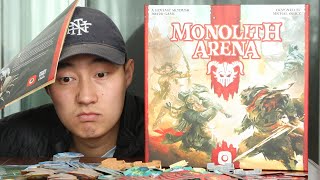
- Components are good quality
- Easy to set up
- Light-hearted tactical nature
- Faction asymmetry works well
- Gentle learning curve
- Good two-player experience
- Flopped commercially; limited traction
- Rulebook could be improved (quick start guide, bullet points in faction guides, missing reference sheets)
- Multiplayer balance issues (2v2 is strong due to poison; 3-4 player variants feel unbalanced)
- Lacks depth for 1v1 players compared to other two-player abstracts
- Marketing and brand positioning overshadow the core design for some players
- Array
- fantasy post-apocalyptic arena
- none
- Hiroshima Hex
- Niroshima Hex
Mechanics (from transcript analysis)
- Adjacency Bonuses / Banner Interaction — Banners grant adjacency bonuses to adjacent units and influence tile interactions.
- asymmetrical factions — Four factions each bring distinct abilities and playstyles.
- End Condition / Draw Rhythm — The game ends when a player runs out of tiles to draw; players can optimize draws to finish early.
- Hand Management — Draw up to three tiles each turn and discard one, shaping your options.
- Layer Building — A plastic tower that can unfold and reveal two tiles for future use, adding strategic depth.
- luck mitigation — There is a measurable luck factor in tile draws, but mitigations exist via the monolith mechanic.
- Monolith Mechanic — A plastic tower that can unfold and reveal two tiles for future use, adding strategic depth.
- Push Your Luck — There is a measurable luck factor in tile draws, but mitigations exist via the monolith mechanic.
- Rotation and Directional Combat — Units attack in certain directions; tile rotation and orientation affect bonuses and attacks.
- Tile Placement — Players place tiles on a shared board to create bonuses, movement options and attack opportunities.
Video topics + discussion points
Quotes (from this video)
- monolith arena is a spin-off version of hiroshima hex
- the learning curve is gentle due to players quickly ruling out foolish tile placements early
- monolith arena stands as a nifty pocket pick
- it's an engaging fast experience where faction asymmetry works well
- there's definitely a luck factor in terms of what you're drawing each turn
- the game ends when anyone runs out of tiles to draw
- the 2v2 offers a lot of cool teamwork opportunities
References (from this video)
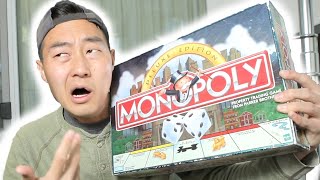
- Thematic potential
- Tactical depth
- Rules complexity
- Table needs several players
- Array
- Fantasy world battle between factions on arena tiles
Mechanics (from transcript analysis)
- Area Control — Players attempt to control sections of the arena to gain impact and points
- Hand Management — Players manage cards to activate actions and effects
- hand management / card play — Players manage cards to activate actions and effects
- Skirmish / Combat — Direct unit-to-unit combat to defeat opponents
Video topics + discussion points
Quotes (from this video)
- this isn't what i meant by board games
- this is just kind of boring there's not enough going on
- it's only been like five minutes
- Relax dude it's just a board game aren't these like 10 bucks
- thanks for watching the video guys this video was inspired by ideas from
References (from this video)
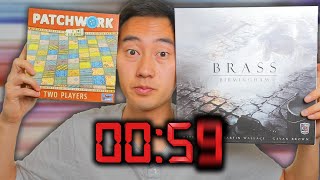
- Timer adaptation supports combat-heavy gameplay
- Thematic and dynamic feel
- Combat pauses can complicate timing accuracy
- Rule complexity may impose cognitive load under timer
- Array
- fantasy arena combat
- Brass Birmingham
- Coup
- Patchwork
Mechanics (from transcript analysis)
- Combat — combat encounters are timed and require decision-making
- Turn-based Movement — players move pieces and engage in combat on turns
Video topics + discussion points
Quotes (from this video)
- I love playing with the chess timer
- it's addicting
- my final say is to at least try using a chest timer for one of your two player games
- we could finish brass Birmingham under 75 minutes
- this chest timer is My Little Secret Weapon to use with a handful of friends to get through our favorite games faster
- I definitely think we could do it more games less time
References (from this video)
- Innovative rotating mechanic
- Balanced weight for families and gamers
- Learning curve for new players due to multiple tokens and terms
- dice drafting and godly actions around a rotating obelisk
- Mythic temple-building duels with rotating central obelisk
- euro-dice drafting with godly powers
- Lorenzo il Magnifico
- Coimbra
Mechanics (from transcript analysis)
- Dice Drafting — Draft dice of different colors and pips; some are 'favored' or 'tainted' depending on obelisk orientation.
- Dynamic obelisk rotation — The rotating obelisk changes available dice and action order mid-game.
Video topics + discussion points
Quotes (from this video)
- bam that's a quote, baby, quotable
- it's one of those things that you should always feel like there's no chance for you to win on both sides simultaneously
- easy like sunday morning
References (from this video)
- Strong interaction with a familiar two-player framework
- Tactical depth over repeated plays
- Has a legacy in the same universe as Nirōshima Hex
- Rules may feel dense to newcomers
- Not as approachable as some lighter Portal games
- Card crafting and combat with a fantasy/sci-fi veneer
- Arena combat with modular faction mechanics
- Competitive, with subtle cross-influences from Nirōshima Hex
- Nirōshima Hex
- Monolith Arena (tabletop)
- Ascension Tactics
Mechanics (from transcript analysis)
- deck-building — Build and use cards to influence combat and tile placement
- tile-based combat — Tiling and positioning influence outcomes and allow for strategic depth
Video topics + discussion points
Quotes (from this video)
- number five tides of time two player game
- number four on my list and this was very tough for me because i was torn between these two
- number two we actually combine two games together, nirōshima hex and monolith arena
- number one stronghold, what else could there be right
- it's a game you can pull off the shelf and play without a heavy rulebook in hand
- the art is amazing and the components are gorgeous, it makes you want to play again just to look at them
References (from this video)
- fast setup
- tactile components
- clear victory condition
- depth may vary by player
- pattern construction
- abstract puzzle
- abstract
- Patchwork
Mechanics (from transcript analysis)
- Pattern Building — pattern-based tile placement; stack blocks to meet patterns.
- Tile Placement — place blocks to build a monolith; strategic layout matters.
Video topics + discussion points
Quotes (from this video)
- Phil Collins should retire
- it's a sliding puzzle... it's a quick 20 minutes
- this is a totally different style of game when it comes to card play
- these games have made it better than the original pandemic
- it's not a 're-themed' pandemic; it's very different