








Munchkin Adventure Time Deep Dive
What the Community Thinks About Munchkin Adventure Time
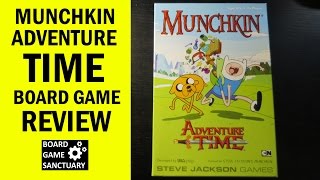
Reviewers mostly treat Munchkin Adventure Time as a playful entry point into the Munchkin family. The most enthusiastic take comes from Board Game Sanctuary, where Danny calls it a very fun, family-friendly game and argues that it is more than a reskin. They say the game takes the characters and world of the Adventure Time show and fits them onto the core Munchkin mechanics, and they give the most attention to the hero cards and artwork.
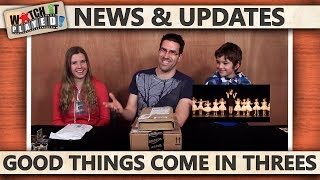
The criticism is more consistent than the praise. Danny finds the game leans heavily on luck, runs long, and can strain a group through its negative interaction. The One Stop Co-op Shop channel, reviewing the core Munchkin series that this edition builds on, raises similar concerns about swinginess and kingmaking. Reviewers disagree mainly on whether those traits are a flaw or the point. Jason of One Stop Co-op Shop calls the series a genuine gateway game and says its volatility produces memorable moments. Chairman of the Board judges the Munchkin design to be weak enough that they no longer want to play it. Much of the wider commentary addresses the Munchkin line as a whole, including Big Posi, who uses Munchkin as their example of a game that feels like a circle of people suffering rather than fun. The Watch It Played interview with Rodney Smith is mainly a trade show update, but it confirms that USAopoly published Munchkin Adventure Time and that an expansion for it was announced.
Core Mechanics That Define Munchkin Adventure Time
Take That
Take That is the mechanic reviewers most associate with Munchkin, and it is central to this edition. On a turn, a player kicks open a door and either fights the monster revealed or chooses to loot the room. Danny explains that a character's battle value is compared against the monster's level, and that other players can join in with extra monsters or curses to change the outcome. Because any opponent can interfere, the aggression is personal. Jason of One Stop Co-op Shop describes the Munchkin series as a game where players are ready to knife each other in the back at just the right moment. Steve Jackson designed the game, and USAopoly published this licensed version, which keeps that confrontational core intact.
Hand Management
Hand Management shapes how the game unfolds from turn to turn. Players hold door and treasure cards and decide whether to play a monster immediately, keep a curse for later, or hold a class or Ally card until the moment is right. Danny notes that curses can be kept and used whenever a player wishes, and that class and Ally cards drawn while looting can be played straight away. Jason's account of a poor opening deal in the core series shows the other side of the mechanic. A hand full of items that cannot be used is dead weight until the right card arrives. Reviewers describe the decision loop as less about what you draw than about how well you sequence what you already hold.
The Munchkin Adventure Time Experience
Playful Family Chaos
Danny describes the table as light and cheerful. They call the game incredibly family friendly, with rules that are particularly simple if somewhat repetitive, and they say it is easy to teach to people who have never played Munchkin. They also credit the artwork with making players feel as though they are playing the characters themselves. The humor comes from the card text and the characters, and the lighthearted tone is what draws fans of the show to the table.
Tense Table Friction
The other side of the experience is friction. Danny warns that the interaction is quite negative in some circumstances. Asking another player for help can backfire, since a player further ahead may decline and leave the requester feeling exposed, which creates an uncomfortable feeling in the group. An early betrayal can be costly, because the other players will often turn antagonistic toward the betrayer. Jason describes the same dynamic in the core series when players stop helping a rival who is close to winning. Danny recommends that groups talk through how they want to handle this kind of interaction before sitting down to play.
What Makes Munchkin Adventure Time Stand Out
Hero Cards That Mirror the Show
Danny's strongest praise is for how the hero cards carry Adventure Time into play. They point to Princess Bubblegum and Prince Gumball, which share the same ability and appear as female and male versions on opposite sides of the card. Items that boost combat strength are worth an extra bonus when used with either hero. They also argue that the hero bonuses are well designed because they stop players from falling too far behind. The result, in their view, is a game where the theme and the mechanics support each other rather than sitting side by side.
Gender-Balanced, Approachable Design
Danny also values the equal footing given to male and female characters. They argue that this makes the game more welcoming than many titles in the hobby, which they describe as heavily male-centered. Paired with rules that are easy to teach, that openness makes the game a practical choice for mixed tables that include new players and younger family members. Danny's emphasis is on accessibility rather than depth.
Potential Drawbacks
Luck and Swinginess
Danny finds that the game relies heavily on luck, both in what a player draws next and in which curses or monsters appear on their turn. Jason, reviewing the core Munchkin series, describes the same volatility, where an opening deal can leave one player with unusable cards while another races ahead. Jason regards this as part of the appeal because it creates memorable reversals, but they also acknowledge that a weak start can take many turns to recover from unless other players are willing to help. Players who prefer steady, controllable progress are likely to find the swings hard to accept.
Length and Commitment
Danny says the game can run two hours or longer, which makes it a real commitment rather than a quick filler game. The rulebook offers a variant that lets players secretly look at a door card and loot for a treasure instead of drawing a second door card, which speeds up the finish. Danny warns, however, that combining this edition with other Munchkin sets lengthens the game and does not fit well with the Adventure Time theme. Jason notes that the core series also grows more time-consuming with five or six players.
If You Enjoy Munchkin Adventure Time
Players who enjoy Munchkin Adventure Time's take that combat will find similar satisfaction in the core Munchkin series, where the same door-kicking and betrayal structure is the foundation. Jason of One Stop Co-op Shop recommends starting with the base game, then adding Munchkin 2 and Munchkin 3 for more variety, and adding Munchkin 4: Need for Steeds for groups that play often. Players who enjoy the swingy card play and personal interaction will find the same tension across the wider line. Players who enjoy the character-driven hero cards will find that the core series' class and race cards change how each player approaches the table in a similar way. Watch It Played's interview also mentions licensed spinoffs such as Munchkin Loot Letter, Munchkin Gloom, and Munchkin Panic for players who want the franchise in another format.
What Reviewers Are Saying
"It takes the elements of the Adventure Time show and perfectly marries it with the mechanics of the original Munchkin game. The hero cards are particularly well created. They've got some excellent bonus abilities that stop players from falling too far behind in the game."
— Board Game Sanctuary
"Right from the opening deal, you can see how incredibly swingy it is. This is obviously an extreme example, but that kind of imbalance gives you a sense for what can happen."
— Jason, One Stop Co-op Shop
"You know, but it's not. All it is is a a circle of people suffering. Um, you know, we're all just watching each other slowly dive into a form of insanity."
— Big Posi