/pic7110034.jpg)






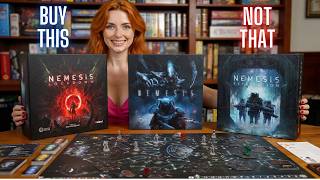
















Nemesis: Lockdown Deep Dive
What the Community Thinks About Nemesis: Lockdown
Nemesis: Lockdown stands as a thematically complete evolution of the original Nemesis, a Mars base survival horror experience that combines the semi-cooperative tension of its predecessor with meaningful new systems. The community's reaction reveals a game that succeeds brilliantly at what it sets out to do; create a story-driven, cinematic survival horror experience; while recognizing that it demands commitment, tactical planning, and comfort with brutal difficulty.
Core Mechanics That Define Nemesis: Lockdown
Power and Light Management
The introduction of power distribution transforms Nemesis: Lockdown into a puzzle of facility control. Unlike the original where noise simply accumulates with no relief, lit sections in Lockdown actively remove noise tokens from connected corridors when characters are not present. This mechanic forces constant decision-making: route power to generate safety zones, but power is finite. Players must decide which floors survive in darkness and which gain temporary sanctuary. This system makes the late game far more manageable than the original's escalating chaos, giving skilled players genuine agency through contingency planning rather than pure survival instinct.
CSS Contingency Tokens and Corporate Betrayal
Layered atop the alien threat sits an invisible corporate conspiracy. CSS contingency tokens represent hidden orders that may execute survivors even after completing primary objectives. Players must investigate these tokens by spending actions to peek at the corporation's endgame conditions. The brilliance lies in uncertainty: you may complete every objective, escape the facility, and still die because you didn't know the corporation would execute everyone in a particular location. This adds a third layer of tension beyond aliens and other players; the game itself becomes complicit in your potential demise.
The Nemesis: Lockdown Experience
Tense and Paranoid Survival Horror
Lockdown trades the claustrophobic corridors of the original spaceship for a brutalist underground Mars facility. While slightly less oppressive in physical layout, the atmosphere grows darker through paranoia. The power systems force constant vulnerability; turn off power in the wrong section and your carefully planned route becomes a death trap. Multiple reviewers describe the experience as grimmer and more systems-heavy than its predecessor; there are simply more ways to fail. Characters can be eliminated through noise cascades, direct alien encounters, environmental hazards, contamination mechanics, or the surprise corporate contingencies. The game relentlessly punishes hesitation.
Thematically Rich and Mechanically Layered
Where the original nails pure survival horror, Lockdown commits fully to simulation. The facility feels like an actual place with infrastructure, power grids, emergency protocols, and institutional oversight. This density of mechanics; power distribution, CSS tokens, multi-level navigation, item crafting with limited resources; creates the sensation of managing a collapsing complex rather than simply running from monsters. Players with professional experience in project management and contingency planning report particular resonance with these systems, as the game rewards the kind of structured thinking used in real crisis management.
What Makes Nemesis: Lockdown Stand Out
Meaningful Player Agency Through Systems
Lockdown empowers players compared to the original's helplessness. Characters receive stronger starting items and abilities. The power system provides clear knobs to turn; route electricity here, leave this corridor dark, activate these elevators strategically. The result feels less like being hunted and more like managing a deteriorating situation where your decisions matter. This shifts the dynamic from hoping to survive to planning how to survive, which appeals to players seeking tactical depth alongside narrative emergenc.
Unforgettable Narrative Moments
Like the original, Lockdown shines brightest in the stories it generates at the table. Reviewers across all channels describe playing Lockdown as an experience they discuss for weeks afterward. One notable moment: a player spent four turns secretly routing toward a rover escape pod after discovering a CSS contingency demanded their character's execution, successfully escaping alone while the table remained unaware of their survival strategy. These moments; where game systems and player agency collide with hidden information and desperate choices; are what Lockdown exists to create.
Potential Drawbacks
Significant Rules Complexity and Teach Time
Lockdown is the heaviest teach of the entire Nemesis series. Beyond the original's foundation sits power management, elevator systems, CSS token investigation, multi-level facility navigation, CSS escape pod mechanics, and expanded crafting requirements. First plays require substantial rulebook reference. The dense documentation, small fonts, and awkward cross-references plague the series universally. Groups comfortable with light-to-medium rules should budget extra sessions to reach playable competence. Semi-cooperative dynamics demand players understand not just individual mechanics but how systems interact with opponent motivations.
Protracted Game Length and Elimination Risk
Four-player games routinely exceed four hours; some reach five. The commitment is real. Additionally, player elimination arrives quickly and often. In a five-hour game, being eliminated early means two hours watching from the sideline. While this is intentional design; the game wanted high stakes and meaningful death; it creates friction for groups that include players who dislike elimination. The unpredictability of the corporate contingency compounds this: you might play perfectly and still lose to an unknown condition you had no way to prepare against.
If You Enjoy Nemesis: Lockdown
You're drawn to narrative-driven board games where systems reinforce theme. You appreciate semi-cooperative dynamics that birth memorable table stories. You're comfortable with hidden information, long play sessions, and accepting loss even when you played well. You likely enjoy games like Gloomhaven, Spirit Island, or Eldritch Horror; titles where the game's job is telling a story, not ensuring everyone wins. The Alien film franchise appeals to you. You're willing to commit to learning dense rules because the payoff is thematic richness and replayability.
What Reviewers Are Saying
"The power system, the CSS contingency tokens, the multi-level facility, these are meaningful additions, not a reskin. It's the most thematically complete game of the three."
— Board Game Critique
"It adds these tokens that are called contingencies; the company has invested into this base that's on Mars and they're going to blow up a certain subset of people. If you don't do this condition you're gonna die. There are six different conditions potentially, so you can talk to people, negotiate with them, try to get that information, as to what that other objective you have to do can be, but here's the twist; there are multiples of some of these objectives."
— Chairman of the Board
"It's one of those games where if you are interested in a game that has a story that you're going to be talking about after the gameplay session is over, nemesis lockdown is wonderful for that. But I do not recommend nemesis lockdown if you have not played the original nemesis before."
— Board Game Hangover