/pic7375234.jpg)























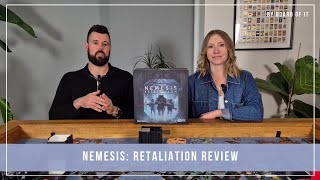











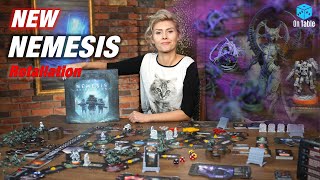








Nemesis: Retaliation Deep Dive
What the Community Thinks About Nemesis: Retaliation
Nemesis: Retaliation has landed with reviewers as something of a pleasant surprise: a game that is unmistakably familiar yet meaningfully improved. Board Of It describes it plainly as "the best version of Nemesis out so far because of the gameplay changes," even while noting that long-time franchise fans might have hoped for something more structurally ambitious. Board Game Critique calls it "the most modern expression of the engine," pointing to flexible objectives, double-layered character boards, and a procedural map as genuine quality-of-life improvements. The Discriminating Gamer goes further still, awarding it a 9.5 and calling it "a superior Nemesis" and "as near a perfect a game as games get." Shelfside lands at a 9 out of 10 recommender score, praising its social deduction core and its ability to generate the kind of stories you retell long after the game ends.
The consensus is not unanimous in every direction. Board Of It raises a pointed concern that despite a meaningful shift in tone, from survival horror to military action, the third game in the series plays roughly 95% the same as its predecessors, with the same intruder types, the same infection system, and the same basic escape routes. For players who own Nemesis or Nemesis: Lockdown, the advice from multiple reviewers is consistent: there is little reason to own all three. But for anyone coming in fresh, Retaliation is the version to start with. Board Games for One (Mike) echoes this, calling it "the one" and predicting it will be his favorite of the trilogy. That enthusiasm for Retaliation as an entry point is one of the most consistent threads across the community: the mechanical improvements make it the most enjoyable place to begin, and the rulebook is the clearest the series has produced.
Core Mechanics That Define Nemesis: Retaliation
Reworked Combat and the Shoot-Burst System
The most praised mechanical change in Nemesis: Retaliation is the overhaul to combat. In previous Nemesis games, shooting required spending precious ammo, then rolling to see if you even hit, then drawing cards to determine damage. You could burn all your resources and accomplish nothing. Reviewers across the board describe this as a persistent frustration with the originals. Retaliation eliminates it. When you shoot at an intruder in the same room, you always deal one damage, then roll to see if you have accumulated enough to kill. No ammo required for the basic shot.
Bursting, the second attack mode, applies when intruders crowd the corridors rather than a room. Corridors regularly fill with hordes of adults and drones, and bursting lets you spend ammo to roll a die and distribute multiple hits across them. Board Of It explains the design logic well: when intruders are in a tight room with you, you cannot fire wildly, but in a corridor, you can let loose. The Discriminating Gamer calls this distinction "very good" and "more streamlined than Core Nemesis combat," noting it just makes sense as you play through it. Board Games for One (Mike) highlights the emotional difference: "when you fire at an intruder it always hits, and that feels good." Shelfside elaborates on the RNG mitigation this creates, noting that even the burst action guarantees at least one hit, so no action feels completely wasted. Reviewers also highlight grenades as a reliable corridor-clearing tool that sidesteps the randomness entirely.
The Flexible Objective System and the Timing Decision
The original Nemesis forced players to commit to one of their two secret objectives the moment the first intruder appeared on the board, before anyone had a sense of how the game would develop. Retaliation replaces this with a timing puzzle. Players hold both a mission objective and a private objective simultaneously, and they choose when to lock in. The first player to commit draws bonus action cards, with subsequent players drawing fewer the longer they wait. Board Game Critique describes the strategic heart of the change clearly: "you're asking yourself every turn, do I lock in now for the bonus actions? Do I wait? Is my health going to hold?" In their sessions, they played a heavy gun operator who waited until turn eight to lock in because they wanted to see the map develop, then used the action burst to clear a room strategically rather than panicking into a commitment.
Shelfside identifies this as "genius" because it handles one of the classic problems with social deduction games: the feeling of getting stuck with an objective you simply cannot complete. The flexibility lets you read the board before committing, reducing kingmaking and runaway-leader situations without removing the tension. Board Games for One (the XVJ0KQkLD8c review) notes a compelling prisoner's dilemma at the heart of the system: if everyone committed to the shared public objective, winning would be easier and more collaborative, but the moment you suspect someone has gone private, you have to decide whether to defect too. That push-and-pull between cooperation and self-interest generates exactly the kind of table drama the game is designed to produce.
The Nemesis: Retaliation Experience
Emergent Stories and Cinematic Moments
Nearly every reviewer lands on the same core defense of Nemesis: Retaliation, which is that the game's value is not measured in whether you win but in the stories it generates. Board Of It describes their best game in vivid detail: one player sacrificed themselves by disabling the autodestruct sequence, which cut off the oxygen supply, knowing they were too deep in the facility to reach safety in time. The other player sprinted for the lander, firing bursts behind them at pursuing intruders, rolled for entry, drew a blank token, made it aboard, and then exploded when the infection check revealed they had been carrying a larvae the whole time. "That kind of dramatic end and storytelling," the reviewers say, "is what Nemesis is about."
Shelfside provides a catalog of similarly memorable moments from their sessions: a heavy gunner who spent turns collecting ammunition magazines only to have the queen appear and maul them before they could reload; an officer ordering a player to move into danger via chain of command; someone camping the lander pad and advancing the ship timer every round, leaving teammates scrambling. The Discriminating Gamer calls the Nemesis games "probably the most thematic games I have ever played that were not IP games," noting that your heart pounds in a way few games achieve. This thematic density, the sense of genuinely being marines in an alien-infested facility rather than pushing tokens around, is what separates Nemesis: Retaliation from more mechanically comparable games.
Tension Management and the Oxygen System
Nemesis: Retaliation introduces oxygen as a facility-wide resource rather than a passive assumption. The map is divided into three sections (A, B, and C), each with a life support control room that must be found and activated. When you are in a section without active life support, you lose one oxygen pip at the end of each of your turns, not each round. Run out, and you die. Board Of It describes this as "a ticking clock you have to worry about," comparing it favorably to the light-and-dark mechanic of Nemesis: Lockdown in that it adds something else to think about without overwhelming the core game. Board Games for One (XVJ0KQkLD8c) frames it as an improvement over Lockdown's power system: "a little more simplified, less distracting," while still feeding directly into the cooperation-versus-betrayal core, because you can help allies by activating life support or hurt them by turning it off or withholding oxygen tokens.
The noise system, carried over from previous games with some refinement, remains one of the game's central tension engines. Every movement triggers a noise roll, placing noise markers in corridors based on the die result. When a corridor already has a noise marker and gains another, an intruder token is drawn from the bag and placed there. As bag development advances rounds, the bag fills with increasingly dangerous tokens: adults replaced by drones, queen tokens added with each development pull. Shelfside highlights the visual impact of watching yellow noise tokens spread across the board as a genuinely effective tension-building tool, because each one could be any type of enemy at any quantity. The secure token system adds a layer of player control: moving carefully lets you place a secure token in your destination room, which absorbs the first intruder attack rather than your health track. Board Of It calls this "giving players more control over their environment" and "the illusion of control," which makes the game feel better without making it actually easier.
What Makes Nemesis: Retaliation Stand Out
The Procedural Map and Exploration
Unlike the fixed board of the original Nemesis, Retaliation generates its map as players explore. When you move into an unexplored corridor, you draw an exploration card that tells you which room tile to place, where additional corridors connect, what noise markers or fires start there, and what entrance effect resolves. The Discriminating Gamer identifies this as the single most important thing that elevates Retaliation above its predecessors: "I love games where you see boards evolve, where you build new pathways or open up new areas, and this one does it very well." The exploration is tense, not just exciting, because the entrance effect might spawn intruders in the corridor you just came through, or place a malfunction token on the room you needed, or trigger a fire.
Board Games for One (XVJ0KQkLD8c) emphasizes how the procedural system reinforces the marines-on-a-mission feel. With a pre-set board, you know where rooms are and can plan routes. With a builder board, the facility literally does not exist until you discover it, so the game tells you when paths open and when they do not. You might have planned to push forward into section C but find the corridors routed in an unexpected direction. Shelfside adds that the map structure is not purely chaotic: each section stack contains the tiles you need (including life support control rooms and objective-related locations), so you will eventually find what you are looking for, but the layout and the hazards you encounter along the way remain unpredictable. This manages variance without eliminating it.
Production Quality and Component Design
Awaken Realms is known for premium production, and reviewers consistently describe Nemesis: Retaliation as a standout even within that catalog. Shelfside praises the intruder miniatures as "properly disgusting and quite sturdy," the double-layered character boards as a quality-of-life upgrade that keeps your character state physically secure, and the recessed tactical belt on the player board as something that genuinely feels like gear management rather than token shuffling. The infected card scanner, a physical red filter that reveals hidden text on contamination cards, earns consistent praise across reviews as one of the best tactile moments in modern board game design. Board Game Critique calls it "such a clever piece of design" that turns a passive deck penalty into an actual moment of table tension, as players scan their cards hoping not to see the word "infected" spelled out.
The bag development system has also been streamlined. Previously, drawn tokens tracked intruder presence on the board and returned to the bag when those intruders were removed. Now, drawn tokens simply exit the bag permanently, with only blank tokens returning. Board Games for One (XVJ0KQkLD8c) describes the new bag token design as clear and intuitive: each token shows a picture of the intruder type that matches the miniature exactly, eliminating the symbol-memorization required by previous editions. The streamlined bag development was felt across multiple reviews as a meaningful improvement to pacing.
Potential Drawbacks
Familiar Territory for Franchise Veterans
The most substantive criticism of Nemesis: Retaliation comes from reviewers who expected the shift to a military-action setting to produce more structural novelty. Board Of It articulates it most directly: despite the tone change, roughly 95% of the game is identical to its predecessors, including the same intruder types, the same infection system, the same escape routes, and the same general room categories. Given that this is the third game in the series and promises a more combat-focused experience, they feel the design team rested on their laurels when they could have pushed the system further. The comparison to Nemesis: Lockdown is illuminating: Lockdown introduced a completely different environmental mechanic (multi-level layout, power management, darkness and light) that made the Mars setting feel distinct. Retaliation uses a similar facility setting to Lockdown but removes some of those layers rather than adding new ones.
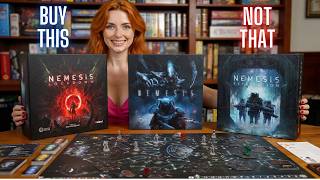
Board Game Critique echoes the point about diminishing distinctiveness, noting that while Retaliation is "a better game by a lot of measures," the original Nemesis is "unmistakably itself" in a way that Retaliation is not. For players who own one or both previous entries, the improvements may not justify the expense of a third box. Multiple reviewers converge on the same recommendation: if you own Nemesis or Lockdown, there is not much reason to add Retaliation unless you are willing to replace one of the others.
Variance, Player Elimination, and the Marmite Problem
Nemesis: Retaliation inherits a design tension from its predecessors that no mechanical improvement fully resolves. Board Of It describes it as a "Marmite game": you will either find the emergent storytelling extraordinary, or you will find the randomness an exercise in frustration. They illustrate both poles with specific sessions. One game produced the sacrificial death and dramatic escape described above. The immediately following game was "just an exercise in frustration": every movement spawned intruders, a required objective target (the queen) did not appear until round ten and then sat immobile without enough bag tokens to move, and a player was eliminated in round three through bad draws. "Everything that went wrong did."
The game also features player elimination, and in sessions that run three to five hours, being eliminated early and watching from the sideline is a real and documented experience. Board Game Critique is direct about this: it is intentional, but if any player in your group considers this a hard dealbreaker, none of the three Nemesis games will work for them. Shelfside adds that the game is genuinely not for people who hate unexpected occurrences or who want to win through consistent optimization. There is still swing, even in Retaliation, which reviewers generally agree has the most controllable variance of the three games but remains substantially dice-driven. The game is also long. Box times are optimistic. Four- and five-player sessions regularly run four to five hours in reviewer experience.
If You Enjoy Nemesis: Retaliation
If Nemesis: Retaliation resonates with you, the two most natural next steps are its direct predecessors. Nemesis (the original 2018 release) provides the purest expression of the survival horror core, with a harsher bag variance, no guaranteed hits in combat, and a fixed board that channels a classic Alien atmosphere. Board Game Critique recommends it for players who want to feel genuinely outmatched and hunted. Nemesis: Lockdown sits between the two in tone, adding a multi-level Mars base, a power management system that lets players actively clear noise from lit corridors, and a corporate contingency token system that adds a third source of paranoia alongside the aliens and other players. Multiple reviewers describe Lockdown as the best second purchase if you already own one Nemesis game.
Outside the trilogy, Battlestar Galactica is the comparison that comes up most often. Shelfside calls Nemesis: Retaliation "the modern Battlestar Galactica, a big box game filled with theme and tons of betrayal," noting it resolves several long-standing problems with that game: the randomness is less punishing, being revealed does not strand you in the brig doing nothing, and the theme is more current. For players drawn specifically to the science fiction horror atmosphere rather than the social deduction, the Nemesis games occupy a relatively unique space in the hobby.
What Reviewers Are Saying
"It is a Marmite game. You'll either think that it's the greatest storytelling device in board gaming or a horrifically unfun board game nightmare of randomness designed to give players a miserable experience. If you're with a group who wants to tell a story and have an experience, then very few games do it better than Nemesis."
— ZH0ziajyORI)
"The objective flexibility creates a timing puzzle the earlier games don't have. You're asking yourself every turn, do I lock in now for the bonus actions? Do I wait? Is my health going to hold? That timing call is the strategic heart of Retaliation."
— C4nKjVU_Fbk)
"I think the Nemesis games are probably the most thematic games I have ever played that were not IP games. They just suck you in. It is so intense and your heart pounds and it just sucks you in like few games can. Nemesis Retaliation is the best of the Nemesis games so far."
— wTp-r2vG4ZE)