/pic8654429.png)


/pic8654429.png)


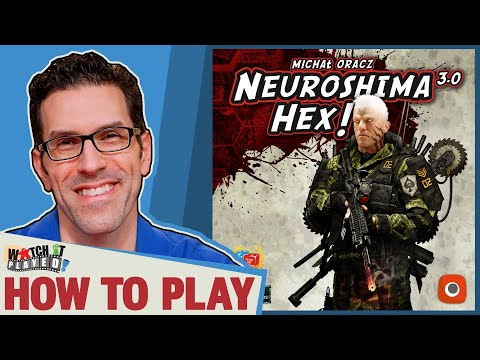















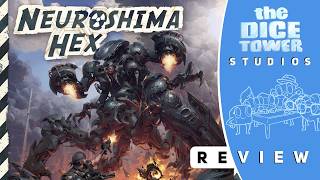

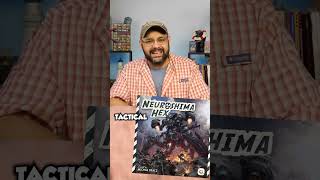
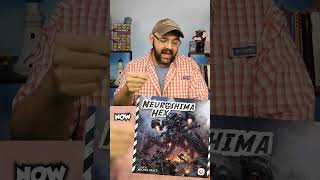


Neuroshima Hex Deep Dive
What the Community Thinks About Neuroshima Hex
Neuroshima Hex has earned its reputation as a standout tactical game within the board gaming community. Channels like The Dice Tower champion it as a refined, deeply replayable design, while Board Gaming Ramblings counts it among personal favorites. This post-apocalyptic hex-grid combat game combines strategic depth with accessible core mechanics, offering both newcomers and seasoned players a compelling puzzle, and its latest edition has only strengthened its standing.
Core Mechanics That Define Neuroshima Hex
Tile Placement and Army Positioning
At its heart, Neuroshima Hex is about deploying units strategically onto a hex grid. Each turn, players draw tiles and must select which to place while discarding the rest. These tiles represent units from a chosen faction, each with distinct abilities and attack values. The board centers on two opposing headquarters, each the other player's ultimate target. Players build their armies by carefully placing tiles around the enemy HQ, using unit types from nimble soldiers to heavy hitters, each with varying initiative speeds and combat capabilities. Designed by Michal Oracz and published by Portal Games, the placement puzzle is deceptively deep.
Initiative-Based Combat Resolution
Combat resolves through a deterministic, initiative-based system that creates tactical puzzles. When a battle triggers, either by filling the board or playing a battle tile, all units attack in a strict order determined by their speed values. Faster units strike first, dealing melee or ranged damage, while units with armor can absorb hits. This all-at-once resolution prevents in-fight targeting decisions, forcing players to predict their opponent's responses and plan accordingly. Because the outcome is fully determined by the board state, skilled players can calculate exact results, turning each placement into a solvable problem that the opponent is simultaneously trying to unsolve.
The Neuroshima Hex Experience
A Tactical Knife Fight
The game delivers satisfying tactical decision-making at multiple levels. In tile selection, players balance immediate threats against long-term positioning. During placement, every position matters because combat is deterministic. Reviewers describe the result as a knife fight in a phone booth: both players simultaneously solving tactical problems while countering the opponent's solutions. The game rewards careful planning, positional awareness, and the ability to adapt when an opponent places a tile in an unexpected spot.
Thematic Scenarios and Replay Value
The newest edition introduces a battle atlas, a collection of scenarios that add narrative context and varied win conditions. Rather than simply attacking a generic opponent, players defend humanity from mutants, halt machines, or complete objectives tied to specific story moments. This thematic layer transforms what could be a purely abstract puzzle into an engaging series of encounters, each with setup instructions, faction restrictions, and special rules that create memorable moments without requiring a long campaign commitment.
What Makes Neuroshima Hex Stand Out
Refined Design and Component Quality
Neuroshima Hex has been refined through multiple printings, and that refinement shows in the final product. The components are carefully chosen, including translucent wound and net tokens that reviewers praise. The core ruleset has been streamlined to elegant efficiency, delivering maximum depth without unnecessary complexity. The accessibility for new players combined with the depth for experienced ones makes it an ideal jumping-on point for tactical board games.
Asymmetric Factions and Flexible Play
While marketed for two to four players, Neuroshima Hex shines brightest as a two-player duel. The core faction system includes asymmetric armies with distinct abilities, and a deep library of expansion factions provides additional tactical approaches. The scenario system adds another layer of variety, letting players experience the game through many different lenses. This flexibility keeps the game fresh across many plays and lets groups choose between pure competitive clashes and thematic scenario encounters.
Potential Drawbacks
Best at Two Players Despite the Box
The game plays optimally as a two-player duel, yet the box still markets a two-to-four-player range without clear distinction. New players drawn by the higher count may find three and four-player games less balanced and more chaotic. Additionally, while the battle atlas scenarios are excellent, not all of them accommodate optional expansion factions, so players with large collections cannot always mix their favorite armies into the published scenarios.
Component Consistency Across Printings
Given the game's many editions and expansions, component quality and finish vary between printings. Tiles from different releases can have slightly different surfaces and sheens, which becomes noticeable for players whose collections span years of releases. For those sensitive to component aesthetics, mixing old and new sets at the table can be a minor distraction.
If You Enjoy Neuroshima Hex
Players seeking tactical grid-based combat should explore Hive, which offers deterministic positioning without any luck. For those drawn to asymmetric faction design, Root provides wildly different player powers and win conditions. Onitama delivers a tight, deterministic two-player abstract duel with a similar solvable-puzzle feel. And for fans of the deterministic combat puzzle in a larger format, Summoner Wars scales the army-building duel into a card-driven battle with comparable tactical bite.
What Reviewers Are Saying
"Neuroshima Hex is a fantastic game. This is a rich, tactical, engaging game. If you like reactionary games, if you like that feeling of a knife fight in a phone booth, if you love overcoming a puzzle that you are trying to solve while your opponent is trying to counter-solve their own, you're going to enjoy this game."
— The Dice Tower
"This is a refined core box, and they've got this down now to where it just sings. It's so rich, it's so well done, there's so much interest and history here."
— The Dice Tower
"Neuroshima Hex, I enjoyed my plays of it. It's not one I'm always wanting to play, but I like it, and I think it's a good game."
— Board Gaming Ramblings