










Next Station: Paris Deep Dive
What the Community Thinks About Next Station: Paris
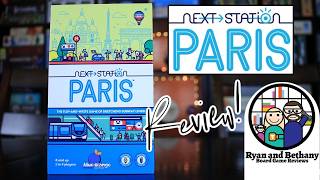
Next Station: Paris is the third entry in the flip-and-write series that began with Next Station London and continued with Next Station Tokyo, and reviewers discuss it as a member of that family. Released in 2024 to coincide with the Paris Olympics, it moved quickly from Board Game Arena alpha testing to a full release, a pace that The Board Gaming Doctor remarked on. In an earlier Board Game Arena news segment, the same channel relayed the publisher's claim that Paris would be the easiest version of the line.
Reception is warm and fairly even. Ryan and Bethany called it a good, clean flip-and-write system that was fun to play, though not one they wanted to repeat back to back. Tabletop Tokki enjoyed it far more than Tokyo and placed it alongside London in lightness. The Dice Tower counts it among the games its host has played most often on Board Game Arena. In a separate discussion, Nate Jenny of Neon Gorilla said they love all three of the London, Tokyo, and Paris entries.
Core Mechanics That Define Next Station: Paris
Flip, Draw, and Pass the Pencil
Each round, every player takes a differently colored pencil, and that pencil sets their starting point on the shared map. Players flip the top card of the deck and draw a line from their route to a station of the revealed shape, working on one color route at a time. At the end of the round the pencils pass to the next player, as The Dice Tower explained. Because every player starts from a different place, the same flipped card produces a different result for each person. Ryan and Bethany noted that this keeps each map individual even when everyone reacts to the same symbol.
Scoring Routes, Monuments, and Bridges
Route building drives the game. Ryan and Bethany described the goal as making as many routes reach as many stops as possible. Scoring each round multiplies the number of districts a player reaches by the number of stations in their most-developed district, so six districts paired with a district holding three stations is worth 18 points. Monuments add two points at the end of the round for a route that stops on one, which Ryan and Bethany called easy points. The bridge crossings introduced in Paris add another layer: using one path across a crossing earns a couple of points, while using both the upper and lower paths earns five.
The Next Station: Paris Experience
How the Game Feels at the Table
Reviewers describe a session that is quick to set up and quick to learn. Tabletop Tokki said Paris is as light, fun, quick, and easy to teach as London. Ryan and Bethany said Paris has the most going on of the three London, Tokyo, and Paris entries, with the extra ways to connect routes adding a layer of planning. The Board Gaming Doctor, who said they are not a big player of the series, found that the slight variations, especially the central hub, made an already popular system more enjoyable.
Shared Goals and Flexible Starts
Shared objectives are the optional module reviewers highlight most. A small deck is shuffled and two objectives are revealed. These are global goals on the board that any player can achieve for 10 points each. Ryan and Bethany liked that both players can chase the same goal, saying "we can both get it but we both have to work at it." A chance card that lets players branch off their existing path gives everyone more ways to reach distant parts of the board and pursue their objectives. Ryan and Bethany also observed that the hub-style objectives, where several colors meet at one station without overlapping, are especially difficult, and that branching makes them possible.
What Makes Next Station: Paris Stand Out
Bridges, Monuments, and the Central Station
Bridges are the addition reviewers single out most often. Tabletop Tokki said the introduction of bridges was the element that made Paris different from London while keeping the same light feel. The central station is the other signature addition. Ryan and Bethany explained that a route can enter the central station and emerge anywhere on the board, which opens up parts of the map that would otherwise be hard to reach. The constraint that a route cannot cross itself forces players to weigh whether a jump will strengthen their remaining route or box it in.
Components and Modular Add-Ons
Ryan and Bethany called the pad of double-sided sheets so generous that players will not need to laminate them. The series also uses a modular structure in which each entry carries a bonus scoring module. The City Gates module from Paris can be played on the London and Tokyo boards, while the shared objectives stay with Paris. Ryan and Bethany said this gives players a reason to collect the line, while adding that you do not need to own every title unless you are a collector.
Potential Drawbacks
Overlap With the Series
The most consistent criticism is overlap. Ryan and Bethany said there is a lot of overlap across London, Tokyo, and Paris, and that the appeal of each comes from its city and its differences rather than from fundamentally new systems. The Dice Tower said Paris "kind of feels like a third" entry in the series, while adding that this is not a bad thing and that the line as a whole remains very creative. Players who already own the earlier games should expect familiar rhythms, with the bridges and central station providing the main departures.
Depth for Experienced Players
Some reviewers suggest that Paris is more approachable than demanding. The publisher's framing of the game as the easiest version of the line, relayed by The Board Gaming Doctor, sets expectations that veterans may find less new material than in London or Tokyo. Ryan and Bethany said they enjoyed the game but did not want to play it again right away, which suggests that its appeal lies in quick, pleasant sessions rather than in a long chase for mastery. Players who want a demanding route-building puzzle may find the series' more constrained entries a better fit.
If You Enjoy Next Station: Paris
- Next Station: London is the original and the simplest entry. Tabletop Tokki described it as a favorite and The Dice Tower called it the classic way to be introduced to the line. Players who want the same light feel with fewer modules should start here.
- Next Station: Tokyo is a tighter variation with a pre-printed central route. The Dice Tower noted that it is harder to score big combinations, which makes it a good pick for players who want more constraint, though Tabletop Tokki was less enthusiastic about its central line.
- Next Station: Berlin is the newest entry in the series. The Dice Tower described it as very tricky, making it the best choice for players who have mastered the earlier titles and want a stiffer challenge. Ryan and Bethany also said they look forward to it.
What Reviewers Are Saying
"I thought it was just as light and fun and quick and easy to teach as London, but with that new element of Bridges to change things up."
— Tabletop Tokki
"This one's probably my favorite. This one has the the most going on."
— Ryan and Bethany
"The slight variations make this, this really fun and popular game, even better."
— The Board Gaming Doctor